

Bodyweight Squatting Row vs Pull-up: Complete Comparison Guide
Bodyweight Squatting Row vs Pull-up — two classic bodyweight back exercises that both target the lats but feel very different. You’ll get clear comparisons of muscle activation, setup and technique cues, equipment needs, difficulty and progression routes. I’ll show you which movement fits your goal—muscle growth, strength, or a simple home routine—plus specific rep ranges (6–12 for strength/hypertrophy work, 8–20 for volume), joint angles to watch, and cues to protect your shoulders. Read on and you’ll leave with a plan: which to prioritize and how to program each exercise into your workouts.
Exercise Comparison
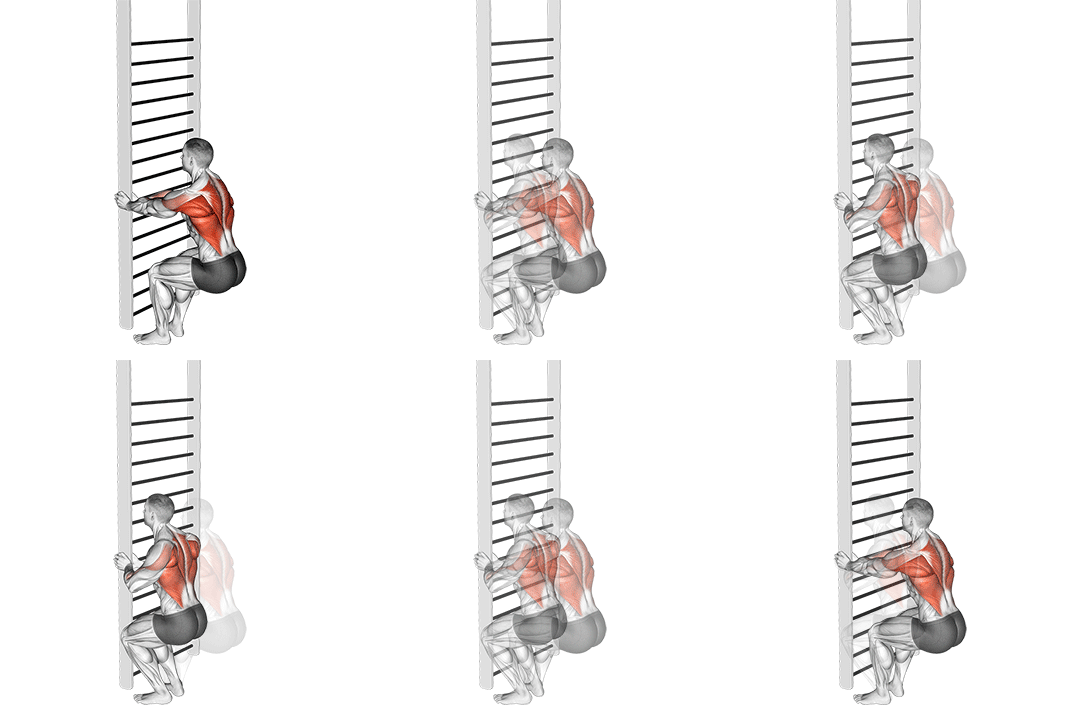
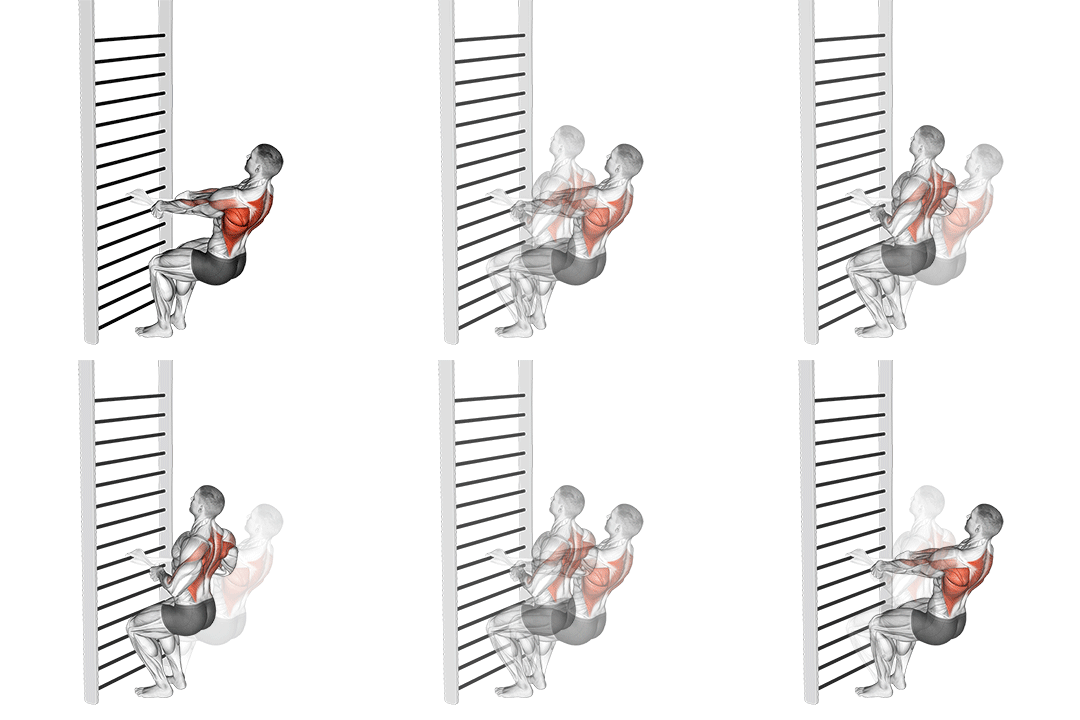
Bodyweight Squatting Row
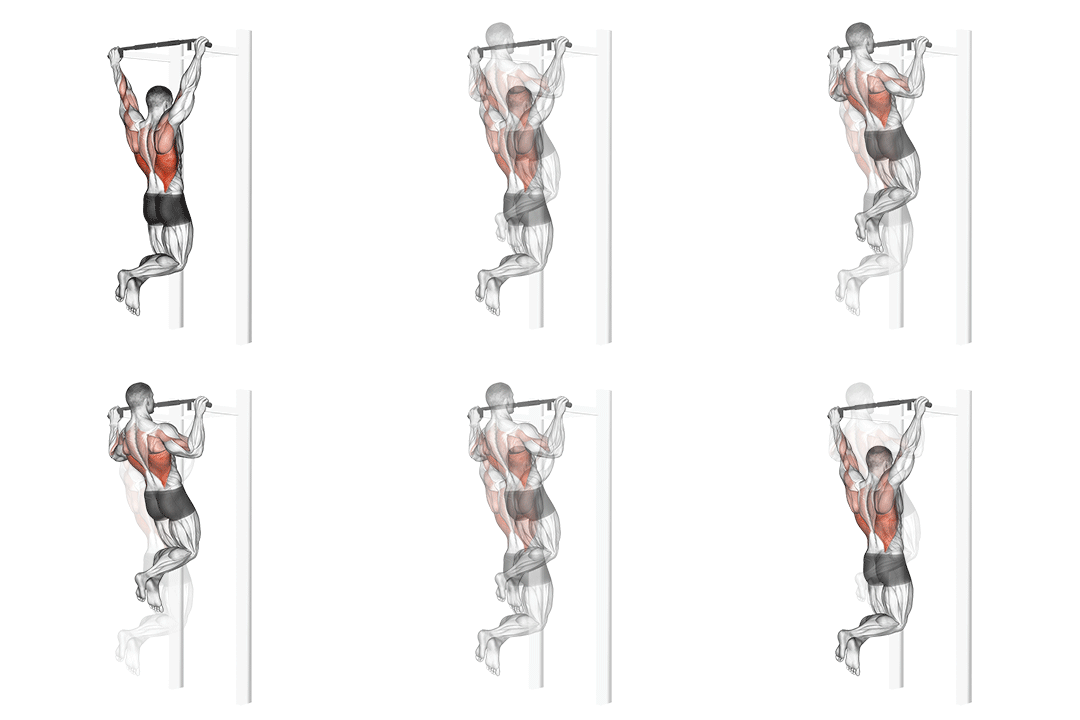
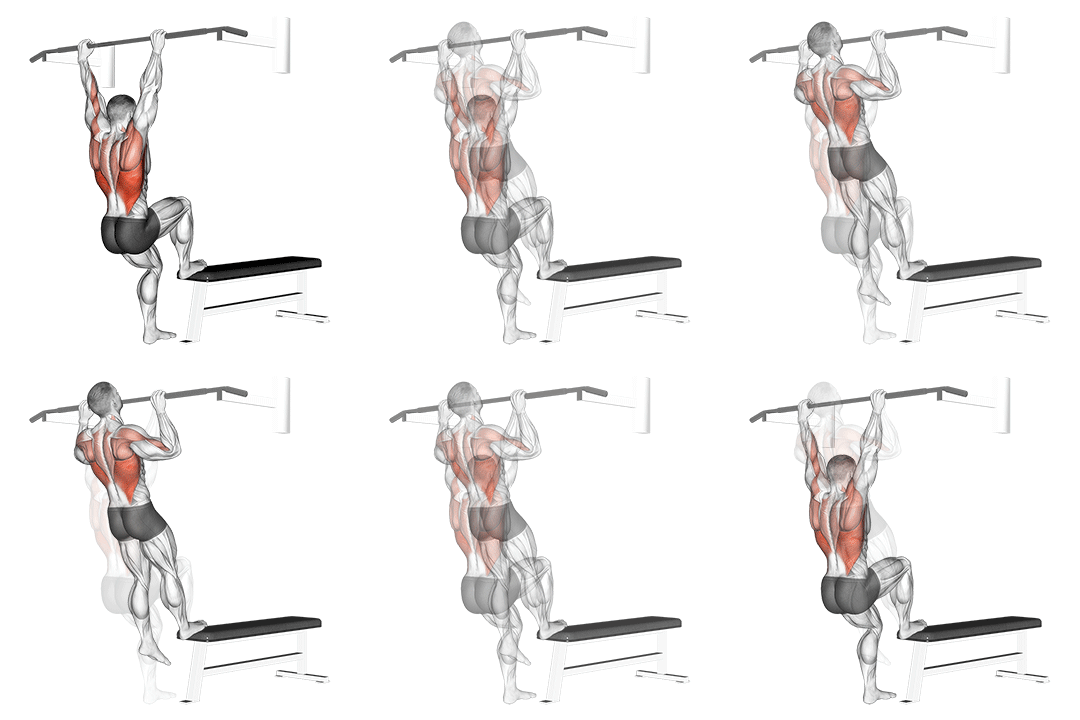
Pull-up
Head-to-Head Comparison
| Attribute | Bodyweight Squatting Row | Pull-up |
|---|---|---|
| Target Muscle |
Lats
|
Lats
|
| Body Part |
Back
|
Back
|
| Equipment |
Body-weight
|
Body-weight
|
| Difficulty |
Beginner
|
Advanced
|
| Movement Type |
Compound
|
Compound
|
| Secondary Muscles |
2
|
2
|
Secondary Muscles Activated
Bodyweight Squatting Row
Pull-up
Visual Comparison
Overview
Bodyweight Squatting Row vs Pull-up — two classic bodyweight back exercises that both target the lats but feel very different. You’ll get clear comparisons of muscle activation, setup and technique cues, equipment needs, difficulty and progression routes. I’ll show you which movement fits your goal—muscle growth, strength, or a simple home routine—plus specific rep ranges (6–12 for strength/hypertrophy work, 8–20 for volume), joint angles to watch, and cues to protect your shoulders. Read on and you’ll leave with a plan: which to prioritize and how to program each exercise into your workouts.
Key Differences
- Difficulty levels differ: Bodyweight Squatting Row is beginner, while Pull-up is advanced.
- Both exercises target the Lats using Body-weight. The main differences are in their movement patterns and muscle activation angles.
Pros & Cons
Bodyweight Squatting Row
+ Pros
- Highly accessible—can use a table, rings, or TRX with minimal equipment
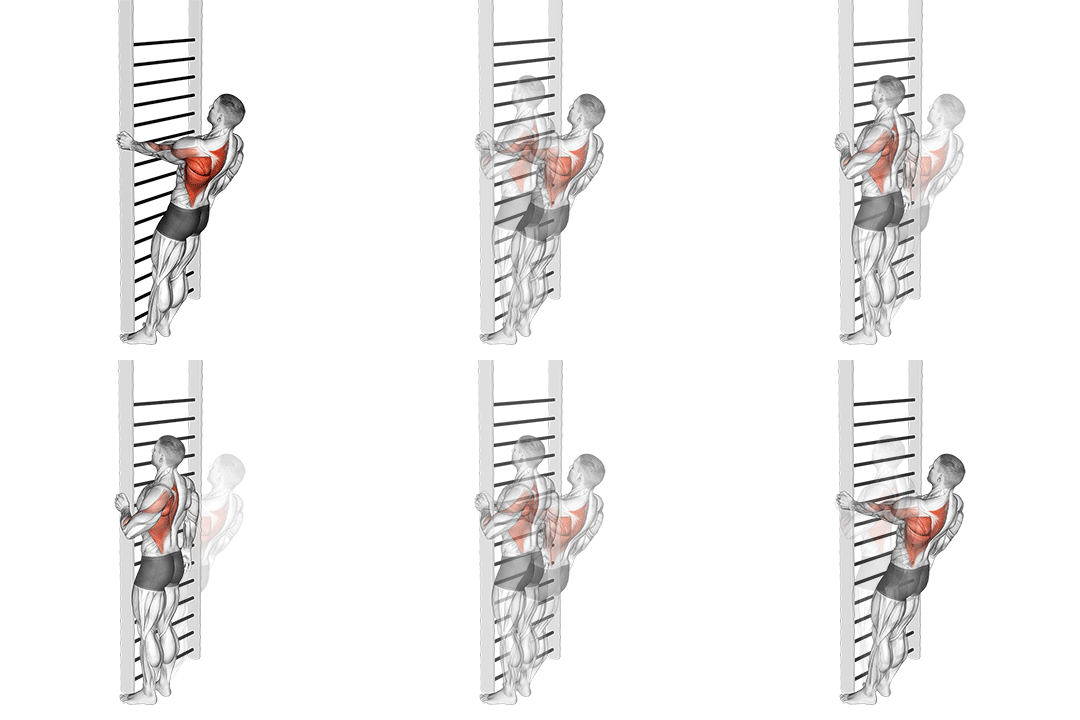
- Easy to scale by changing torso angle from near-vertical to horizontal
- Promotes strong scapular retraction and mid-back development (rhomboids, traps)
- Lower peak shoulder impingement risk compared with overhead hangs
− Cons
- Harder to reach maximal overload for long-term strength progression
- Less forearm and grip development than vertical pulls
- Requires careful torso bracing to avoid lumbar flexion
Pull-up
+ Pros
- Excellent for vertical pulling strength and maximal lat loading
- Broad progression options (weighted, eccentric, tempo, grip variations)
- Strong carryover to sport-specific movements and compound strength
- Improves grip and forearm strength due to hanging demand
− Cons
- Steep learning curve for beginners—requires significant initial strength
- Depends on secure overhead anchor and clearance
- Higher shoulder/elbow stress if scapular control or mobility are poor
When Each Exercise Wins
Pull-ups allow greater progressive overload (weighted pull-ups, slower eccentrics) and place the lats in a longer starting position, increasing mechanical tension across 6–12 rep ranges. You can also target different lat fibers with wide vs neutral grips to maximize hypertrophy.
Pull-ups load the vertical pulling plane and can be systematically overloaded (add 2.5–20+ lb) to push neural and muscular strength adaptations. Weighted and low-rep (3–6) protocols translate directly into measurable pull strength improvements.
Rows let you control difficulty by changing your torso angle—start vertical and progress toward horizontal—so you can build scapular control and biceps strength before attempting full pull-ups. This reduces shoulder strain and lets you accumulate practice volume (3–4 sets of 8–15).
You can perform squatting rows with improvised anchors (table, broom across chairs, rings) and small space, making them more practical for home training. Pull-ups require a fixed, safe overhead anchor which many homes lack.
Frequently Asked Questions
Can I do both Bodyweight Squatting Row and Pull-up in the same workout?
Yes. Use squatting rows as an accessory to pre-fatigue or reinforce technique and scapular control, then perform pull-up sets when you have the most strength. For example, do 2–3 sets of rows (8–12 reps) followed by 3–5 pull-up sets or progressions.
Which exercise is better for beginners?
Bodyweight Squatting Row is better for most beginners because you can reduce load by standing more upright and focus on scapular retraction. That builds the strength and motor control needed before attempting unassisted pull-ups.
How do the muscle activation patterns differ?
Squatting rows emphasize mid-back muscles and scapular retraction with a horizontal force vector, producing peak lat activity mid-range. Pull-ups create a vertical force vector with higher peak lat and biceps activation, especially during the concentric pull from a long-start position and near full elbow flexion.
Can Pull-up replace Bodyweight Squatting Row?
Pull-ups can replace rows for many goals if you can perform them with good technique and sufficient volume, but rows offer unique scapular retraction stimulus and easier volume accumulation. For balanced back development include both or alternate them across training cycles.
Expert Verdict
Choose pull-ups when your priority is maximal lat loading and long-term strength progression—use weighted or eccentric-focused sets in 3–6 or 6–12 rep ranges to drive muscle growth. Pick bodyweight squatting rows when you need accessibility, to build scapular retraction, or when you’re a beginner building the base strength and motor pattern for vertical pulling. A practical program pairs both: spend 2–3 weekly sessions with rows (3–4 sets of 8–15, emphasis on tempo and scapular squeeze) and 1–2 sessions focused on pull-up progressions (band-assisted, eccentric negatives, or weighted work in 3–8 rep ranges). That balances volume, reduces injury risk, and accelerates progress.
Also Compare
More comparisons with Bodyweight Squatting Row
Compare More Exercises
Use our free comparison tool to analyze any two exercises head-to-head.
Compare Exercises