

Bodyweight Squatting Row (with Towel) vs Pullups: Complete Comparison Guide
Bodyweight Squatting Row (with Towel) vs Pullups — if you want bigger, stronger lats but only have bodyweight options, which one should you pick? You’ll get a clear breakdown of muscle activation, movement mechanics, equipment needs, and progressions so you can choose based on your goals. I’ll cover technique cues (joint angles, elbow path, scapular action), rep ranges for hypertrophy and strength (6–12 reps vs 3–6+ weighted), and practical programming tips so you can apply these moves in a workout today.
Exercise Comparison
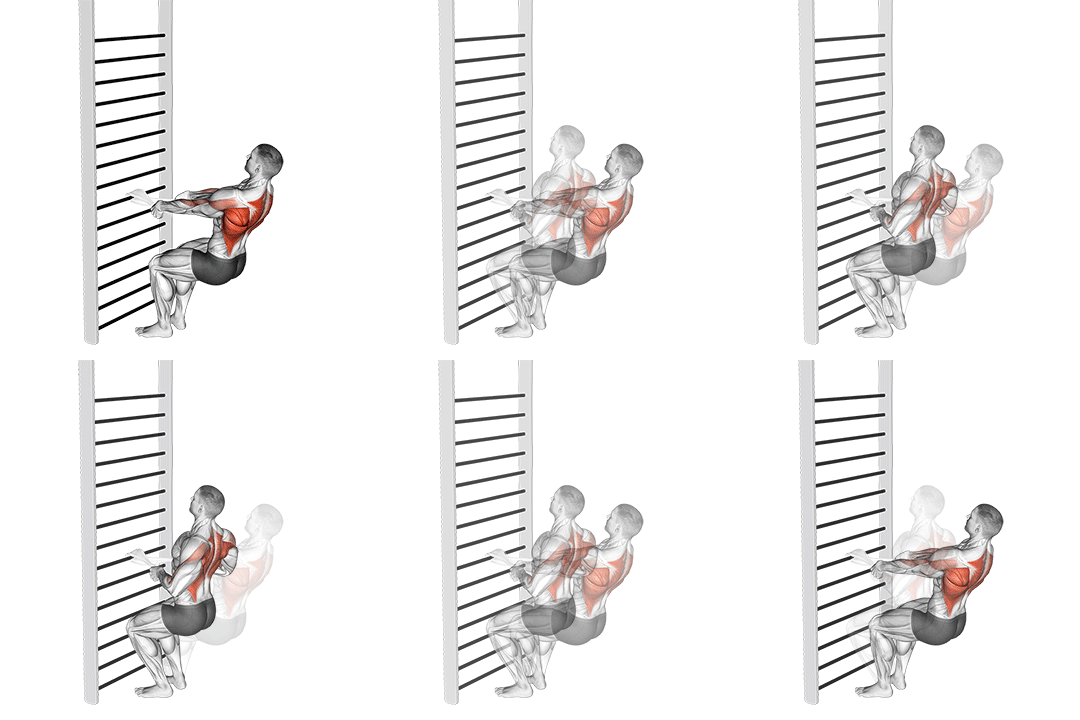
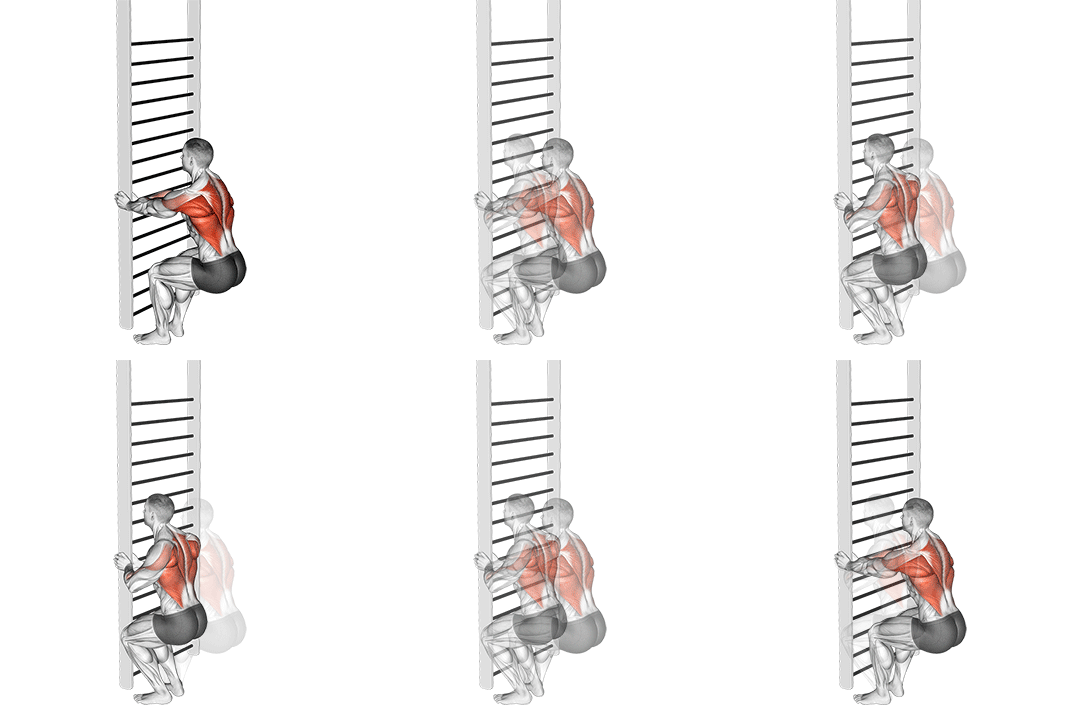
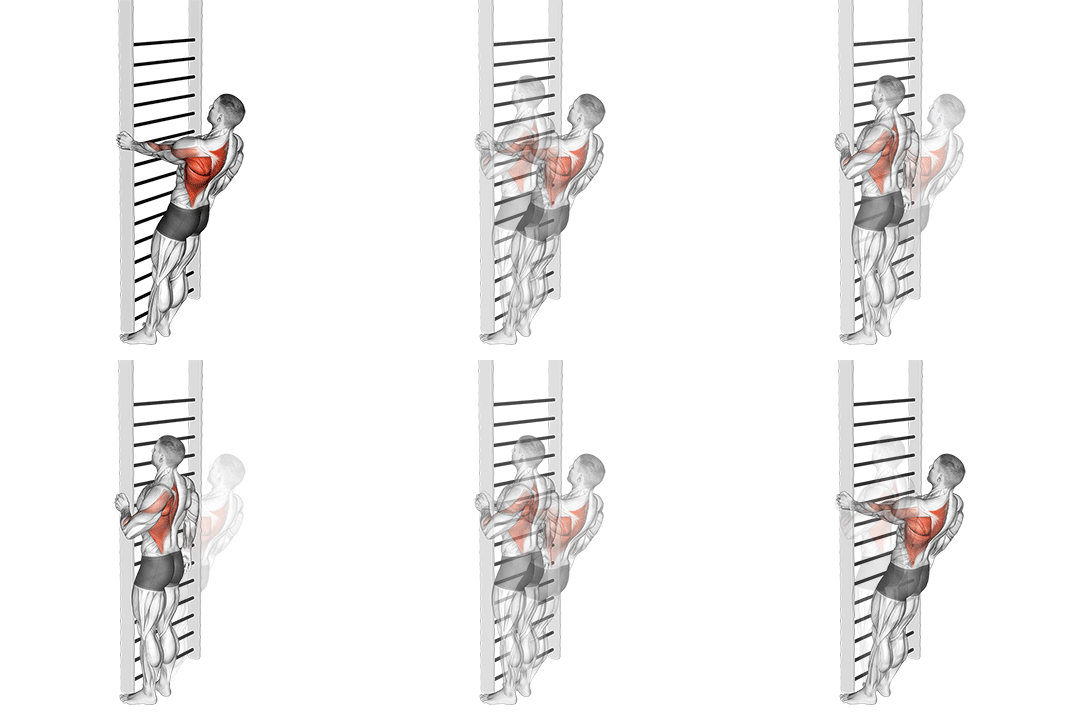
Bodyweight Squatting Row (with Towel)
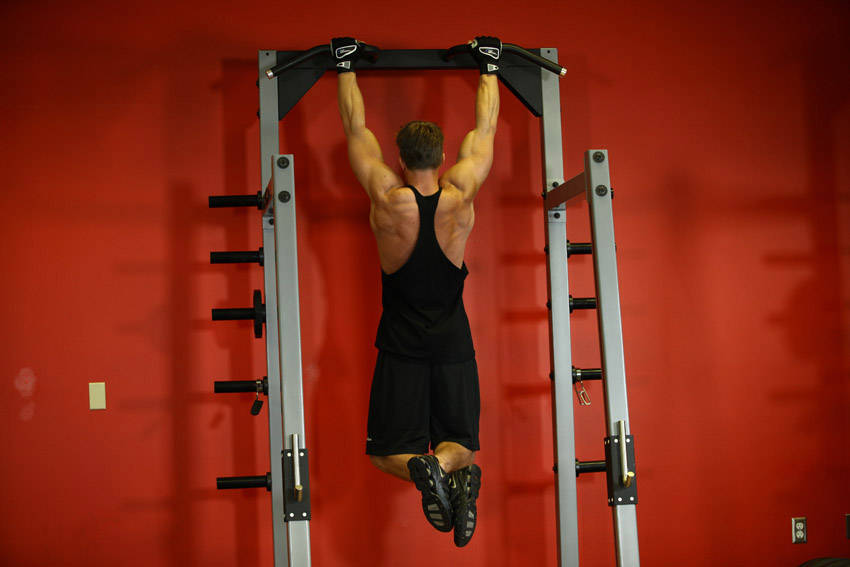
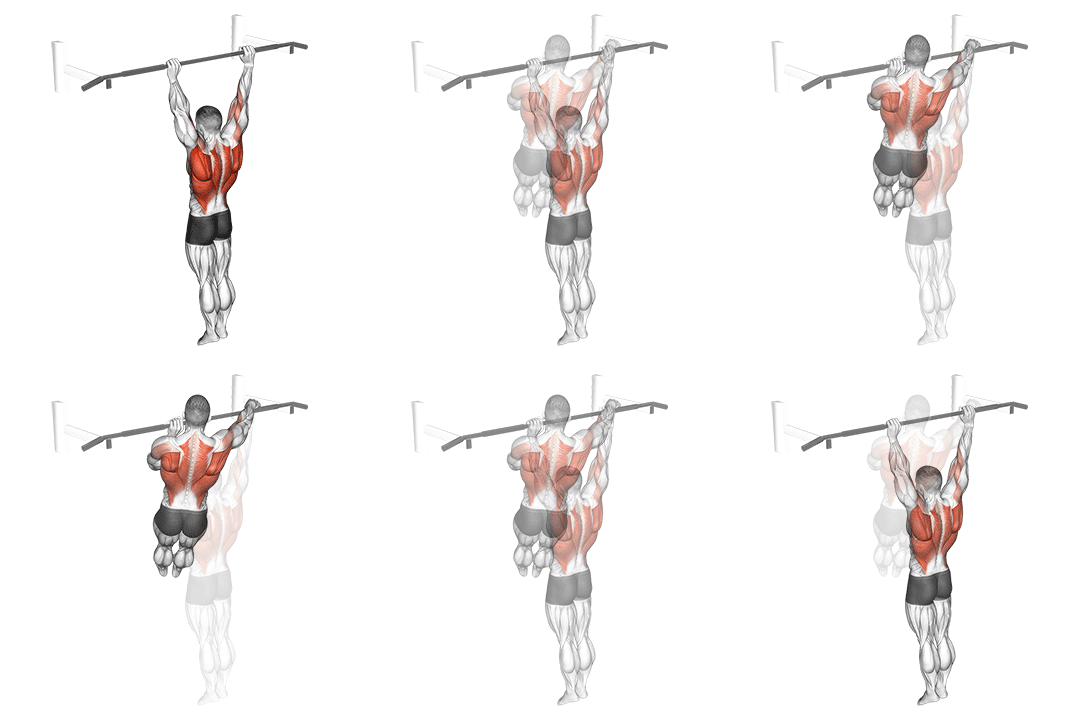
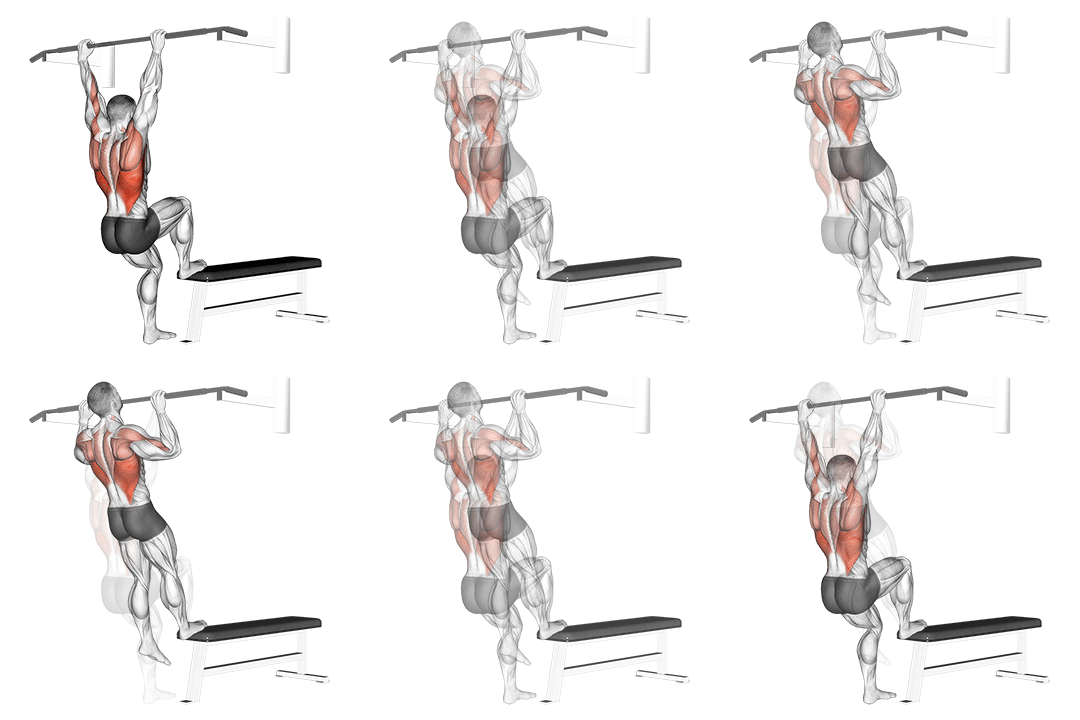
Pullups
Head-to-Head Comparison
| Attribute | Bodyweight Squatting Row (with Towel) | Pullups |
|---|---|---|
| Target Muscle |
Lats
|
Lats
|
| Body Part |
Back
|
Back
|
| Equipment |
Body-weight
|
Body-weight
|
| Difficulty |
Intermediate
|
Intermediate
|
| Movement Type |
Compound
|
Compound
|
| Secondary Muscles |
2
|
2
|
Secondary Muscles Activated
Bodyweight Squatting Row (with Towel)
Pullups
Visual Comparison
Overview
Bodyweight Squatting Row (with Towel) vs Pullups — if you want bigger, stronger lats but only have bodyweight options, which one should you pick? You’ll get a clear breakdown of muscle activation, movement mechanics, equipment needs, and progressions so you can choose based on your goals. I’ll cover technique cues (joint angles, elbow path, scapular action), rep ranges for hypertrophy and strength (6–12 reps vs 3–6+ weighted), and practical programming tips so you can apply these moves in a workout today.
Key Differences
- Both exercises target the Lats using Body-weight. The main differences are in their movement patterns and muscle activation angles.
Pros & Cons
Bodyweight Squatting Row (with Towel)
+ Pros
- Highly accessible — uses a towel and an anchor instead of a bar
- Easy intensity scaling by changing body angle and foot position
- Greater continuous mid-back (rhomboid) activation due to horizontal vector
- Comfortable on shoulders for those who struggle with overhead vertical loading
− Cons
- Harder to apply large external overload for maximal strength
- Requires a safe, load-bearing anchor — improper setup risks failure
- Can encourage rounded lumbar posture if you collapse the chest
Pullups
+ Pros
- Superior for absolute lat loading and progressive overload (add weight)
- Maximizes shoulder extension ROM and lat stretch at the bottom
- Strong carryover to vertical pulling strength and climbing
- Efficiently trains scapular depression and shoulder girdle stability
− Cons
- Higher initial strength requirement — many need regressions
- Requires a sturdy pull-up bar and overhead clearance
- Greater shoulder stress if done with poor scapular mechanics or kipping
When Each Exercise Wins
Pullups allow greater overload per rep and a full lat stretch at the bottom, which increases mechanical tension—use 6–12 reps, slow 2–3 s eccentrics, and add weight gradually. For combined hypertrophy, pair pullups with towel rows to increase time under tension and mid-back thickness.
Pullups offer the best path to raw vertical pulling strength because you can train heavy sets (3–6 reps) and add external load. The vertical force vector recruits prime movers at longer muscle lengths, improving maximal torque in shoulder extension.
Towel rows scale easily by making the torso more upright, letting you build scapular retraction and elbow control before progressing to full vertical loading. Start with 8–15 reps at a controlled tempo to build base strength.
Towel rows require minimal gear and adapt to tight spaces; you can improvise an anchor and still load the lats effectively. They’re safer for small homes where a mounted pull-up bar isn’t possible.
Frequently Asked Questions
Can I do both Bodyweight Squatting Row (with Towel) and Pullups in the same workout?
Yes — pair them as a superset or in sequence: use towel rows for higher-volume sets (8–15 reps) to pre-fatigue the mid-back, then perform 3–6 heavy pullups for strength. That order leverages time-under-tension and then maximal loading without compromising form.
Which exercise is better for beginners?
Begin with Bodyweight Squatting Row (with Towel) because you can reduce the load by standing more upright and focus on scapular mechanics. Progress to assisted pullups and then full pullups once you can do 10–15 controlled rows with strict scapular retraction.
How do the muscle activation patterns differ?
Pullups emphasize concentric torque from a stretched lat position with peak activation near the top; towel rows keep constant horizontal tension and emphasize scapular retraction and mid-back muscles earlier in the pull. The force vector (vertical vs horizontal) changes which fibers and accessory muscles dominate at different joint angles.
Can Pullups replace Bodyweight Squatting Row (with Towel)?
Pullups can replace towel rows for vertical pulling strength, but you’ll lose some horizontal-row specific mid-back activation and the easy scalability of body-angle regression. If your goal is balanced back development, include both to target different force vectors and length–tension profiles.
Expert Verdict
If your priority is raw lat strength and clear progression to heavy loads, prioritize Pullups—train them with 3–6 heavy reps for strength and 6–12 for hypertrophy, focusing on full hang to chin-over-bar ROM and controlled eccentrics. If you’re training at home, rehabbing shoulders, or building a technical foundation, use the Bodyweight Squatting Row (with Towel) to teach scapular retraction, maintain continuous tension, and scale intensity via body angle. A balanced program uses both: towel rows for volume and mid-back density, pullups for maximal overload and vertical pulling power.
Also Compare
More comparisons with Bodyweight Squatting Row (with Towel)
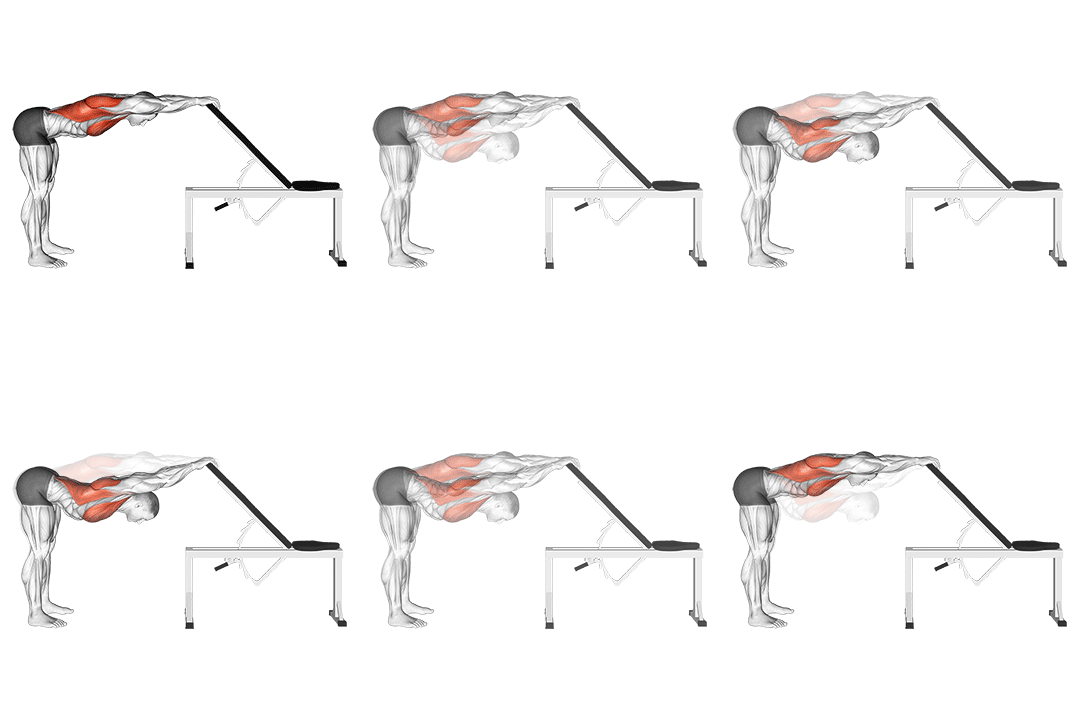
Compare More Exercises
Use our free comparison tool to analyze any two exercises head-to-head.
Compare Exercises