

Bodyweight Standing Calf Raise vs Box Jump Down With One Leg Stabilization: Complete Comparison Guid
Bodyweight Standing Calf Raise vs Box Jump Down With One Leg Stabilization — when you want stronger, more resilient lower legs you need to pick the right movement. I’ll walk you through how each exercise loads the calf complex, the secondary muscles involved, equipment and progression options, and real-world cues so you can choose the best move for your goals. You’ll get technique tips (foot placement, ankle angle, tempo), biomechanical reasoning (length-tension, force vectors, landing forces), and clear program recommendations based on muscle growth, strength, and accessibility.
Exercise Comparison
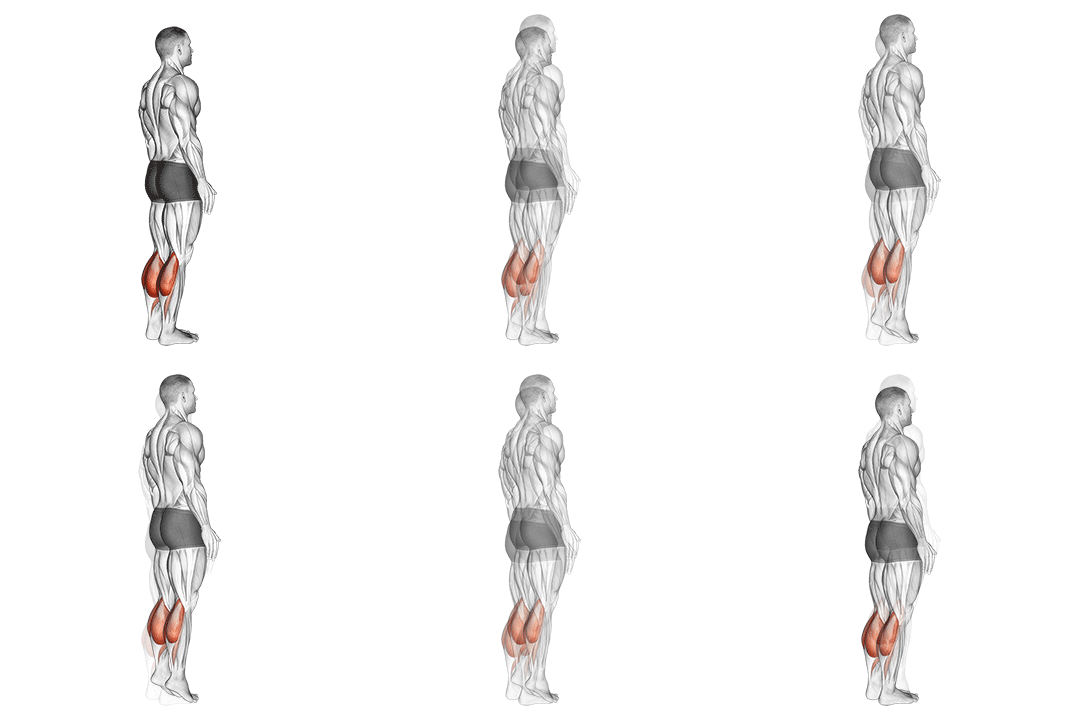
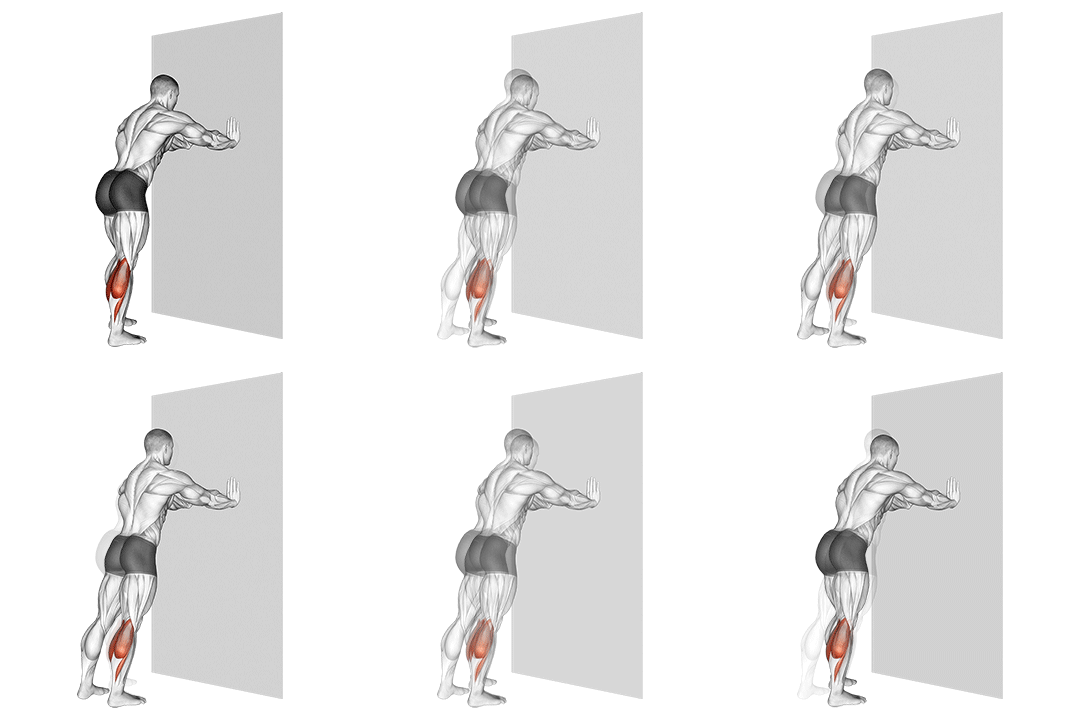
Bodyweight Standing Calf Raise
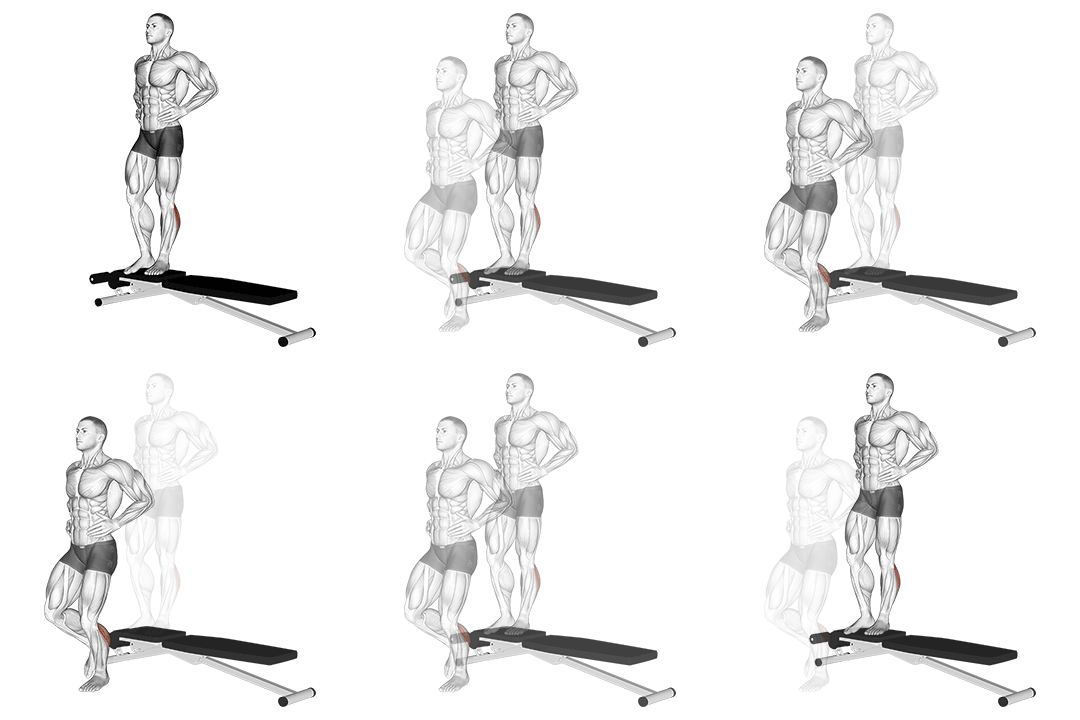
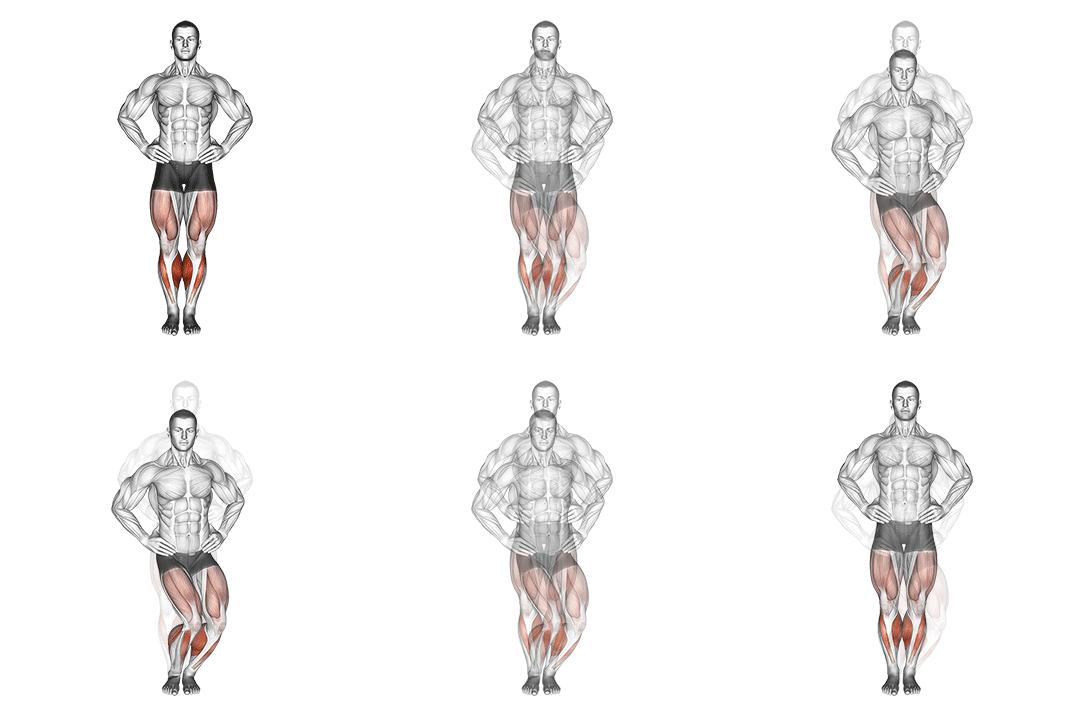
Box Jump Down With One Leg Stabilization
Head-to-Head Comparison
| Attribute | Bodyweight Standing Calf Raise | Box Jump Down With One Leg Stabilization |
|---|---|---|
| Target Muscle |
Calves
|
Calves
|
| Body Part |
Lower-legs
|
Lower-legs
|
| Equipment |
Body-weight
|
Body-weight
|
| Difficulty |
Beginner
|
Intermediate
|
| Movement Type |
Isolation
|
Compound
|
| Secondary Muscles |
2
|
3
|
Secondary Muscles Activated
Bodyweight Standing Calf Raise
Box Jump Down With One Leg Stabilization
Visual Comparison
Overview
Bodyweight Standing Calf Raise vs Box Jump Down With One Leg Stabilization — when you want stronger, more resilient lower legs you need to pick the right movement. I’ll walk you through how each exercise loads the calf complex, the secondary muscles involved, equipment and progression options, and real-world cues so you can choose the best move for your goals. You’ll get technique tips (foot placement, ankle angle, tempo), biomechanical reasoning (length-tension, force vectors, landing forces), and clear program recommendations based on muscle growth, strength, and accessibility.
Key Differences
- Bodyweight Standing Calf Raise is an isolation exercise, while Box Jump Down With One Leg Stabilization is a compound movement.
- Difficulty levels differ: Bodyweight Standing Calf Raise is beginner, while Box Jump Down With One Leg Stabilization is intermediate.
- Both exercises target the Calves using Body-weight. The main differences are in their movement patterns and muscle activation angles.
Pros & Cons
Bodyweight Standing Calf Raise
+ Pros
- Minimal equipment and space required — you can do it anywhere
- Direct isolation of plantarflexors for targeted hypertrophy
- Easy to scale via single-leg, added load, or tempo changes
- Low acute injury risk when performed with controlled ROM
− Cons
- Limited carryover to multi-joint athletic movements
- Plateaus without progressive overload or variation
- Less challenge to balance and unilateral control
Box Jump Down With One Leg Stabilization
+ Pros
- Builds unilateral stability and eccentric control under real-world loads
- Carries over to jumping and agility thanks to stretch-shortening cycle training
- Engages quads, hamstrings, and glutes for whole-limb strength
- Provides high RFD and reactive strength benefits
− Cons
- Requires a stable box, space, and baseline strength
- Higher landing impact increases injury risk if technique is poor
- Harder to quantify progressive overload for pure hypertrophy
When Each Exercise Wins
Standing calf raises give consistent time under tension and easily trackable progressive overload (8–20+ reps, added weight or slow eccentrics). That consistent isolated loading is superior for increasing calf cross-sectional area.
One-leg box jump downs train eccentric strength, unilateral force absorption, and intermuscular coordination across hip, knee, and ankle, producing functional strength gains that translate to athletic tasks.
Calf raises are low-skill, low-impact, and let you learn ankle mechanics and build baseline plantarflexor strength before introducing high-load unilateral landings.
You need little or no equipment, minimal space, and can safely load the calf with tempo, single-leg variations, or rep volume at home.
Frequently Asked Questions
Can I do both Bodyweight Standing Calf Raise and Box Jump Down With One Leg Stabilization in the same workout?
Yes. Pair them by doing calf raises earlier for targeted volume (3–4 sets of 8–20), then use box jump downs later for skill and eccentric control (2–4 sets of 3–6 per leg). Leave 1–2 minutes between higher-impact unilateral landings and heavy volume to reduce fatigue-related technique breakdown.
Which exercise is better for beginners?
Bodyweight standing calf raises are better for beginners because they require less coordination and lower impact. Start with both-feet calf raises, then progress to single-leg versions before attempting unilateral box landings.
How do the muscle activation patterns differ?
Calf raises produce long, controlled concentric-eccentric activation that maximizes time under tension on the gastrocnemius with the knee extended. Box jump downs drive high-rate eccentric activation and brief isometric stabilization of the plantarflexors while also recruiting knee and hip extensors to absorb landing forces.
Can Box Jump Down With One Leg Stabilization replace Bodyweight Standing Calf Raise?
Not completely. Box jump downs can improve functional strength and stability but provide less consistent concentric work for hypertrophy. Use box jumps as a complement for sport-specific power and keep calf raises for progressive hypertrophy and isolated strengthening.
Expert Verdict
Use bodyweight standing calf raises when your priority is targeted calf hypertrophy, accessibility, and low-risk progressive overload. Program 3–4 sets of 8–20 reps, or single-leg sets of 6–12 for added intensity, cue heels up, drive through the big toe, and control the descent to 20–30 degrees dorsiflexion. Choose box jump down with one leg stabilization when you want unilateral eccentric strength, reactive control, and athletic transfer — start with low heights (12 inches), focus on soft knee flexion and ankle stiffness, and work 3–6 controlled reps per leg. Both have a place: calf raises for volume and isolated growth, box jump downs for function and resilience.
Also Compare
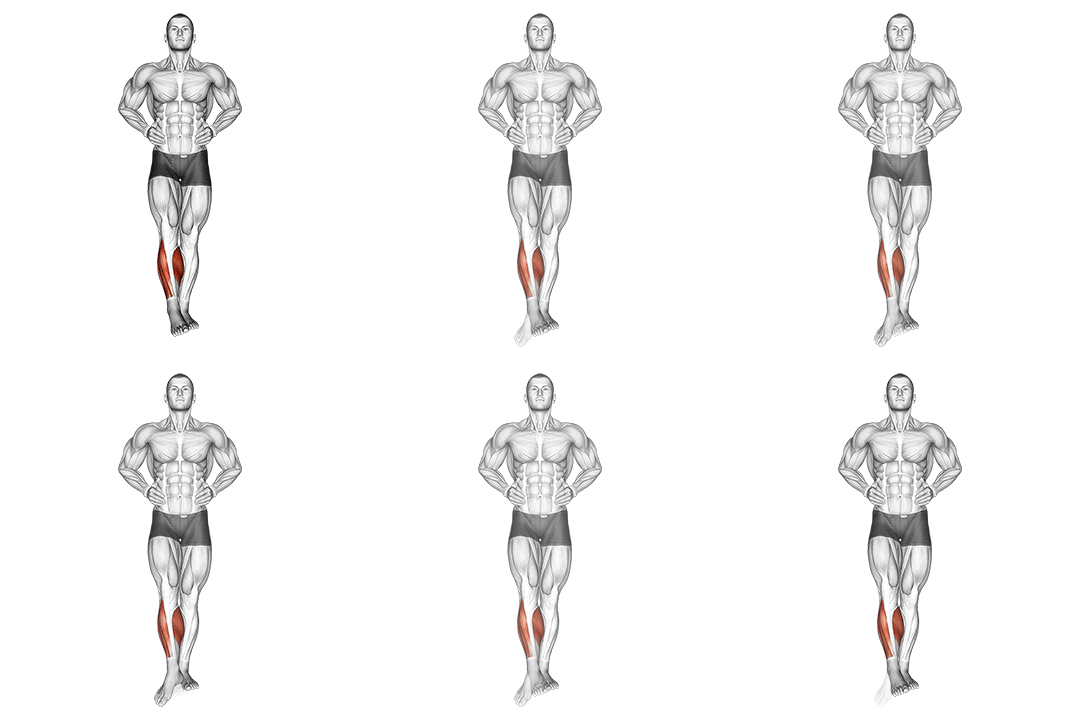
More comparisons with Bodyweight Standing Calf Raise
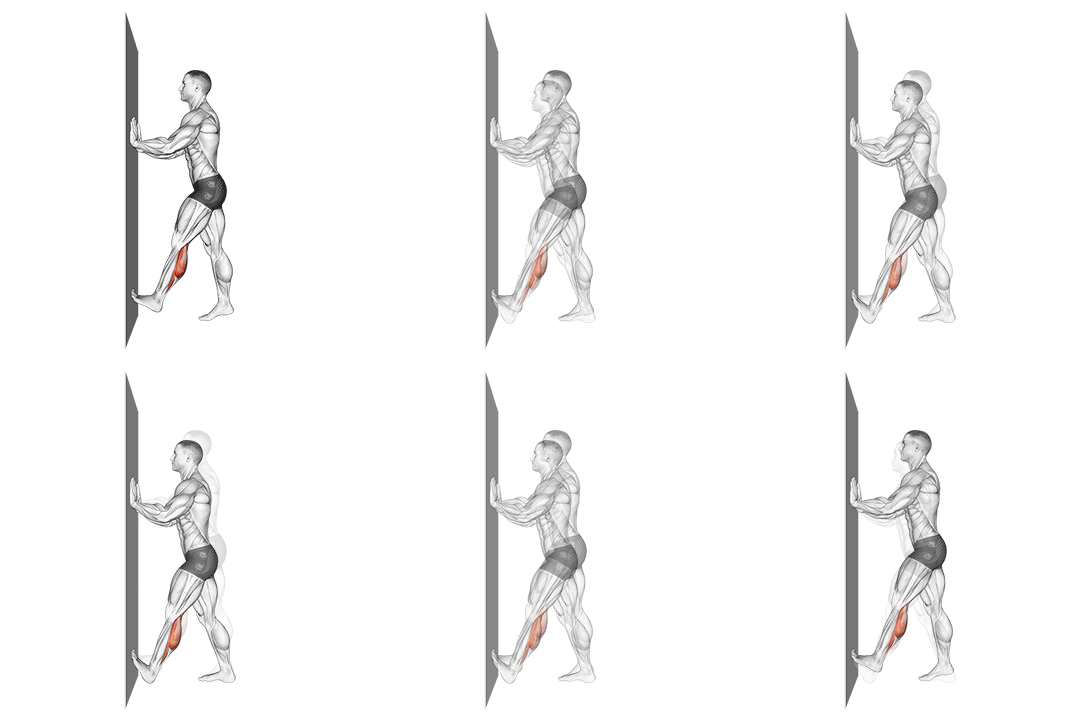
More comparisons with Box Jump Down With One Leg Stabilization
Compare More Exercises
Use our free comparison tool to analyze any two exercises head-to-head.
Compare Exercises