

Bodyweight Standing Calf Raise vs Calf Push Stretch With Hands Against Wall: Complete Comparison Gui
Bodyweight Standing Calf Raise vs Calf Push Stretch With Hands Against Wall: you’ll get a clear read on how each move loads the calf and which one matches your goals. I’ll break down technique cues (ankle alignment, knee angle, tempo), the biomechanics behind length-tension and force vectors, rep ranges (8–20+), and practical progressions. Read what to emphasize for muscle growth, ankle strength, or soleus flexibility, plus safety tips so you can pick the right exercise for training at home or in the gym.
Exercise Comparison
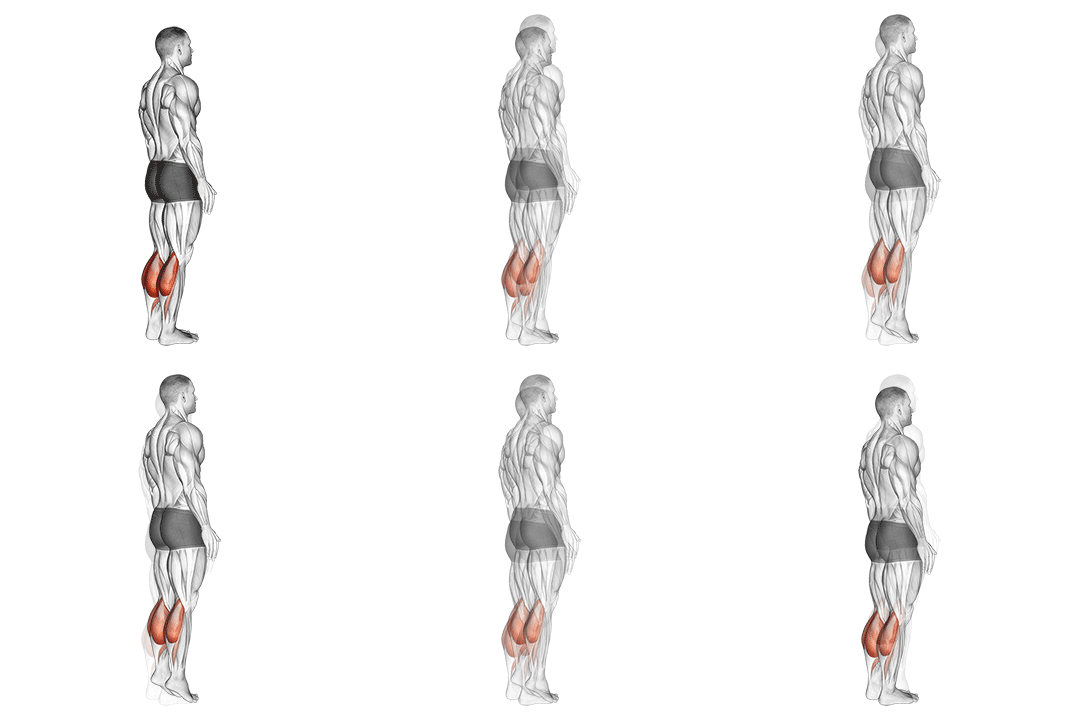
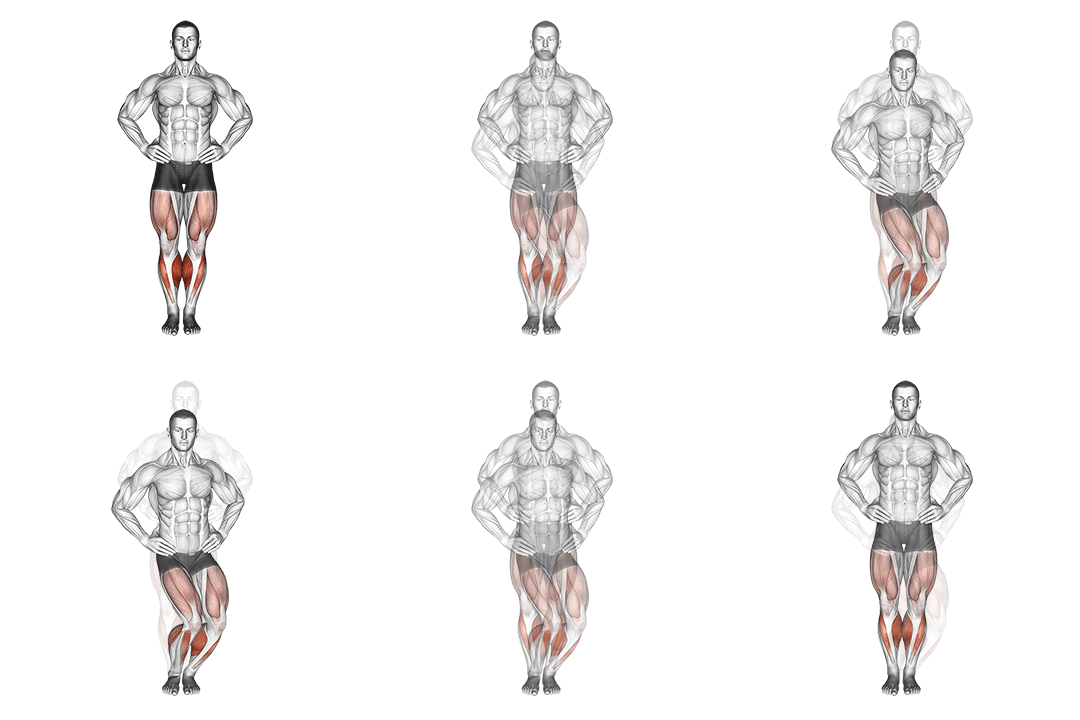
Bodyweight Standing Calf Raise
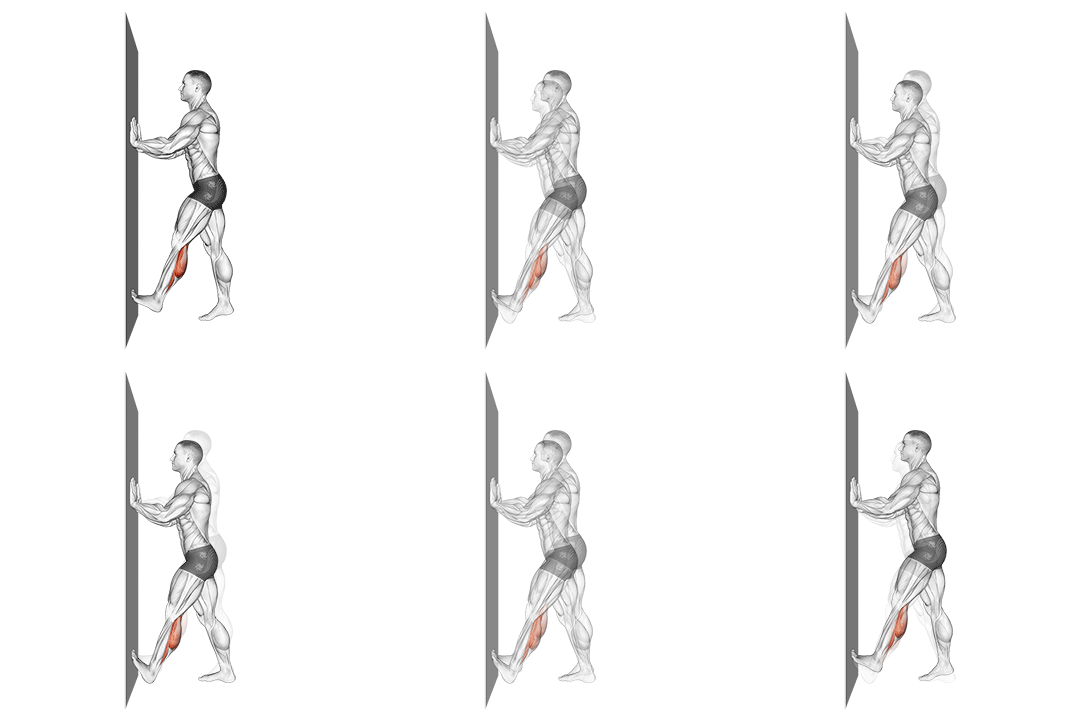
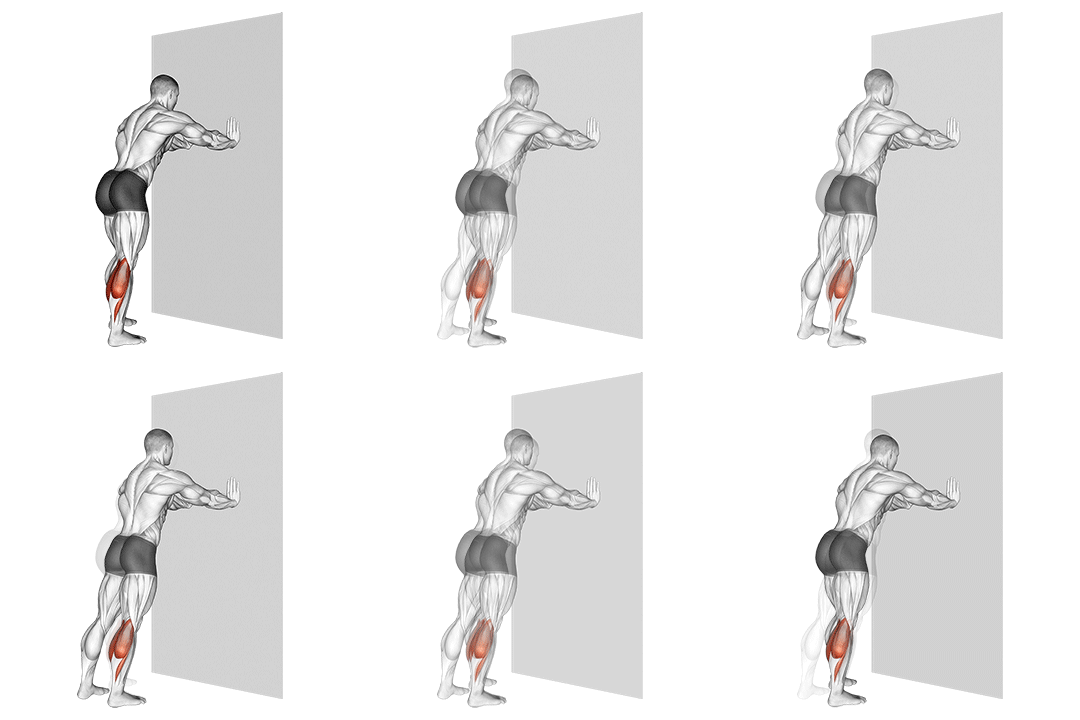
Calf Push Stretch With Hands Against Wall
Head-to-Head Comparison
| Attribute | Bodyweight Standing Calf Raise | Calf Push Stretch With Hands Against Wall |
|---|---|---|
| Target Muscle |
Calves
|
Calves
|
| Body Part |
Lower-legs
|
Lower-legs
|
| Equipment |
Body-weight
|
Body-weight
|
| Difficulty |
Beginner
|
Beginner
|
| Movement Type |
Isolation
|
Isolation
|
| Secondary Muscles |
2
|
1
|
Secondary Muscles Activated
Bodyweight Standing Calf Raise
Calf Push Stretch With Hands Against Wall
Visual Comparison
Overview
Bodyweight Standing Calf Raise vs Calf Push Stretch With Hands Against Wall: you’ll get a clear read on how each move loads the calf and which one matches your goals. I’ll break down technique cues (ankle alignment, knee angle, tempo), the biomechanics behind length-tension and force vectors, rep ranges (8–20+), and practical progressions. Read what to emphasize for muscle growth, ankle strength, or soleus flexibility, plus safety tips so you can pick the right exercise for training at home or in the gym.
Key Differences
- Both exercises target the Calves using Body-weight. The main differences are in their movement patterns and muscle activation angles.
Pros & Cons
Bodyweight Standing Calf Raise
+ Pros
- Direct concentric-eccentric loading ideal for building strength and muscle growth
- Easy to progress: single-leg, added weight, or elevated ROM
- Improves push-off power and ankle stability through dynamic movement
- Minimal space and no fixed surface required
− Cons
- Less emphasis on long-length stretch and mobility
- Can overload the Achilles if you increase load too quickly
- Balance demands may limit reps for some beginners
Calf Push Stretch With Hands Against Wall
+ Pros
- Places calf under longer muscle length for mobility and sustained tension
- Hands-on-wall setup gives excellent balance and alignment feedback
- Engages hamstrings and posterior chain as stabilizers
- Low-impact option for controlled eccentric/isometric loading
− Cons
- Harder to progressively overload for hypertrophy without external load
- Risk of overstretching if you push too deep into dorsiflexion
- Less concentric peak force, so less optimal for pure strength gains
When Each Exercise Wins
Standing calf raises let you apply concentric and eccentric overload, increase time under tension, and add progressive resistance (single-leg, weight). Aim for 8–12 reps with 2–3s eccentrics to stimulate muscle growth.
Strength benefits from producing high concentric force against a vertical load vector; standing raises (and loaded variations) allow you to push heavier loads and train peak plantarflexion torque more effectively.
The hands-on-wall variation gives stability and teaches end-range control, reducing balance constraints so a beginner can safely explore dorsiflexion, ankle control, and hamstring engagement.
Requires no wall and can be performed anywhere with limited space; you can scale intensity with single-leg variations or household weights, making it a more flexible home option.
Frequently Asked Questions
Can I do both Bodyweight Standing Calf Raise and Calf Push Stretch With Hands Against Wall in the same workout?
Yes. Start with standing calf raises as your primary strength stimulus (8–12 reps or single-leg sets), then finish with 1–3 sets of the wall push stretch for 20–40 seconds to increase length-tension and mobility. That combination reinforces strength while reducing stiffness.
Which exercise is better for beginners?
The Calf Push Stretch With Hands Against Wall is friendlier for beginners because the wall provides balance and alignment cues, letting you control dorsiflexion depth safely while learning ankle mechanics.
How do the muscle activation patterns differ?
Standing calf raises produce high concentric and eccentric activation—shortening then lengthening under load—favoring gastrocnemius when the knee is straight. The wall push stretch increases time under tension at longer muscle lengths and emphasizes eccentric/isometric control, shifting emphasis toward mobility and sustained soleus/gastrocnemius strain.
Can Calf Push Stretch With Hands Against Wall replace Bodyweight Standing Calf Raise?
Not if your goal is maximal strength or hypertrophy. The push stretch improves flexibility and adds isometric/eccentric stress, but it’s harder to progressively overload concentrically. Keep the push stretch for mobility and recovery, and use standing raises as your primary strength builder.
Expert Verdict
Use the Bodyweight Standing Calf Raise when your priority is calf muscle development or strength. Its vertical force vector, concentric-eccentric cycle, and easy progression (single-leg, added load, elevated heel) make it the primary choice for building plantarflexion power. Choose the Calf Push Stretch With Hands Against Wall when you want to improve ankle mobility, increase time under tension at long muscle lengths, or practice controlled eccentric/isometric loading with more balance support. For most trainees, alternate both: prioritize standing raises for 2–3 sessions per week for strength/hypertrophy (8–12 reps or heavy single-leg sets), and add the wall push stretch for mobility sets or as a warm-up (2–3 sets of 20–30s holds).
Also Compare
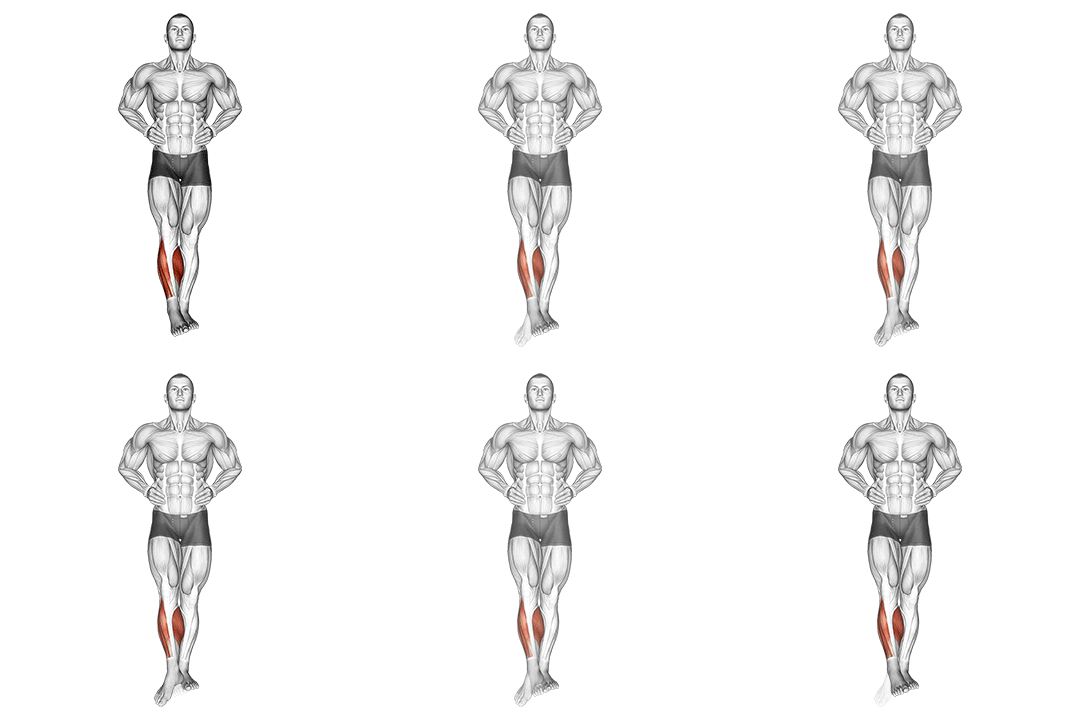
More comparisons with Bodyweight Standing Calf Raise
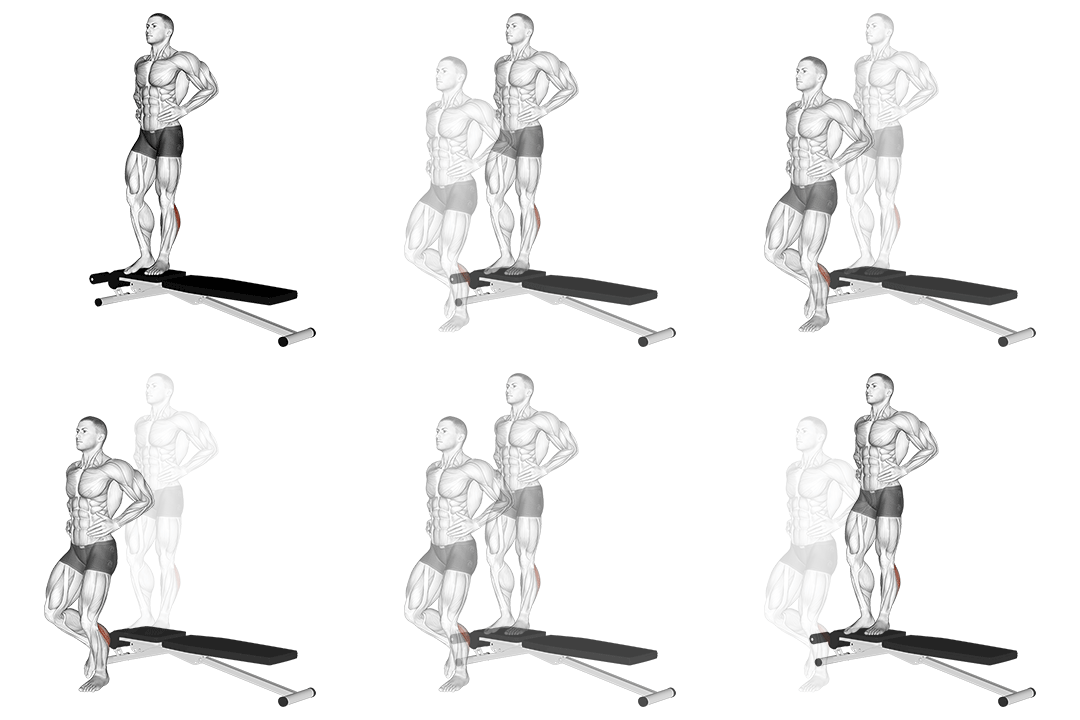
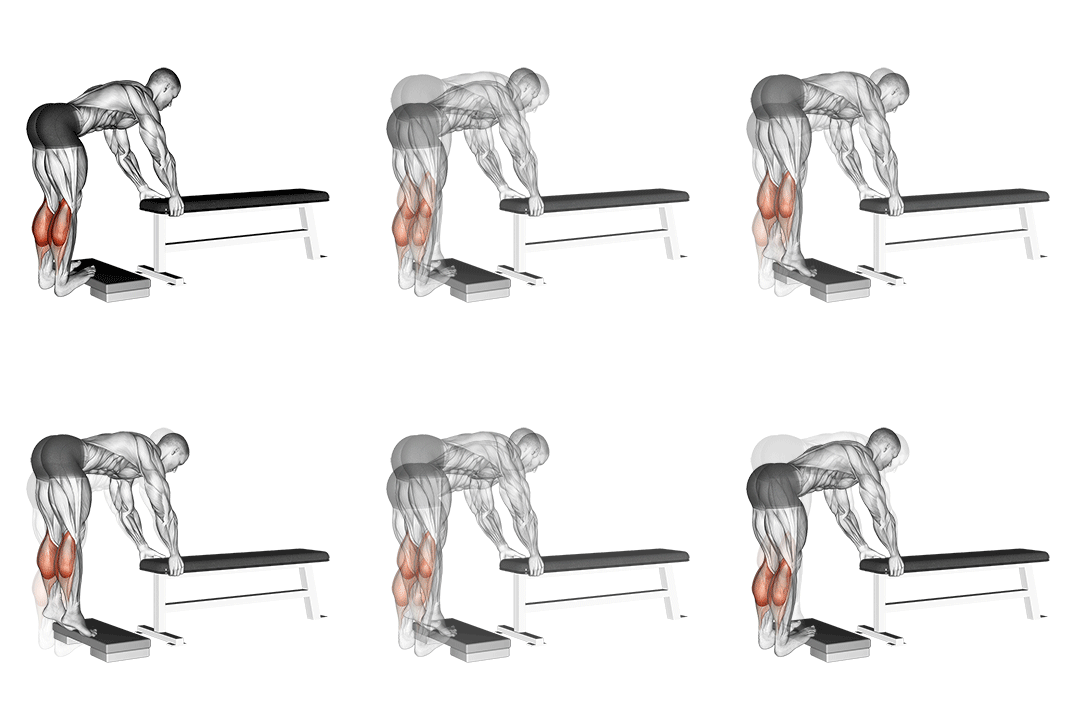
More comparisons with Calf Push Stretch With Hands Against Wall
Compare More Exercises
Use our free comparison tool to analyze any two exercises head-to-head.
Compare Exercises