

Bodyweight Standing Calf Raise vs Calf Stretch With Hands Against Wall: Complete Comparison Guide
Bodyweight Standing Calf Raise vs Calf Stretch With Hands Against Wall — you probably want stronger, more resilient calves or better ankle mobility. In this guide I walk you through how each move loads the gastrocnemius and soleus, what equipment (if any) you need, clear technique cues, and how to use them in a workout. You’ll get rep ranges, recommended hold times, and simple progressions so you can pick the right exercise for muscle growth, strength, or mobility.
Exercise Comparison
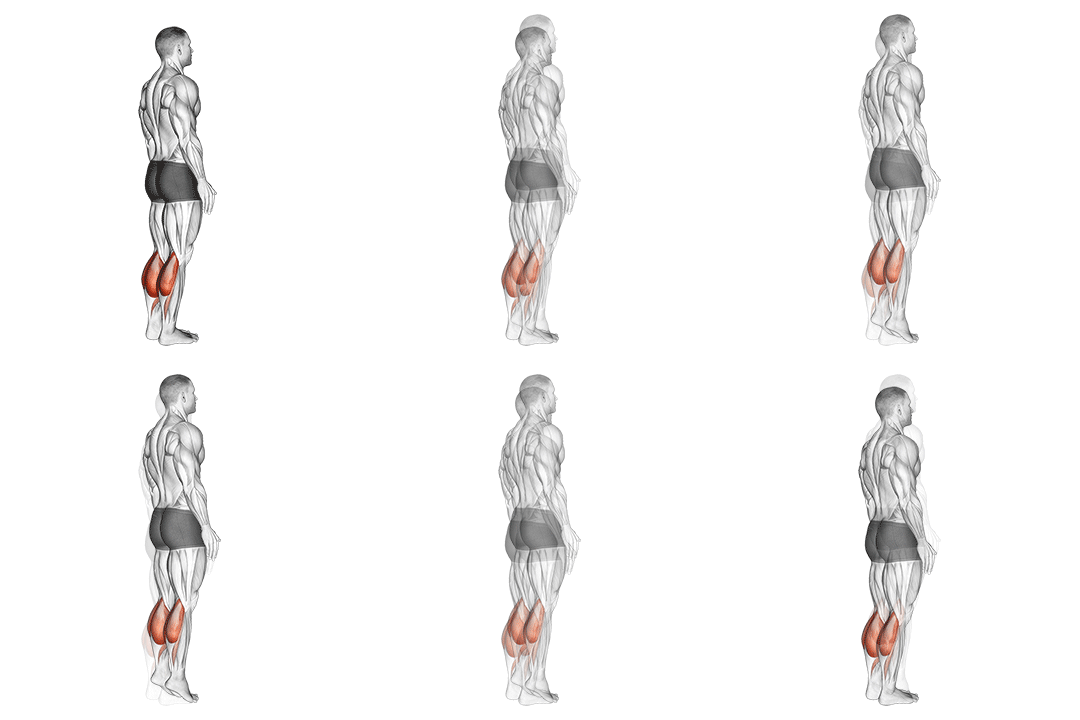
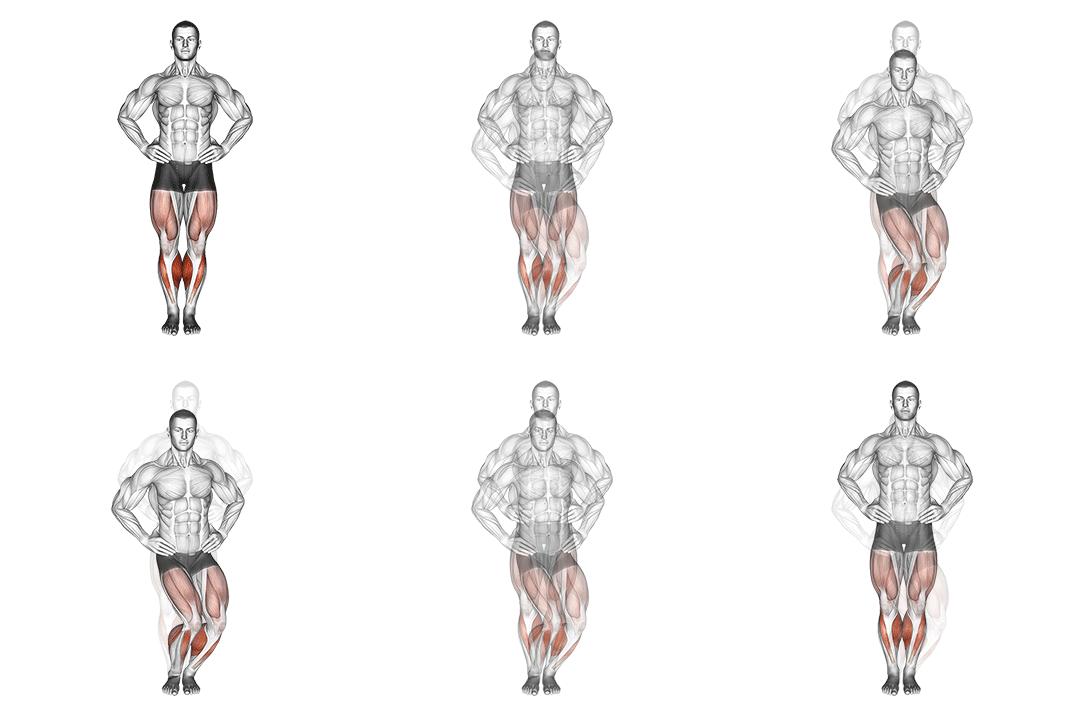
Bodyweight Standing Calf Raise
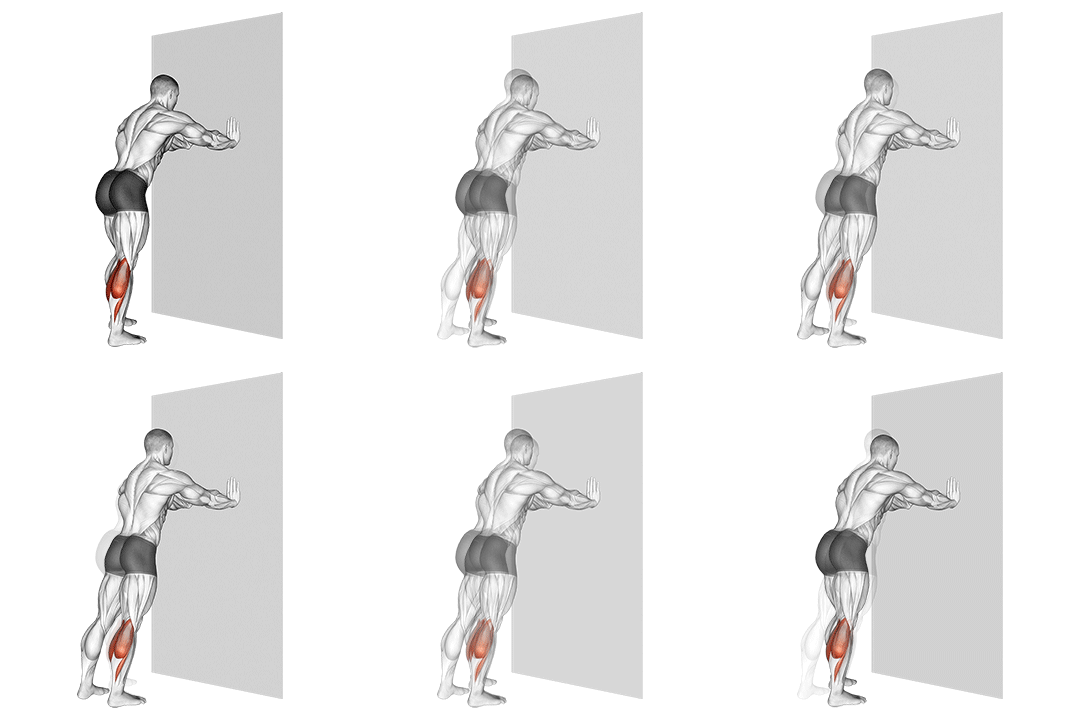
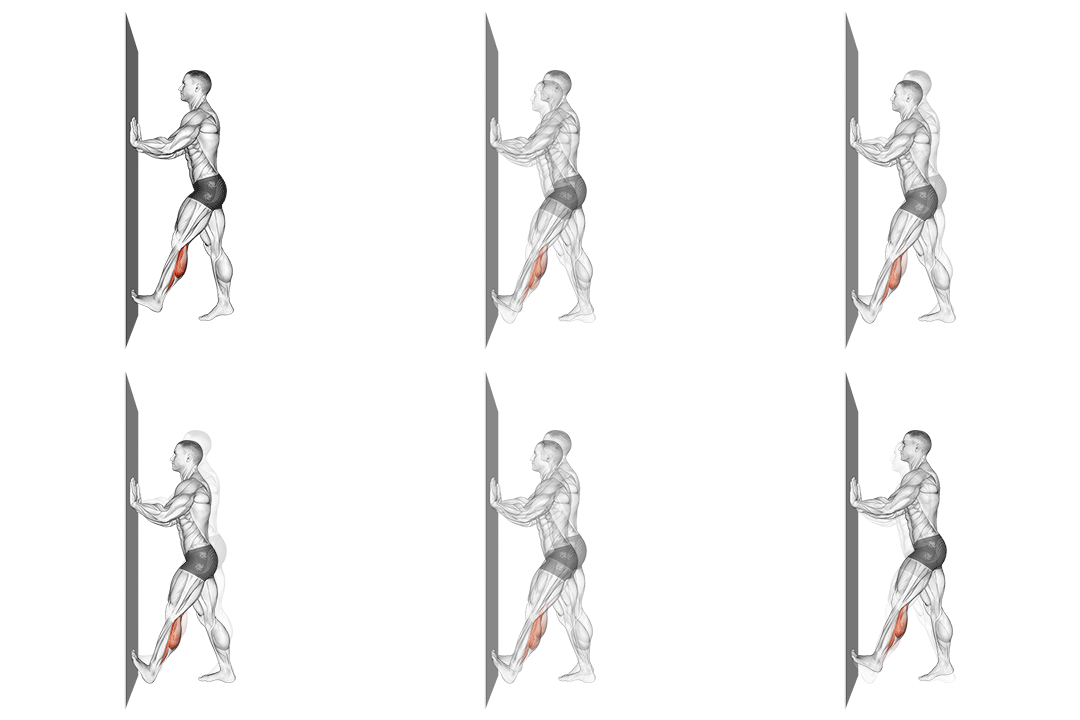
Calf Stretch With Hands Against Wall
Head-to-Head Comparison
| Attribute | Bodyweight Standing Calf Raise | Calf Stretch With Hands Against Wall |
|---|---|---|
| Target Muscle |
Calves
|
Calves
|
| Body Part |
Lower-legs
|
Lower-legs
|
| Equipment |
Body-weight
|
Body-weight
|
| Difficulty |
Beginner
|
Beginner
|
| Movement Type |
Isolation
|
Isolation
|
| Secondary Muscles |
2
|
1
|
Secondary Muscles Activated
Bodyweight Standing Calf Raise
Calf Stretch With Hands Against Wall
Visual Comparison
Overview
Bodyweight Standing Calf Raise vs Calf Stretch With Hands Against Wall — you probably want stronger, more resilient calves or better ankle mobility. In this guide I walk you through how each move loads the gastrocnemius and soleus, what equipment (if any) you need, clear technique cues, and how to use them in a workout. You’ll get rep ranges, recommended hold times, and simple progressions so you can pick the right exercise for muscle growth, strength, or mobility.
Key Differences
- Both exercises target the Calves using Body-weight. The main differences are in their movement patterns and muscle activation angles.
Pros & Cons
Bodyweight Standing Calf Raise
+ Pros
- Builds concentric and eccentric calf strength and muscle growth
- Easy to progress (single-leg, added weight, tempo)
- Improves ankle plantarflexion power and balance
- Requires minimal equipment and space
− Cons
- Higher mechanical load increases risk of Achilles strain if done too aggressively
- Requires balance and some coordination — harder for those with proprioceptive deficits
- Limited soleus emphasis unless knee is bent or tempo adjusted
Calf Stretch With Hands Against Wall
+ Pros
- Excellent for increasing ankle dorsiflexion and muscle length-tension range
- Very low impact and easy for absolute beginners
- Can be adjusted to emphasize gastrocnemius (knee straight) or soleus (knee bent)
- Minimal setup and very safe when done with controlled body position
− Cons
- Does not provide sufficient mechanical overload for strength or hypertrophy
- Benefits are largely passive (stretching) rather than strengthening
- Hard to quantify progression beyond hold time and slight angle changes
When Each Exercise Wins
Standing calf raises create active tension and time-under-tension necessary for muscle growth. Use 3–4 sets of 8–20 reps, controlled 2–3s eccentrics, and progress to single-leg or loaded variations to drive hypertrophy.
Strength requires force production against resistance; standing raises allow progressive overload (added weight or slow eccentrics). Aim for lower-rep strength blocks (4–8 reps with added load) or heavy single-leg sets for maximal force adaptations.
The wall stretch is simpler to perform and teaches ankle range control with minimal load, reducing injury risk. Hold 20–45 seconds per rep and focus on getting 10°–20° dorsiflexion without heel lift before progressing.
Standing calf raises require no special anchor and work well on stairs or floor, giving both strength and endurance options at home. They’re versatile: increase reps, add a slow tempo, or do single-leg sets to challenge yourself.
Frequently Asked Questions
Can I do both Bodyweight Standing Calf Raise and Calf Stretch With Hands Against Wall in the same workout?
Yes — pair them strategically. Do the wall stretch as a warm-up to restore dorsiflexion (2×30s) and follow with standing calf raises for strength or hypertrophy. Finish with another short stretch to modulate muscle tone if needed.
Which exercise is better for beginners?
Calf Stretch With Hands Against Wall is better for absolute beginners because it teaches ankle mechanics and increases mobility with very low load. After achieving stable dorsiflexion and heel contact, progress to standing calf raises for strength work.
How do the muscle activation patterns differ?
Standing calf raises produce active concentric and eccentric activation of gastrocnemius and soleus, with higher EMG during loaded contractions. The wall stretch increases passive tension by lengthening the muscle-tendon unit and reduces active EMG; soleus contribution rises when the knee is flexed about 30°.
Can Calf Stretch With Hands Against Wall replace Bodyweight Standing Calf Raise?
No — the stretch cannot replace the mechanical overload needed for strength or hypertrophy. Use the wall stretch to improve range of motion and complement standing raises, but rely on loaded or bodyweight raises to build muscle and force.
Expert Verdict
Use Bodyweight Standing Calf Raise when your priority is strength or muscle growth: it provides active concentric and eccentric loading, easy progression (single-leg, added weight), and direct activation of gastrocnemius and ankle stabilizers. Use Calf Stretch With Hands Against Wall when your goal is mobility, restoring ankle dorsiflexion, or easing into calf work — hold the stretch 20–45 seconds, repeat 2–4 times, and switch to a bent-knee variation to emphasize the soleus. For a complete lower-leg program, combine both: prioritize standing raises in strength phases (8–20 reps or loaded 4–8 reps), and add wall stretches as a warm-up/cool-down to maintain length-tension balance and reduce injury risk.
Also Compare
More comparisons with Bodyweight Standing Calf Raise
More comparisons with Calf Stretch With Hands Against Wall
Compare More Exercises
Use our free comparison tool to analyze any two exercises head-to-head.
Compare Exercises