

Bodyweight Standing Calf Raise vs Circles Knee Stretch: Complete Comparison Guide
Bodyweight Standing Calf Raise vs Circles Knee Stretch — which should you use to build stronger, more resilient calves? You’ll get a direct comparison of primary muscle activation, secondary muscle involvement, equipment needs, technique cues, and clear recommendations for hypertrophy, strength, beginners, and home workouts. I’ll break down biomechanics (length-tension, force vectors), give rep/tempo ranges you can use today (8–20 reps, 2–3 second eccentrics), and show when each movement earns the win so you can pick the right exercise for your goals.
Exercise Comparison
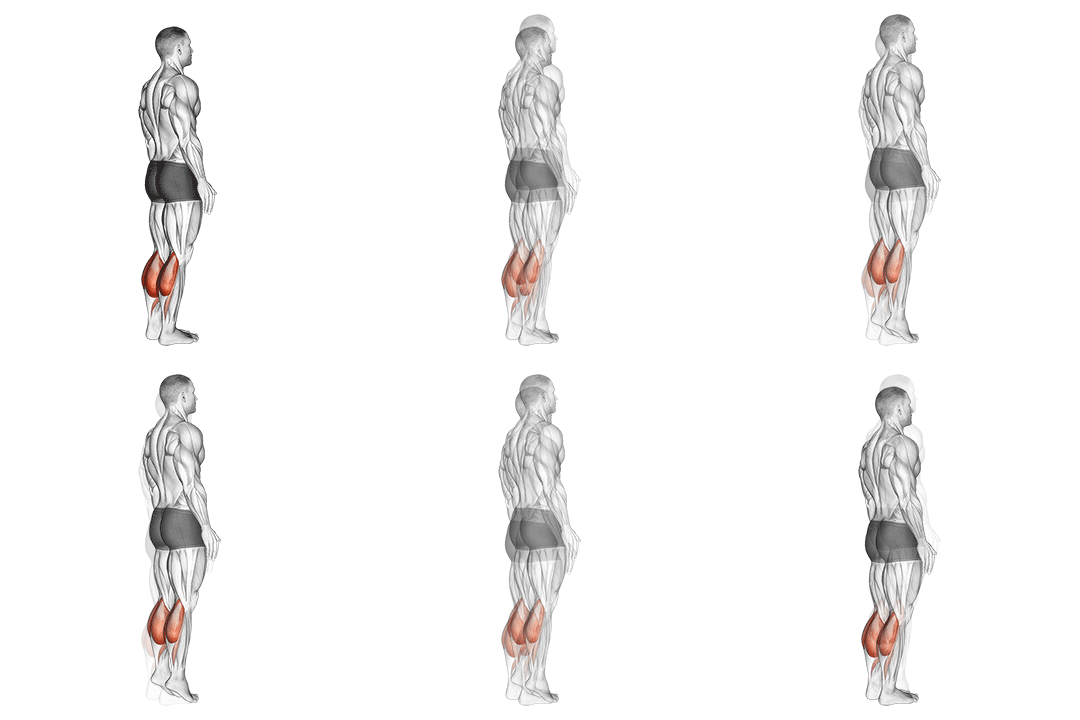
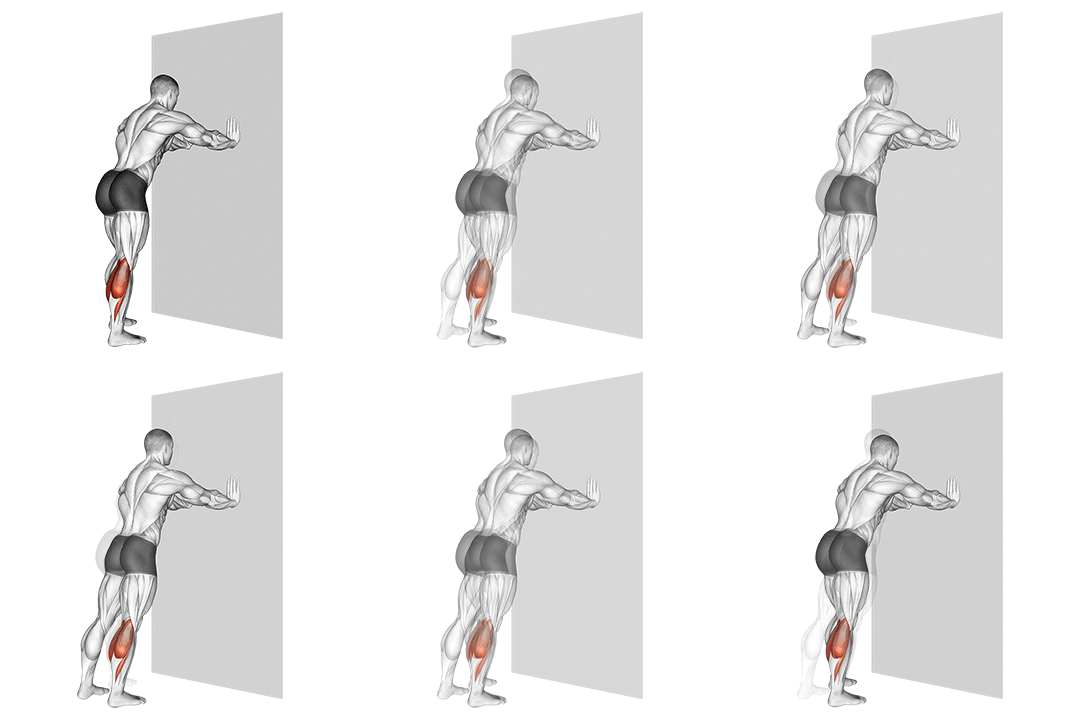
Bodyweight Standing Calf Raise
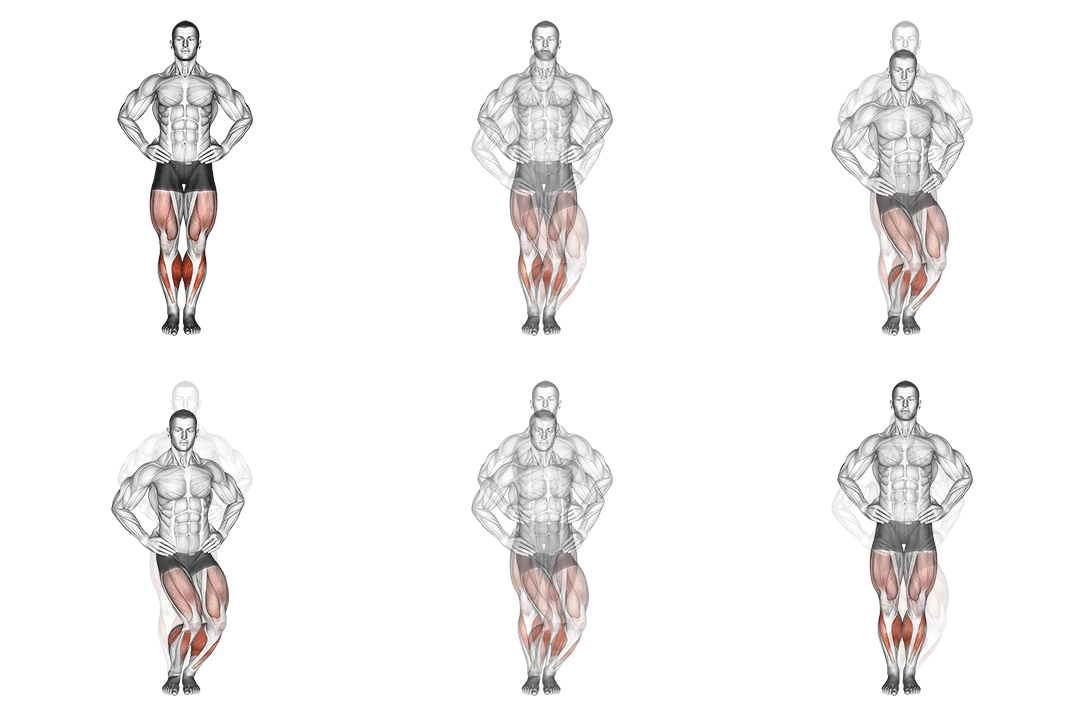
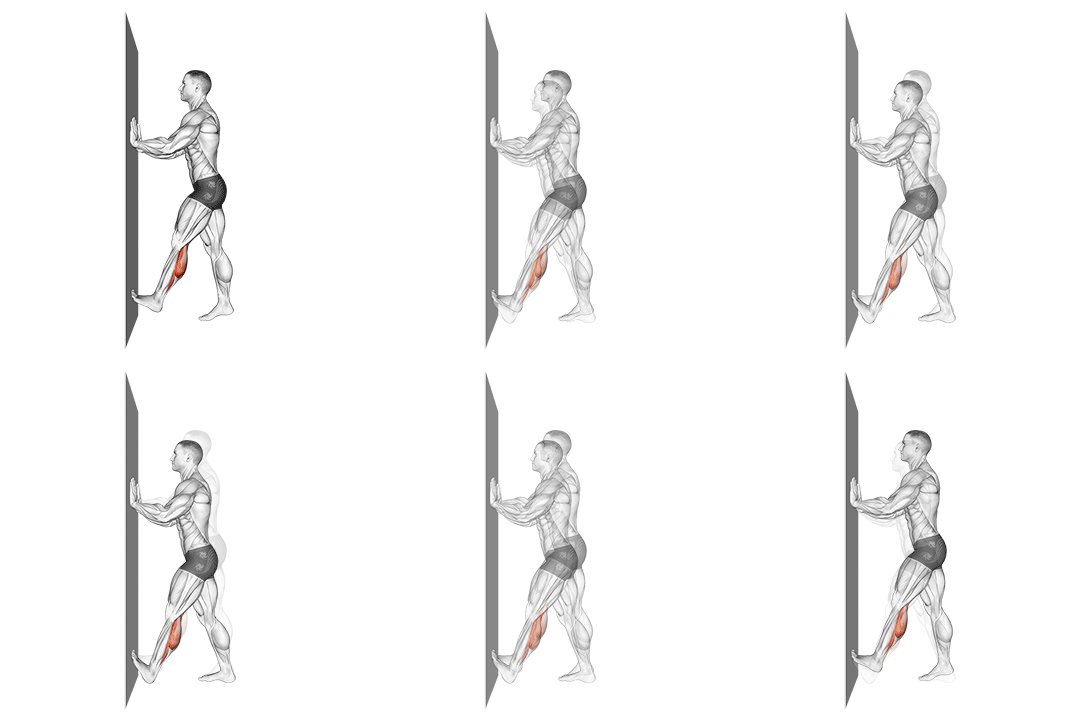
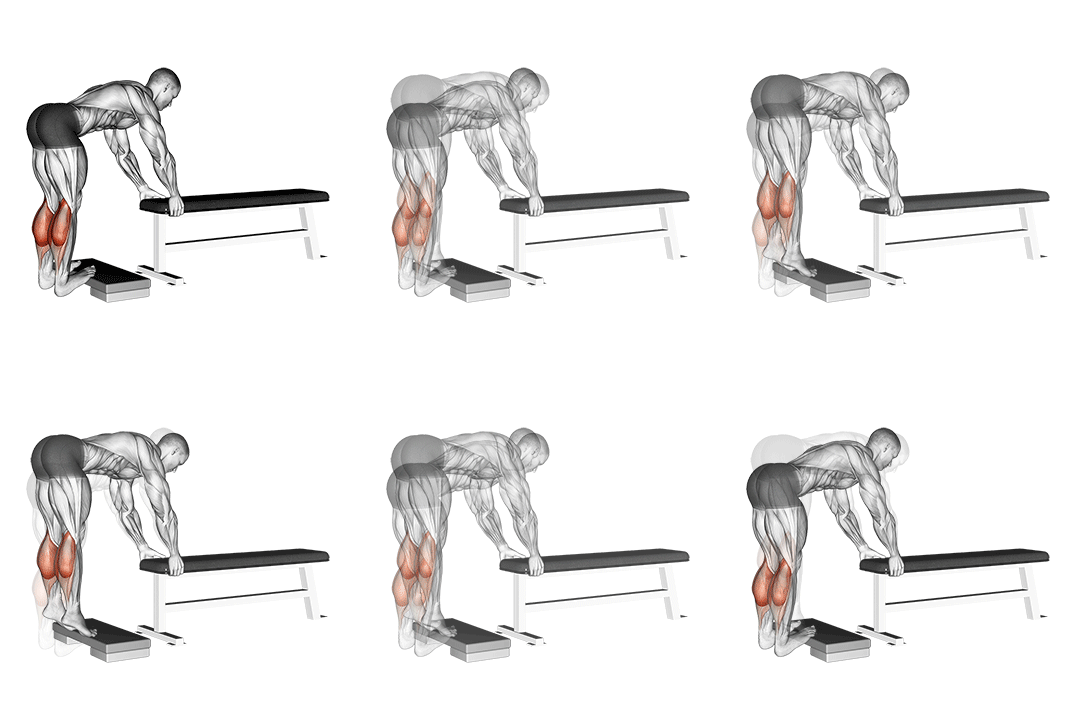
Circles Knee Stretch
Head-to-Head Comparison
| Attribute | Bodyweight Standing Calf Raise | Circles Knee Stretch |
|---|---|---|
| Target Muscle |
Calves
|
Calves
|
| Body Part |
Lower-legs
|
Lower-legs
|
| Equipment |
Body-weight
|
Body-weight
|
| Difficulty |
Beginner
|
Beginner
|
| Movement Type |
Isolation
|
Isolation
|
| Secondary Muscles |
2
|
2
|
Secondary Muscles Activated
Bodyweight Standing Calf Raise
Circles Knee Stretch
Visual Comparison
Overview
Bodyweight Standing Calf Raise vs Circles Knee Stretch — which should you use to build stronger, more resilient calves? You’ll get a direct comparison of primary muscle activation, secondary muscle involvement, equipment needs, technique cues, and clear recommendations for hypertrophy, strength, beginners, and home workouts. I’ll break down biomechanics (length-tension, force vectors), give rep/tempo ranges you can use today (8–20 reps, 2–3 second eccentrics), and show when each movement earns the win so you can pick the right exercise for your goals.
Key Differences
- Both exercises target the Calves using Body-weight. The main differences are in their movement patterns and muscle activation angles.
Pros & Cons
Bodyweight Standing Calf Raise
+ Pros
- Simple movement pattern with fast learning curve
- Easy to progressively overload (single-leg, added weight)
- Directly targets gastrocnemius with clear concentric/eccentric phases
- Requires almost no space or equipment
− Cons
- Limited multi-joint carryover — mostly isolation at the ankle
- Can be boring for endurance without variations
- If done with poor ankle mobility, risks Achilles strain
Circles Knee Stretch
+ Pros
- Adds multi-planar control and mobility to calf training
- Involves hamstrings and quads as stabilizers, improving joint coordination
- Longer time-under-tension and continuous tension through the circle
- Useful for rehab, mobility, and improving ankle tracking
− Cons
- Harder to add heavy progressive overload
- Requires more coordination and space than a simple raise
- Risk of knee stress if circles are large or uncontrolled
When Each Exercise Wins
Standing raises give clearer options to increase mechanical tension (higher reps, single-leg, added load) and provide strong concentric/eccentric cycles that drive muscle growth through progressive overload.
You can increase force production more directly by adding external load or using unilateral variations, creating higher peak force through the ankle plantarflexors compared with the low-load, rotational nature of the Circles Knee Stretch.
Circles Knee Stretch teaches multi-joint coordination, increases ankle mobility, and places less acute peak force on the Achilles, making it a gentler introduction to calf work while training knee stabilizers.
Standing raises need minimal room or props, are easy to scale, and can be performed on stairs or flat floor, making them the superior pick for cramped home setups.
Frequently Asked Questions
Can I do both Bodyweight Standing Calf Raise and Circles Knee Stretch in the same workout?
Yes. Start with standing calf raises for heavy, high-tension sets (8–20 reps) to prioritize strength or hypertrophy, then finish with Circles Knee Stretch for mobility and additional time under tension. This pairing combines mechanical overload with improved ankle and knee coordination.
Which exercise is better for beginners?
For pure simplicity the standing calf raise is easiest to learn, but Circles Knee Stretch is often better for absolute beginners needing mobility and coordination training. If you lack ankle dorsiflexion, do the circles first to prime movement quality, then add basic standing raises.
How do the muscle activation patterns differ?
Standing raises produce phasic concentric contractions of gastrocnemius and sizable eccentric control by soleus, with clear peak force at top of the raise. Circles Knee Stretch uses continuous, lower-amplitude plantarflexion with more co-contraction of hamstrings and quads to control knee rotation and limb trajectory, increasing time-under-tension but lowering peak plantarflexor force.
Can Circles Knee Stretch replace Bodyweight Standing Calf Raise?
Not fully. Circles Knee Stretch is a strong supplemental drill for mobility and endurance, but it lacks the straightforward progressive overload potential of standing raises needed for maximal muscle growth or strength. Use circles alongside raises rather than as a direct replacement when hypertrophy or strength is the goal.
Expert Verdict
Use Bodyweight Standing Calf Raise as your primary calf-builder when your goal is muscle growth or strength: it creates clear, repeatable loading parameters (8–20 reps, single-leg progressions, added weight) and emphasizes gastrocnemius force production through full plantarflexion. Choose Circles Knee Stretch when your priority is ankle mobility, joint coordination, or low-load endurance — it increases time under tension, recruits hamstrings/quads as stabilizers, and improves multi-planar control. For balanced development, include standing raises for progressive overload and add circles as a supplemental mobility/coordination drill 1–2 times weekly.
Also Compare
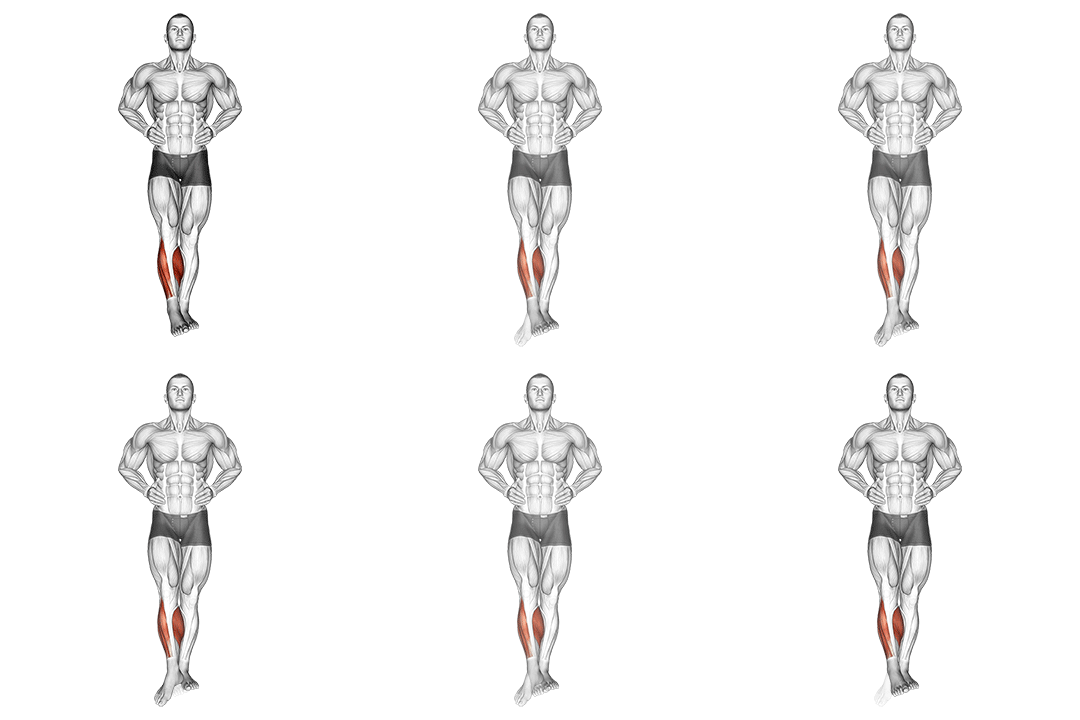
More comparisons with Bodyweight Standing Calf Raise
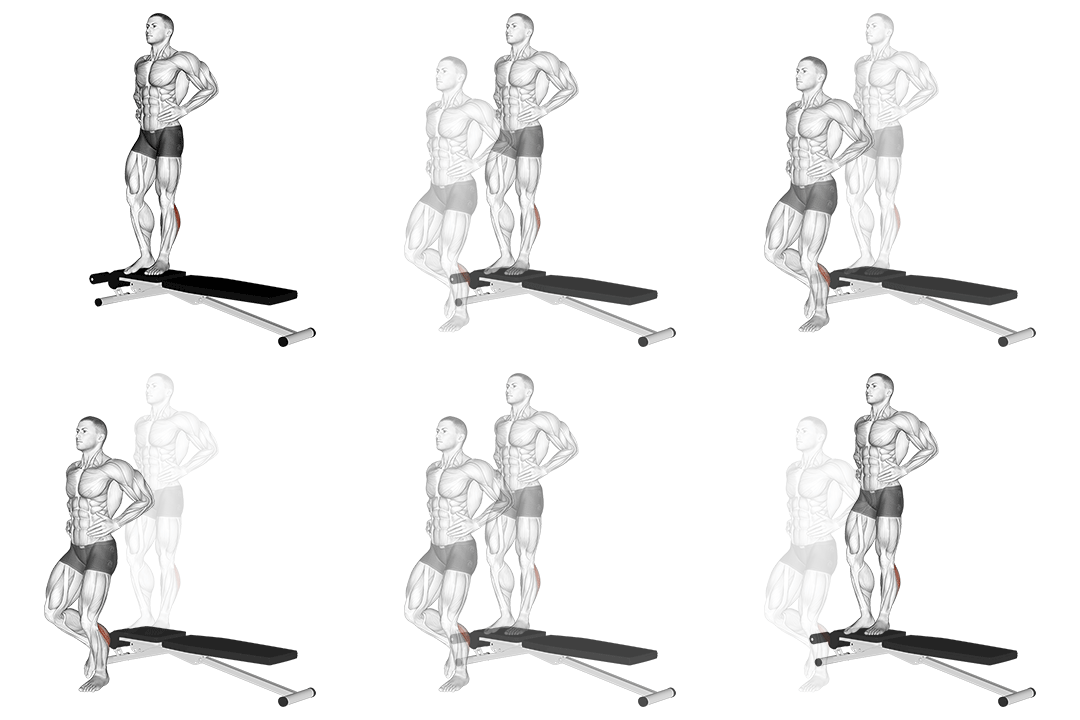
More comparisons with Circles Knee Stretch
Compare More Exercises
Use our free comparison tool to analyze any two exercises head-to-head.
Compare Exercises