

Box Jump Down With One Leg Stabilization vs Calf Push Stretch With Hands Against Wall: Complete Comp
Box Jump Down With One Leg Stabilization vs Calf Push Stretch With Hands Against Wall — you’re comparing a dynamic, compound plyometric that trains force and single-leg control against a low-risk isolation stretch that targets calf length-tension and mobility. I’ll walk you through muscle activation, biomechanics, equipment needs, difficulty, injury risk, and when to pick each exercise for strength, hypertrophy, balance, or rehab. Read on and you’ll get clear cues, rep ranges, and practical progressions so you can choose the right move for your goals.
Exercise Comparison
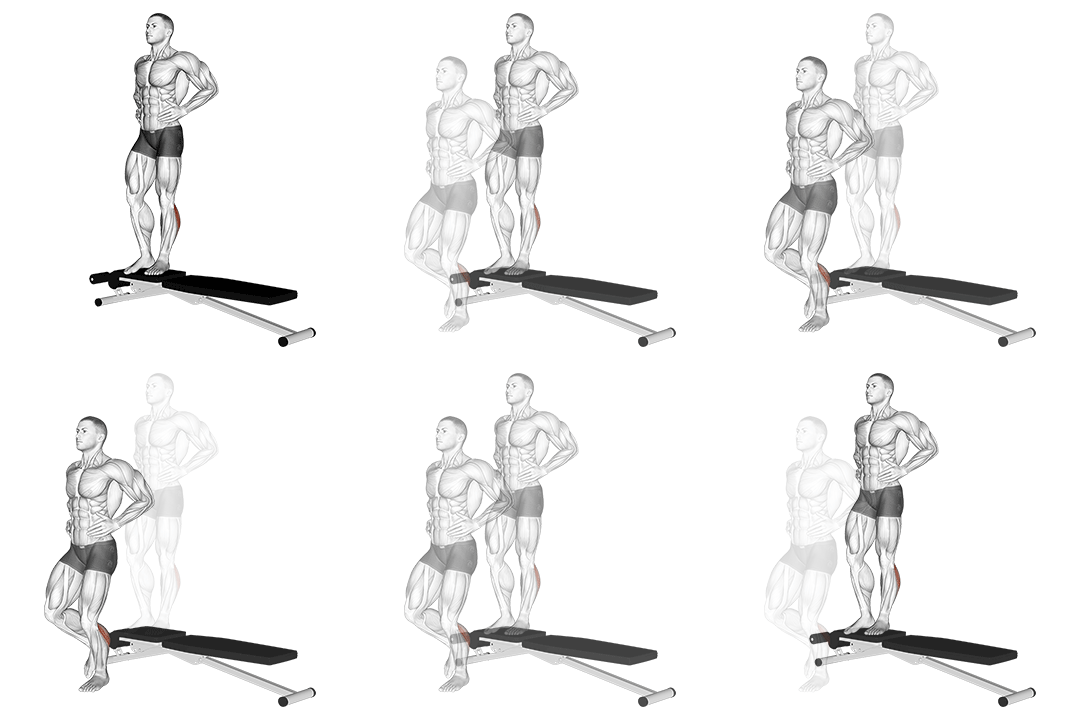
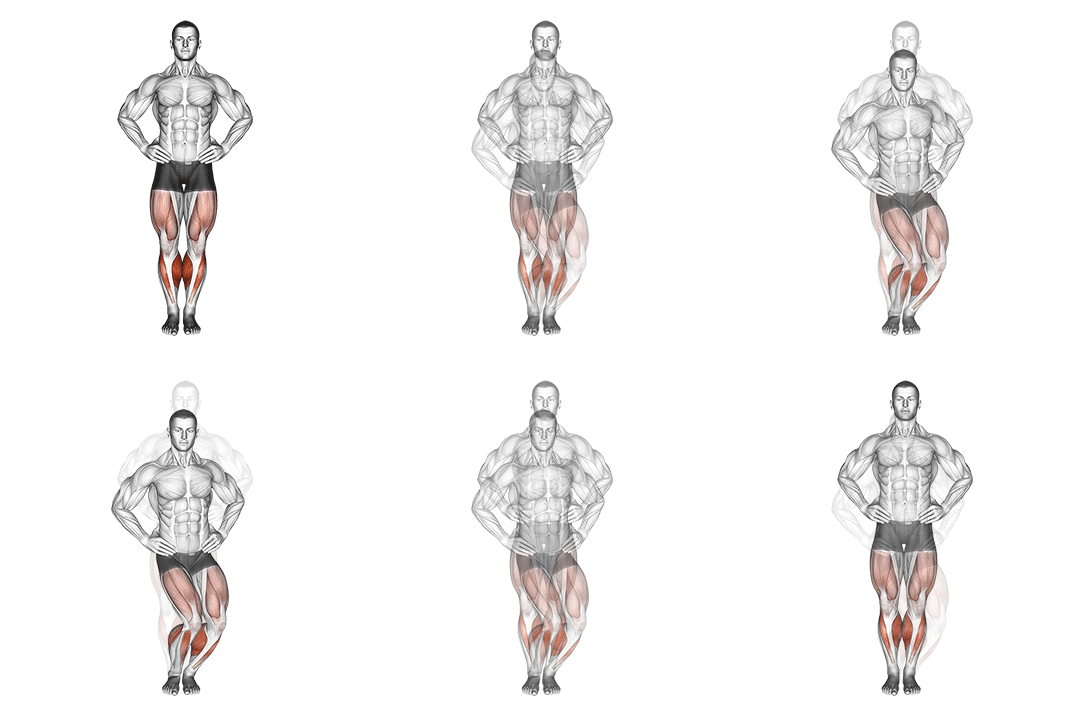
Box Jump Down With One Leg Stabilization
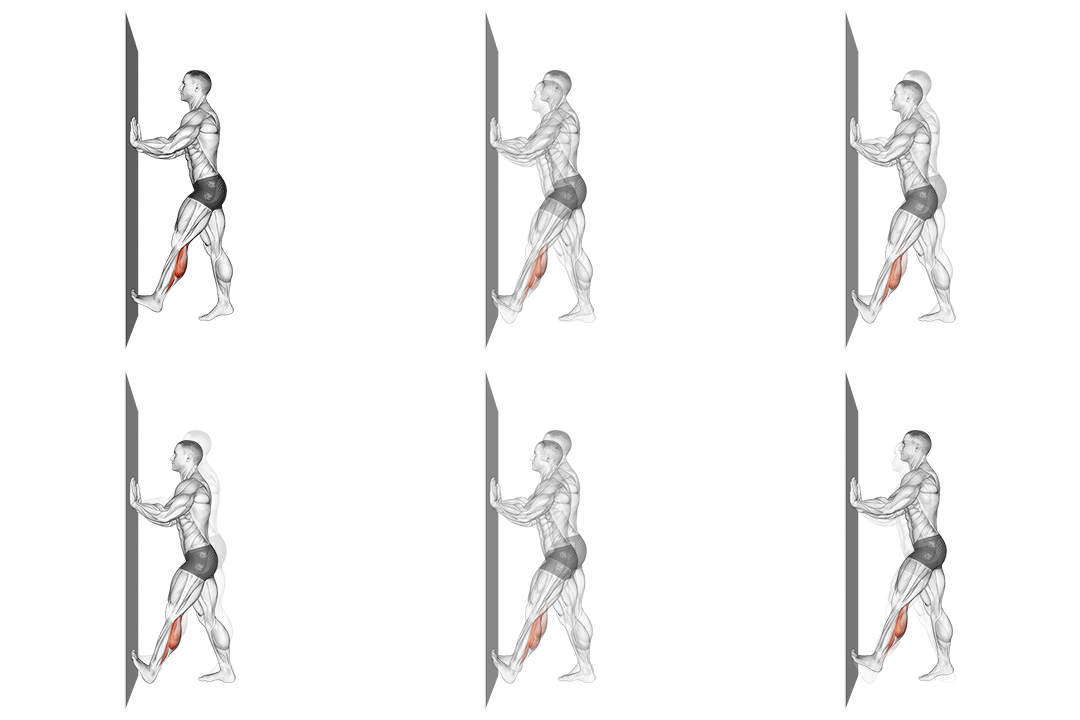
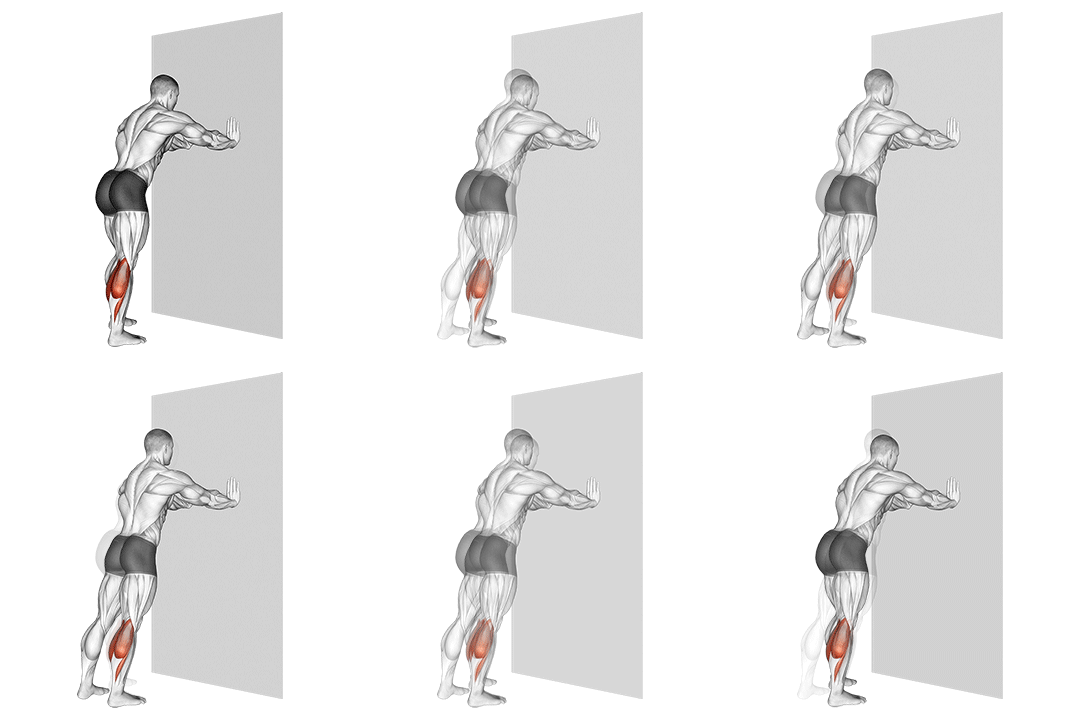
Calf Push Stretch With Hands Against Wall
Head-to-Head Comparison
| Attribute | Box Jump Down With One Leg Stabilization | Calf Push Stretch With Hands Against Wall |
|---|---|---|
| Target Muscle |
Calves
|
Calves
|
| Body Part |
Lower-legs
|
Lower-legs
|
| Equipment |
Body-weight
|
Body-weight
|
| Difficulty |
Intermediate
|
Beginner
|
| Movement Type |
Compound
|
Isolation
|
| Secondary Muscles |
3
|
1
|
Secondary Muscles Activated
Box Jump Down With One Leg Stabilization
Calf Push Stretch With Hands Against Wall
Visual Comparison
Overview
Box Jump Down With One Leg Stabilization vs Calf Push Stretch With Hands Against Wall — you’re comparing a dynamic, compound plyometric that trains force and single-leg control against a low-risk isolation stretch that targets calf length-tension and mobility. I’ll walk you through muscle activation, biomechanics, equipment needs, difficulty, injury risk, and when to pick each exercise for strength, hypertrophy, balance, or rehab. Read on and you’ll get clear cues, rep ranges, and practical progressions so you can choose the right move for your goals.
Key Differences
- Box Jump Down With One Leg Stabilization is a compound movement, while Calf Push Stretch With Hands Against Wall is an isolation exercise.
- Difficulty levels differ: Box Jump Down With One Leg Stabilization is intermediate, while Calf Push Stretch With Hands Against Wall is beginner.
- Both exercises target the Calves using Body-weight. The main differences are in their movement patterns and muscle activation angles.
Pros & Cons
Box Jump Down With One Leg Stabilization
+ Pros
- Builds high-rate plantarflexion force and reactive strength via stretch-shortening cycle
- Improves single-leg stability, proprioception and functional landing mechanics
- Recruits calves along with quads, hamstrings and glutes for compound lower-limb training
- Easy to progress for power and unilateral strength by altering height or load
− Cons
- Higher impact and greater risk of ankle/knee injury if technique is poor
- Requires a plyo box or platform and adequate space
- Not ideal for beginners or those with Achilles issues due to high eccentric loading
Calf Push Stretch With Hands Against Wall
+ Pros
- Very low equipment need and accessible for all fitness levels
- Targets calf length-tension and mobility for stretch-mediated muscle response
- Low impact—suitable for rehab and recovery sessions
- Easy to modify intensity by changing hold time or foot position
− Cons
- Limited concentric force production—less effective for power and maximal strength
- Minimal secondary muscle recruitment—offers less systemic training stimulus
- Progressions for size or strength are slower compared with loaded or plyometric options
When Each Exercise Wins
The stretch position increases time under tension and places the gastrocnemius/soleus at longer muscle lengths, which promotes stretch-mediated hypertrophy. Use long holds (30–60s) or high-rep eccentric-loaded calf raises to maximize muscle growth.
This compound plyometric recruits high-threshold motor units and produces large eccentric and concentric forces, improving maximal plantarflexion strength and single-leg force transfer. Progress with higher boxes, loaded vests, or weighted single-leg landings for strength adaptations.
It’s low-impact, easy to coach, and safe for those with limited balance or prior lower-leg injuries. Start with 2–3 sets of 20–30s holds and focus on ankle dorsiflexion control before advancing.
Requires no box or extra gear and fits into short routines for mobility and calf conditioning. It’s quick to implement and scales by adjusting hold time or foot angle.
Frequently Asked Questions
Can I do both Box Jump Down With One Leg Stabilization and Calf Push Stretch With Hands Against Wall in the same workout?
Yes. Use the box jumps earlier to target high-force, neuromuscular work (3–6 sets of 3–6 reps) and finish with calf push stretches as a mobility or hypertrophy-focused finisher (3 sets of 30–60s). Sequence high-intensity plyometrics before static stretching to preserve power performance.
Which exercise is better for beginners?
Calf Push Stretch With Hands Against Wall is better for beginners because it’s low-impact and easy to perform with minimal balance demands. Learn ankle mobility and calf control with holds before attempting single-leg box landings.
How do the muscle activation patterns differ?
Box Jump Down uses rapid eccentric dorsiflexion followed by explosive plantarflexion, recruiting high-threshold motor units and phasic gastrocnemius activation. The calf push stretch produces sustained dorsiflexion with low-intensity isometric/ eccentric activation, emphasizing passive tension and lengthening rather than peak force output.
Can Calf Push Stretch With Hands Against Wall replace Box Jump Down With One Leg Stabilization?
Not if your goal is power or unilateral strength—an isolation stretch won’t replicate the high-rate force and neural drive produced by plyometric single-leg landings. For mobility, tendon conditioning, or low-impact hypertrophy it can replace box work temporarily or be used alongside plyometrics for a balanced program.
Expert Verdict
Use Box Jump Down With One Leg Stabilization when your priority is power, single-leg strength, and reactive ankle control. It loads the calves under high-rate eccentric and concentric forces and brings quads, hamstrings and glutes into play, so include it in strength or athletic programs (3–6 sets of 3–6 controlled reps). Choose Calf Push Stretch With Hands Against Wall when you need low-impact calf loading, improved dorsiflexion, or rehab-focused hypertrophy—use 3 sets of 30–60s holds or pair with slow eccentric calf raises for 8–15 reps. Both can complement each other: one builds force and stability, the other builds length-tension and recovery.
Also Compare
More comparisons with Box Jump Down With One Leg Stabilization
More comparisons with Calf Push Stretch With Hands Against Wall
Compare More Exercises
Use our free comparison tool to analyze any two exercises head-to-head.
Compare Exercises