

Box Jump Down With One Leg Stabilization vs Circles Knee Stretch: Complete Comparison Guide
Box Jump Down With One Leg Stabilization vs Circles Knee Stretch — you get two different tools for stronger calves. I'll compare how each exercise loads the calf complex, the movement patterns they emphasize, equipment needs, and which to choose for power, hypertrophy, or rehab. You’ll get clear technique cues (foot placement, joint angles), rep-range suggestions (3–6 explosive reps vs 10–20 controlled reps), and biomechanical reasoning about force vectors and length-tension. Read on so you can pick the exercise that matches your goals and training environment.
Exercise Comparison
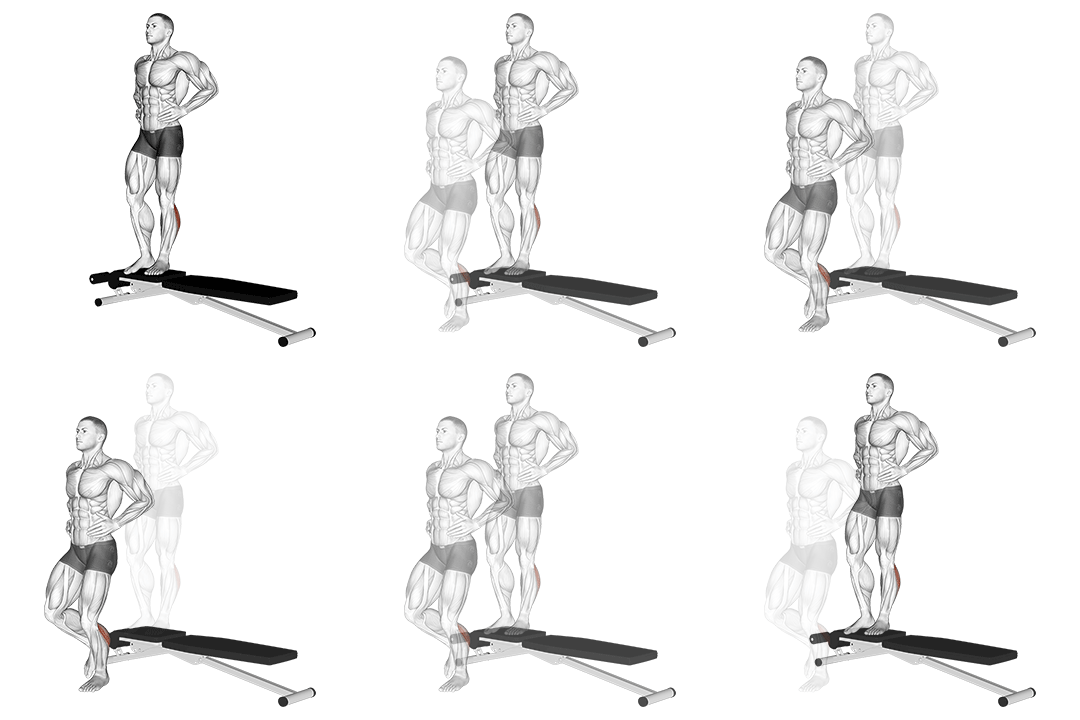
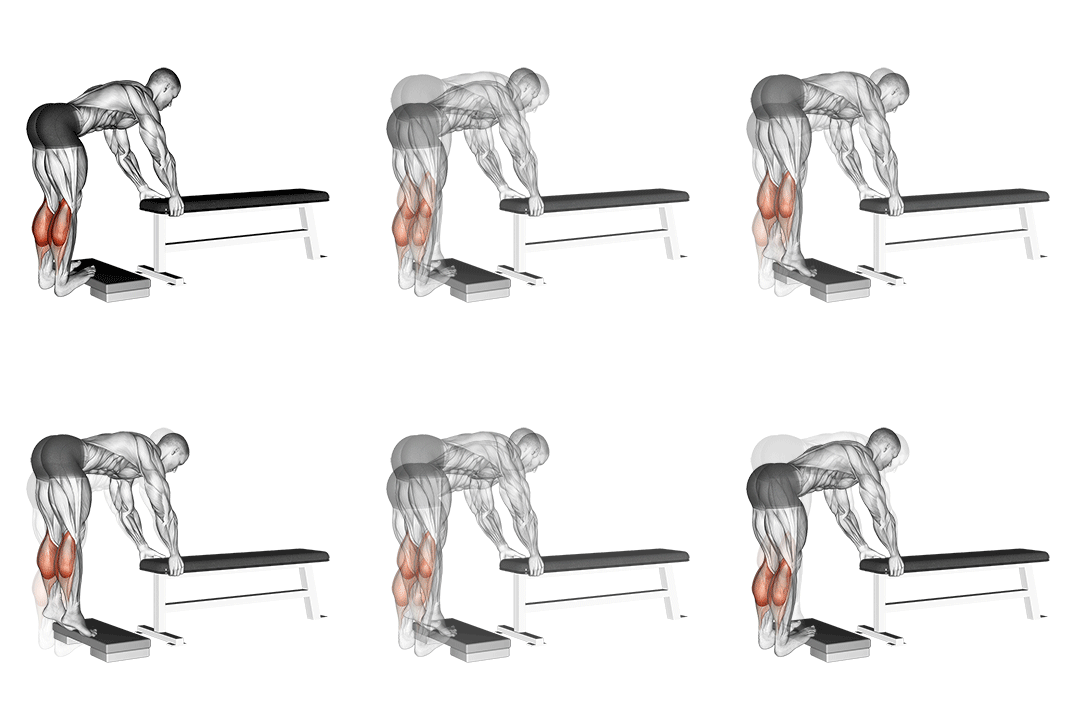
Box Jump Down With One Leg Stabilization
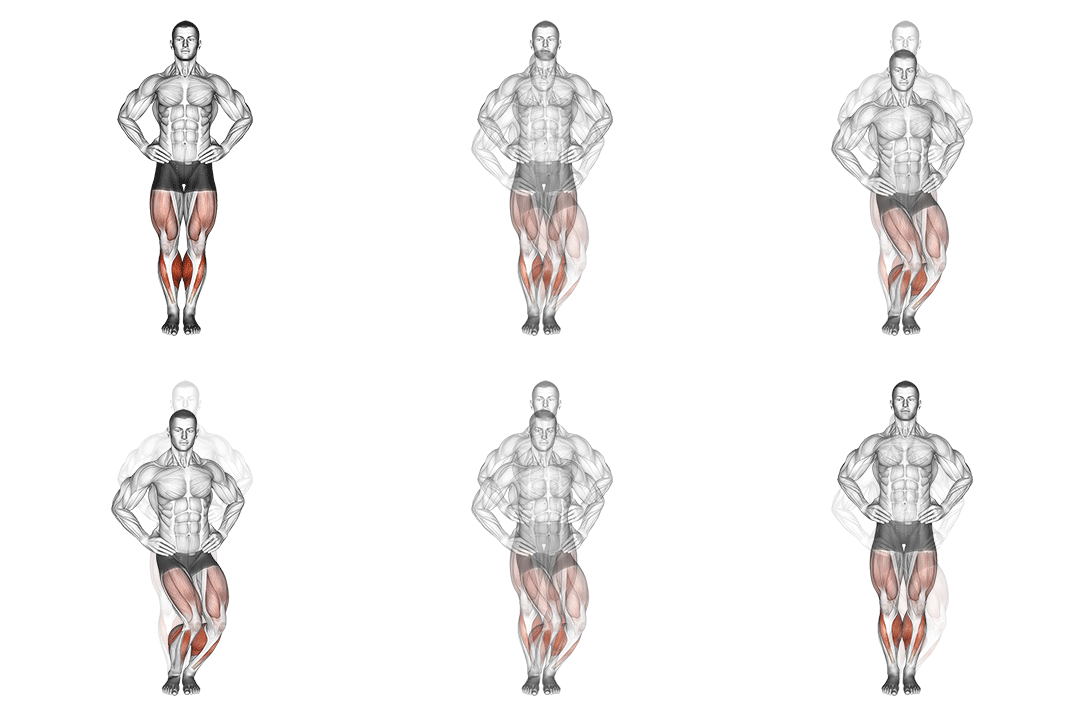
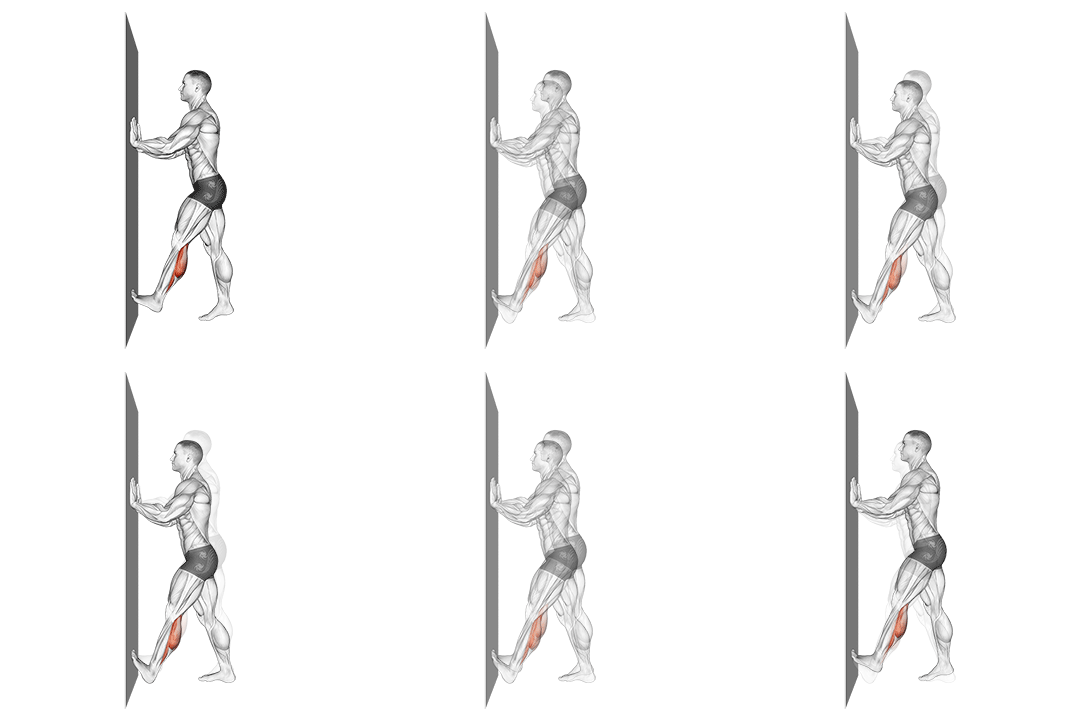
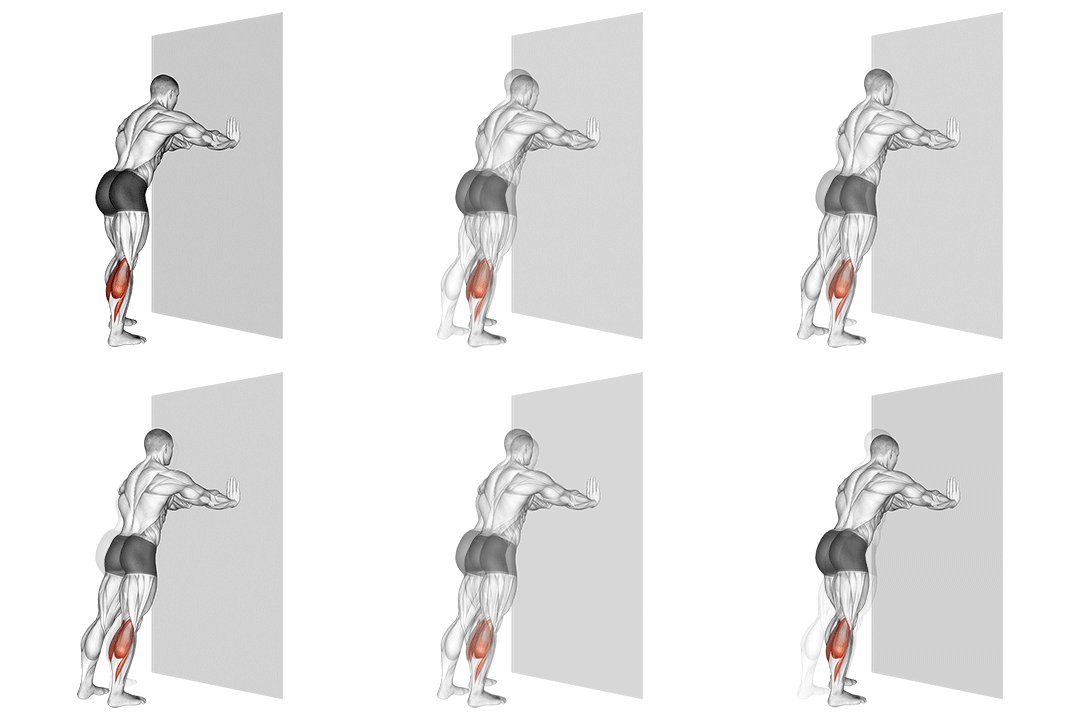
Circles Knee Stretch
Head-to-Head Comparison
| Attribute | Box Jump Down With One Leg Stabilization | Circles Knee Stretch |
|---|---|---|
| Target Muscle |
Calves
|
Calves
|
| Body Part |
Lower-legs
|
Lower-legs
|
| Equipment |
Body-weight
|
Body-weight
|
| Difficulty |
Intermediate
|
Beginner
|
| Movement Type |
Compound
|
Isolation
|
| Secondary Muscles |
3
|
2
|
Secondary Muscles Activated
Box Jump Down With One Leg Stabilization
Circles Knee Stretch
Visual Comparison
Overview
Box Jump Down With One Leg Stabilization vs Circles Knee Stretch — you get two different tools for stronger calves. I'll compare how each exercise loads the calf complex, the movement patterns they emphasize, equipment needs, and which to choose for power, hypertrophy, or rehab. You’ll get clear technique cues (foot placement, joint angles), rep-range suggestions (3–6 explosive reps vs 10–20 controlled reps), and biomechanical reasoning about force vectors and length-tension. Read on so you can pick the exercise that matches your goals and training environment.
Key Differences
- Box Jump Down With One Leg Stabilization is a compound movement, while Circles Knee Stretch is an isolation exercise.
- Difficulty levels differ: Box Jump Down With One Leg Stabilization is intermediate, while Circles Knee Stretch is beginner.
- Both exercises target the Calves using Body-weight. The main differences are in their movement patterns and muscle activation angles.
Pros & Cons
Box Jump Down With One Leg Stabilization
+ Pros
- Develops explosive strength and reactive capacity in the calves and posterior chain
- Trains unilateral balance and knee/hip control under load
- High motor-unit recruitment with brief, high-force contractions
- Transfers well to jumping and sprinting mechanics
− Cons
- Higher impact increases risk to joints and tendons
- Requires a stable box/platform and more space
- Steeper technical learning curve for safe landings
Circles Knee Stretch
+ Pros
- No equipment; low-impact and easy to scale for beginners
- Excellent for increasing time under tension and targeting the calf isolation
- Useful for rehab and correcting imbalances at slower tempos
- Can be performed anywhere and paired with mobility work
− Cons
- Limited transfer to explosive power and reactive strength
- Lower peak force limits maximal motor-unit recruitment
- May be less effective alone for full lower-limb functional development
When Each Exercise Wins
Circles Knee Stretch gives sustained time under tension (10–20+ reps) and controlled range through dorsiflexion/plantarflexion, maximizing metabolic and mechanical stress. Its isolation pattern lets you fatigue the calf without systemic fatigue from large concentric jumps.
Box Jump Down provides higher peak forces and rapid eccentric-to-concentric transitions that stimulate high-threshold motor units and improve rate of force development — key for increasing maximal strength in functional movements.
Circles Knee Stretch has a shallow learning curve, minimal injury risk, and requires no equipment, allowing beginners to build calf endurance and joint control before progressing to single-leg plyometrics.
Circles Knee Stretch needs zero equipment and little space, making it ideal for home sessions. Box Jump Down can be done at home only if you have a safe, sturdy platform and sufficient ceiling height.
Frequently Asked Questions
Can I do both Box Jump Down With One Leg Stabilization and Circles Knee Stretch in the same workout?
Yes. Use Circles Knee Stretch as a warm-up or hypertrophy primer (10–15 controlled reps) to increase blood flow and ankle mobility, then perform Box Jump Downs for power (3–6 reps per leg). Keep total volume manageable to avoid tendon overload.
Which exercise is better for beginners?
Circles Knee Stretch is better for beginners because it requires no box, has lower impact, and teaches ankle control. Start with slow, deliberate repetitions before progressing to plyometric Box Jump Downs.
How do the muscle activation patterns differ?
Box Jump Down produces a fast eccentric stretch followed by a high-amplitude stabilizing contraction in the gastrocnemius — brief, high-threshold activation. Circles Knee Stretch yields continuous, lower-amplitude activation with longer time under tension and less phasic hip involvement.
Can Circles Knee Stretch replace Box Jump Down With One Leg Stabilization?
Not fully. Circles Knee Stretch can replace Box Jumps if your goal is hypertrophy, rehab, or low-impact training, but it won’t replicate the high peak forces, reactive timing, or sport-specific transfer you get from unilateral plyometrics.
Expert Verdict
Use Box Jump Down With One Leg Stabilization when your priority is power, unilateral stability, and sport-specific transfer. Perform 3–6 reps per leg, 3–5 sets, focusing on a soft but controlled eccentric (knee flexion ~30–50° on landing) and immediate stabilization. Choose Circles Knee Stretch when you want to isolate the calf, increase time under tension for hypertrophy (10–20 reps, 3–4 sets), or need a low-impact option for rehab or beginners. Both exercises complement each other: cycle isolation work to build endurance and structural capacity, then add unilateral plyometrics to express strength as measurable power.
Also Compare
More comparisons with Box Jump Down With One Leg Stabilization
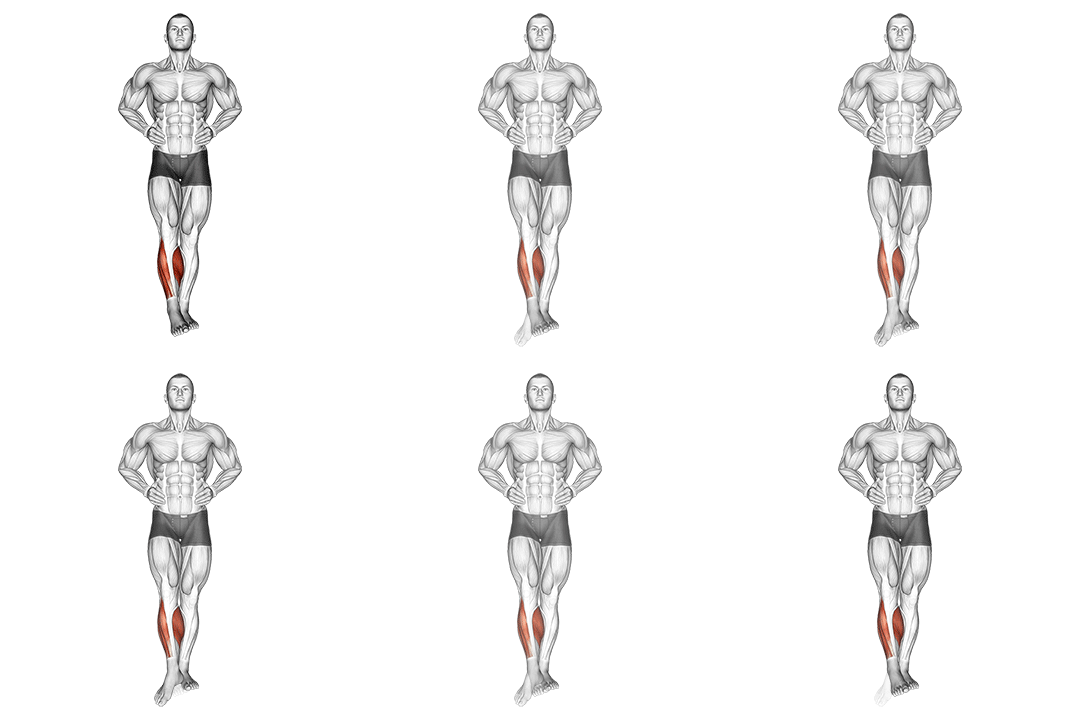
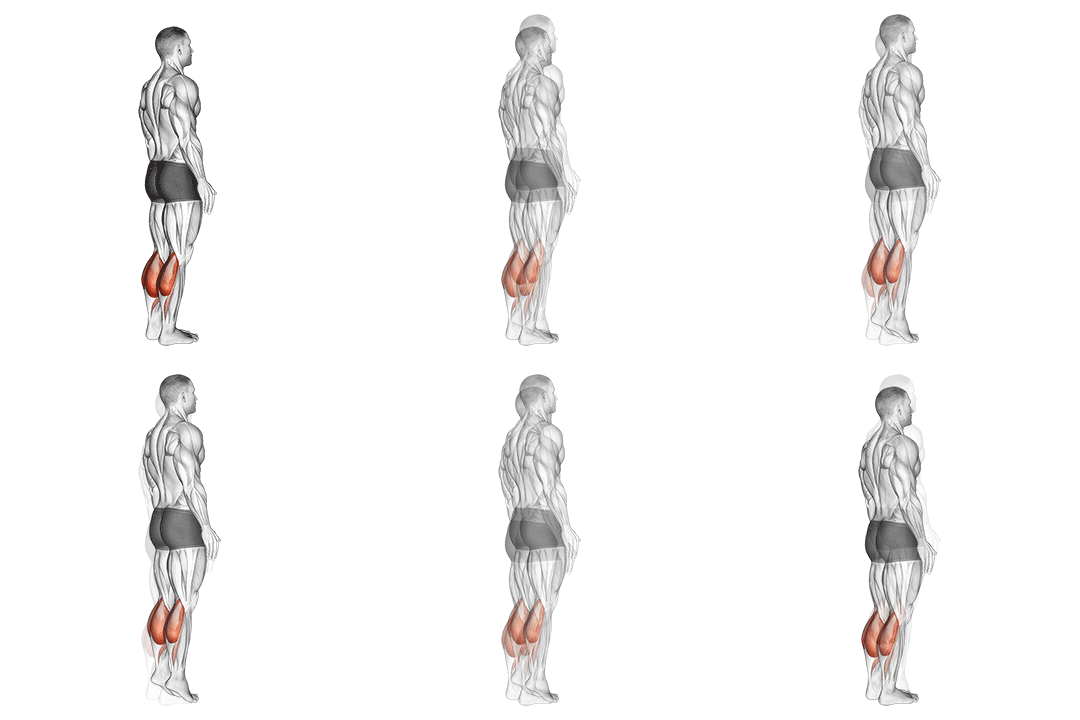
More comparisons with Circles Knee Stretch
Compare More Exercises
Use our free comparison tool to analyze any two exercises head-to-head.
Compare Exercises