

Box Jump (Multiple Response) vs Box Skip: Complete Comparison Guide
Box Jump (Multiple Response) vs Box Skip is a head-to-head you need if you care about glute power, coordination, and practical training choices. You’ll get clear comparisons of primary and secondary muscle activation, equipment needs, learning curve, and injury risk. I’ll give technique cues (hip hinge, triple extension, landing mechanics), recommended rep ranges (3–6 for power, 8–12 for conditioning), and specific progressions so you can pick the best move for your goals and set up safe, measurable training.
Exercise Comparison

Box Jump (multiple Response)
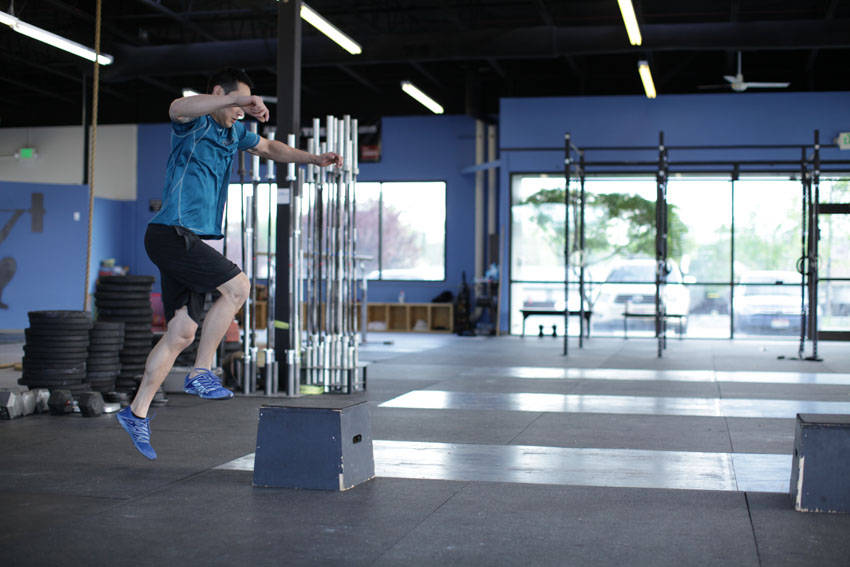
Box Skip
Head-to-Head Comparison
| Attribute | Box Jump (multiple Response) | Box Skip |
|---|---|---|
| Target Muscle |
Glutes
|
Glutes
|
| Body Part |
Upper-legs
|
Upper-legs
|
| Equipment |
Other
|
Other
|
| Difficulty |
Intermediate
|
Intermediate
|
| Movement Type |
Compound
|
Compound
|
| Secondary Muscles |
5
|
5
|
Secondary Muscles Activated
Box Jump (multiple Response)
Box Skip
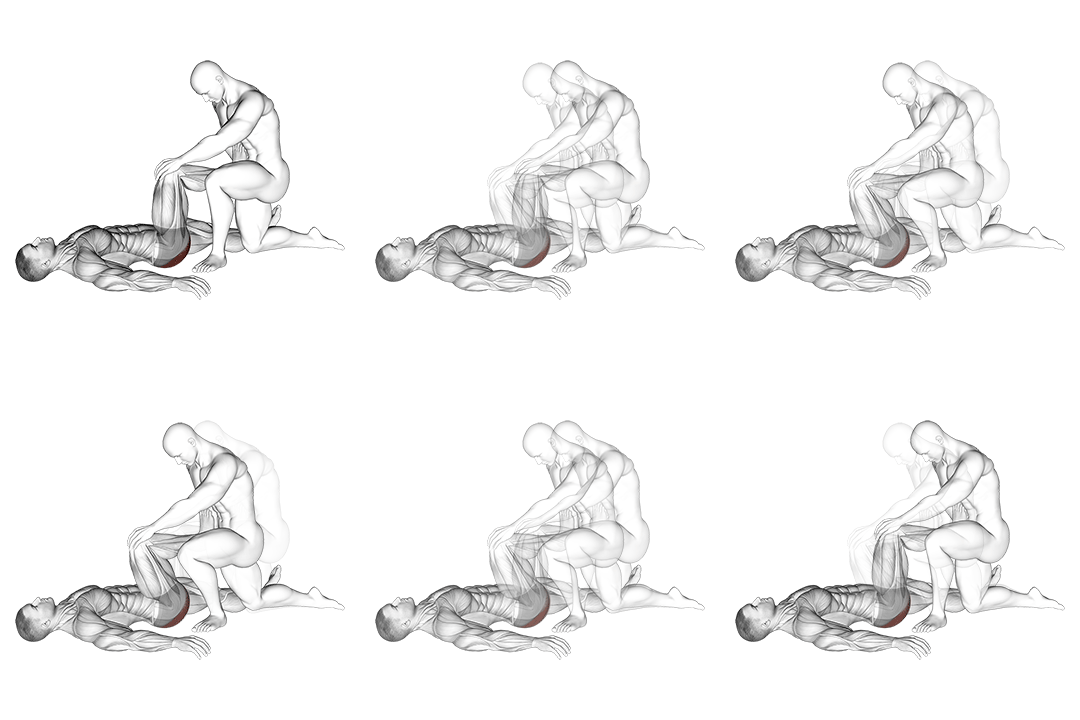
Visual Comparison
Overview
Box Jump (Multiple Response) vs Box Skip is a head-to-head you need if you care about glute power, coordination, and practical training choices. You’ll get clear comparisons of primary and secondary muscle activation, equipment needs, learning curve, and injury risk. I’ll give technique cues (hip hinge, triple extension, landing mechanics), recommended rep ranges (3–6 for power, 8–12 for conditioning), and specific progressions so you can pick the best move for your goals and set up safe, measurable training.
Key Differences
- Both exercises target the Glutes using Other. The main differences are in their movement patterns and muscle activation angles.
Pros & Cons
Box Jump (multiple Response)
+ Pros
- Maximizes peak concentric force and power via triple extension
- Short sets (3–6 reps) highly effective for fast-twitch recruitment
- Clear objective progressions: box height, weighted vest, single-rep power
- High carryover to athletic movements that require vertical explosiveness
− Cons
- Higher acute impact and technical demand on landing mechanics
- Requires a stable, appropriately sized box and space
- Less total time‑under‑tension for hypertrophy compared with repeated single‑leg work
Box Skip
+ Pros
- More accessible equipment and smaller box heights required
- Higher cumulative muscle activation across sets due to repeated cycles
- Improves single‑leg coordination, frontal‑plane stability, and lateral hip strength
- Easier to scale volume for conditioning and muscle growth
− Cons
- Lower peak force output per rep compared with maximal box jumps
- May be less specific for maximal vertical power development
- Can expose asymmetries if one leg compensates for the other
When Each Exercise Wins
Box Skip wins because repeated single‑leg cycles increase time‑under‑tension and eccentric control, which stimulate muscle growth. Use higher volume (3–5 sets of 8–15 skips per leg) and tempo control to target hypertrophy.
Box Jump produces higher peak forces and recruits fast‑twitch fibers, making it superior for developing raw lower‑body power. Focus on heavy, low‑rep sets (3–6 reps) with full recovery to maximize neural adaptation.
Box Skip has a gentler learning curve with lower peak impacts and easier scaling via step height. Beginners should start with 6–10 in steps and emphasize soft landings and knee tracking.
Box Skip needs less specialized equipment and smaller clearances, so you can perform it safely at home. Short spaces and low platforms or curbs work well for progressive sessions.
Frequently Asked Questions
Can I do both Box Jump (Multiple Response) and Box Skip in the same workout?
Yes — sequence them smartly. Do Box Jump early for fresh maximal power (3–6 reps, 3–5 sets) then use Box Skip later for volume and conditioning (3–4 sets of 8–15 per leg) to avoid fatigue compromising jump technique.
Which exercise is better for beginners?
Box Skip is better for beginners because it uses lower box heights, lower peak impact, and easier scaling. Start with a 6–10 in step, prioritize soft landings and knee alignment, and build confidence before progressing to full box jumps.
How do the muscle activation patterns differ?
Box Jump produces brief, high‑amplitude activation peaks during takeoff, favoring fast‑twitch fibers and high vertical force vectors. Box Skip creates repeated concentric‑eccentric cycles with more sustained activation and greater involvement of hip abductors for frontal‑plane stabilization.
Can Box Skip replace Box Jump (Multiple Response)?
Box Skip can replace Box Jump for conditioning, hypertrophy, and skill work, but not entirely for maximal power development. If your goal is vertical jump power, keep Box Jump in the program; for accessibility and volume, Box Skip is a solid substitute.
Expert Verdict
Choose Box Jump (Multiple Response) when your priority is developing maximal lower‑body power and sport‑specific vertical explosiveness. Program low reps (3–6), emphasize full triple extension, and progress box height or load. Choose Box Skip when you want higher volume, better single‑leg control, and safer, more accessible conditioning that still targets the glutes; use 3–5 sets of 8–15 skips per leg and control the eccentric phase. Pair the two across training blocks: prioritize Box Jump for power cycles and Box Skip for hypertrophy or rehabilitation phases to address asymmetries and build durability.
Also Compare
More comparisons with Box Jump (multiple Response)
Compare More Exercises
Use our free comparison tool to analyze any two exercises head-to-head.
Compare Exercises