

Box Jump (Multiple Response) vs Tire Flip: Complete Comparison Guide
Box Jump (Multiple Response) vs Tire Flip is a matchup between explosive, plyometric power and heavy, functional strength. If you want clearer choices for your training, this guide breaks down glute and upper-leg activation, secondary muscle recruitment, equipment needs, skill demand, progression options, and injury considerations. You’ll get technique cues for cleaner reps, biomechanical reasons why one movement loads the posterior chain differently, rep and set ranges for different goals, and actionable programming advice so you can pick the exercise that best serves your muscle growth, strength, or conditioning plan.
Exercise Comparison

Box Jump (multiple Response)
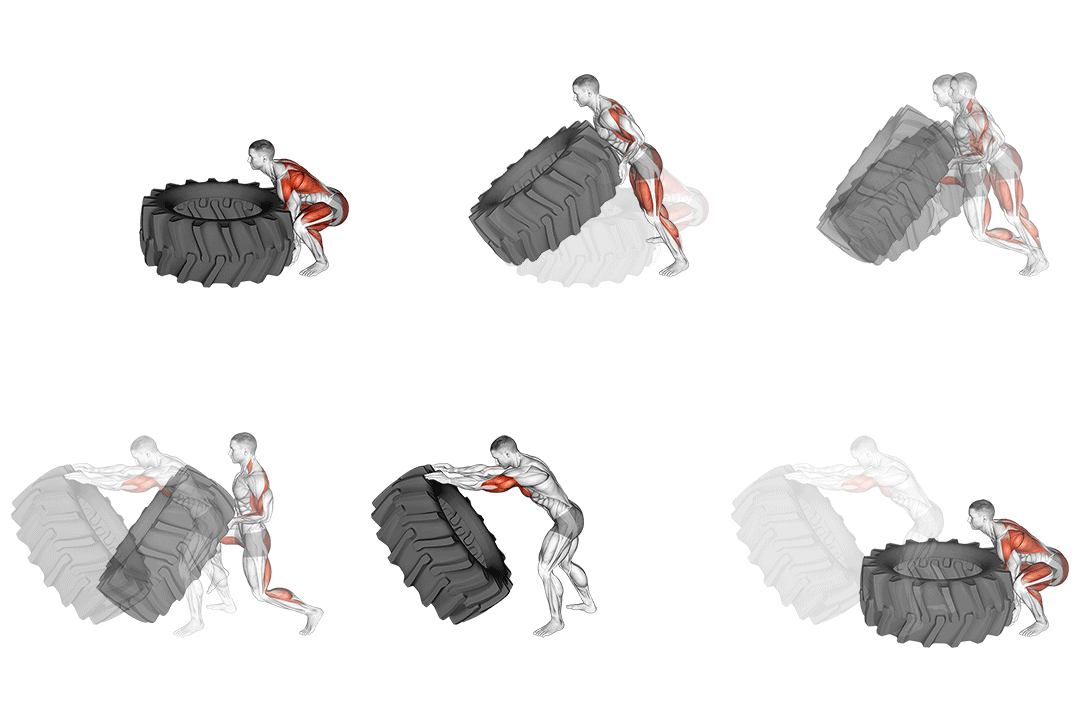
Tire Flip
Head-to-Head Comparison
| Attribute | Box Jump (multiple Response) | Tire Flip |
|---|---|---|
| Target Muscle |
Glutes
|
Glutes
|
| Body Part |
Upper-legs
|
Upper-legs
|
| Equipment |
Other
|
Other
|
| Difficulty |
Intermediate
|
Advanced
|
| Movement Type |
Compound
|
Compound
|
| Secondary Muscles |
5
|
3
|
Secondary Muscles Activated
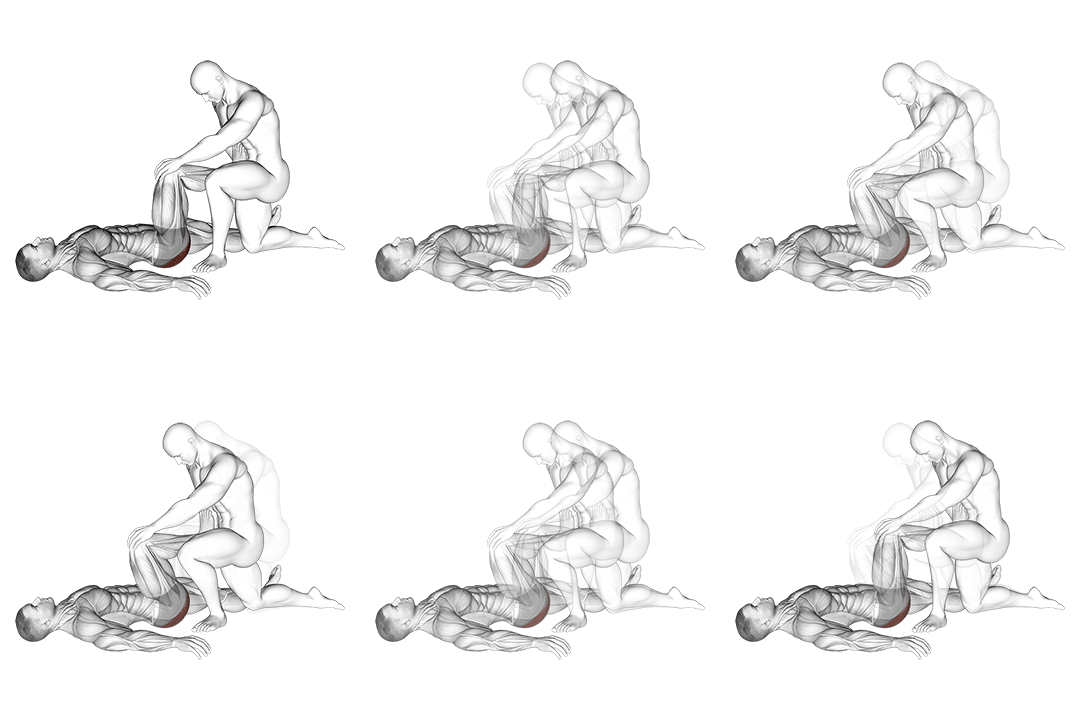
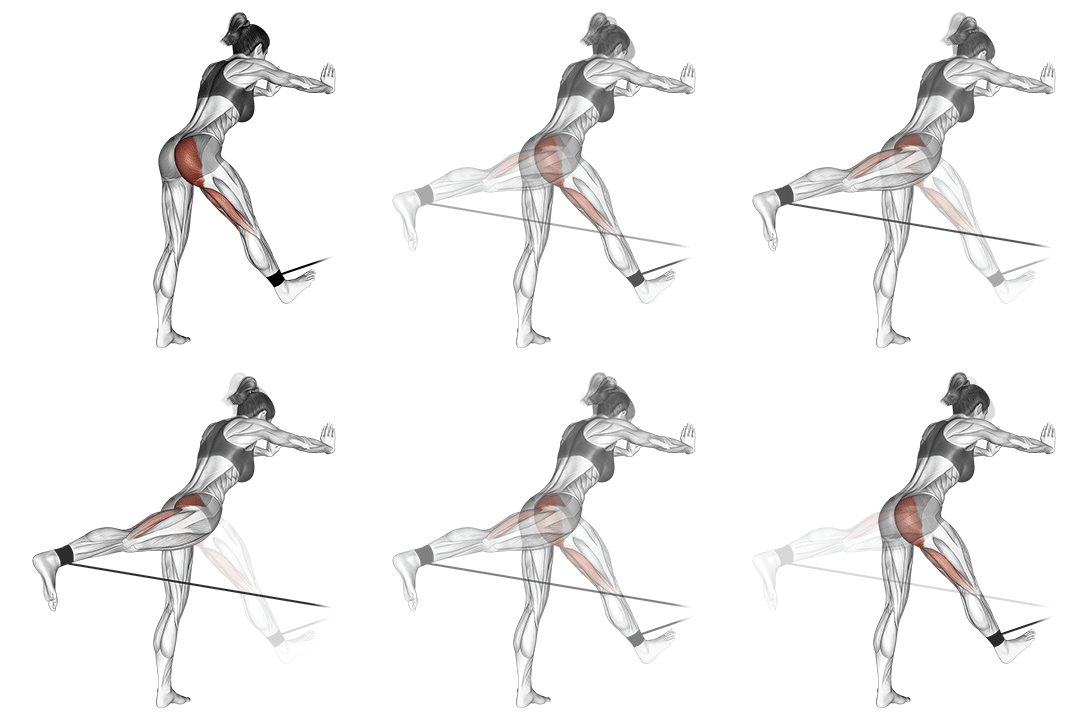
Box Jump (multiple Response)
Tire Flip
Visual Comparison
Overview
Box Jump (Multiple Response) vs Tire Flip is a matchup between explosive, plyometric power and heavy, functional strength. If you want clearer choices for your training, this guide breaks down glute and upper-leg activation, secondary muscle recruitment, equipment needs, skill demand, progression options, and injury considerations. You’ll get technique cues for cleaner reps, biomechanical reasons why one movement loads the posterior chain differently, rep and set ranges for different goals, and actionable programming advice so you can pick the exercise that best serves your muscle growth, strength, or conditioning plan.
Key Differences
- Difficulty levels differ: Box Jump (multiple Response) is intermediate, while Tire Flip is advanced.
- Both exercises target the Glutes using Other. The main differences are in their movement patterns and muscle activation angles.
Pros & Cons
Box Jump (multiple Response)
+ Pros
- High-rate power development via fast triple extension
- Minimal, inexpensive equipment required (plyo box)
- Scalable: height, reps, and weight vest adjustments
- Lower spinal load compared with heavy lifting movements
− Cons
- Limited time under tension for pure hypertrophy
- Repetitive impact can aggravate knees, ankles, or Achilles
- Requires good landing mechanics to avoid injury
Tire Flip
+ Pros
- Strong force and time-under-tension stimulus for glutes and hamstrings
- Excellent for functional, full-body strength and core stability
- Clear linear progression by adding heavier tires or more reps
- Transfers well to real-world pushing and lifting tasks
− Cons
- Requires heavy, specialized equipment and space
- Higher risk of lumbar shear and acute injury if technique fails
- Harder to scale precisely with small weight increments
When Each Exercise Wins
Tire flips provide higher time under tension and allow heavy external loads on the hip extensors and hamstrings, which stimulate muscle growth more effectively than short, explosive box jumps. Sets of 4–12 flips create mechanical tension and metabolic stress conducive to hypertrophy.
The heavy, resisted hip hinge pattern of the tire flip builds maximal force production and posterior chain strength more directly than plyometric box jumps. Increasing tire mass or reps produces progressive overload for strength-focused blocks.
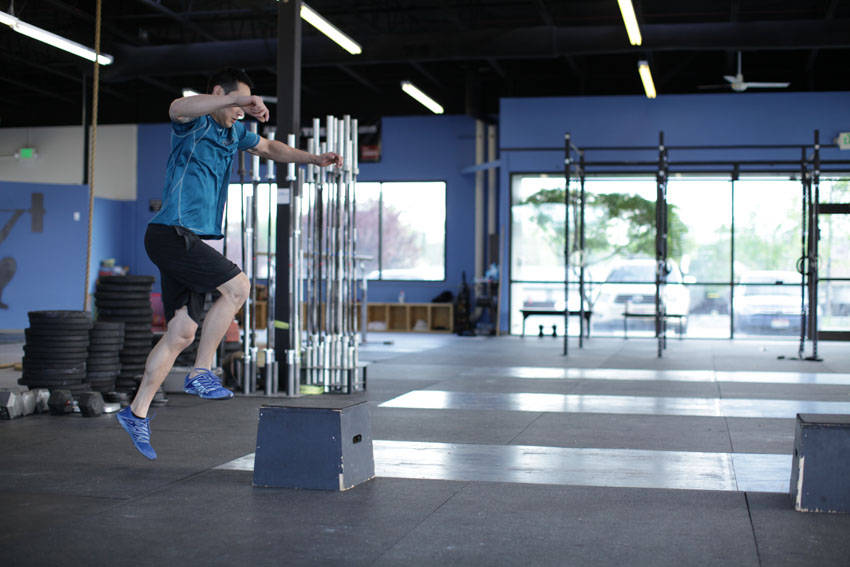
Box jumps are easier to scale by lowering box height and practicing landing mechanics, and they avoid heavy spine-loading that can occur with tire flips. Start with 6–12 inch boxes and focus on soft landings and neutral spine.
A single plyo box or a sturdy household alternative covers most progressions, while tire flips require large, heavy equipment and space. Box jumps let you train power and conditioning with minimal setup.
Frequently Asked Questions
Can I do both Box Jump (Multiple Response) and Tire Flip in the same workout?
Yes. Pair them with order depending on goals: do box jumps first if you prioritize power (3–6 sets of 3–6 reps), or tire flips first if strength is the main goal (3–5 sets of 4–10). Allow 2–3 minutes rest between heavy sets to preserve technique and force output.
Which exercise is better for beginners?
Box Jump (Multiple Response) is generally better for beginners because you can safely scale box height and focus on landing mechanics without heavy spine loading. Start low, practice soft landings with hips and knees absorbing impact, and progress gradually.
How do the muscle activation patterns differ?
Box jumps produce a short, high-velocity concentric burst with rapid eccentric braking; glutes fire for explosive hip extension while quads and calves contribute to takeoff and landing. Tire flips involve longer concentric work and sustained core and hamstring engagement due to the hinge pattern and heavier external load.
Can Tire Flip replace Box Jump (Multiple Response)?
Not completely. Tire flips can substitute for strength and hypertrophy work but they do not train reactive, high-velocity triple extension as efficiently as box jumps. For a well-rounded program, include both or choose one based on whether you need power (box jump) or heavy posterior-chain strength (tire flip).
Expert Verdict
Choose box jumps when your priority is rate of force development, reactive power, or when you need a low-equipment, space-efficient option. Use precise cues: load hips back, quick arm drive, land softly with hips and knees absorbing force and maintain a neutral spine. Choose tire flips when you want heavy posterior-chain loading, longer time under tension, and functional strength—ensure a solid hip-hinge, braced core, and a plan to progress tire weight safely. For balanced programming, pair both across training cycles: use box jumps for power blocks (3–6 sets of 3–8 reps) and tire flips for strength or hypertrophy blocks (3–5 sets of 4–12 flips).
Also Compare
More comparisons with Box Jump (multiple Response)
Compare More Exercises
Use our free comparison tool to analyze any two exercises head-to-head.
Compare Exercises