

Burpee vs Dumbbell Burpee: Complete Comparison Guide
Burpee vs Dumbbell Burpee — which one should you use in your training? You’ll get a direct, practical comparison so you can pick the right move for your goals. I’ll cover primary and secondary muscle activation, equipment needs, difficulty and progression, key technique cues (hip hinge, knee angles, landing mechanics), injury risk, and specific programming recommendations. Read on for clear scenarios showing when to choose the bodyweight burpee for conditioning or the dumbbell variation for added quad and upper-body load.
Exercise Comparison
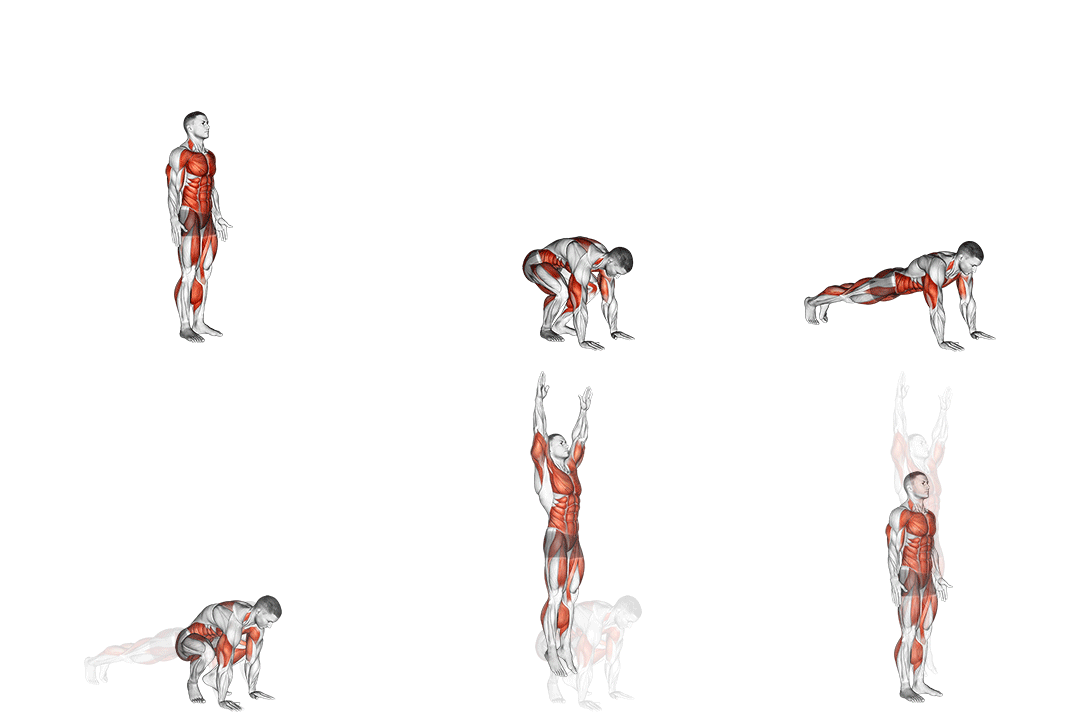
Burpee
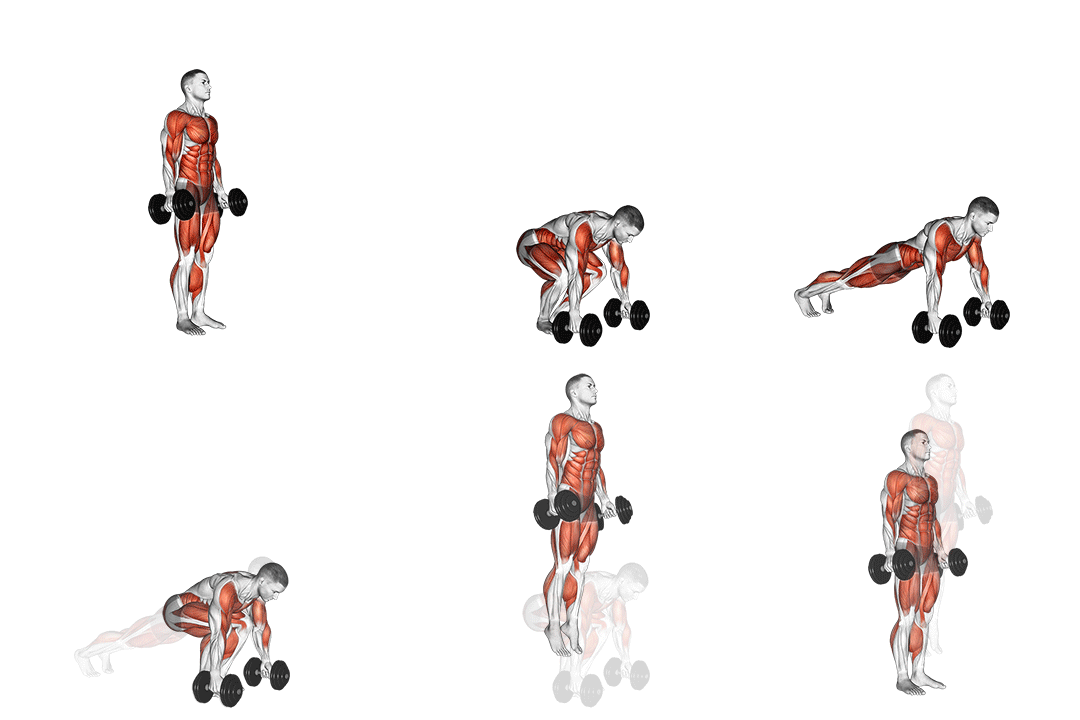
Dumbbell Burpee
Head-to-Head Comparison
| Attribute | Burpee | Dumbbell Burpee |
|---|---|---|
| Target Muscle |
Cardiovascular-system
|
Quads
|
| Body Part |
Cardio
|
Cardio
|
| Equipment |
Body-weight
|
Dumbbell
|
| Difficulty |
Intermediate
|
Advanced
|
| Movement Type |
Compound
|
Compound
|
| Secondary Muscles |
5
|
6
|
Secondary Muscles Activated
Burpee
Dumbbell Burpee
Visual Comparison
Overview
Burpee vs Dumbbell Burpee — which one should you use in your training? You’ll get a direct, practical comparison so you can pick the right move for your goals. I’ll cover primary and secondary muscle activation, equipment needs, difficulty and progression, key technique cues (hip hinge, knee angles, landing mechanics), injury risk, and specific programming recommendations. Read on for clear scenarios showing when to choose the bodyweight burpee for conditioning or the dumbbell variation for added quad and upper-body load.
Key Differences
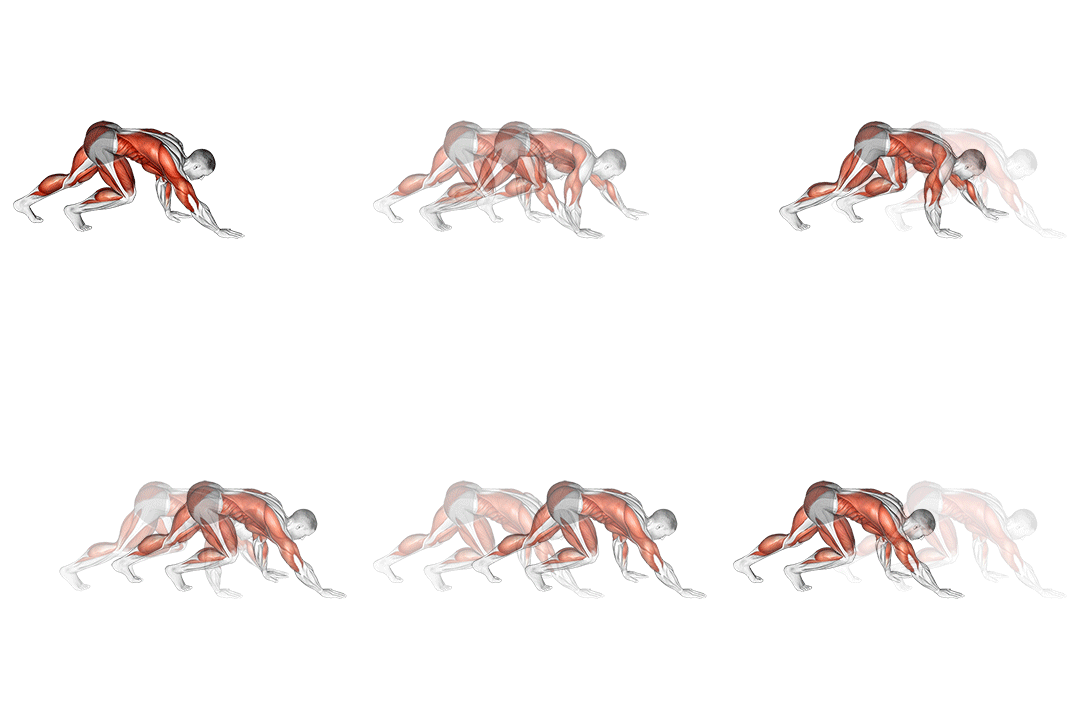
- Burpee primarily targets the Cardiovascular-system, while Dumbbell Burpee focuses on the Quads.
- Equipment differs: Burpee uses Body-weight, while Dumbbell Burpee requires Dumbbell.
- Difficulty levels differ: Burpee is intermediate, while Dumbbell Burpee is advanced.
Pros & Cons
Burpee
+ Pros
- No equipment required—do anywhere
- Superior cardiovascular conditioning and metabolic demand
- Easy to scale by removing push-up or jump
- Quick tempo improves reactive power and foot contact timing
− Cons
- Limited hypertrophy stimulus for quads and upper body
- Wrist and shoulder stress from floor push-ups
- Harder to quantify progressive overload precisely
Dumbbell Burpee
+ Pros
- Adds external load for greater quad and triceps stimulus
- Better for progressive overload and measurable strength gains
- Increases core anti-extension and shoulder stabilization demands
- Can be modified to include presses or rows for extra upper-body work
− Cons
- Requires equipment and safe load management
- Higher technical demand—greater shoulder and lower-back stress if done poorly
- Less portable and slower to transition between reps
When Each Exercise Wins
The added external load increases mechanical tension on the quads, triceps, and shoulders, which drives muscle growth more effectively than bodyweight work. Use 6–12 reps with controlled tempo and progressive weight increases to maximize hypertrophy.
Dumbbells allow you to manipulate external resistance and target concentric knee-extensor force and upper-body pressing strength. Focus on heavier sets (4–8 reps) with longer rest and strict technique to increase force production.
A scaled bodyweight burpee (step back, incline push-up) teaches the movement pattern, hip hinge, and landing mechanics with lower injury risk. Start with 6–10 reps and focus on hip extension and soft landings before adding load.
No equipment and minimal space make the burpee ideal for home training and travel. Use AMRAPs or timed intervals (20–40 seconds work) to maintain high cardiovascular benefit.
Frequently Asked Questions
Can I do both Burpee and Dumbbell Burpee in the same workout?
Yes. A common approach is to use burpees for warm-up and metabolic conditioning (30–60 seconds) and dumbbell burpees for heavier, lower-rep sets (4–8 reps) later in the workout. Alternate them across circuits to balance cardiovascular demand and strength stimulus.
Which exercise is better for beginners?
Burpee is better for most beginners because you can regress to step-backs and incline push-ups to learn mechanics. Start with 6–10 controlled reps, emphasize hip hinge and soft landings, and only add load after 4–6 weeks of consistent technique work.
How do the muscle activation patterns differ?
Bodyweight burpees rely more on elastic energy and rapid hip extension, increasing calf and glute reactive work, while dumbbell burpees shift force vectors anteriorly to increase knee-extensor (quad) and shoulder/triceps activation. Adding weight increases concentric force demands and core anti-rotation torque.
Can Dumbbell Burpee replace Burpee?
Yes, if your priority is strength or hypertrophy; dumbbell burpees supply measurable overload and greater quad/triceps stimulus. For pure conditioning, speed work, or when equipment is unavailable, stick with the bodyweight burpee.
Expert Verdict
Choose the bodyweight burpee when your primary goal is efficient cardiovascular conditioning, plyometric power, and portability—especially for high-rep circuits and timed intervals (20–60 seconds). Opt for the dumbbell burpee when you want measurable strength and hypertrophy benefits for the quads, triceps, and shoulders; load in 5–15 lb increments and prioritize strict spine alignment and scapular control. If you train for mixed outcomes, pair them: use burpees for metabolic conditioning and dumbbell burpees for strength-focused sets. Always cue a neutral spine, soft landing (knee flexion ~80–100°), and drive through the hips to protect joints and get the most out of each rep.
Also Compare
More comparisons with Burpee

Compare More Exercises
Use our free comparison tool to analyze any two exercises head-to-head.
Compare Exercises