

Burpee vs High Knee Against Wall: Complete Comparison Guide
Burpee vs High Knee Against Wall — if you want efficient cardio and conditioning, you need to pick the right move for your goals. I'll walk you through muscle activation, biomechanics, difficulty, equipment needs, and practical progressions so you can choose confidently. You’ll get clear technique cues (hip hinge, 90° knee drive, spine posture), rep and interval examples, and scenarios that name a winner for muscle growth, strength, beginners, and home sessions. Read on and use the guidance to program these exercises into your workouts based on what you want to improve.
Exercise Comparison
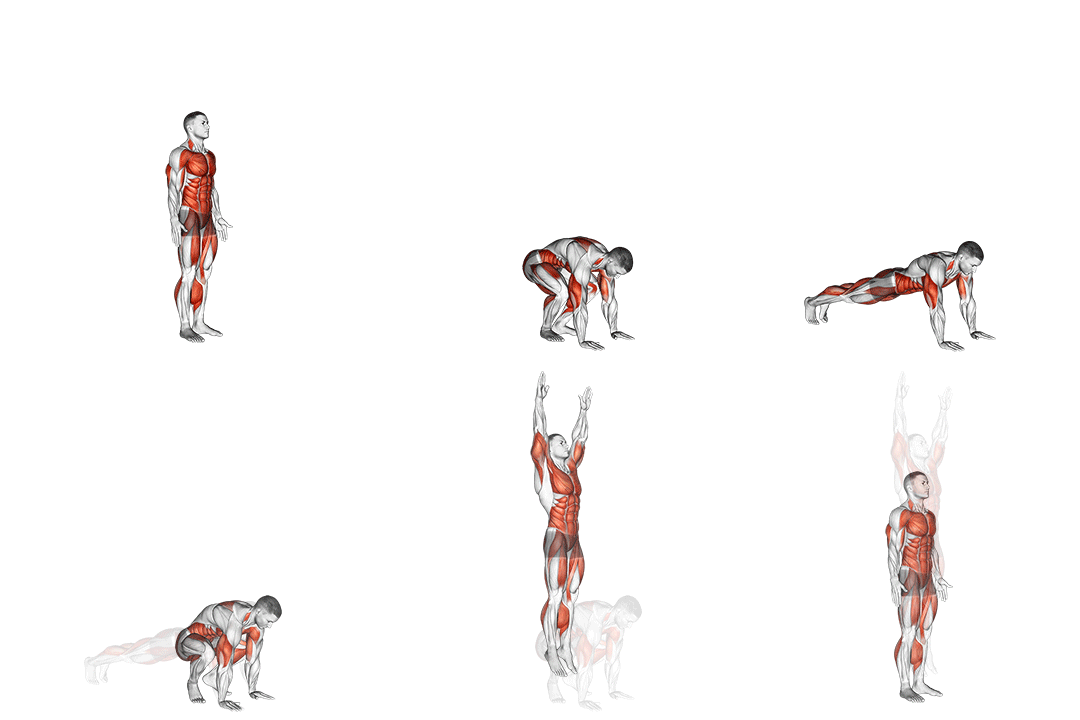
Burpee
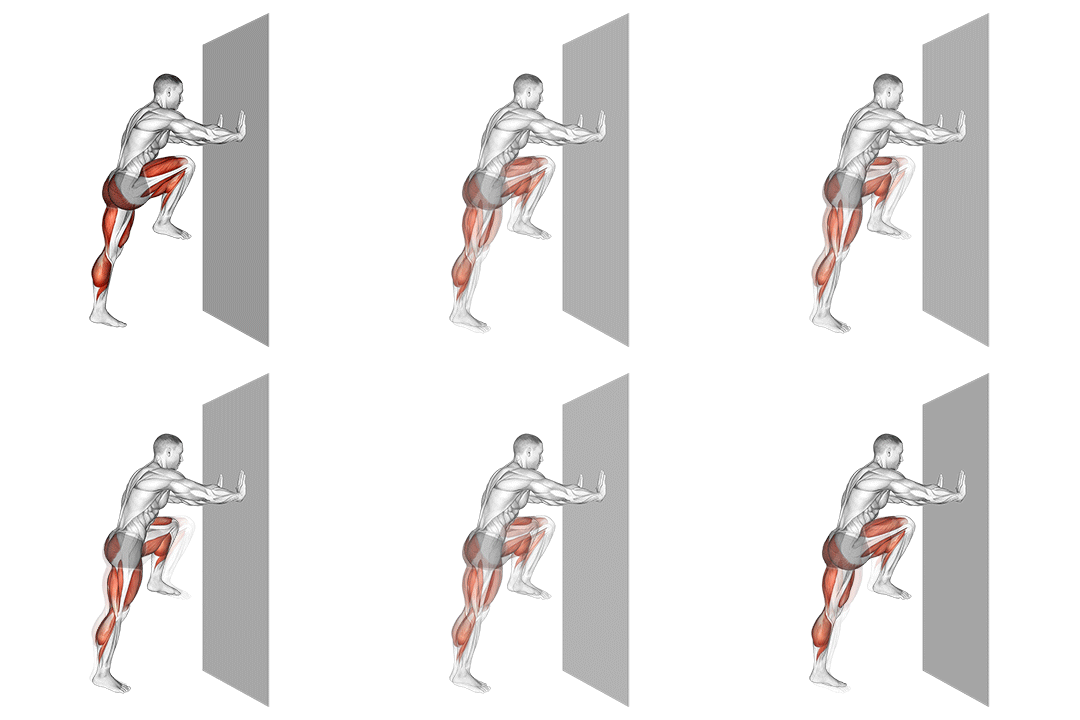
High Knee Against Wall
Head-to-Head Comparison
| Attribute | Burpee | High Knee Against Wall |
|---|---|---|
| Target Muscle |
Cardiovascular-system
|
Cardiovascular-system
|
| Body Part |
Cardio
|
Cardio
|
| Equipment |
Body-weight
|
Body-weight
|
| Difficulty |
Intermediate
|
Beginner
|
| Movement Type |
Compound
|
Compound
|
| Secondary Muscles |
5
|
4
|
Secondary Muscles Activated
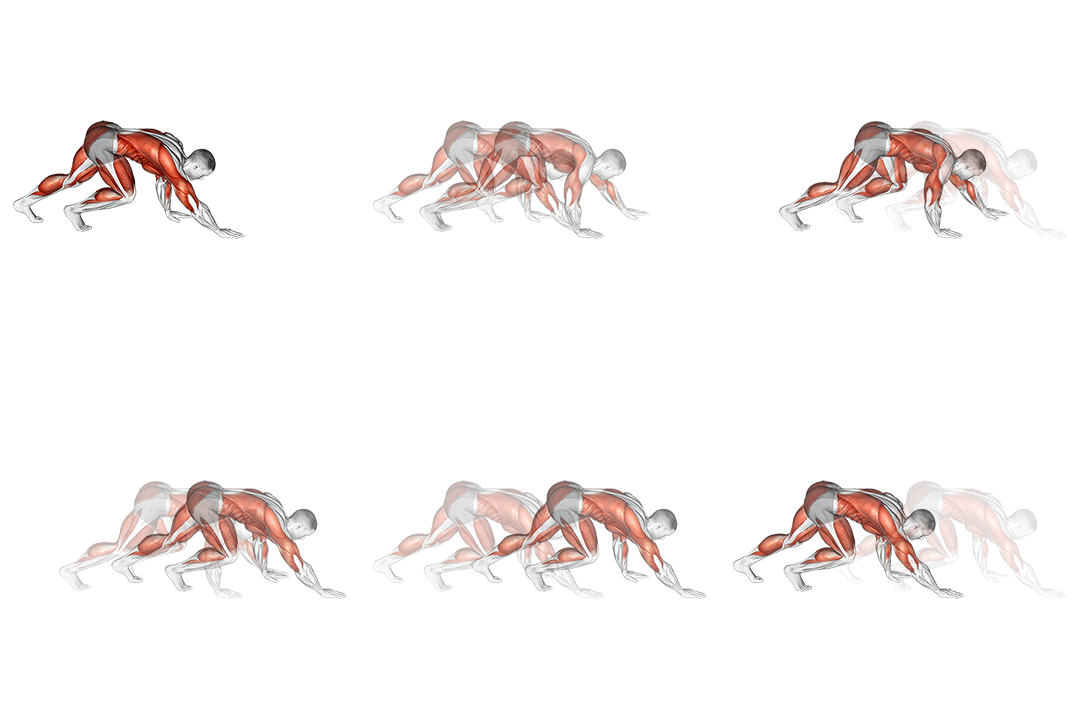
Burpee
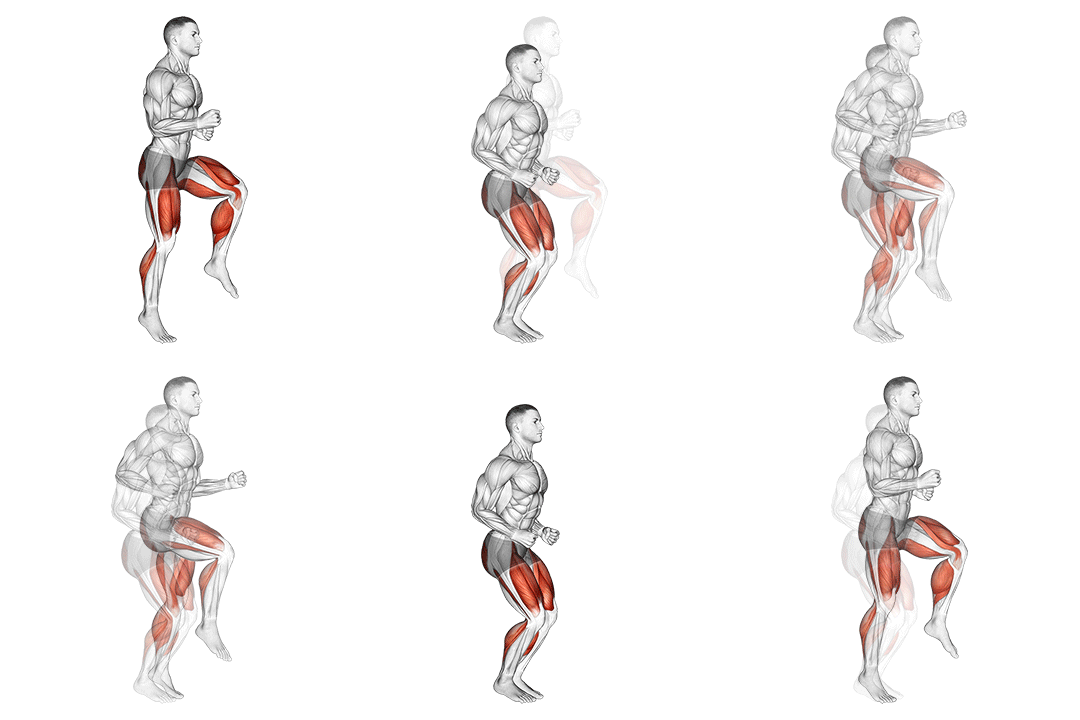
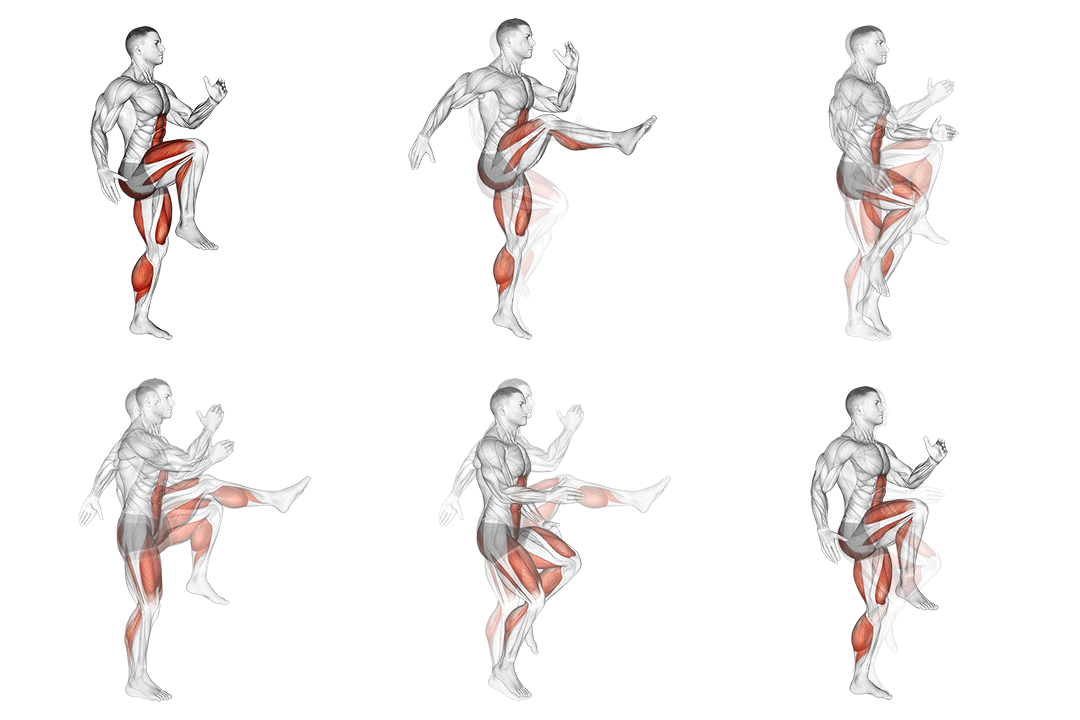
High Knee Against Wall
Visual Comparison
Overview
Burpee vs High Knee Against Wall — if you want efficient cardio and conditioning, you need to pick the right move for your goals. I'll walk you through muscle activation, biomechanics, difficulty, equipment needs, and practical progressions so you can choose confidently. You’ll get clear technique cues (hip hinge, 90° knee drive, spine posture), rep and interval examples, and scenarios that name a winner for muscle growth, strength, beginners, and home sessions. Read on and use the guidance to program these exercises into your workouts based on what you want to improve.
Key Differences
- Difficulty levels differ: Burpee is intermediate, while High Knee Against Wall is beginner.
- Both exercises target the Cardiovascular-system using Body-weight. The main differences are in their movement patterns and muscle activation angles.
Pros & Cons
Burpee
+ Pros
- Full-body conditioning that elevates heart rate quickly and taxes anaerobic systems
- Adds upper-body push and core stability work through the plank and push-up phase
- Easy to scale intensity with tempo, reps (6–15 reps), or added load
- Develops power via explosive triple-extension (ankle-knee-hip)
− Cons
- Higher joint impact and technical demand can stress knees, hips, or shoulders
- Fatigue quickly degrades form—risking spinal flexion or collapsed shoulders
- Requires more space and coordination than simple in-place drills
High Knee Against Wall
+ Pros
- Beginner-friendly cardio drill with low technical complexity
- Low impact on shoulders and spine when performed with back contact on wall
- Very space-efficient and easy to program in interval work (20–60s rounds)
- Allows consistent tempo and high reps for steady-state or HIIT sessions
− Cons
- Limited upper-body stimulus and reduced eccentric loading for hamstrings
- Fewer progressive overload options for long-term muscle strength gains
- Can become monotonous at high volumes without tempo or resistance variation
When Each Exercise Wins
Burpees recruit more muscle groups per rep—upper body push, core anti-extension, and explosive lower-body triple-extension—so they create greater systemic stimulus. Perform sets of 6–12 reps or circuit intervals to induce metabolic and mechanical tension that supports muscle growth.
Although both are bodyweight, burpees include a push-up and explosive jump that load muscles across multiple planes, offering more force-vector variation and chance to add resistance (vests, plate carries). Use slow eccentric push-ups and weighted progressions to prioritize strength.
High Knee Against Wall isolates hip flexion with a stable spine and lower joint load, making it easier to maintain technical quality. Start with 20–40 second intervals at controlled tempo to build conditioning and motor patterning.
High Knee Against Wall needs minimal space and a wall, demands less technical skill, and keeps noise/impact lower—ideal for apartments. It scales easily with interval timing (30–60s) for effective home conditioning.
Frequently Asked Questions
Can I do both Burpee and High Knee Against Wall in the same workout?
Yes. Pair high knees as an activation or warm-up (2–3 sets of 30–45 seconds) to raise heart rate and groove hip flexion, then use burpees in harder circuits or intervals (6–12 reps or 20–40 second all-out sets). This sequencing reduces fatigue-related technical breakdown during burpees.
Which exercise is better for beginners?
High Knee Against Wall is better for beginners because it preserves an upright spine, reduces impact, and isolates a simple movement pattern. Start with short intervals (20–40 seconds) and increase duration before adding complex moves like burpees.
How do the muscle activation patterns differ?
Burpees show a mixed activation pattern: anterior core and shoulders during the plank/push-up, then concentric triple-extension (quads, glutes, calves) during the jump. High knees emphasize repetitive hip flexion and knee drive with lower upper-body involvement, producing a more localized lower-limb rhythm.
Can High Knee Against Wall replace Burpee?
High Knee Against Wall can replace burpees if your goal is low-impact cardio or beginner conditioning, but it won’t match the full-body power or upper-body stimulus of burpees. For systemic overload and multi-joint strength, keep burpees in your program when ready.
Expert Verdict
Use burpees when you need full-body conditioning, power development, and a higher metabolic cost per rep. They shine in circuits and conditioning sets (6–15 reps, or 20–40 seconds EMOM intervals) and can be progressed with added load or jump height. Choose High Knee Against Wall when you want safe, low-tech cardio that’s beginner-friendly or low-impact—perform 30–60 second rounds focusing on a hip-height knee drive (~90° knee flexion) and an upright torso. Program both: start with high knees to build capacity, then add burpees for systemic overload once technique and core control are solid.
Also Compare
More comparisons with Burpee
Compare More Exercises
Use our free comparison tool to analyze any two exercises head-to-head.
Compare Exercises