

Burpee vs Push To Run: Complete Comparison Guide
Burpee vs Push To Run — you’re choosing between two bodyweight, compound cardio moves that tax your heart and legs. If you want to boost conditioning, improve power, or slot hard intervals into a short session, this comparison will help you pick the right tool. I’ll break down how each exercise loads muscles (primary and secondary), show key technique cues, compare equipment and progression options, and give clear winners for common goals like hypertrophy, strength, beginners, and home workouts. Read on and you’ll know exactly when to use Burpees, when to use Push To Run, and how to perform each safely.
Exercise Comparison
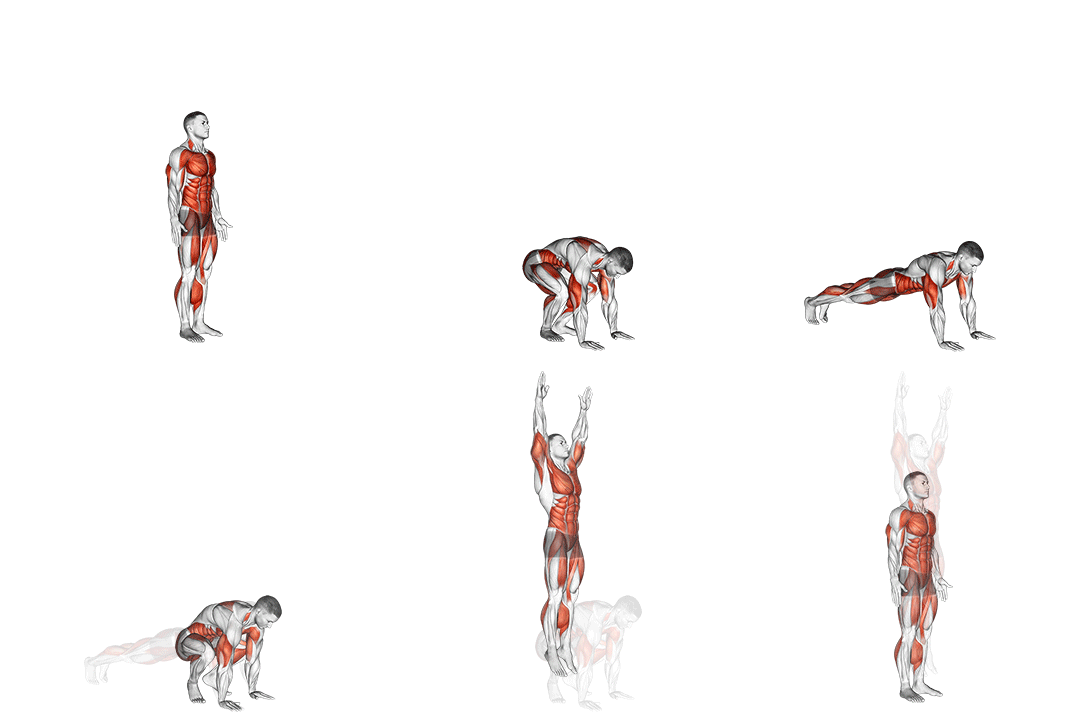
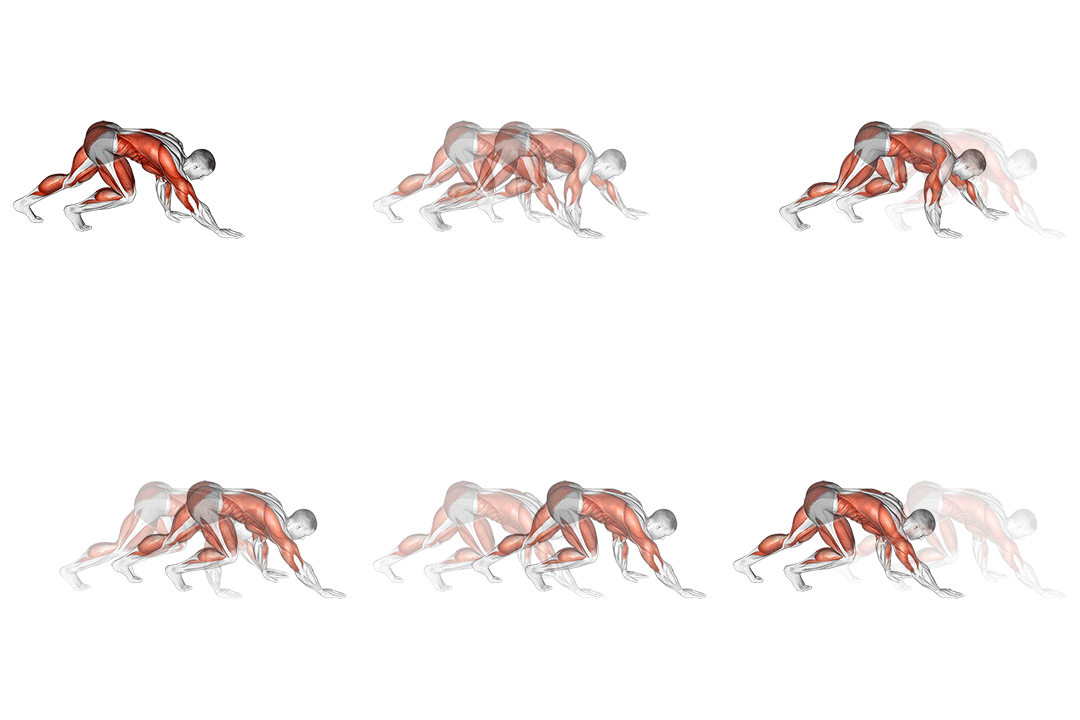
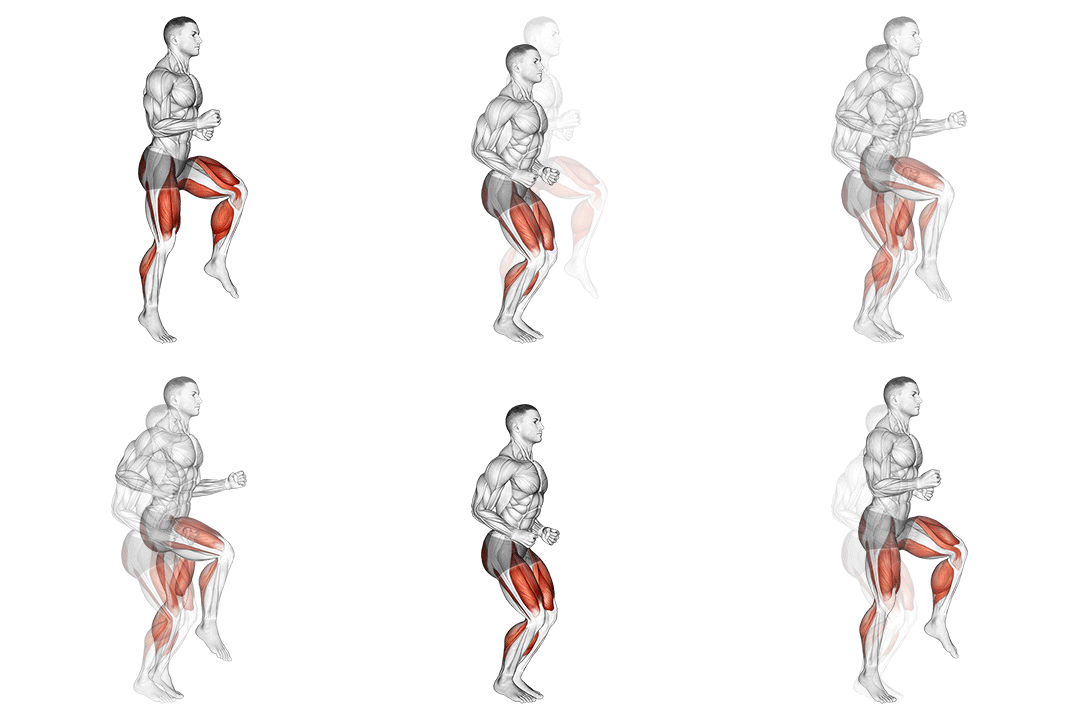
Burpee
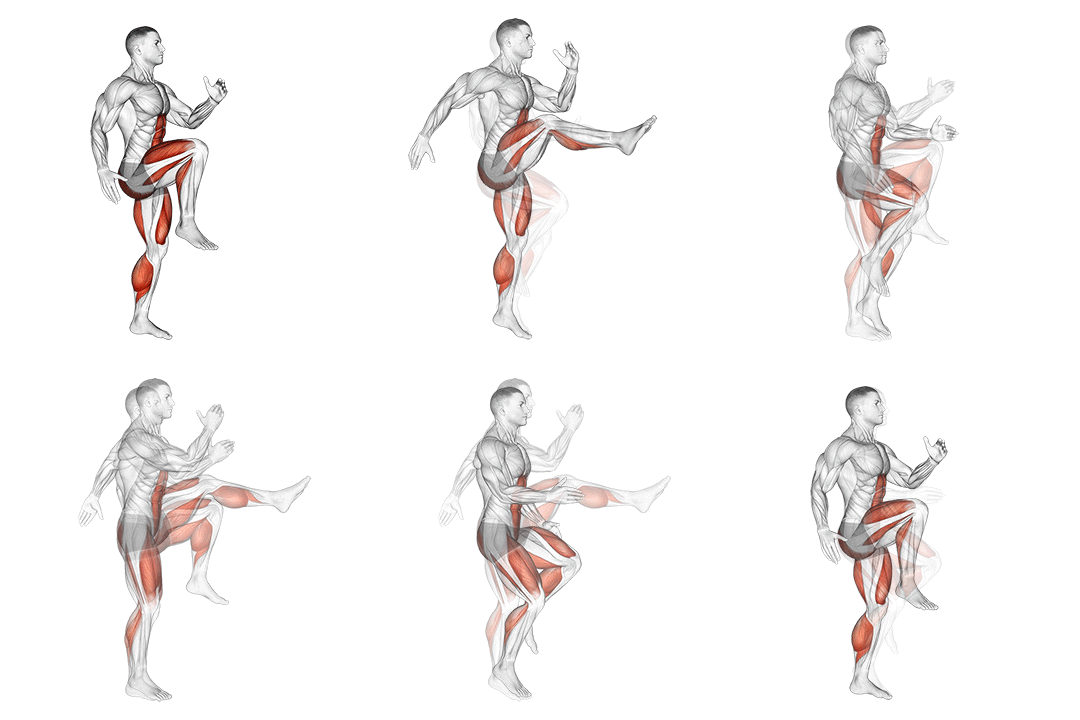
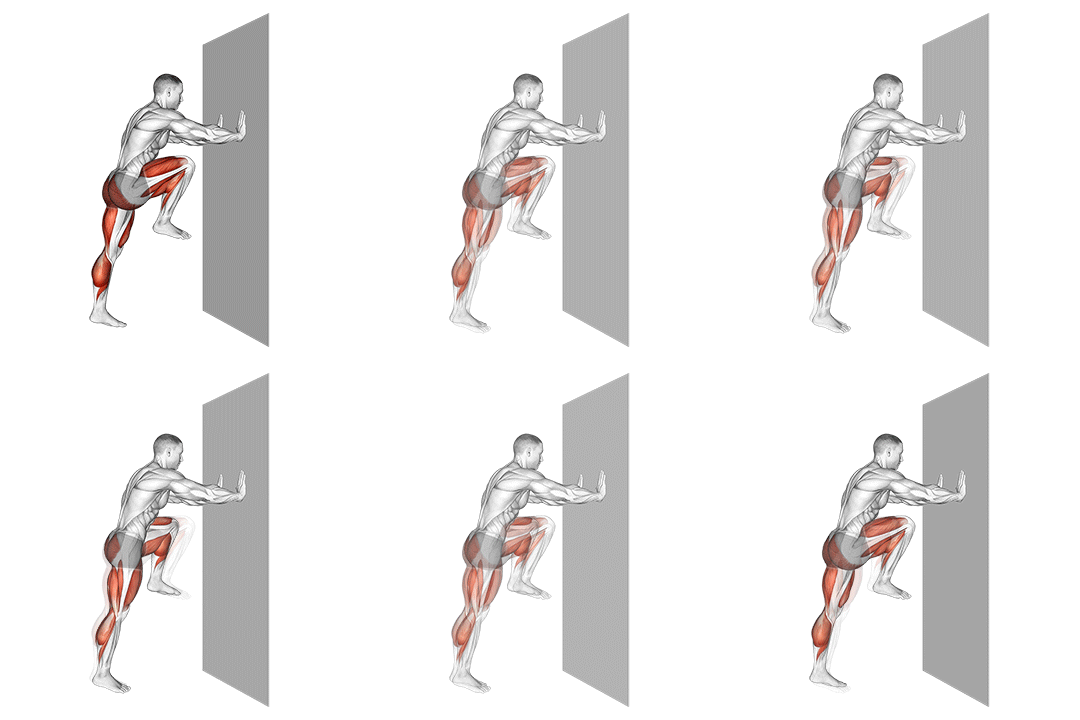
Push To Run
Head-to-Head Comparison
| Attribute | Burpee | Push To Run |
|---|---|---|
| Target Muscle |
Cardiovascular-system
|
Cardiovascular-system
|
| Body Part |
Cardio
|
Cardio
|
| Equipment |
Body-weight
|
Body-weight
|
| Difficulty |
Intermediate
|
Intermediate
|
| Movement Type |
Compound
|
Compound
|
| Secondary Muscles |
5
|
3
|
Secondary Muscles Activated
Burpee
Push To Run
Visual Comparison
Overview
Burpee vs Push To Run — you’re choosing between two bodyweight, compound cardio moves that tax your heart and legs. If you want to boost conditioning, improve power, or slot hard intervals into a short session, this comparison will help you pick the right tool. I’ll break down how each exercise loads muscles (primary and secondary), show key technique cues, compare equipment and progression options, and give clear winners for common goals like hypertrophy, strength, beginners, and home workouts. Read on and you’ll know exactly when to use Burpees, when to use Push To Run, and how to perform each safely.
Key Differences
- Both exercises target the Cardiovascular-system using Body-weight. The main differences are in their movement patterns and muscle activation angles.
Pros & Cons
Burpee
+ Pros
- Combines upper- and lower-body work for whole-body conditioning
- Easy to scale intensity with reps, tempo, or weighted vest
- Strong posterior and anterior chain stimulus plus chest/shoulder loading
- Efficient: high caloric and cardiovascular demand per minute
− Cons
- Higher technical demand—push-up and jump transitions require coordination
- Greater shoulder and wrist stress for those with mobility issues
- Harder to maintain perfect form at high rep speeds, increasing injury risk
Push To Run
+ Pros
- Simpler pattern, easier to learn and maintain under fatigue
- Lower upper-body loading—better for those with shoulder or wrist pain
- Excellent for repeated hip/knee/ankle power and short-ground-contact conditioning
- Requires minimal space and scales well with cadence
− Cons
- Less upper-body stimulus—limited chest and shoulder development
- Can overload calves or Achilles if jumped too rapidly
- Less variety for upper-body strength progressions
When Each Exercise Wins
Burpees load the chest, shoulders, triceps, quads, and glutes in one compound sequence, offering more total-muscle recruitment per rep. You can also add a weighted vest or slow the eccentric push-up to increase time under tension for hypertrophy.
Burpees provide an upper-body push element and allow progressive overload via weighted vests and harder push-up variations, enabling greater absolute force development than Push To Run's primarily plyometric pattern.
Push To Run removes the plank-to-push-up complexity and focuses on a running-drive pattern that beginners can pick up in 1–3 sessions, lowering technical and shoulder demands while still producing high cardiovascular stress.
Both work well at home, but Push To Run is marginally better when space is tight or when you need a lower-risk option for shoulders and wrists. It scales with cadence and requires no additional progressions.
Frequently Asked Questions
Can I do both Burpee and Push To Run in the same workout?
Yes. Pair them in alternation: e.g., 30 seconds Push To Run followed by 30 seconds Burpees for 4–6 rounds to mix high-cadence plyometrics with upper-body loading. Monitor form and reduce volume if technique breaks down.
Which exercise is better for beginners?
Push To Run is better for most beginners because it removes the push-up transition and is easier to scale. Start with short sets (20–30 seconds) and build to 3–5 rounds before adding Burpee progressions.
How do the muscle activation patterns differ?
Burpees include a horizontal pushing phase (push-up) that increases pectoral and anterior shoulder EMG, followed by a vertical jump phase recruiting quads and glutes. Push To Run emphasizes repeated hip, knee, and ankle extension with shorter ground contact, increasing calf and quad stretch-shortening cycle contributions.
Can Push To Run replace Burpee?
Push To Run can replace Burpees if your priorities are lower shoulder load and simpler technique, or if you want focused lower-body plyometrics. For combined upper-body conditioning and progressive overload, keep Burpees in your program.
Expert Verdict
Use Burpees when you want a time-efficient, total-body conditioning tool that also stresses the upper body and allows straightforward progressive overload (weighted vests, harder push-ups). Choose Burpees when your goal includes upper-body strength or combined power and strength intervals. Use Push To Run when you need an easier-to-learn, lower-shoulder-load option that emphasizes hip extension, calf power, and high-cadence conditioning. For beginners or people with shoulder/wrist issues, start with Push To Run and layer in Burpee variations as mobility and strength improve. Program both into cycles for balanced conditioning: Push To Run for tempo work, Burpees for strength-conditioned intervals.
Also Compare
More comparisons with Burpee
Compare More Exercises
Use our free comparison tool to analyze any two exercises head-to-head.
Compare Exercises