

Cable Alternate Shoulder Press vs Cable Cross-over Revers Fly: Complete Comparison Guide
Cable Alternate Shoulder Press vs Cable Cross-over Revers Fly — if you want stronger, fuller shoulders you need to pick the right tool. I’ll walk you through how each move stresses the delts, which secondary muscles pick up the load, how technique and force vectors change results, and which fits your goal: hypertrophy, strength, rehab or home training. Expect clear cues (body position, elbow path, scapular control), rep ranges (6–12 for presses, 8–20 for isolations), and practical progressions so you can choose the best exercise for your program.
Exercise Comparison
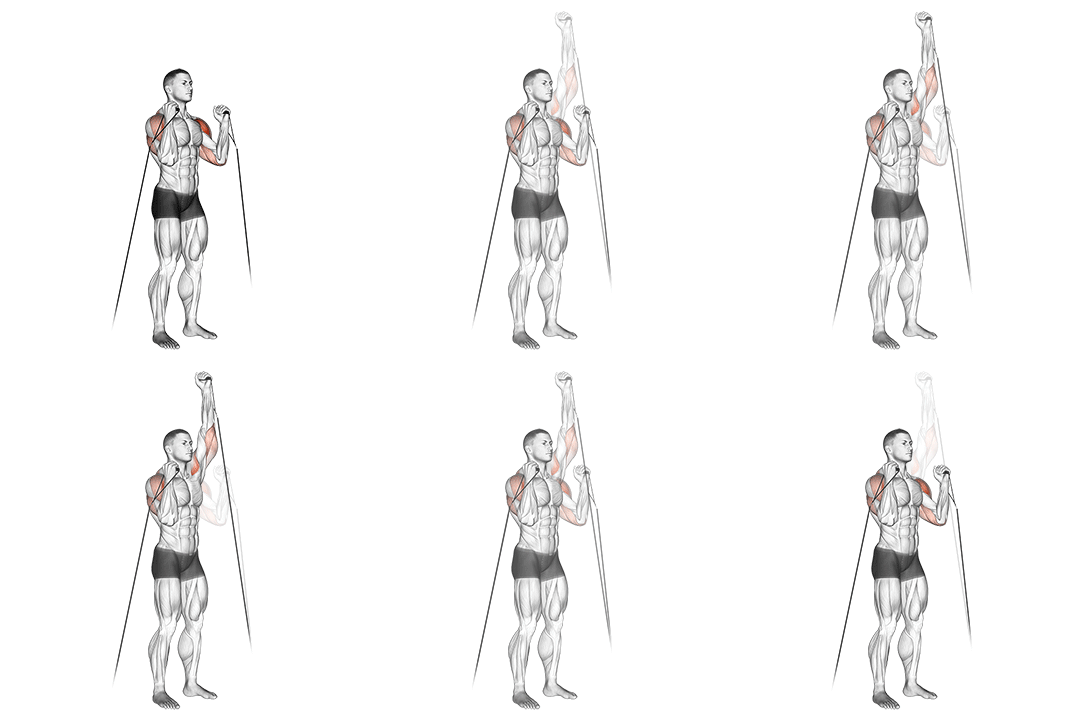
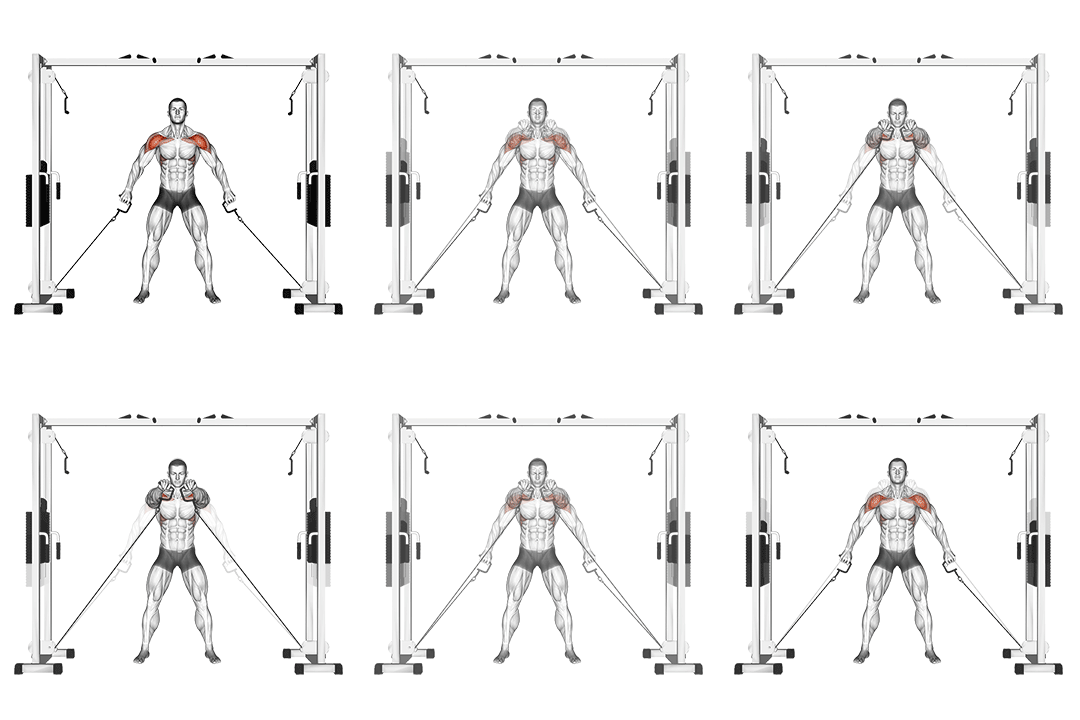
Cable Alternate Shoulder Press
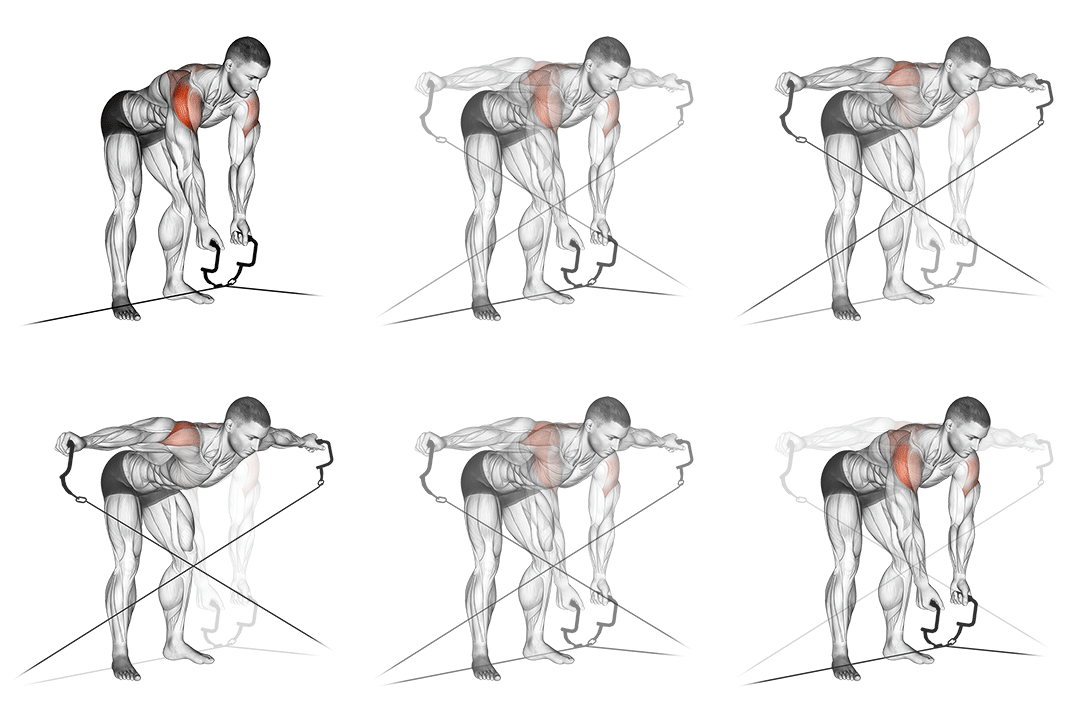
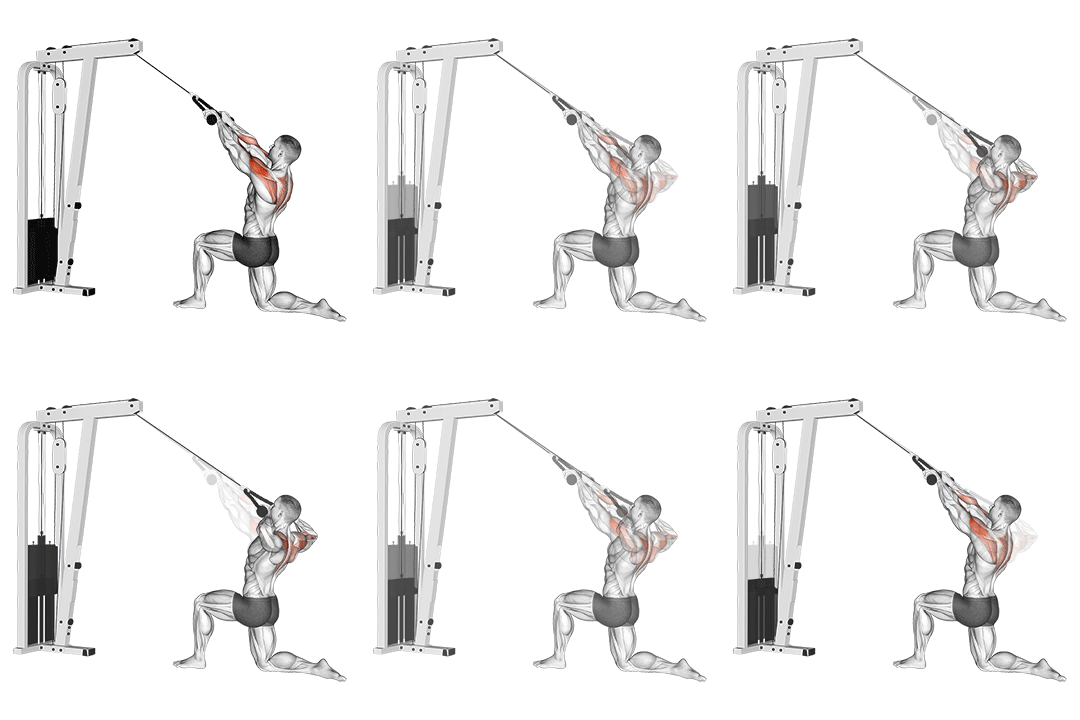
Cable Cross-over Revers Fly
Head-to-Head Comparison
| Attribute | Cable Alternate Shoulder Press | Cable Cross-over Revers Fly |
|---|---|---|
| Target Muscle |
Delts
|
Delts
|
| Body Part |
Shoulders
|
Shoulders
|
| Equipment |
Cable
|
Cable
|
| Difficulty |
Intermediate
|
Intermediate
|
| Movement Type |
Compound
|
Isolation
|
| Secondary Muscles |
2
|
2
|
Secondary Muscles Activated
Cable Alternate Shoulder Press
Cable Cross-over Revers Fly
Visual Comparison
Overview
Cable Alternate Shoulder Press vs Cable Cross-over Revers Fly — if you want stronger, fuller shoulders you need to pick the right tool. I’ll walk you through how each move stresses the delts, which secondary muscles pick up the load, how technique and force vectors change results, and which fits your goal: hypertrophy, strength, rehab or home training. Expect clear cues (body position, elbow path, scapular control), rep ranges (6–12 for presses, 8–20 for isolations), and practical progressions so you can choose the best exercise for your program.
Key Differences
- Cable Alternate Shoulder Press is a compound movement, while Cable Cross-over Revers Fly is an isolation exercise.
- Both exercises target the Delts using Cable. The main differences are in their movement patterns and muscle activation angles.
Pros & Cons
Cable Alternate Shoulder Press
+ Pros
- Compound movement that loads anterior and lateral delts while building pressing strength
- Carries over to bench and overhead strength — good for overall upper-body development
- Allows heavier external loads (often 20–50% more than isolation variations) for progressive overload
- Core bracing and unilateral work improve anti-rotational stability when performed alternately
− Cons
- Higher compressive shoulder and spinal load when overloaded
- Can overemphasize anterior delts and traps if technique is poor
- Requires good thoracic extension and scapular mobility to press safely
Cable Cross-over Revers Fly
+ Pros
- Direct isolation of posterior deltoid to correct muscular imbalances
- Strong recruitment of rhomboids and mid-traps for improved posture and scapular control
- Low absolute loading reduces joint compressive stress when performed correctly
- Easy to manipulate tempo and angle to hit the posterior fiber line-of-pull
− Cons
- Harder to load heavily — limited for pure strength development
- Requires dual-pulley setup or crossover frame for optimal mechanics
- Technical demand for scapular retraction and transverse-plane control
When Each Exercise Wins
The press lets you use heavier loads and longer sets in the 6–12 rep range, generating higher mechanical tension on the delts and triceps. Use presses as the primary mass-builder, then add 2–3 sets of reverse flys (10–15 reps) to target rear delt fibers and improve balance.
As a compound vertical press it supports progressive overload and neural adaptations; you can increase load in 2.5–5% increments and work lower rep ranges (3–6) to build maximal pressing strength and transfer to other lifts.
Beginners will learn a clear movement pattern and build basic pressing strength while developing core bracing. Keep reps at 8–12, use a bench for support if needed, and focus on elbow tracking and neutral spine before increasing load.
If you lack a heavy cable machine, the reverse fly adapts well to resistance bands or light dumbbells and targets the often-neglected posterior delts. That makes it a practical, low-equipment option for posture work and rear-delt hypertrophy.
Frequently Asked Questions
Can I do both Cable Alternate Shoulder Press and Cable Cross-over Revers Fly in the same workout?
Yes — program the press first as your heavy compound movement (3–5 sets, 6–12 reps), then follow with reverse flys as an accessory (2–4 sets, 10–15 reps) to fatigue the posterior delts and reinforce scapular control.
Which exercise is better for beginners?
The Cable Alternate Shoulder Press is generally better for beginners because the vertical pressing pattern is easier to learn and load progressively. Start seated or with light resistance, nail the elbow path and neutral spine, then add accessory reverse flys for rear-delt balance.
How do the muscle activation patterns differ?
Pressing produces a vertical force vector that stresses anterior and lateral delts with higher triceps contribution and peak force early in elevation. Reverse flys use a transverse-plane pull that peaks posterior delt and scapular muscle activation later in the ROM, favoring length-tension at longer muscle lengths.
Can Cable Cross-over Revers Fly replace Cable Alternate Shoulder Press?
Not if your primary goal is pressing strength or overall shoulder mass — the reverse fly is an isolation that won’t provide the same mechanical tension or triceps recruitment. Use it as a complementary exercise to target rear delts and posture.
Expert Verdict
Use the Cable Alternate Shoulder Press as your primary shoulder mover when your goal is overall deltoid size and pressing strength — load it in 6–12 reps for hypertrophy or 3–6 for strength, keep elbows tracking roughly under handles, and brace your core to protect the spine. Add the Cable Cross-over Revers Fly as an accessory to correct posterior delt weakness and improve scapular control; perform 8–20 controlled reps with a 2–3 s eccentric and ensure scapular retraction. For balanced shoulder development, prioritize presses early in the session and finish with 2–4 sets of reverse flys to manage muscle length-tension and reduce injury risk.
Also Compare
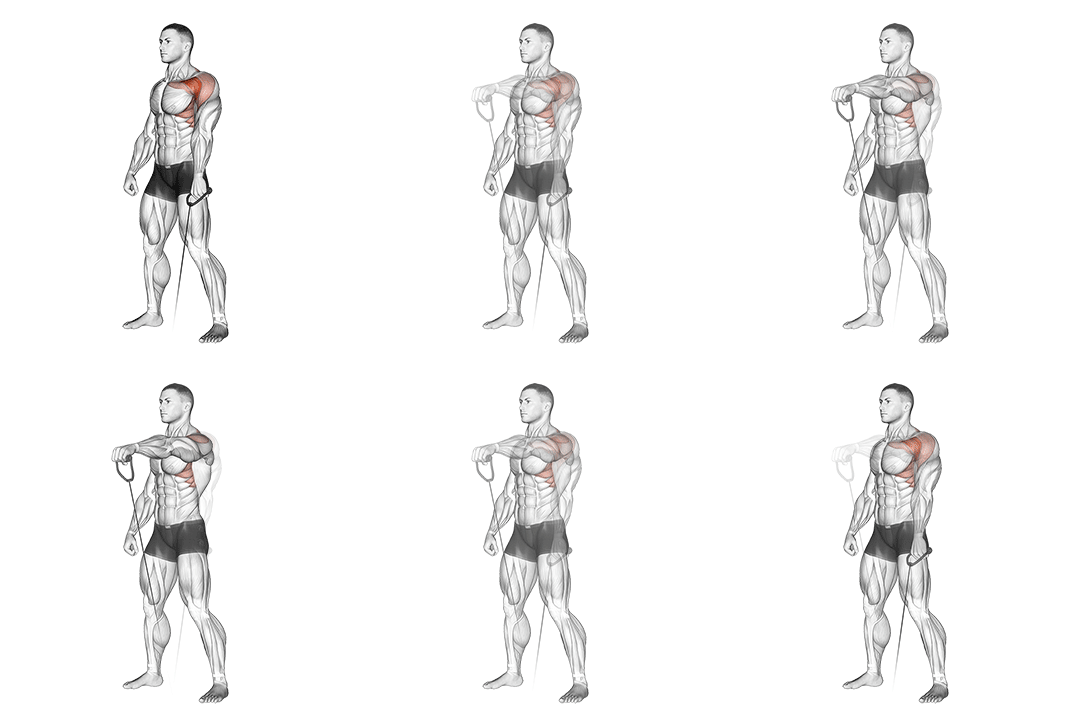
More comparisons with Cable Alternate Shoulder Press
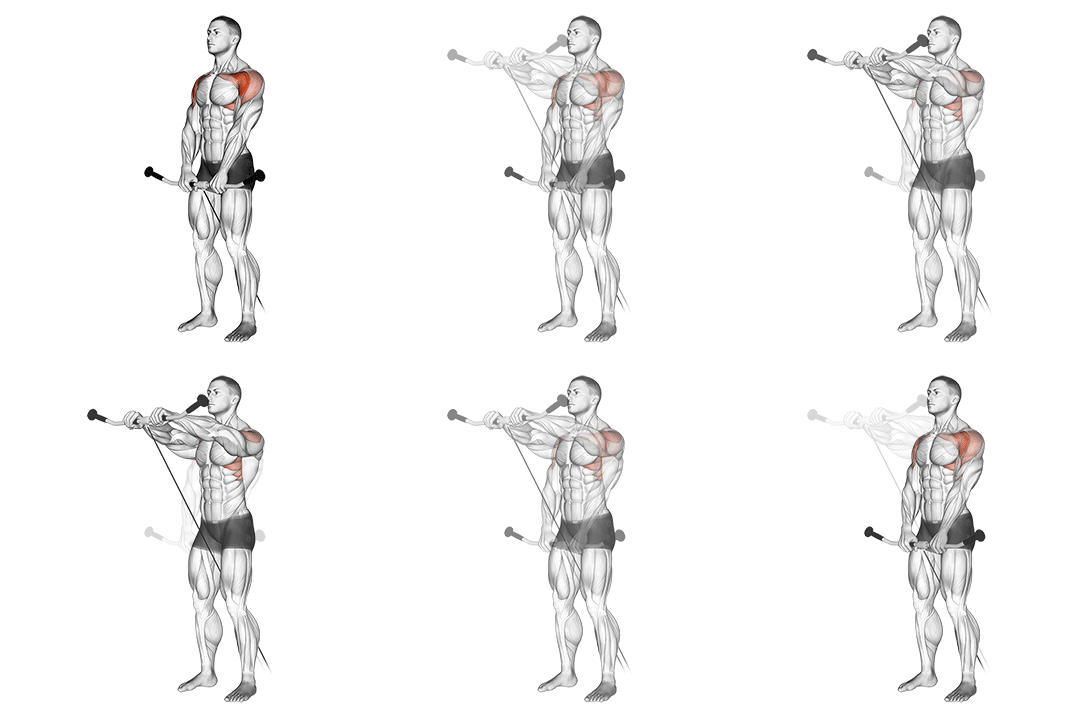
More comparisons with Cable Cross-over Revers Fly
Compare More Exercises
Use our free comparison tool to analyze any two exercises head-to-head.
Compare Exercises