

Cable Alternate Shoulder Press vs Cable Forward Raise: Complete Comparison Guide
Cable Alternate Shoulder Press vs Cable Forward Raise — which moves should be in your shoulder rotation? You’ll get a clear, practical breakdown so you can pick the right tool for your goals. I’ll cover which heads of the deltoid each exercise emphasizes, how the load and force vectors change muscle activation, exact technique cues (angles, rep ranges), equipment needs, progression routes, and injury-risk considerations so you can program the best shoulder work for muscle growth or strength.
Exercise Comparison
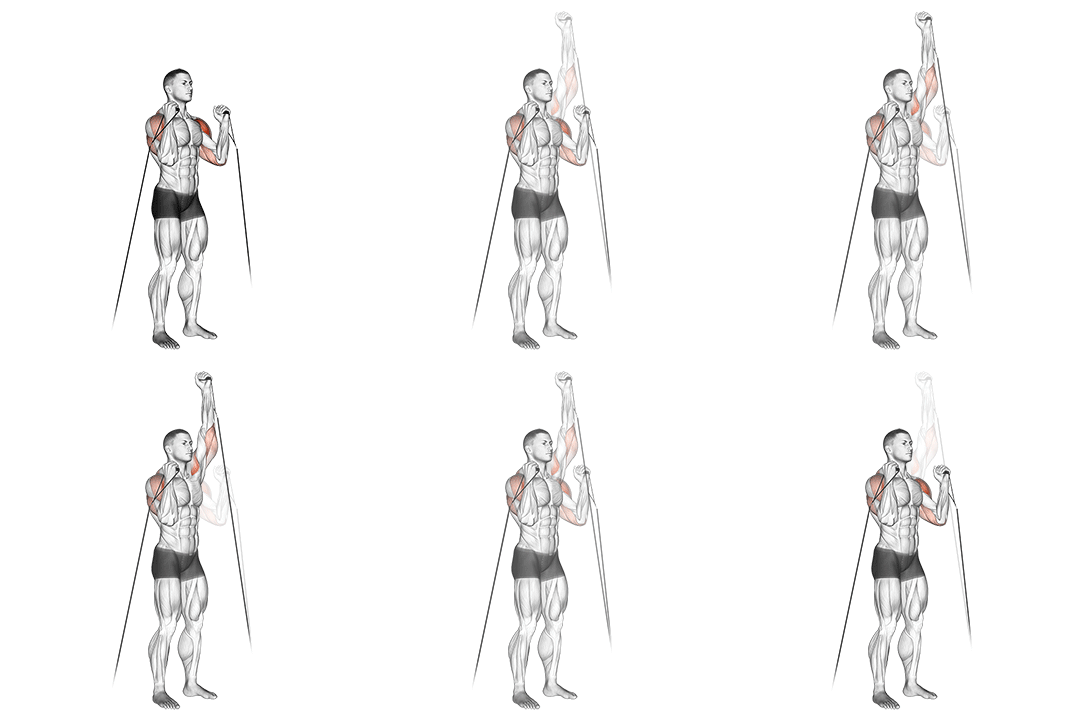
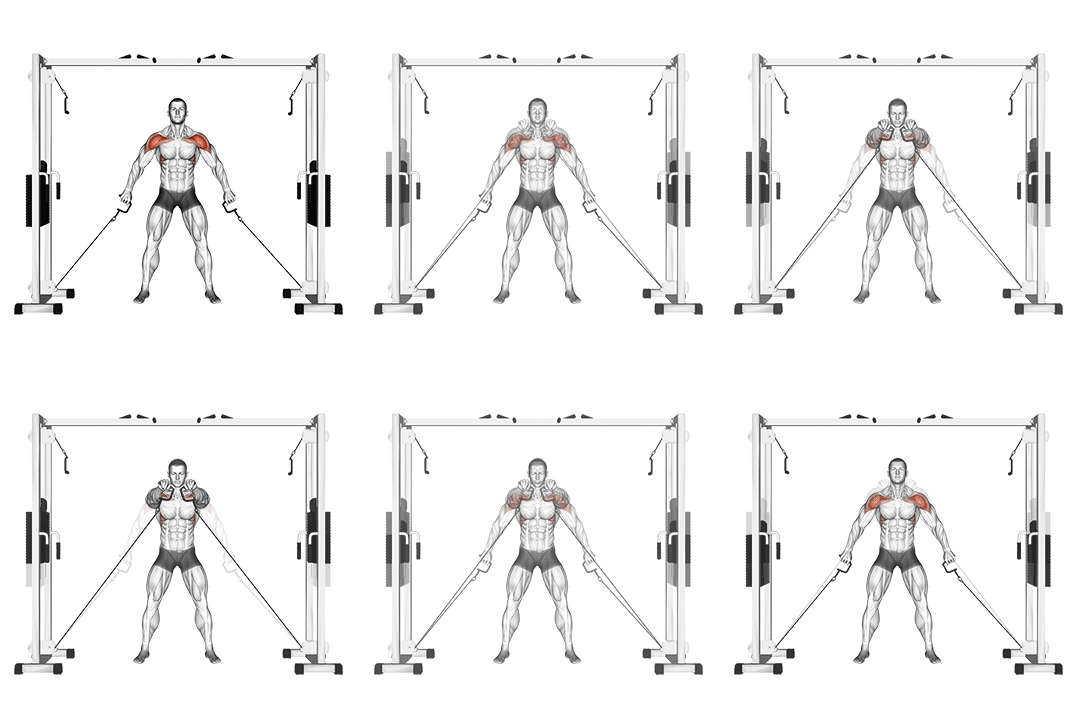
Cable Alternate Shoulder Press
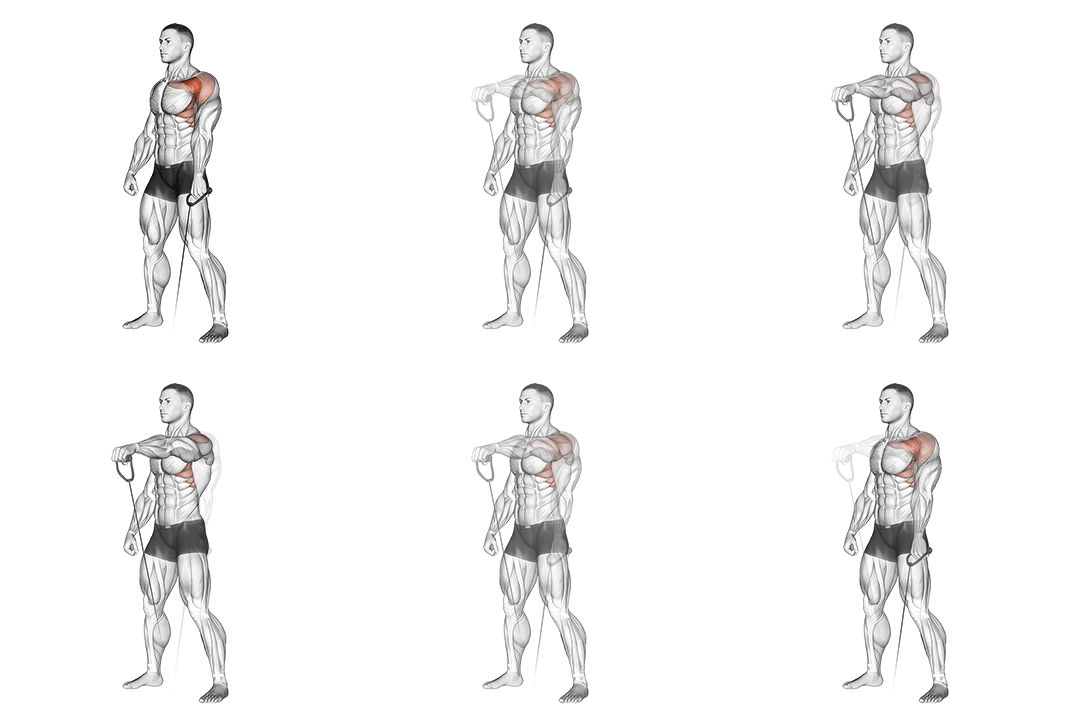
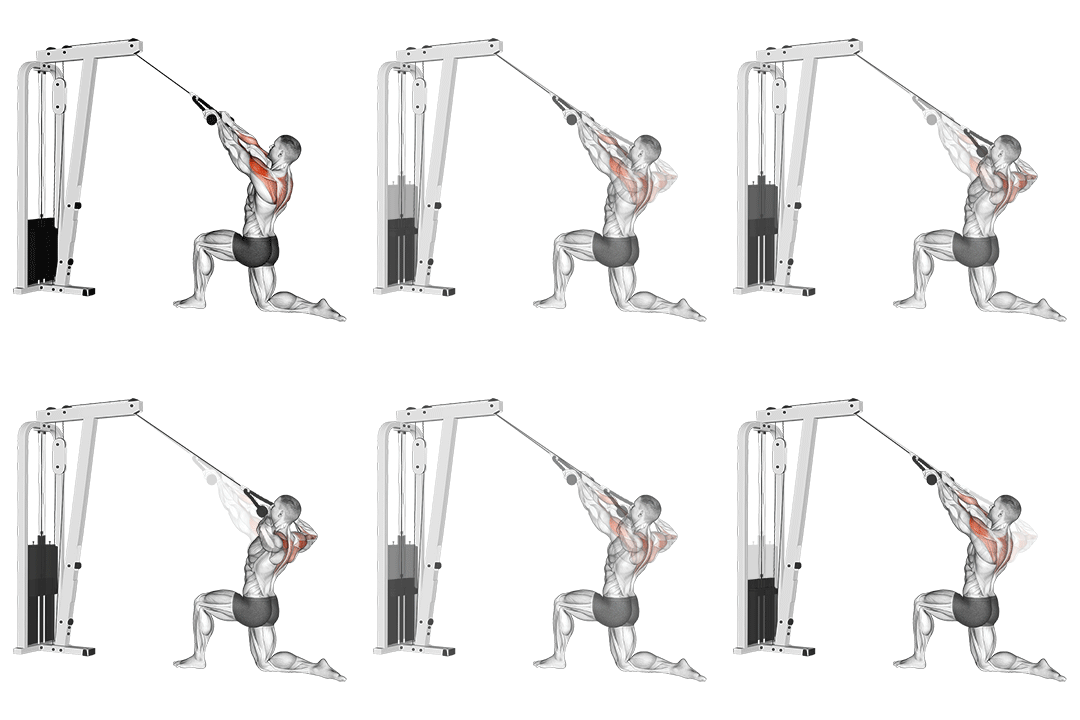
Cable Forward Raise
Head-to-Head Comparison
| Attribute | Cable Alternate Shoulder Press | Cable Forward Raise |
|---|---|---|
| Target Muscle |
Delts
|
Delts
|
| Body Part |
Shoulders
|
Shoulders
|
| Equipment |
Cable
|
Cable
|
| Difficulty |
Intermediate
|
Beginner
|
| Movement Type |
Compound
|
Isolation
|
| Secondary Muscles |
2
|
2
|
Secondary Muscles Activated
Cable Alternate Shoulder Press
Cable Forward Raise
Visual Comparison
Overview
Cable Alternate Shoulder Press vs Cable Forward Raise — which moves should be in your shoulder rotation? You’ll get a clear, practical breakdown so you can pick the right tool for your goals. I’ll cover which heads of the deltoid each exercise emphasizes, how the load and force vectors change muscle activation, exact technique cues (angles, rep ranges), equipment needs, progression routes, and injury-risk considerations so you can program the best shoulder work for muscle growth or strength.
Key Differences
- Cable Alternate Shoulder Press is a compound movement, while Cable Forward Raise is an isolation exercise.
- Difficulty levels differ: Cable Alternate Shoulder Press is intermediate, while Cable Forward Raise is beginner.
- Both exercises target the Delts using Cable. The main differences are in their movement patterns and muscle activation angles.
Pros & Cons
Cable Alternate Shoulder Press
+ Pros
- Loads multiple deltoid heads plus triceps and upper back for efficient training
- Better for progressive overload and strength (work with 6–12 rep ranges)
- Unilateral version trains anti-rotation and core stability
- Vertical force vector improves overall shoulder mechanical loading
− Cons
- Requires more coordination and coaching to nail scapular mechanics
- Higher systemic fatigue—less isolation of the anterior deltoid
- Greater demand on core and lower-back stability if performed standing
Cable Forward Raise
+ Pros
- Simple, low-skill movement ideal for isolating the anterior deltoid
- Easy to set up and great for high-rep damage control (8–15+ reps)
- Lower systemic fatigue—useful as a finisher or pre-exhaust
- Works well with light cables, bands, or low pulley setups
− Cons
- Limited progression ceiling compared with compound presses
- Higher risk of subacromial impingement if scapulae aren’t controlled
- Minimal involvement of lateral delts and upper back for overall shoulder balance
When Each Exercise Wins
Use the alternate press for hypertrophy because it loads multiple deltoid heads and allows heavier resistance—worksets of 6–12 reps with controlled eccentrics increase total muscle tension and metabolic stress, driving greater overall shoulder muscle growth.
The press is a compound lift with a vertical force vector that lets you overload the shoulder-triceps chain. Low-rep strength work (4–8 reps) and heavier single-arm loading transfer better to overall pressing strength than isolation raises.
Forward raises are easier to teach and master—single-joint movement, clear range to ~90° of flexion, and lower coordination demands let beginners safely build anterior deltoid strength and motor control.
Forward raises translate cleanly to resistance bands or single low-pulley setups you’re more likely to have at home; they require less space and no heavy loading that would need a commercial cable stack.
Frequently Asked Questions
Can I do both Cable Alternate Shoulder Press and Cable Forward Raise in the same workout?
Yes — program the press earlier as a compound heavy or moderate set (6–12 reps), then add 2–4 sets of forward raises as a finisher (8–15 reps) to overload the anterior deltoid and increase metabolic stress without excessive systemic fatigue.
Which exercise is better for beginners?
Beginners should start with the Cable Forward Raise to learn shoulder flexion mechanics and build deltoid endurance. Once you have basic stability and scapular control, add the Cable Alternate Shoulder Press for multi-joint strength and larger workloads.
How do the muscle activation patterns differ?
Pressing is multi-joint with a vertical force vector, engaging anterior and lateral delts plus triceps and scapular stabilizers throughout the range. Forward raises are single-joint shoulder flexion with the moment arm peaking around 70–100°, producing concentrated anterior deltoid activation in the mid-range.
Can Cable Forward Raise replace Cable Alternate Shoulder Press?
Not if your goal is overall shoulder strength or balanced delt development—forward raises isolate the anterior head and lack the triceps and upper-back stimulus you get from presses. Use the raise as a supplement, not a full replacement, when you need targeted work or lighter-volume sessions.
Expert Verdict
Use the Cable Alternate Shoulder Press as your primary shoulder compound when you want total shoulder development and strength. It places longer muscle tension across anterior and lateral delts and brings triceps and scapular stabilizers into play—ideal for 6–12 rep strength/hypertrophy blocks. Use the Cable Forward Raise as an isolation tool: perfect for finishing sets, correcting anterior-dominant weaknesses, and safe high-rep stimulus (8–15+ reps). If you train for size or pressing strength, prioritize the press; if you need targeted anterior delt work, rehab-friendly volume, or a simple home option, prioritize the forward raise.
Also Compare
More comparisons with Cable Alternate Shoulder Press
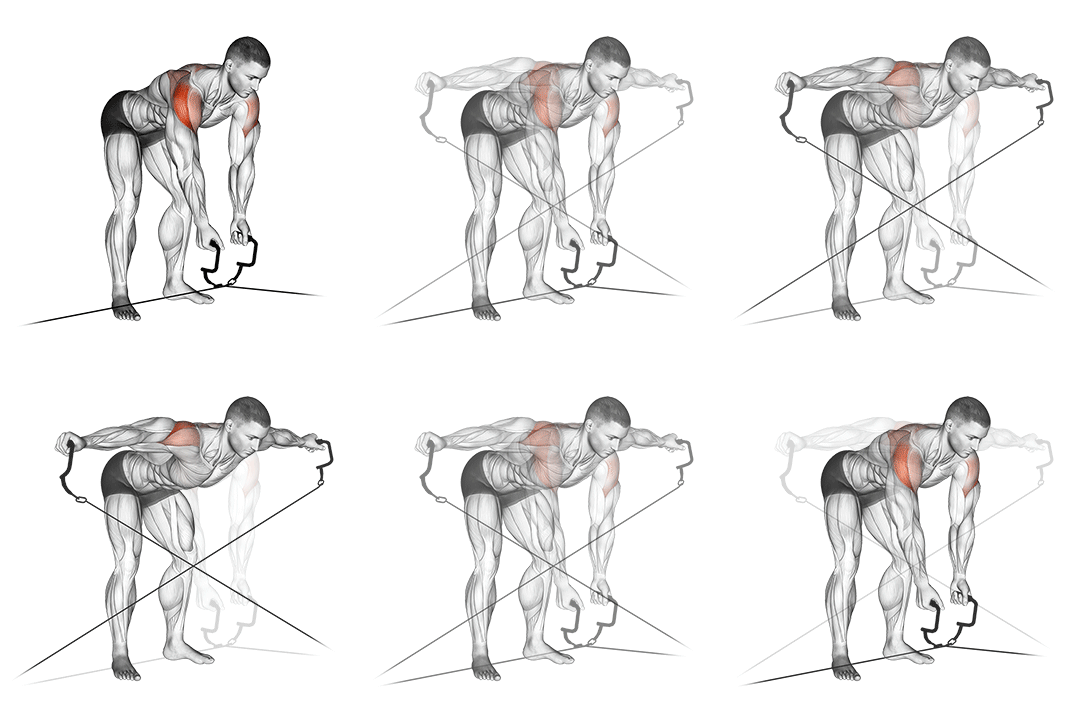
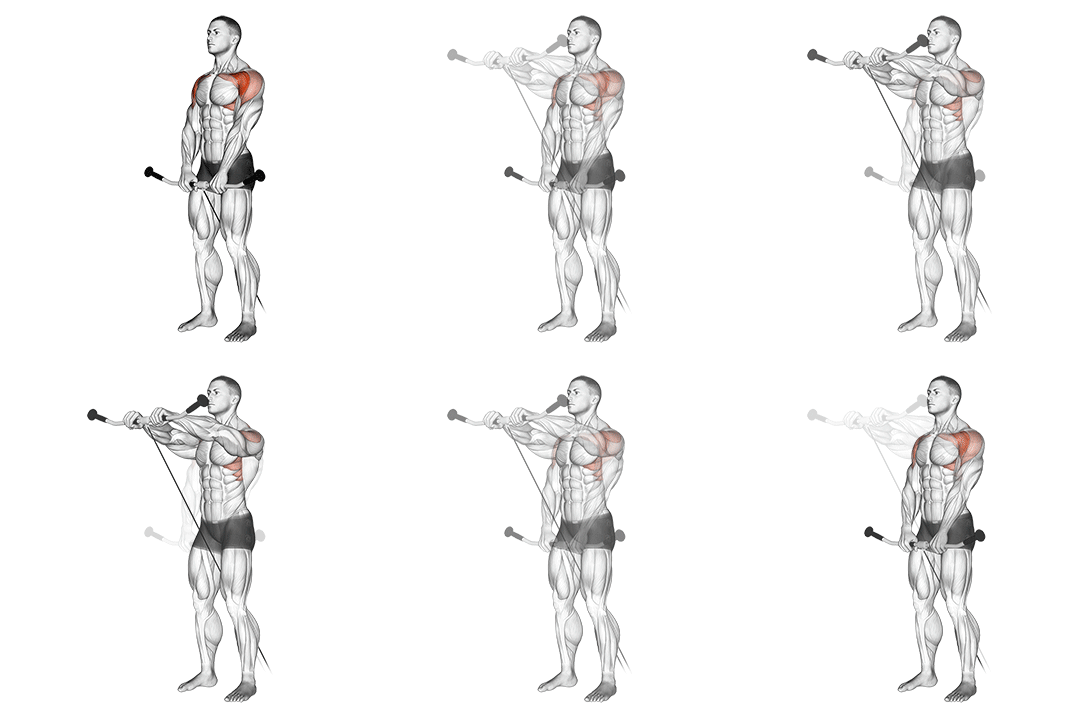
More comparisons with Cable Forward Raise
Compare More Exercises
Use our free comparison tool to analyze any two exercises head-to-head.
Compare Exercises