

Cable Alternate Shoulder Press vs Cable Front Raise: Complete Comparison Guide
Cable Alternate Shoulder Press vs Cable Front Raise — which should you put in your program? If you want clearer shoulder development, stronger pressing mechanics, or a safer isolation movement, this comparison gives you the answers. I’ll walk you through primary and secondary muscle activation, equipment needs, learning curve, injury risk, and when to choose each exercise for hypertrophy, strength, or rehab. Read on for technique cues, biomechanical reasoning, and actionable rep/tempo recommendations so you can pick the movement that matches your goals.
Exercise Comparison
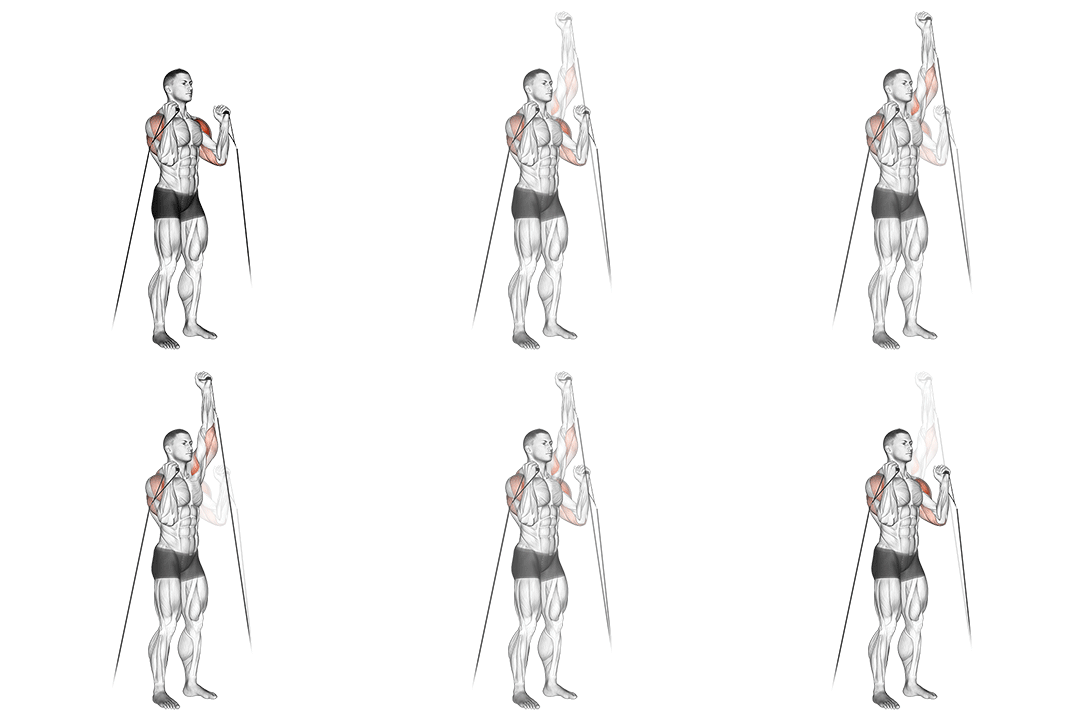
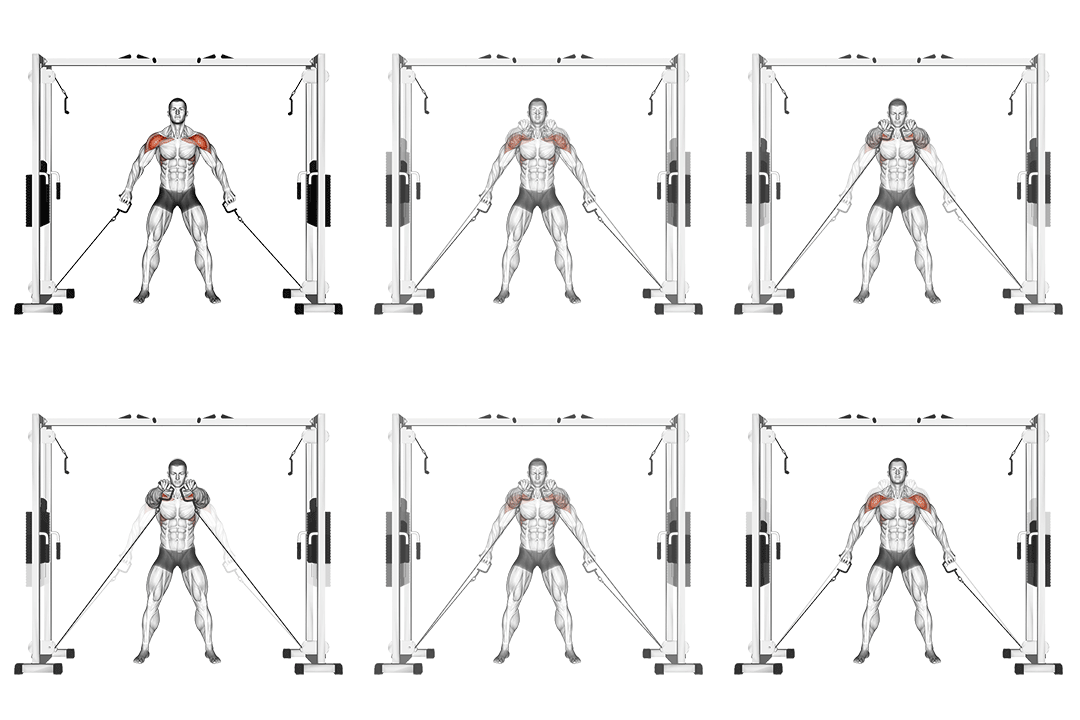
Cable Alternate Shoulder Press
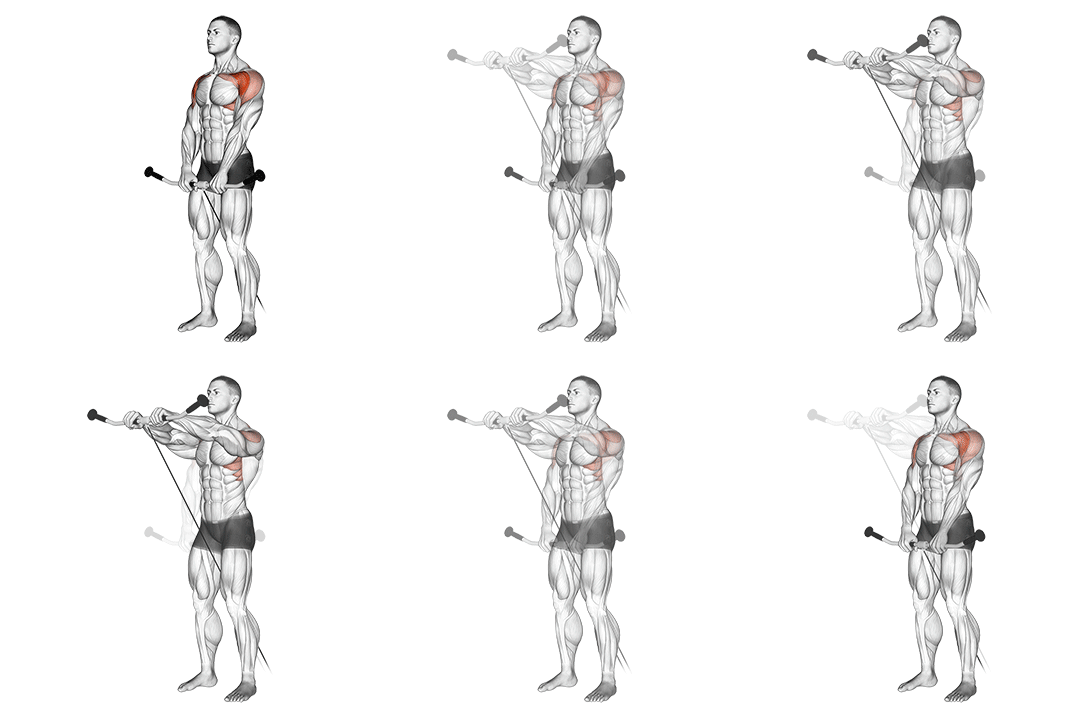
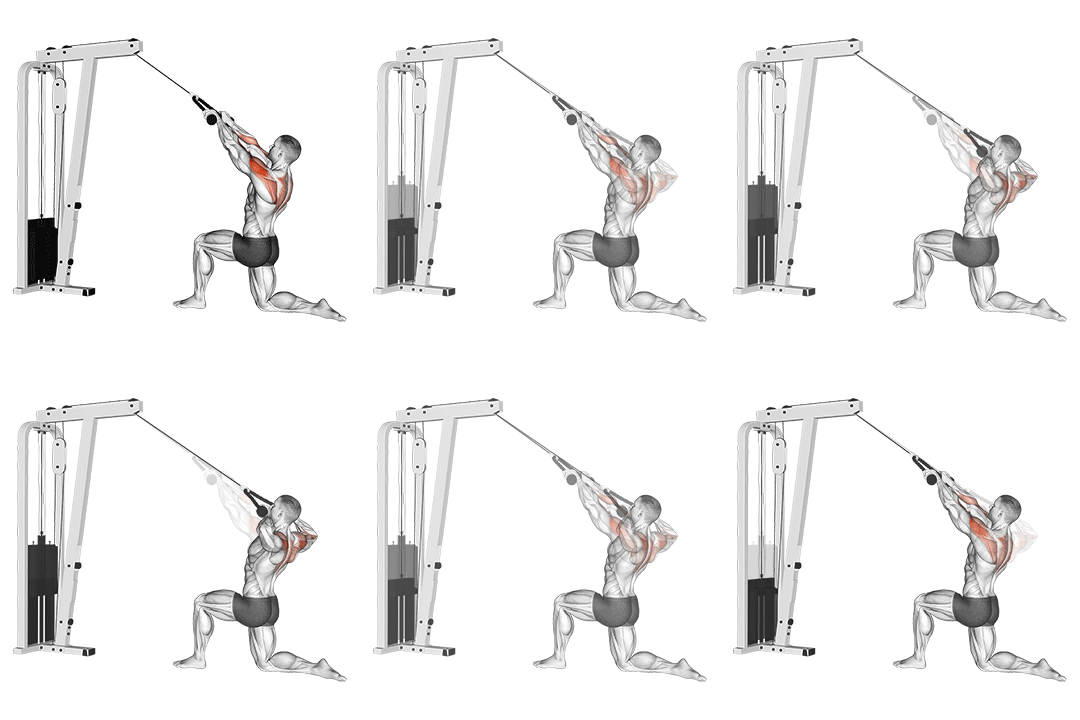
Cable Front Raise
Head-to-Head Comparison
| Attribute | Cable Alternate Shoulder Press | Cable Front Raise |
|---|---|---|
| Target Muscle |
Delts
|
Delts
|
| Body Part |
Shoulders
|
Shoulders
|
| Equipment |
Cable
|
Cable
|
| Difficulty |
Intermediate
|
Beginner
|
| Movement Type |
Compound
|
Isolation
|
| Secondary Muscles |
2
|
2
|
Secondary Muscles Activated
Cable Alternate Shoulder Press
Cable Front Raise
Visual Comparison
Overview
Cable Alternate Shoulder Press vs Cable Front Raise — which should you put in your program? If you want clearer shoulder development, stronger pressing mechanics, or a safer isolation movement, this comparison gives you the answers. I’ll walk you through primary and secondary muscle activation, equipment needs, learning curve, injury risk, and when to choose each exercise for hypertrophy, strength, or rehab. Read on for technique cues, biomechanical reasoning, and actionable rep/tempo recommendations so you can pick the movement that matches your goals.
Key Differences
- Cable Alternate Shoulder Press is a compound movement, while Cable Front Raise is an isolation exercise.
- Difficulty levels differ: Cable Alternate Shoulder Press is intermediate, while Cable Front Raise is beginner.
- Both exercises target the Delts using Cable. The main differences are in their movement patterns and muscle activation angles.
Pros & Cons
Cable Alternate Shoulder Press
+ Pros
- Compound lift that recruits delts, triceps, and upper back for greater overall muscle stimulus
- Easier to progressively overload with heavier weights and unilateral variation
- Improves pressing strength and functional vertical force production
- Engages core and scapular stabilizers for improved posture and shoulder mechanics
− Cons
- Requires better technique and scapular control to avoid rotator cuff stress
- More setup and space needed (dual handles, pulley adjustments)
- Can drive lumbar extension if performed standing without bracing or seating
Cable Front Raise
+ Pros
- Simple, low‑setup isolation for direct anterior deltoid targeting
- Lower technical barrier — good for beginners and targeted finishing work
- Minimal core demand, easier to control rep tempo for hypertrophy (8–15 reps)
- Can be performed in small spaces with a single anchor or band
− Cons
- Limited progression potential due to small muscle size and forearm fatigue
- Higher risk of shoulder impingement if range or load is excessive
- Less carryover to pressing strength and multi‑joint movements
When Each Exercise Wins
The press allows heavier loading and recruits multiple muscles across the shoulder complex, increasing total mechanical tension. Use 6–12 reps with controlled 2:0:2 tempo, plus a finishing set of 10–15 cable front raises to emphasize anterior delts.
Strength requires high external load and neural adaptation; the compound press supports heavier loads and unilateral overload. Work in 4–8 rep ranges and prioritize scapular control and bracing to transfer force to the deltoids and triceps.
As a single‑joint move, the front raise teaches isolation and shoulder flexion mechanics with low coordination demand. Start with 8–15 reps, light load, and strict elbows to build anterior delt endurance before progressing to presses.
You can replicate the movement with a resistance band or single cable anchor and minimal space. The press typically needs more stable setup or heavier equipment to load safely at home.
Frequently Asked Questions
Can I do both Cable Alternate Shoulder Press and Cable Front Raise in the same workout?
Yes. Start with the compound Cable Alternate Shoulder Press when your nervous system is fresh to handle heavier loads, then add 2–3 sets of Cable Front Raises for 10–15 reps as a finisher to isolate the anterior deltoid and increase time under tension.
Which exercise is better for beginners?
Cable Front Raise is better for absolute beginners because it’s single‑joint and easy to learn. After building anterior delt endurance and basic shoulder control, introduce the Cable Alternate Shoulder Press to develop pressing strength and multi‑muscle coordination.
How do the muscle activation patterns differ?
The press spreads activation across anterior and lateral deltoids, triceps, and scapular stabilizers as the moment arm changes through the arc. The front raise puts a constant external moment arm on the anterior deltoid between about 30°–90° of flexion, maintaining steady tension but recruiting fewer secondary muscles.
Can Cable Front Raise replace Cable Alternate Shoulder Press?
Not if your priority is pressing strength or total shoulder mass. The front raise is a valuable isolation tool, but it can’t match the compound overload, scapular training, and triceps contribution of the Cable Alternate Shoulder Press. Use it as a complement rather than a replacement.
Expert Verdict
Use the Cable Alternate Shoulder Press when your goal is overall shoulder development and pressing strength — it produces higher total mechanical tension across deltoids, triceps, and upper back and offers clear progression options. Choose the Cable Front Raise when you need targeted anterior deltoid work, a simple accessory, or a low‑setup option for beginners and home sessions. For hypertrophy pair them: heavy alternating presses (6–12 reps) earlier in the session, then 2–3 sets of 10–15 cable front raises as finishers to exploit both compound overload and focused anterior delt tension.
Also Compare
More comparisons with Cable Alternate Shoulder Press
More comparisons with Cable Front Raise
Compare More Exercises
Use our free comparison tool to analyze any two exercises head-to-head.
Compare Exercises