

Cable Alternate Shoulder Press vs Cable Front Shoulder Raise: Complete Comparison Guide
Cable Alternate Shoulder Press vs Cable Front Shoulder Raise — you’re choosing between a compound vertical press and a single-joint front raise. I’ll walk you through which movement hits the delts more effectively, how secondary muscles differ, specific technique cues, and which exercise to pick for hypertrophy, strength, or beginners. Expect clear rep ranges, joint angles, and simple progressions so you can apply this to your next workout.
Exercise Comparison
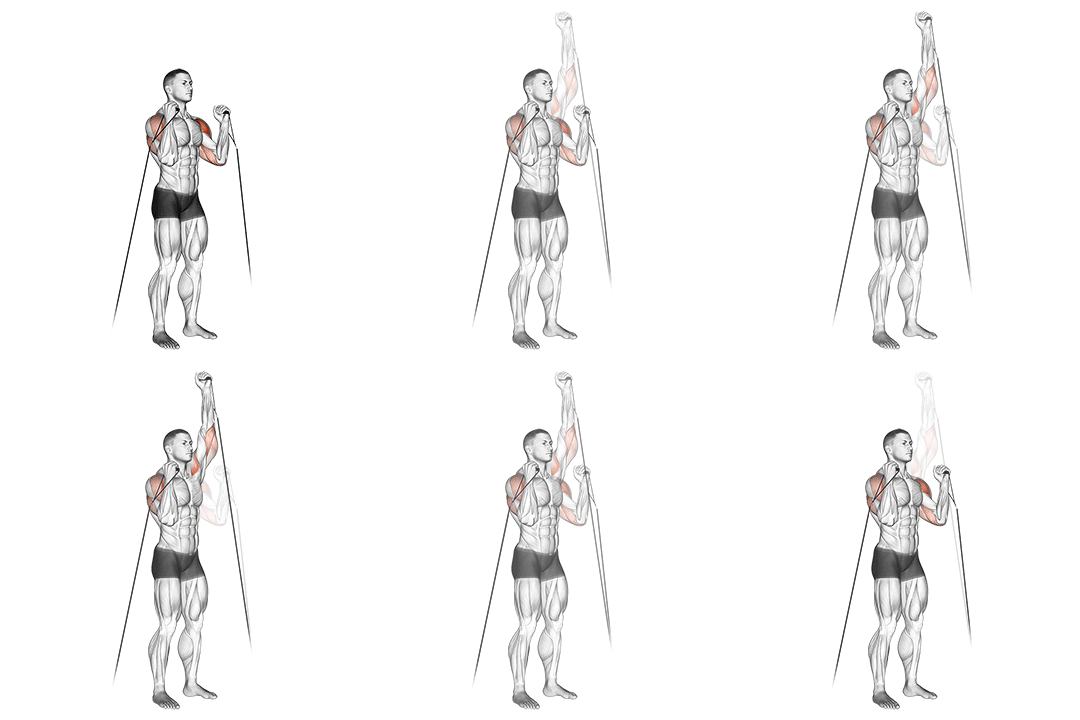
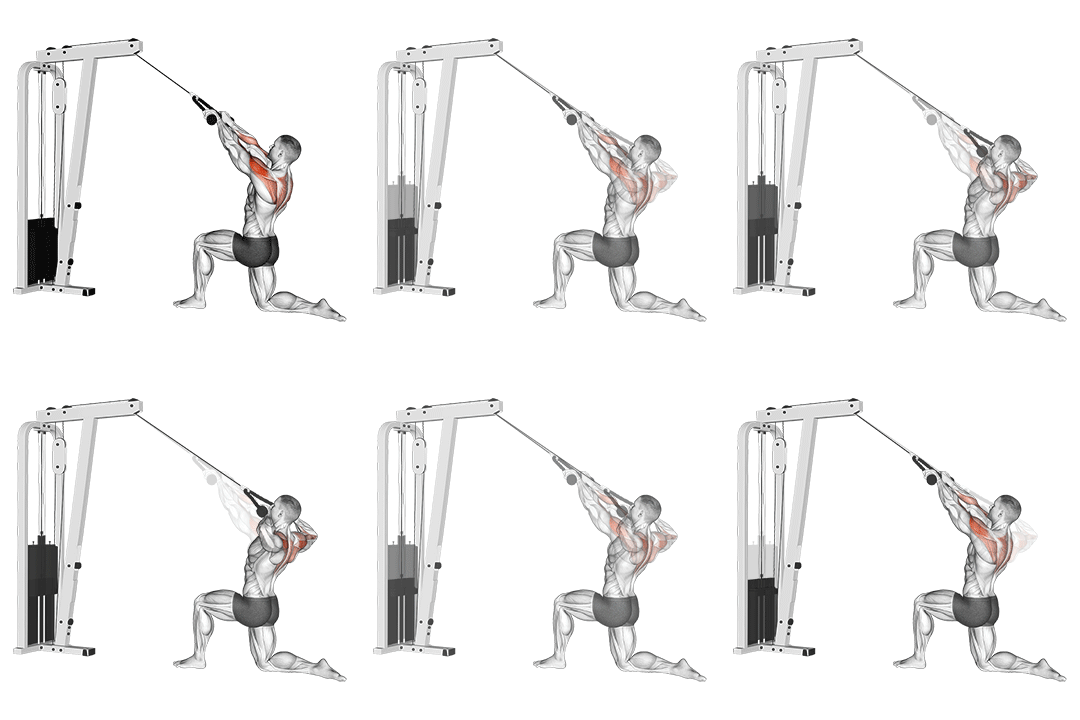
Cable Alternate Shoulder Press
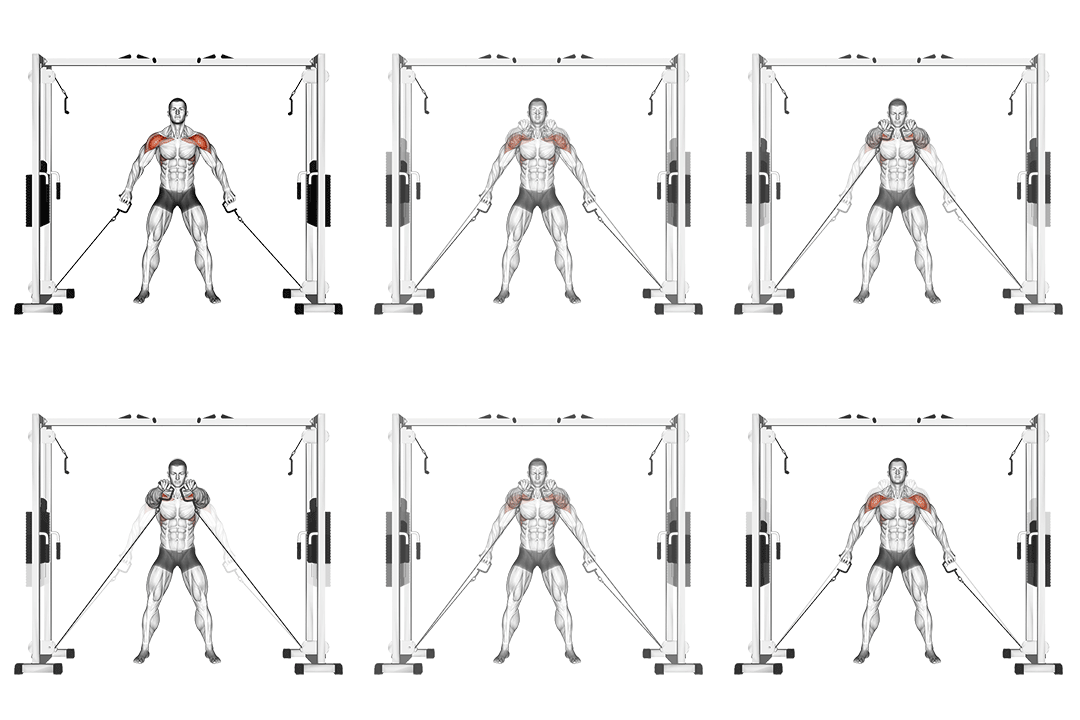
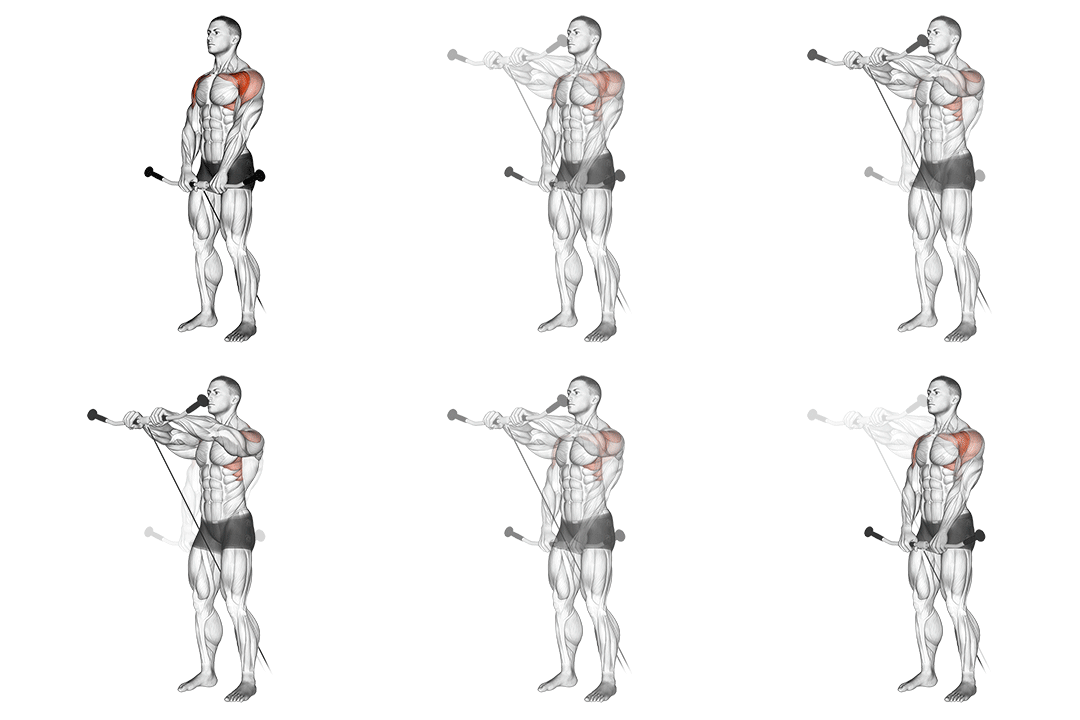
Cable Front Shoulder Raise
Head-to-Head Comparison
| Attribute | Cable Alternate Shoulder Press | Cable Front Shoulder Raise |
|---|---|---|
| Target Muscle |
Delts
|
Delts
|
| Body Part |
Shoulders
|
Shoulders
|
| Equipment |
Cable
|
Cable
|
| Difficulty |
Intermediate
|
Beginner
|
| Movement Type |
Compound
|
Isolation
|
| Secondary Muscles |
2
|
2
|
Secondary Muscles Activated
Cable Alternate Shoulder Press
Cable Front Shoulder Raise
Visual Comparison
Overview
Cable Alternate Shoulder Press vs Cable Front Shoulder Raise — you’re choosing between a compound vertical press and a single-joint front raise. I’ll walk you through which movement hits the delts more effectively, how secondary muscles differ, specific technique cues, and which exercise to pick for hypertrophy, strength, or beginners. Expect clear rep ranges, joint angles, and simple progressions so you can apply this to your next workout.
Key Differences
- Cable Alternate Shoulder Press is a compound movement, while Cable Front Shoulder Raise is an isolation exercise.
- Difficulty levels differ: Cable Alternate Shoulder Press is intermediate, while Cable Front Shoulder Raise is beginner.
- Both exercises target the Delts using Cable. The main differences are in their movement patterns and muscle activation angles.
Pros & Cons
Cable Alternate Shoulder Press
+ Pros
- Compound movement that builds overall shoulder strength and muscle growth through multi-joint recruitment
- Greater triceps and upper-back engagement for functional pressing strength
- Easier to overload progressively with heavier resistance
- Improves scapular upward rotation and overhead stability when performed correctly
− Cons
- Requires more technical skill to coordinate trunk and scapular mechanics
- Higher systemic fatigue per set, which can limit volume
- Greater risk of low-back compensation or shoulder impingement if form breaks down
Cable Front Shoulder Raise
+ Pros
- Simple, focused anterior deltoid isolation for targeted muscle growth
- Low setup time and minimal equipment required
- Lower systemic fatigue—easy to incorporate as a finisher or superset
- Beginner-friendly technique with clear joint action (shoulder flexion)
− Cons
- Limited progression ceiling due to small muscle mass involved
- Less carryover to pressing strength and overhead function
- Can stress the anterior shoulder capsule when performed with poor control or excessive range
When Each Exercise Wins
The press loads multiple deltoid heads and secondary movers, increasing total work per rep. Use 6–12 reps for compound sets and add 8–15 rep isolation finishers like front raises for balanced shoulder development.
The multi-joint nature allows heavier absolute loads and improved neural adaptation. Perform 3–6 reps per set with progressive overload and focus on stable scapular positioning to build pressing strength.
It's an easier motor pattern to teach and execute, letting you feel the anterior deltoid work directly. Start with 8–15 reps and light load to master scapular control and shoulder flexion.
Requires only a single low pulley or resistance band alternative and minimal space. The press typically needs a bench and higher pulley positions or heavier cable stacks to match effectiveness.
Frequently Asked Questions
Can I do both Cable Alternate Shoulder Press and Cable Front Shoulder Raise in the same workout?
Yes. Sequence the press first as the primary compound movement (3–5 sets) while you’re fresh, then add 2–4 sets of front raises as an isolation finisher to increase anterior deltoid volume without taxing your triceps heavily.
Which exercise is better for beginners?
Cable Front Shoulder Raise is better to start because it’s a simple single-joint pattern that teaches shoulder flexion and target activation. Once you have scapular control and basic strength, add the alternate cable press to develop compound pressing ability.
How do the muscle activation patterns differ?
The press produces coordinated activation across anterior and lateral delts, triceps, and scapular stabilizers with peak torque during mid-range upward movement. The front raise produces concentrated anterior deltoid activation with peak tension near 60° of shoulder flexion due to moment-arm and length-tension factors.
Can Cable Front Shoulder Raise replace Cable Alternate Shoulder Press?
No, not if your goal is pressing strength or balanced shoulder development. Front raises are a useful supplement for targeted anterior deltoid work, but they don’t load the triceps or scapular stabilizers the same way a compound press does.
Expert Verdict
Use the Cable Alternate Shoulder Press when you want efficient, compound shoulder training that builds pressing strength and larger amounts of muscle work per set. Prioritize it in 3–5 set blocks with 3–12 rep ranges depending on strength versus hypertrophy focus, and cue full scapular upward rotation and a braced core. Choose the Cable Front Shoulder Raise when you need targeted anterior deltoid isolation, low setup time, or a low-fatigue finisher—perform 8–15 reps with a slight elbow bend and stop at shoulder height to protect the anterior capsule. For best results, pair them: heavy alternating presses early in the session and front raises as targeted volume later.
Also Compare
More comparisons with Cable Alternate Shoulder Press
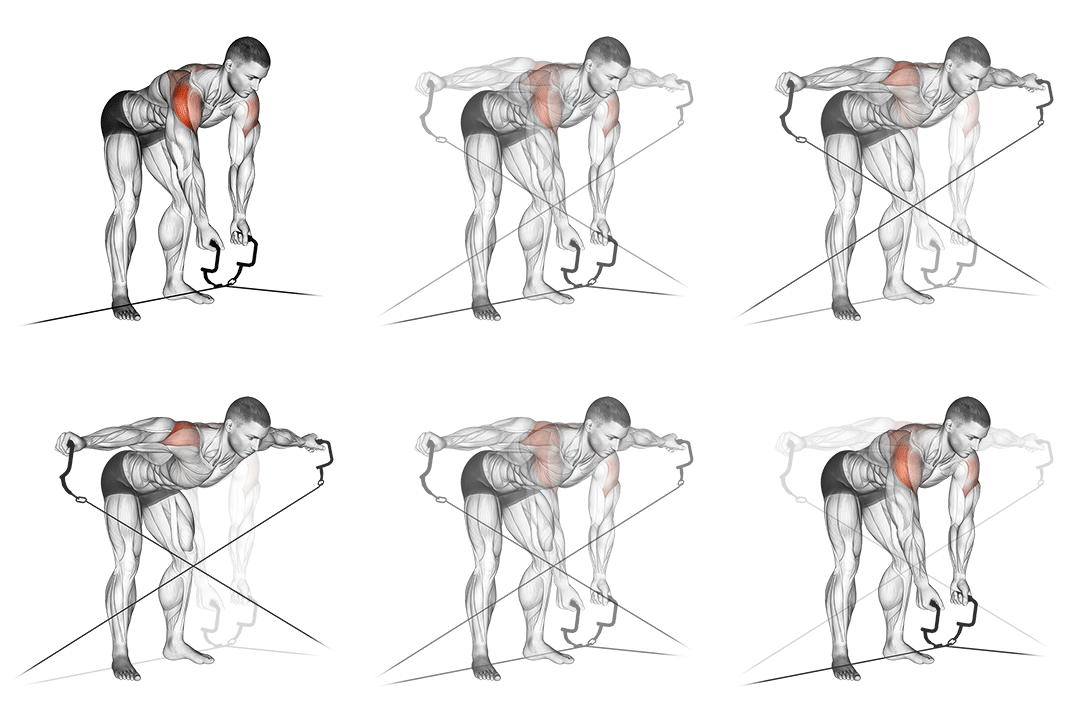
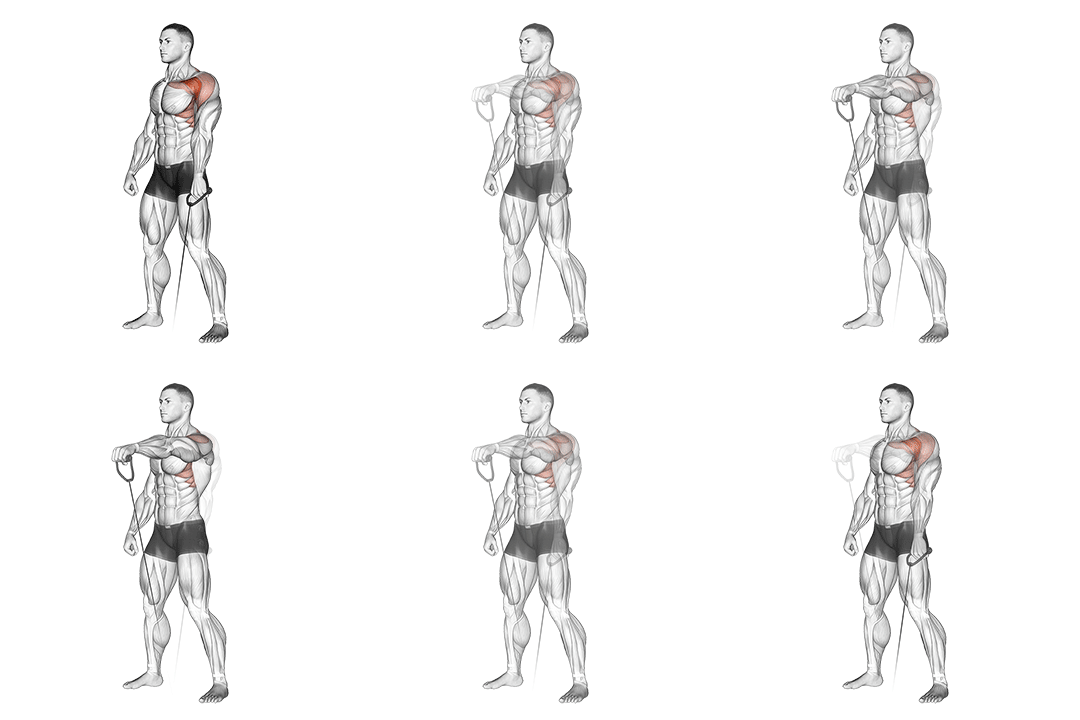
More comparisons with Cable Front Shoulder Raise
Compare More Exercises
Use our free comparison tool to analyze any two exercises head-to-head.
Compare Exercises