

Cable Alternate Shoulder Press vs Cable Kneeling Rear Delt Row (with Rope) (male): Complete Comparis
Cable Alternate Shoulder Press vs Cable Kneeling Rear Delt Row (with Rope) (male) — which one should you use to build fuller shoulders? You’ll get a clear, practical breakdown: which heads of the deltoid each exercise stresses, the biomechanics behind the movement, precise technique cues, equipment needs, and situations where one outperforms the other. Read on to learn rep ranges (3–6 for strength, 6–12 for hypertrophy, 12–20 for endurance), angles to watch (vertical press path vs horizontal pull), and how to program these moves into your sessions.
Exercise Comparison
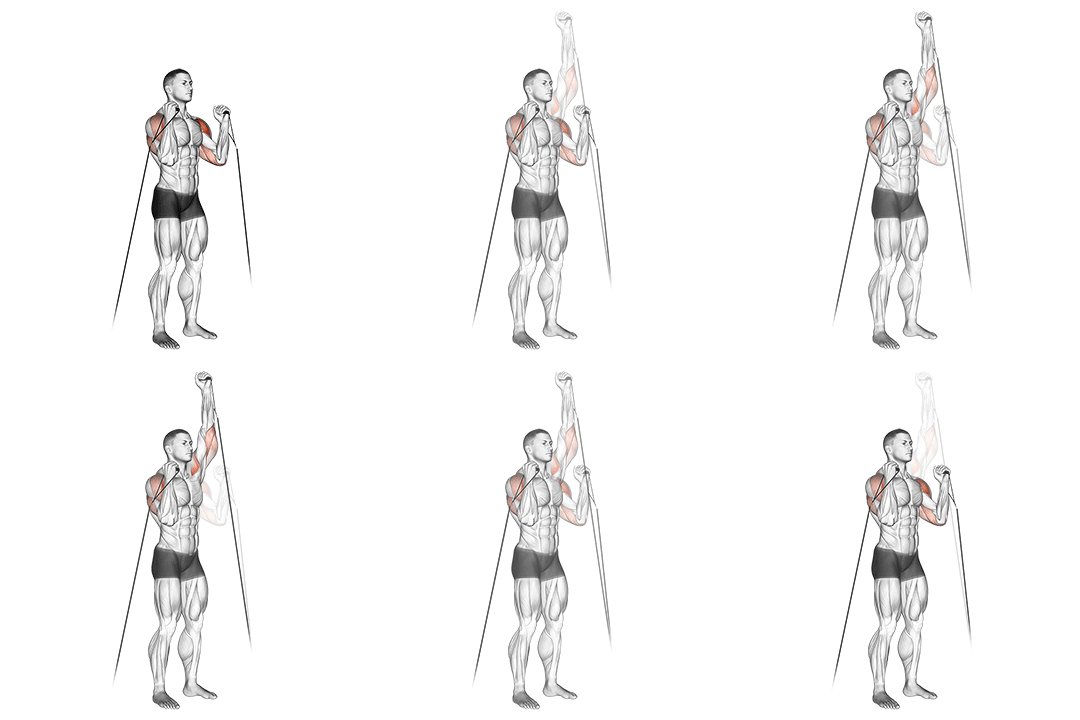
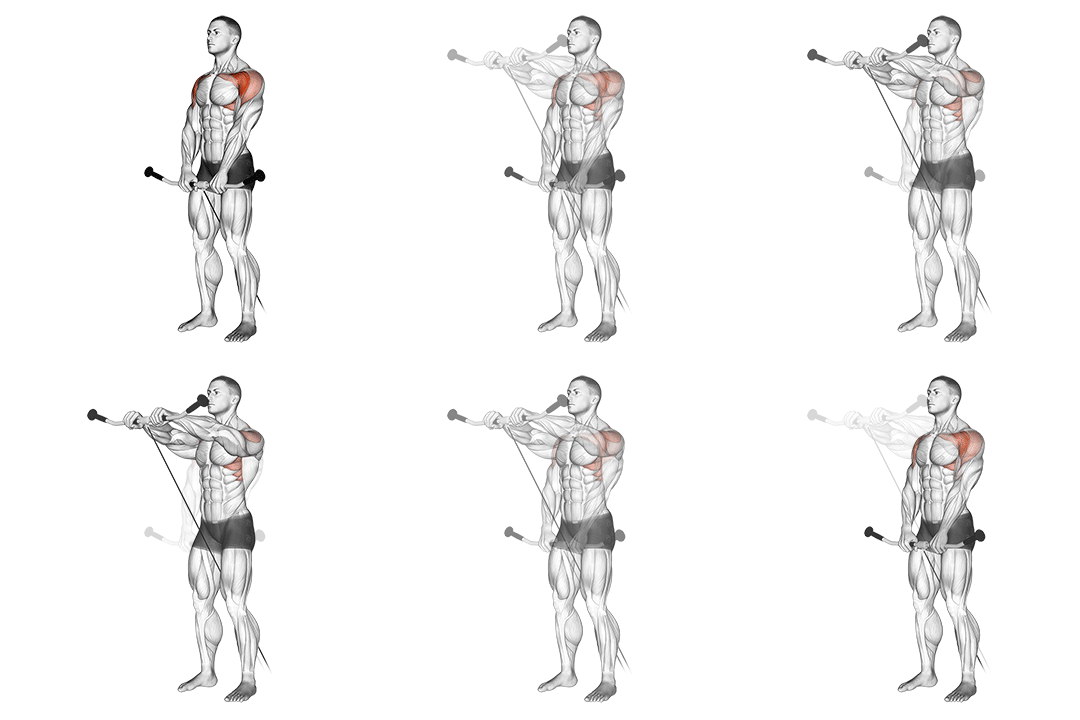
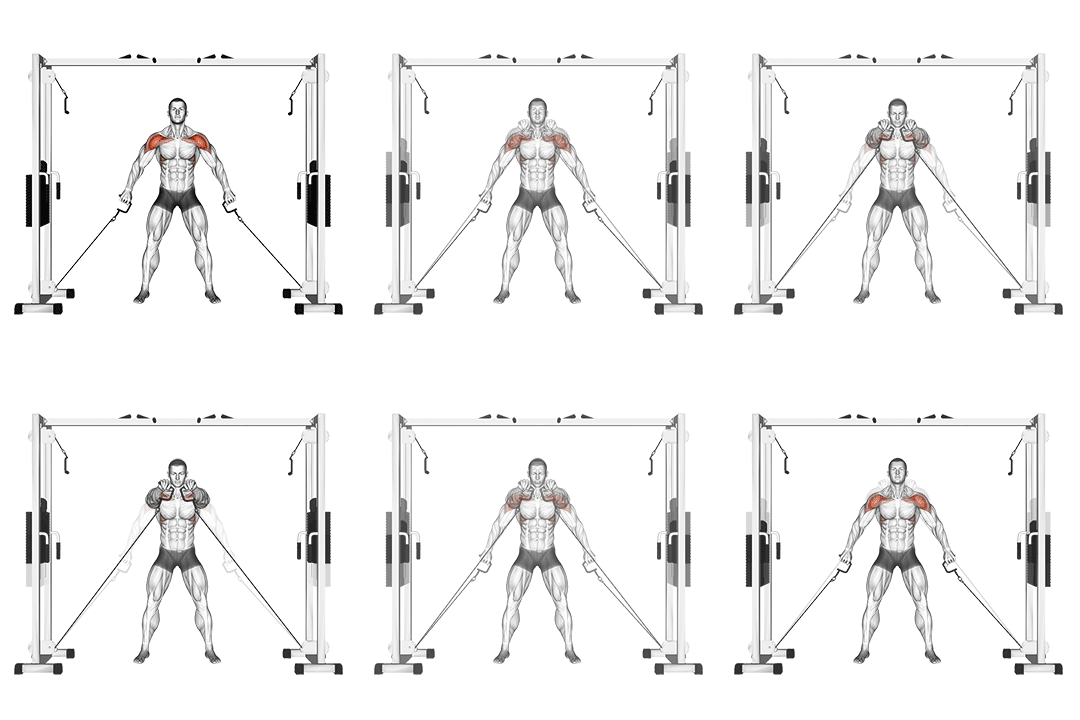
Cable Alternate Shoulder Press
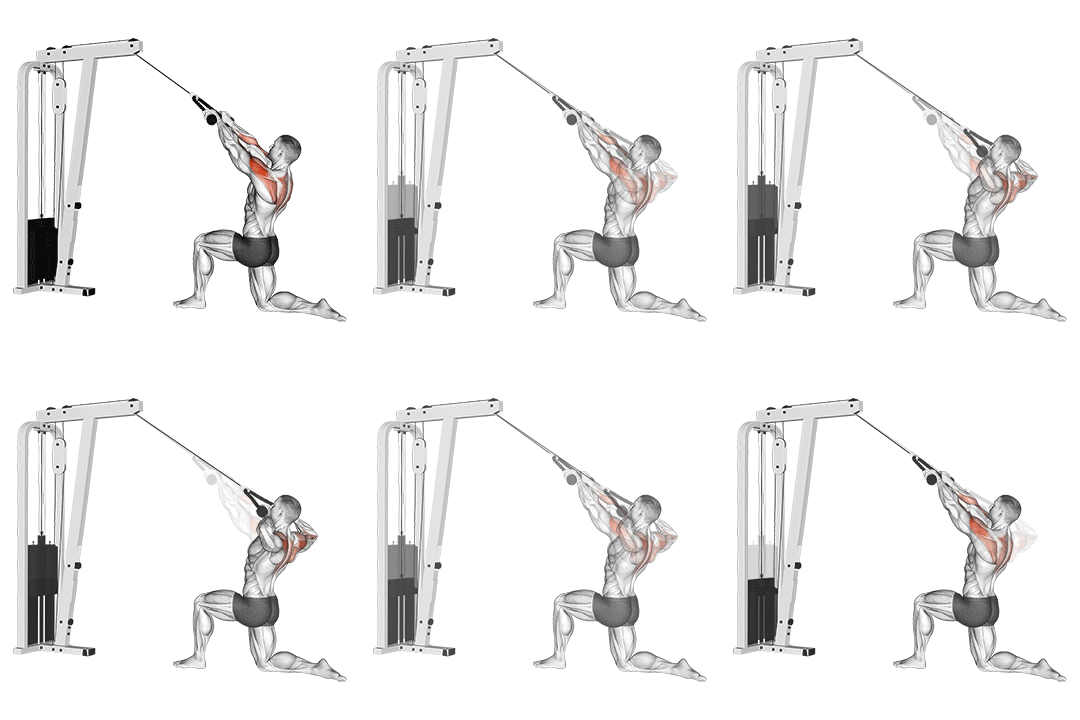
Cable Kneeling Rear Delt Row (with Rope) (male)
Head-to-Head Comparison
| Attribute | Cable Alternate Shoulder Press | Cable Kneeling Rear Delt Row (with Rope) (male) |
|---|---|---|
| Target Muscle |
Delts
|
Delts
|
| Body Part |
Shoulders
|
Shoulders
|
| Equipment |
Cable
|
Cable
|
| Difficulty |
Intermediate
|
Intermediate
|
| Movement Type |
Compound
|
Compound
|
| Secondary Muscles |
2
|
3
|
Secondary Muscles Activated
Cable Alternate Shoulder Press
Cable Kneeling Rear Delt Row (with Rope) (male)
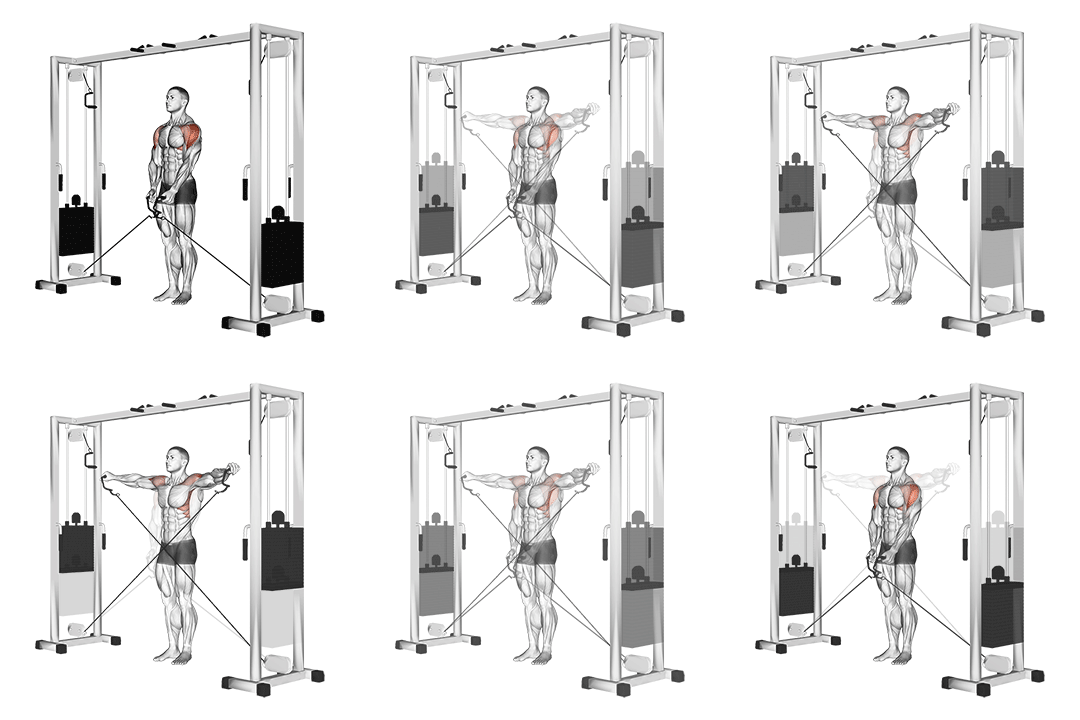
Visual Comparison
Overview
Cable Alternate Shoulder Press vs Cable Kneeling Rear Delt Row (with Rope) (male) — which one should you use to build fuller shoulders? You’ll get a clear, practical breakdown: which heads of the deltoid each exercise stresses, the biomechanics behind the movement, precise technique cues, equipment needs, and situations where one outperforms the other. Read on to learn rep ranges (3–6 for strength, 6–12 for hypertrophy, 12–20 for endurance), angles to watch (vertical press path vs horizontal pull), and how to program these moves into your sessions.
Key Differences
- Both exercises target the Delts using Cable. The main differences are in their movement patterns and muscle activation angles.
Pros & Cons
Cable Alternate Shoulder Press
+ Pros
- Loads anterior and lateral delts for balanced shoulder mass and pressing strength
- Transfers directly to overhead strength and pressing performance
- Easy to scale load and substitute with dumbbells or bands
- Teaches vertical force production and scapular upward rotation
− Cons
- Can irritate the subacromial space if mobility or scapular control is poor
- Less direct posterior delt stimulus and upper-back development
- Requires careful core and thoracic positioning to avoid lumbar compensation
Cable Kneeling Rear Delt Row (with Rope) (male)
+ Pros
- Strong isolation of posterior deltoid for improved shoulder balance and posture
- Recruits traps and rhomboids to improve scapular retraction strength
- Lower impingement risk when performed with neutral scapular mechanics
- Rope attachment allows greater external rotation and separation of hands for full posterior deltoid lengthening
− Cons
- Requires a low pulley and rope—less transferable to home setups
- Technique demands good scapular control and motor coordination
- Harder to load as heavily as presses, limiting absolute strength progression
When Each Exercise Wins
For posterior delt hypertrophy the kneeling rear-delt row provides a more direct horizontal pull and external rotation, placing the posterior deltoid under longer tension. Use 6–12 reps, 3–4 sets with 2–3 second eccentrics to maximize time under tension.
The vertical force vector and triceps involvement let you load heavier and build pressing strength; program 3–6 reps, heavier sets, and progressive overload for measurable strength improvements.
The press has a simpler motor pattern and is more transferable to dumbbell/barbell presses, making it easier to learn safe mechanics and build foundational shoulder strength.
You can replicate the pressing pattern with dumbbells or bands at home, while the kneeling rope row needs a low pulley and rope attachment that most home setups lack.
Frequently Asked Questions
Can I do both Cable Alternate Shoulder Press and Cable Kneeling Rear Delt Row (with Rope) (male) in the same workout?
Yes. Pair them in the same session by placing the press earlier for heavier sets and the rear-delt row later as an accessory. For example, do 3–5 sets of presses (3–6 or 6–8 reps) then 3–4 sets of rear-delt rows (8–12 reps) to avoid fatigue-driven form breakdown.
Which exercise is better for beginners?
The Cable Alternate Shoulder Press is better for beginners due to a simpler movement pattern and easier load progression. Start with moderate weight, focus on thoracic extension and scapular upward rotation, and use 8–12 reps to build motor control.
How do the muscle activation patterns differ?
The press uses a vertical force vector that emphasizes anterior and lateral deltoid fibers during concentric shoulder elevation, while the rear-delt row uses a horizontal/posterior vector that targets posterior deltoid fibers and scapular retractors. The press loads triceps more; the rear row loads traps, rhomboids, and biceps.
Can Cable Kneeling Rear Delt Row (with Rope) (male) replace Cable Alternate Shoulder Press?
Not entirely. If your goal is overhead strength or anterior/lateral deltoid hypertrophy, the press is superior. Use the kneeling rear row as a complement when you need posterior delt focus or to correct muscular imbalances.
Expert Verdict
Use the Cable Alternate Shoulder Press when your goal is overhead strength, broader deltoid mass (especially anterior and lateral heads), and when you need an exercise that scales across equipment options. Presses are the go-to for heavy loading and strength-focused blocks. Pick the Cable Kneeling Rear Delt Row (with Rope) when you need targeted posterior deltoid development, improved scapular retraction, and better shoulder health—especially if your chest and front delts dominate. For a balanced program, rotate both: prioritize presses during strength phases (3–6 reps) and add 3–4 sets of kneeling rear rows in hypertrophy or corrective phases (6–12 reps) to correct anterior/posterior imbalances.
Also Compare
More comparisons with Cable Alternate Shoulder Press
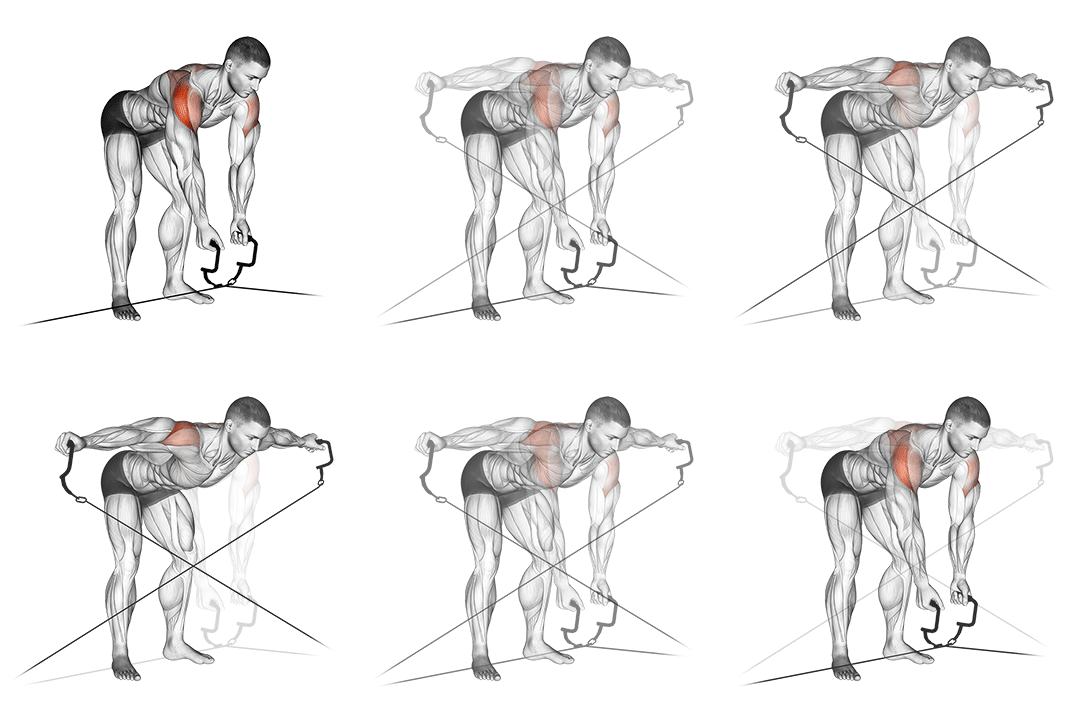
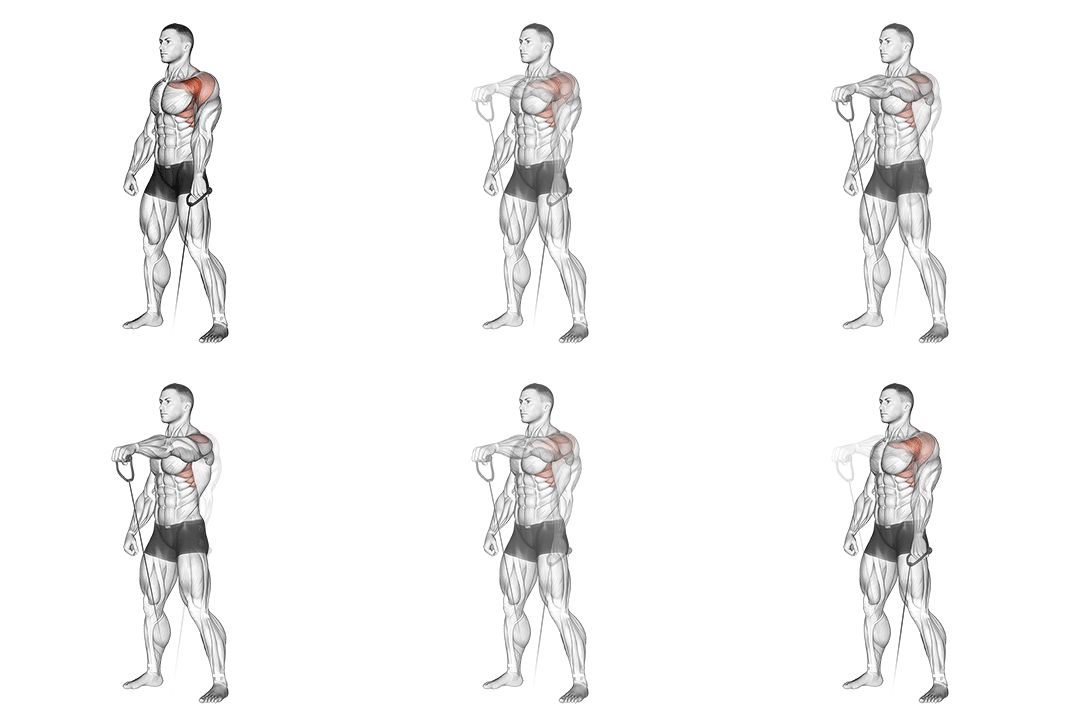
More comparisons with Cable Kneeling Rear Delt Row (with Rope) (male)
Compare More Exercises
Use our free comparison tool to analyze any two exercises head-to-head.
Compare Exercises