

Cable Alternate Shoulder Press vs Cable Lateral Raise: Complete Comparison Guide
Cable Alternate Shoulder Press vs Cable Lateral Raise — if you want broader shoulder development, you need to choose wisely. You’ll get a straight comparison that explains which exercise emphasizes the deltoid heads, how each loads your joints, and which fits your training level and equipment. I’ll cover muscle recruitment, biomechanics (force vectors, length-tension), setup and technique cues, rep ranges, and practical programming tips so you can pick the right move for hypertrophy, strength, or injury-safe progress.
Exercise Comparison
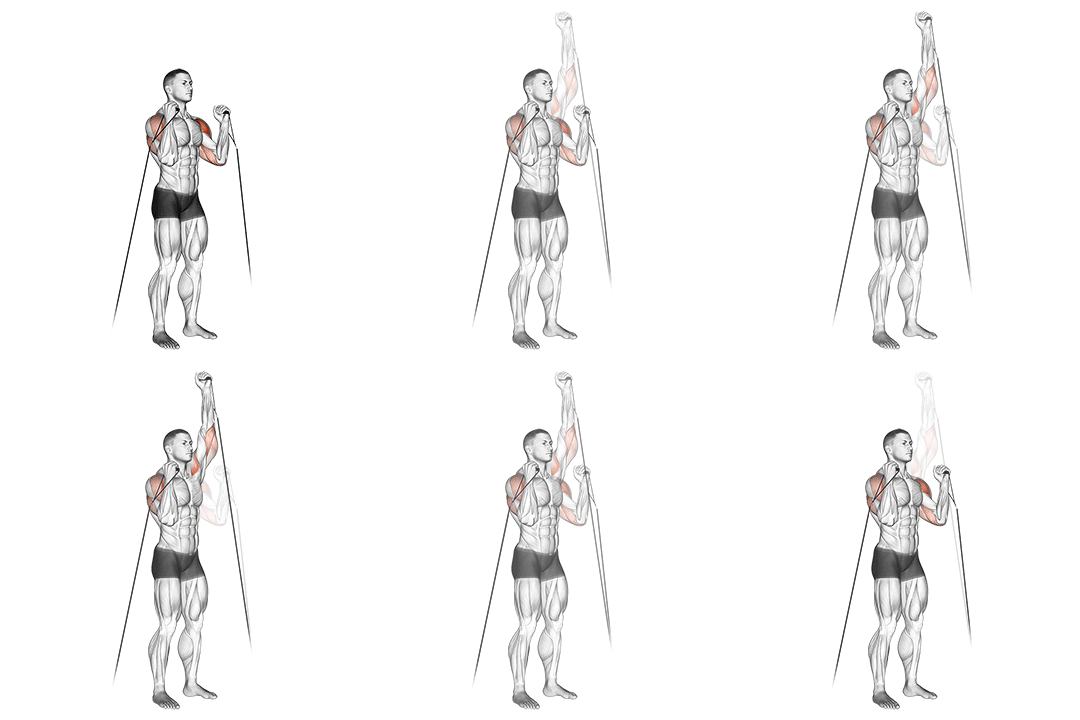
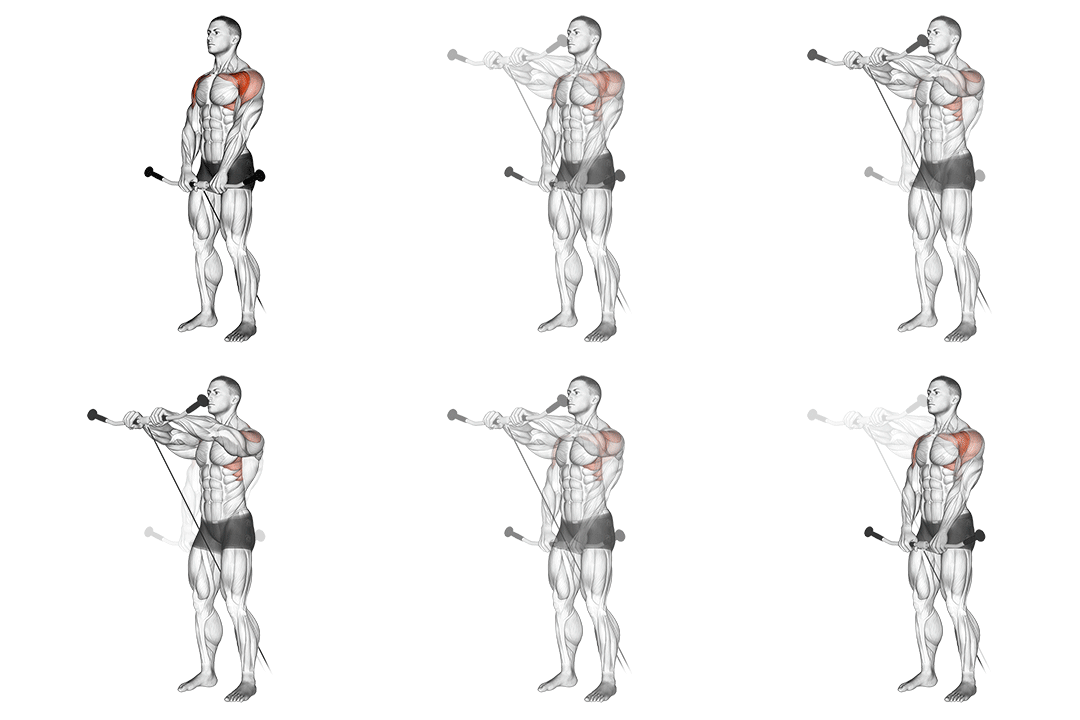
Cable Alternate Shoulder Press
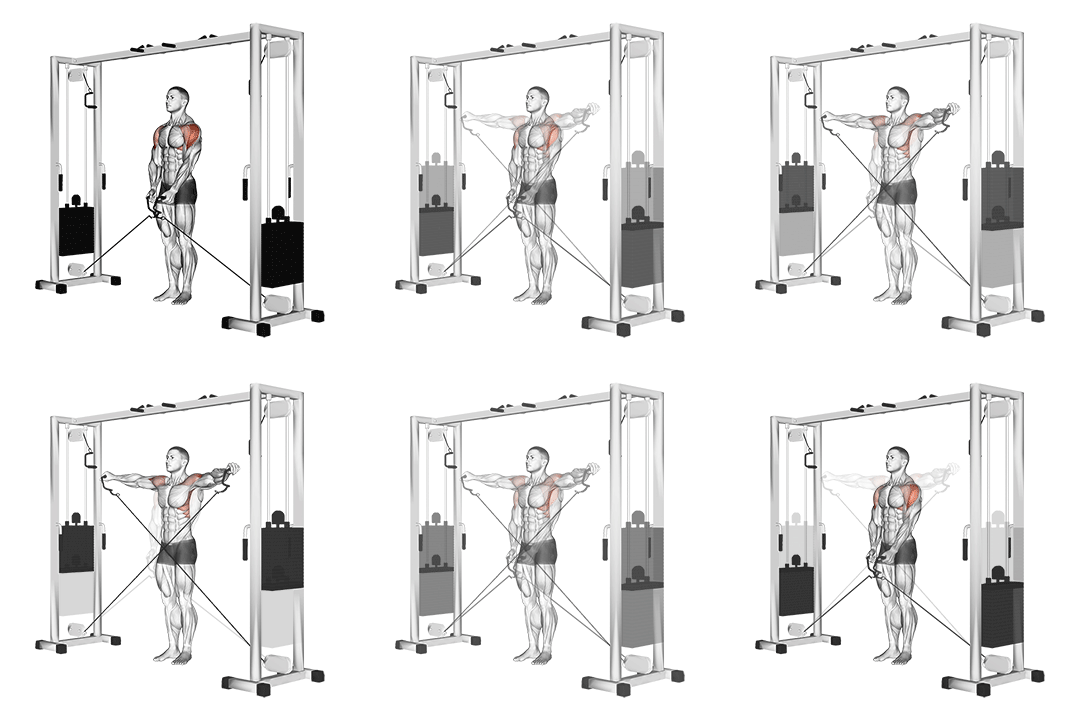
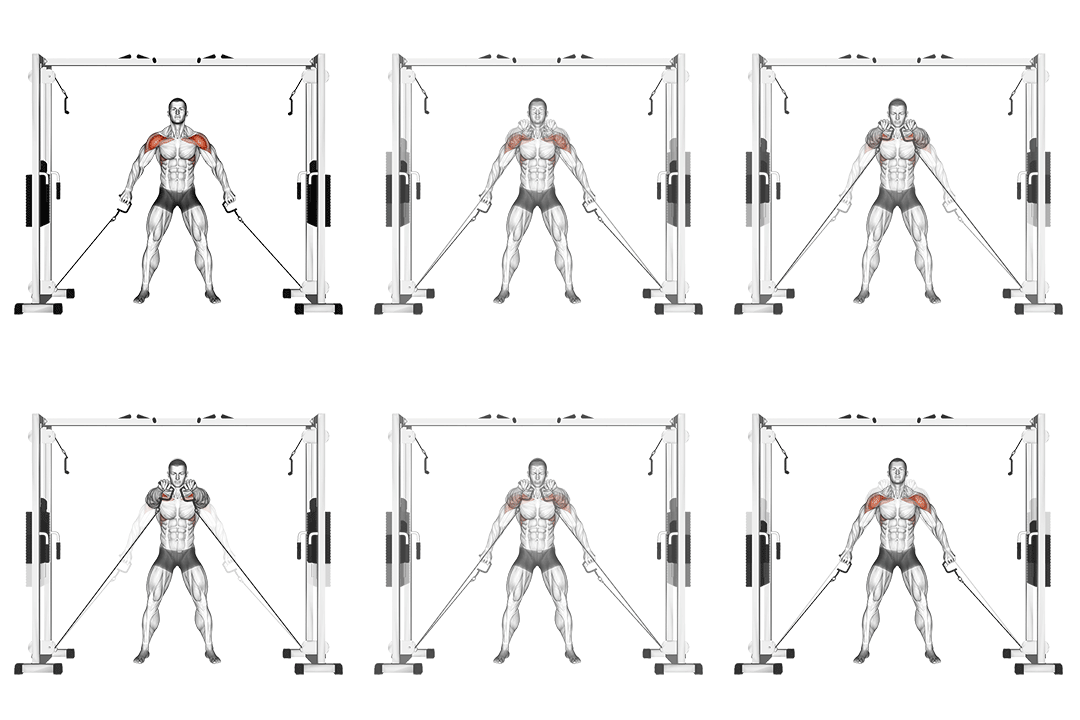
Cable Lateral Raise
Head-to-Head Comparison
| Attribute | Cable Alternate Shoulder Press | Cable Lateral Raise |
|---|---|---|
| Target Muscle |
Delts
|
Delts
|
| Body Part |
Shoulders
|
Shoulders
|
| Equipment |
Cable
|
Cable
|
| Difficulty |
Intermediate
|
Beginner
|
| Movement Type |
Compound
|
Isolation
|
| Secondary Muscles |
2
|
2
|
Secondary Muscles Activated
Cable Alternate Shoulder Press
Cable Lateral Raise
Visual Comparison
Overview
Cable Alternate Shoulder Press vs Cable Lateral Raise — if you want broader shoulder development, you need to choose wisely. You’ll get a straight comparison that explains which exercise emphasizes the deltoid heads, how each loads your joints, and which fits your training level and equipment. I’ll cover muscle recruitment, biomechanics (force vectors, length-tension), setup and technique cues, rep ranges, and practical programming tips so you can pick the right move for hypertrophy, strength, or injury-safe progress.
Key Differences
- Cable Alternate Shoulder Press is a compound movement, while Cable Lateral Raise is an isolation exercise.
- Difficulty levels differ: Cable Alternate Shoulder Press is intermediate, while Cable Lateral Raise is beginner.
- Both exercises target the Delts using Cable. The main differences are in their movement patterns and muscle activation angles.
Pros & Cons
Cable Alternate Shoulder Press
+ Pros
- Compound movement that builds pressing strength and overall shoulder mass
- Engages triceps and upper back for functional stability
- Easier to progressively overload with heavier weights
- Better transfer to pushing movements like overhead presses
− Cons
- Higher technical demand on scapular and core stability
- Greater compressive and rotator cuff load under heavy sets
- Requires dual pulleys or more setup space
Cable Lateral Raise
+ Pros
- Simple setup and low learning curve for targeted lateral delt work
- Lower absolute load reduces joint compression risk
- Excellent for finishing volume and isolating the lateral head
- Accessible in most gyms and compact home cable rigs
− Cons
- Limited progressive overload options with heavy absolute loads
- Easily cheated with momentum or scapular shrugging
- Less carryover to pushing strength and compound pressing
When Each Exercise Wins
The press lets you generate higher mechanical tension across multiple heads and recruit triceps and upper-back stabilizers, enabling heavier loads (6–12 reps) and progressive overload, which drives more overall muscle growth in the shoulder complex.
As a compound movement with a vertical force vector, the alternate press improves pressing strength and neuromuscular coordination. You can progressively increase resistance and practice heavy, low-rep sets to build functional overhead strength.
Lateral raises are single-joint and teach clean abduction mechanics with lower loading demands. You can safely accumulate volume (8–20 reps) to build a distinct lateral shoulder shape without complex timing or heavy stabilization needs.
Most home cable rigs or resistance band setups can mimic lateral raises with minimal space and low loads. The exercise requires only one pulley or band anchor and delivers visible lateral delt development without a full cable column.
Frequently Asked Questions
Can I do both Cable Alternate Shoulder Press and Cable Lateral Raise in the same workout?
Yes. Pair the press early as a primary compound (3–5 sets of 6–12 reps) and follow with 2–4 sets of 10–20 reps of lateral raises to target the lateral head for extra volume and metabolic stress.
Which exercise is better for beginners?
Cable Lateral Raise is better for absolute beginners because it’s single-joint, low-load, and easier to nail technique. Start with light weight, a slight elbow bend, and stop at about shoulder height to avoid compensation.
How do the muscle activation patterns differ?
The press creates a vertical force vector that engages anterior and lateral delts plus triceps and upper back stabilizers across the ROM. The lateral raise produces an abduction moment that isolates the lateral delt with peak tension between 20–40° of abduction and increased trap activity if the scapula elevates.
Can Cable Lateral Raise replace Cable Alternate Shoulder Press?
No—if your goal is pressing strength and heavy mechanical tension across the shoulder complex, the lateral raise won’t replace a compound press. Use lateral raises as a supplementary isolation movement to refine size and shape.
Expert Verdict
Use the Cable Alternate Shoulder Press when you want compound overload and functional pressing strength: it’s the go-to for building overall deltoid mass and improving overhead power. Prioritize sets of 6–12 reps, strict core bracing, and controlled tempo to protect the rotator cuff. Add Cable Lateral Raises as a targeted finisher or when you need to isolate the lateral head—perform 10–20 reps with a 10–2 second tempo (eccentric-control) and keep abduction in the 30–45° range to maximize length-tension on the lateral delt. If you can, program both: press for heavy work and lateral raises for volume and shape.
Also Compare
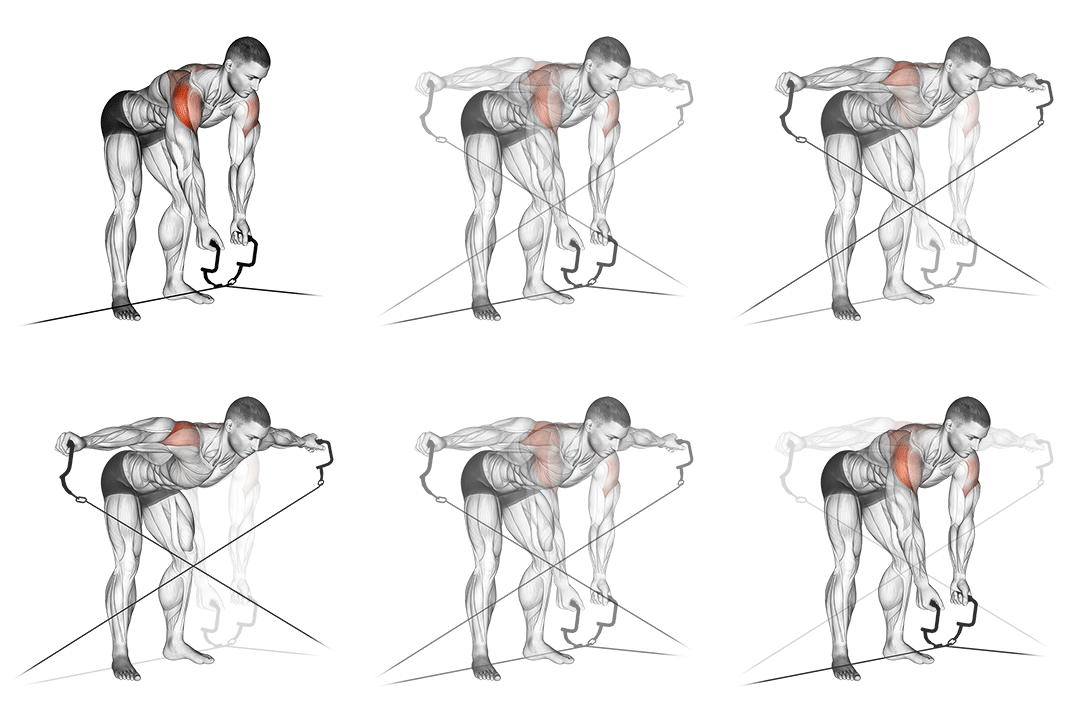
More comparisons with Cable Alternate Shoulder Press
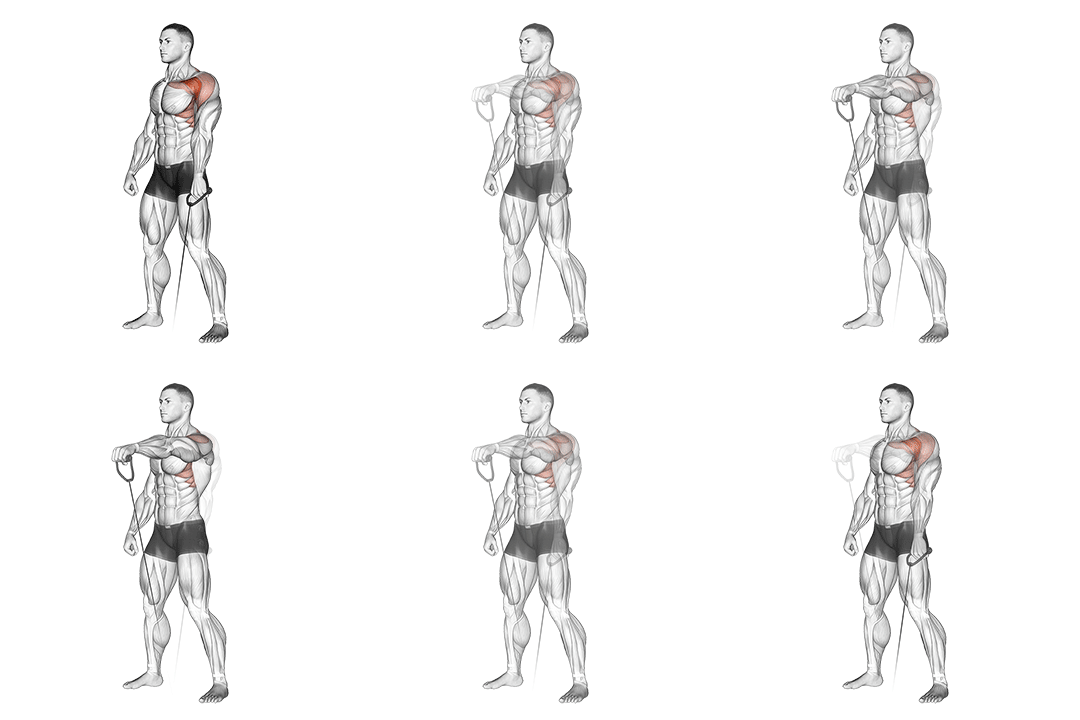
More comparisons with Cable Lateral Raise
Compare More Exercises
Use our free comparison tool to analyze any two exercises head-to-head.
Compare Exercises