

Cable Bar Lateral Pulldown vs Cable Pulldown: Complete Comparison Guide
Cable Bar Lateral Pulldown vs Cable Pulldown — if you want thicker, wider lats you need to know how these two stack up. I’ll walk you through how each move loads the latissimus dorsi, which secondary muscles kick in, how the force vector and grip change the movement, and which is better for hypertrophy, strength, beginners, and home use. You’ll get clear technique cues (seat height, elbow path, torso angle), recommended rep ranges, and simple progressions so you can pick the exercise that matches your goals and limits.
Exercise Comparison
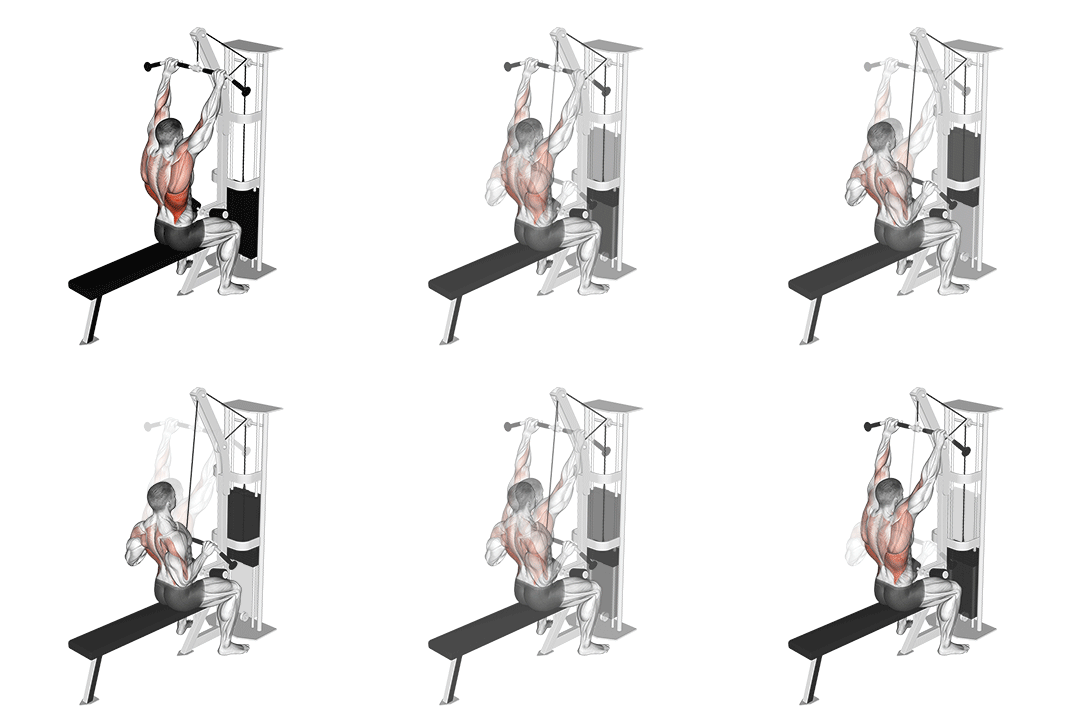
Cable Bar Lateral Pulldown
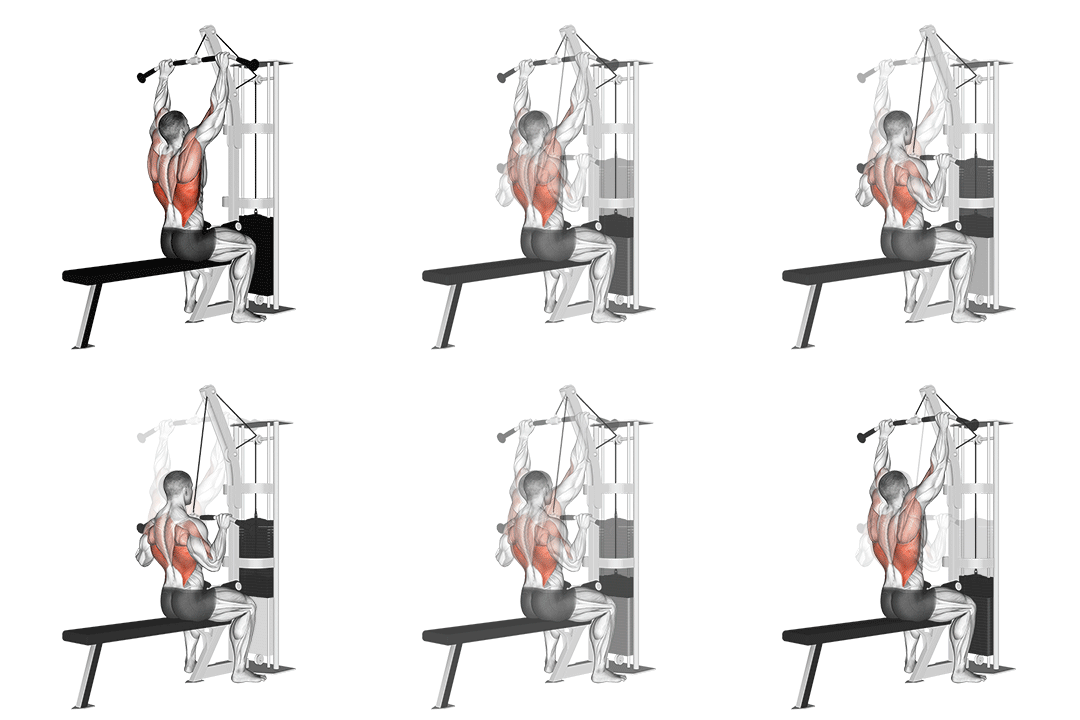
Cable Pulldown
Head-to-Head Comparison
| Attribute | Cable Bar Lateral Pulldown | Cable Pulldown |
|---|---|---|
| Target Muscle |
Lats
|
Lats
|
| Body Part |
Back
|
Back
|
| Equipment |
Cable
|
Cable
|
| Difficulty |
Intermediate
|
Intermediate
|
| Movement Type |
Compound
|
Compound
|
| Secondary Muscles |
3
|
2
|
Secondary Muscles Activated
Cable Bar Lateral Pulldown
Cable Pulldown
Visual Comparison
Overview
Cable Bar Lateral Pulldown vs Cable Pulldown — if you want thicker, wider lats you need to know how these two stack up. I’ll walk you through how each move loads the latissimus dorsi, which secondary muscles kick in, how the force vector and grip change the movement, and which is better for hypertrophy, strength, beginners, and home use. You’ll get clear technique cues (seat height, elbow path, torso angle), recommended rep ranges, and simple progressions so you can pick the exercise that matches your goals and limits.
Key Differences
- Both exercises target the Lats using Cable. The main differences are in their movement patterns and muscle activation angles.
Pros & Cons
Cable Bar Lateral Pulldown
+ Pros
- Stronger lat stretch and greater mechanical tension at end range
- Better for developing upper-back thickness via rhomboid and rear delt recruitment
- Versatile grip widths and grip variations for targeted fiber work
- High overload potential for lower-rep strength work
− Cons
- Wider grip can increase shoulder impingement risk if mobility is limited
- Requires a long lat bar attachment found in most gyms but not always at home
- Technique-sensitive — needs solid scapular control and torso positioning
Cable Pulldown
+ Pros
- More accessible and easier to mimic with bands or single handles at home
- Cleaner vertical pulling pattern that’s simpler for beginners to learn
- Greater forearm and biceps engagement for improved grip and elbow strength
- Lower shoulder stress when performed with proper chest-targeted finish
− Cons
- Slightly shorter lat ROM and less outer-lat emphasis than a wide bar
- Can become biceps-dominant if elbows lead the movement
- Fewer leverage variations for advanced specificity
When Each Exercise Wins
The wider bar increases lat stretch and creates more mechanical tension across a larger ROM, which helps muscle growth. Use 8–12 reps for 3–4 sets, focus on a controlled eccentric and a full peak contraction to maximize hypertrophy.
It allows heavier loading and varied leverage (wide, underhand, paused reps), which suits 4–6 rep strength blocks. Maintain tight scapular control and a slight torso lean to transfer force efficiently into the lats.
Its vertical force vector and simpler elbow path make it easier to learn lat engagement and maintain safe scapular mechanics. Start with 10–15 reps to groove the pattern before adding load.
You can replicate the movement with resistance bands, a single handle, or a door anchor, and it requires fewer specialized attachments than the wide lat bar. That makes it the practical choice when equipment is limited.
Frequently Asked Questions
Can I do both Cable Bar Lateral Pulldown and Cable Pulldown in the same workout?
Yes. Pairing them works well: start with Cable Bar Lateral Pulldown for heavy sets or wide-grip specificity, then finish with Cable Pulldown for higher-rep volume and forearm/biceps work. Keep total volume appropriate—eg, 3–4 heavy sets then 2–3 lighter sets of 8–15 reps.
Which exercise is better for beginners?
Cable Pulldown is better for beginners because the vertical path and simpler cues let you feel the lats sooner and reduce shoulder strain. Focus on controlled reps, scapular retraction, and pulling the elbow down to the ribs.
How do the muscle activation patterns differ?
Wider-bar lateral pulldowns emphasize lat stretch and scapular retraction, increasing rhomboid and rear-delt involvement, while narrow or neutral pulldowns shift load into elbow flexors and forearms earlier in the concentric phase. Changing grip width and torso angle alters the force vector and relative muscle contributions.
Can Cable Pulldown replace Cable Bar Lateral Pulldown?
Cable Pulldown can replace the bar for general lat development, especially when equipment is limited, but it won’t fully replicate the wide-bar stretch and upper-back emphasis. If your goal is maximal outer-lat width or heavy overload, include the bar variation when available.
Expert Verdict
Both moves build the lats but target them differently. Choose Cable Bar Lateral Pulldown when your goal is broader lat development and upper-back thickness: use wider grips, controlled eccentrics, and 6–12 rep ranges to exploit the greater stretch and scapular retraction. Pick Cable Pulldown if you need an easier pattern to teach, greater forearm and biceps involvement, or a variation you can replicate at home—work in 8–15 reps and focus on pulling the elbow to the ribcage. For balanced programming, alternate both across training cycles: prioritize the bar for targeted hypertrophy/strength blocks and the pulldown for skill, volume, and accessibility.
Also Compare
More comparisons with Cable Bar Lateral Pulldown
More comparisons with Cable Pulldown
Compare More Exercises
Use our free comparison tool to analyze any two exercises head-to-head.
Compare Exercises