

Cable Bench Press vs Incline Cable Flye: Complete Comparison Guide
Cable Bench Press vs Incline Cable Flye — two cable chest moves that look similar but load your pecs very differently. {Exercise1} vs {Exercise2} appears here to help you choose based on muscle emphasis, equipment, and progression. You’ll get clear technique cues, biomechanics (force vectors, length-tension), rep ranges, and when to use each exercise in your program. Read this if you want to know which movement better drives muscle growth, builds pressing strength, or fits into a beginner or home routine.
Exercise Comparison
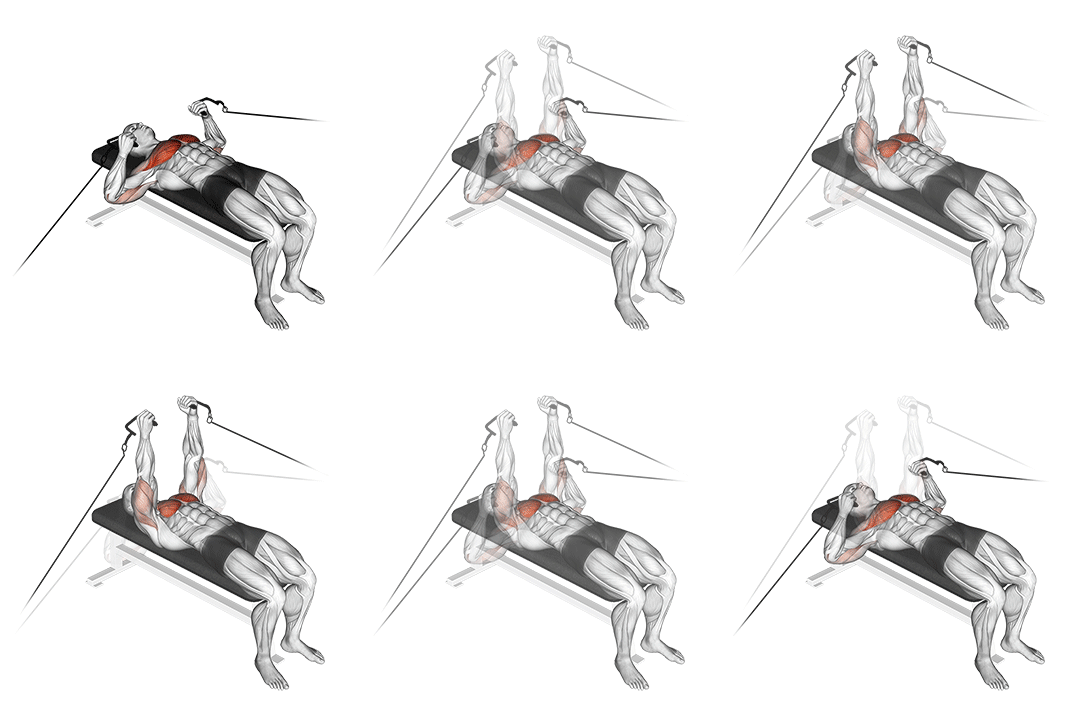
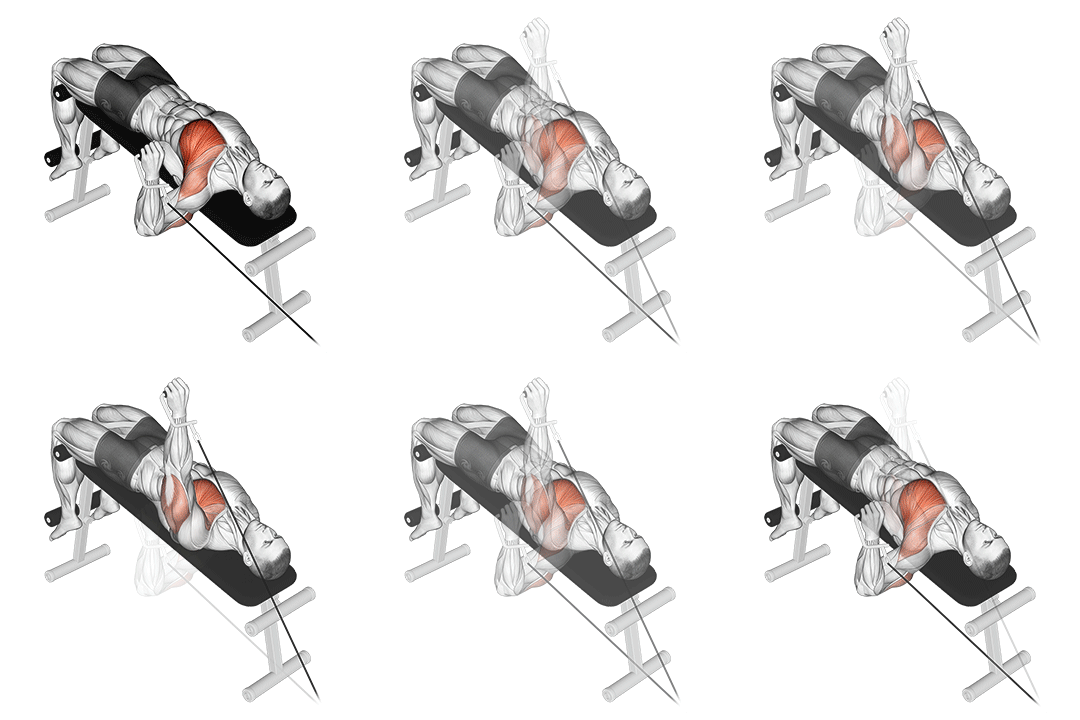
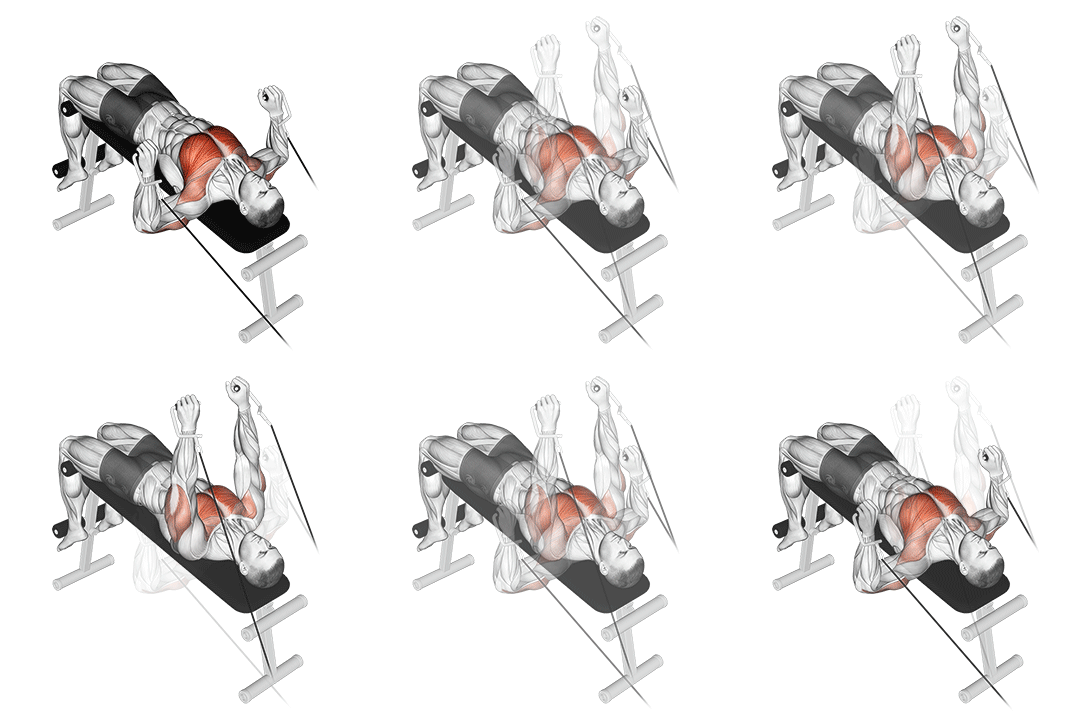
Cable Bench Press
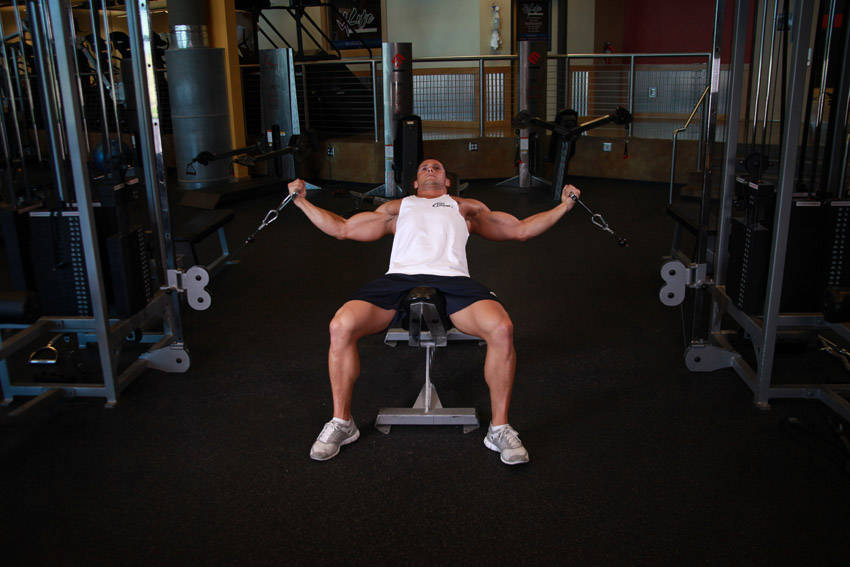
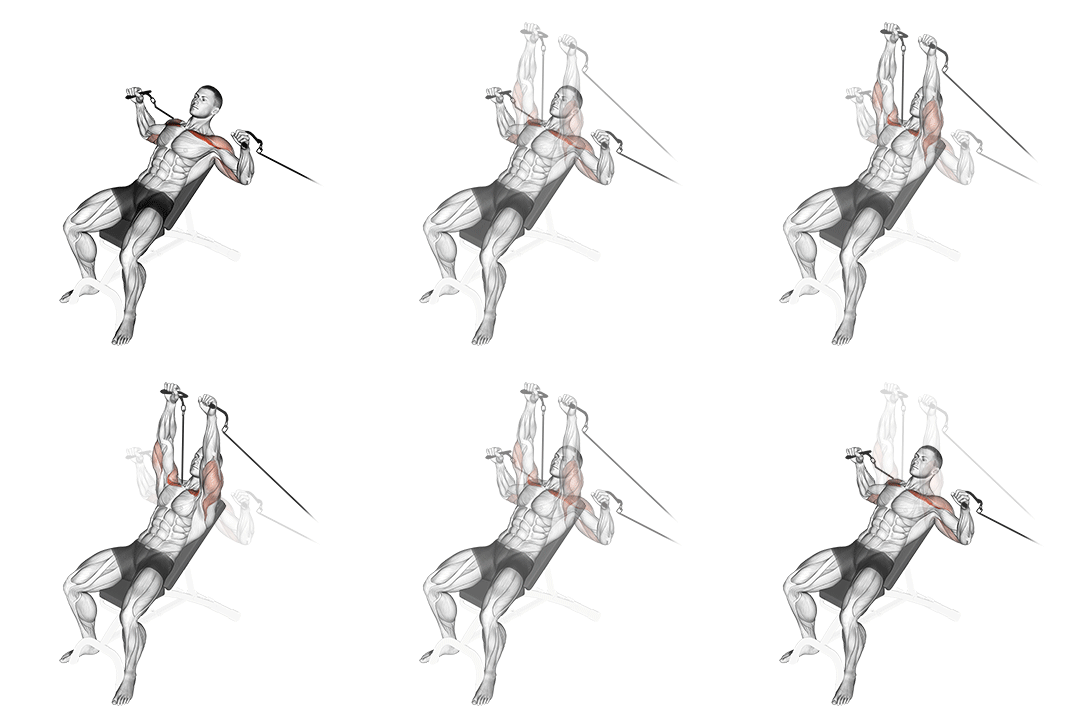
Incline Cable Flye
Head-to-Head Comparison
| Attribute | Cable Bench Press | Incline Cable Flye |
|---|---|---|
| Target Muscle |
Pectorals
|
Pectorals
|
| Body Part |
Chest
|
Chest
|
| Equipment |
Cable
|
Cable
|
| Difficulty |
Intermediate
|
Beginner
|
| Movement Type |
Compound
|
Isolation
|
| Secondary Muscles |
2
|
1
|
Secondary Muscles Activated
Cable Bench Press
Incline Cable Flye
Visual Comparison
Overview
Cable Bench Press vs Incline Cable Flye — two cable chest moves that look similar but load your pecs very differently. {Exercise1} vs {Exercise2} appears here to help you choose based on muscle emphasis, equipment, and progression. You’ll get clear technique cues, biomechanics (force vectors, length-tension), rep ranges, and when to use each exercise in your program. Read this if you want to know which movement better drives muscle growth, builds pressing strength, or fits into a beginner or home routine.
Key Differences
- Cable Bench Press is a compound movement, while Incline Cable Flye is an isolation exercise.
- Difficulty levels differ: Cable Bench Press is intermediate, while Incline Cable Flye is beginner.
- Both exercises target the Pectorals using Cable. The main differences are in their movement patterns and muscle activation angles.
Pros & Cons
Cable Bench Press
+ Pros
- Built for heavier loads — supports strength and hypertrophy work with 4–8+ rep sets
- Engages triceps and shoulders, giving compound carryover to pressing strength
- Cable tension keeps continuous load through the range, improving joint torque profiles
- Easily progressed with heavier stacks, tempo changes, and partials
− Cons
- Higher technical demand for scapular stability and elbow tracking
- Greater shoulder and triceps involvement can limit pec isolation
- Requires a dual cable station and a flat bench — less practical at home
Incline Cable Flye
+ Pros
- Excellent upper-pec isolation when set at 30°–45°, targeting clavicular fibers
- Beginner-friendly motor pattern with fixed elbow angle and slow eccentrics
- Lower triceps demand lets you preload pecs without exhausting elbow extensors
- Easy to manipulate peak tension via cable line-of-pull and incline angle
− Cons
- Limited maximal-load progression compared to pressing variations
- Can place anterior shoulder in a vulnerable stretched position if range is excessive
- Less carryover to compound pressing strength due to minimal triceps involvement
When Each Exercise Wins
Cable Bench Press allows heavier loading and a wider range of progressive overload strategies (6–12 reps, heavy sets, paused reps). The compound nature recruits more motor units across the chest and triceps, creating larger overall mechanical tension for mass.
As a compound press, it trains the full pressing pattern and permits maximal loading and neural adaptation (3–6 rep strength cycles). It transfers better to barbell/dumbbell pressing because of similar elbow extension demands and intermuscular coordination.
Its isolation pattern, controlled range, and simpler motor demands make it easier to learn proper chest contraction and tempo. Set the bench at 30°–45°, keep a soft elbow (~15–30°), and use 8–15 reps to build form and mind-muscle connection.
You can mimic the incline cable flye with resistance bands anchored low and an incline bench, making it more adaptable to limited equipment. It provides targeted upper-chest stimulus without needing heavy cable stacks.
Frequently Asked Questions
Can I do both Cable Bench Press and Incline Cable Flye in the same workout?
Yes — pair them intelligently: start with Cable Bench Press as the primary compound movement (3–5 sets of 4–8 or 6–12), then follow with 2–4 sets of Incline Cable Flye for 8–15 reps to increase time under tension and isolate the upper pecs.
Which exercise is better for beginners?
Incline Cable Flye is generally better for beginners because it requires less coordination and lets you focus on chest contraction. Use light loads, a 30°–45° incline, and controlled tempo to learn the movement safely.
How do the muscle activation patterns differ?
Cable Bench Press produces peak pectoral activation around mid-range with increasing triceps EMG toward lockout, while Incline Cable Flye peaks near full horizontal adduction due to length-tension and passive tension at end-range. The incline flye biases the clavicular head and relies more on controlled eccentric tension.
Can Incline Cable Flye replace Cable Bench Press?
Not entirely — if your goal is maximal pressing strength or heavy progressive overload, the Cable Bench Press is superior. Use the Incline Cable Flye as a complementary isolation exercise for upper-chest emphasis or when equipment limits heavy pressing.
Expert Verdict
Choose Cable Bench Press when your priority is heavy, progressive overload and pressing strength. Its compound mechanics and continuous cable tension let you load the chest and triceps effectively for 4–12 rep ranges, and it transfers to barbell work. Opt for Incline Cable Flye when you need upper-pectoral isolation, rehab-friendly loading, or are coaching beginners — set the bench to 30°–45°, maintain a slight elbow bend, and emphasize slow eccentrics (2–4 seconds). Use both in rotation: start cycles with Cable Bench Press for strength phases, then add Incline Cable Flye as an accessory for targeted hypertrophy and upper-chest shaping.
Also Compare
More comparisons with Cable Bench Press
Compare More Exercises
Use our free comparison tool to analyze any two exercises head-to-head.
Compare Exercises