

Cable Cross-over Lateral Pulldown vs Cable Incline Pushdown: Complete Comparison Guide
Cable Cross-over Lateral Pulldown vs Cable Incline Pushdown — two cable-based back moves that both claim to hit the lats. You’ll get a clear, practical comparison: how each targets the lats and secondary muscles, the biomechanics behind the movement, exact technique cues, equipment needs, progression tips, and which to pick for hypertrophy, strength, beginners, or home workouts. Read on and you’ll know which exercise to program, how many reps and sets to use (6–12 for heavy mass work, 8–15 for higher-volume sessions), and how to reduce injury risk.
Exercise Comparison
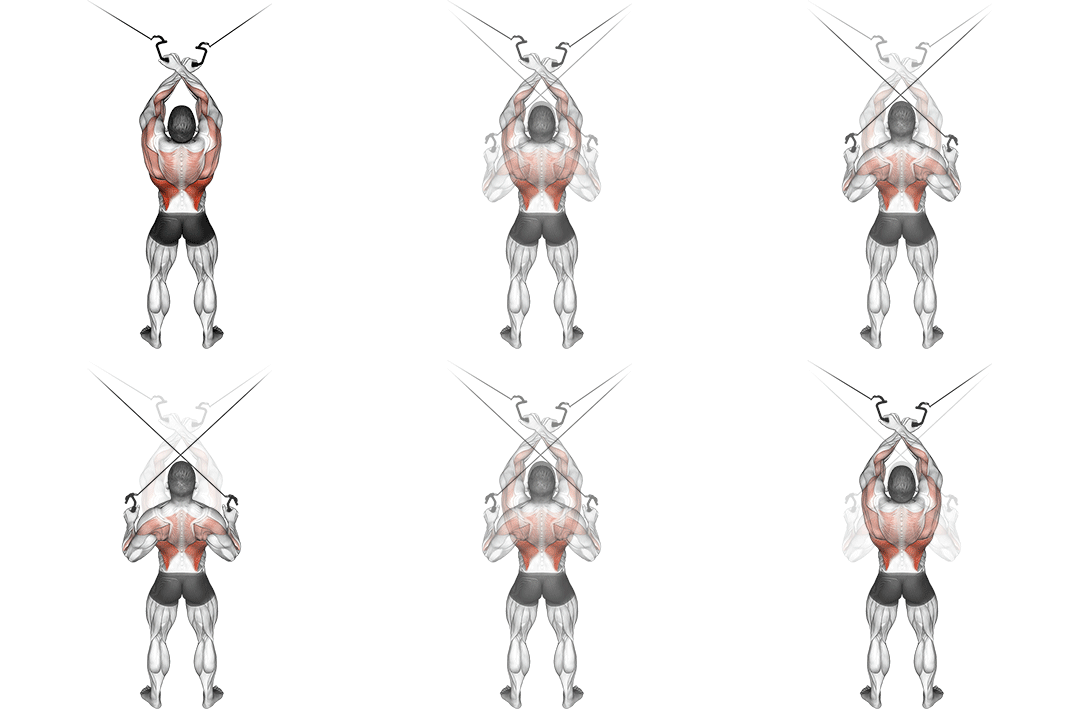
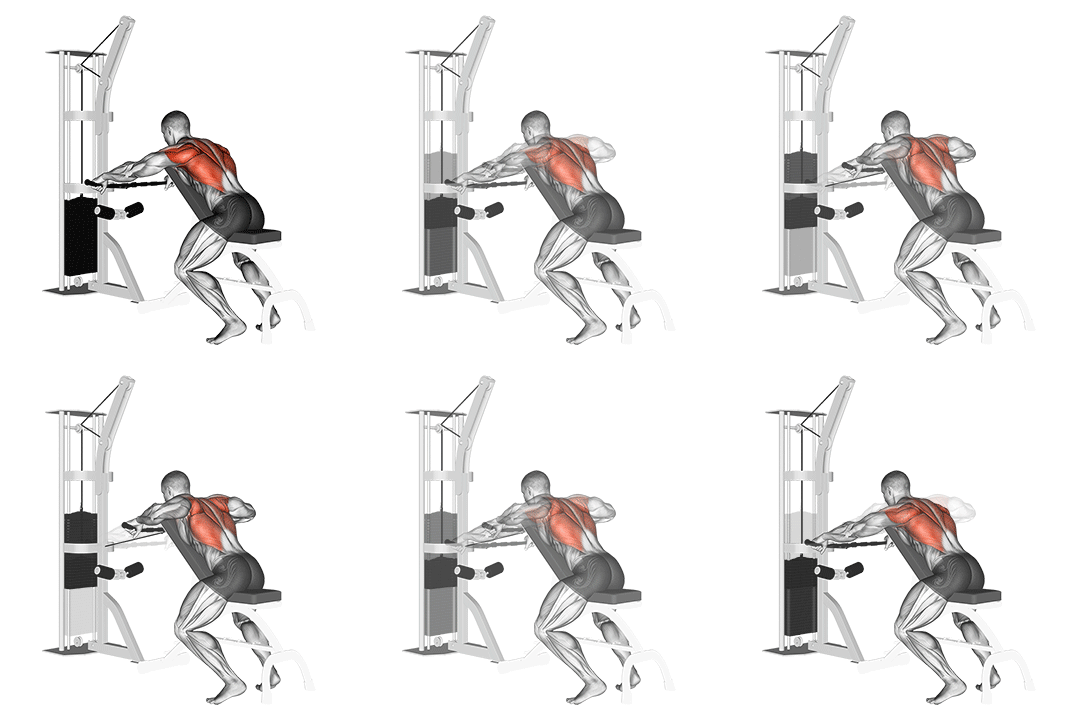
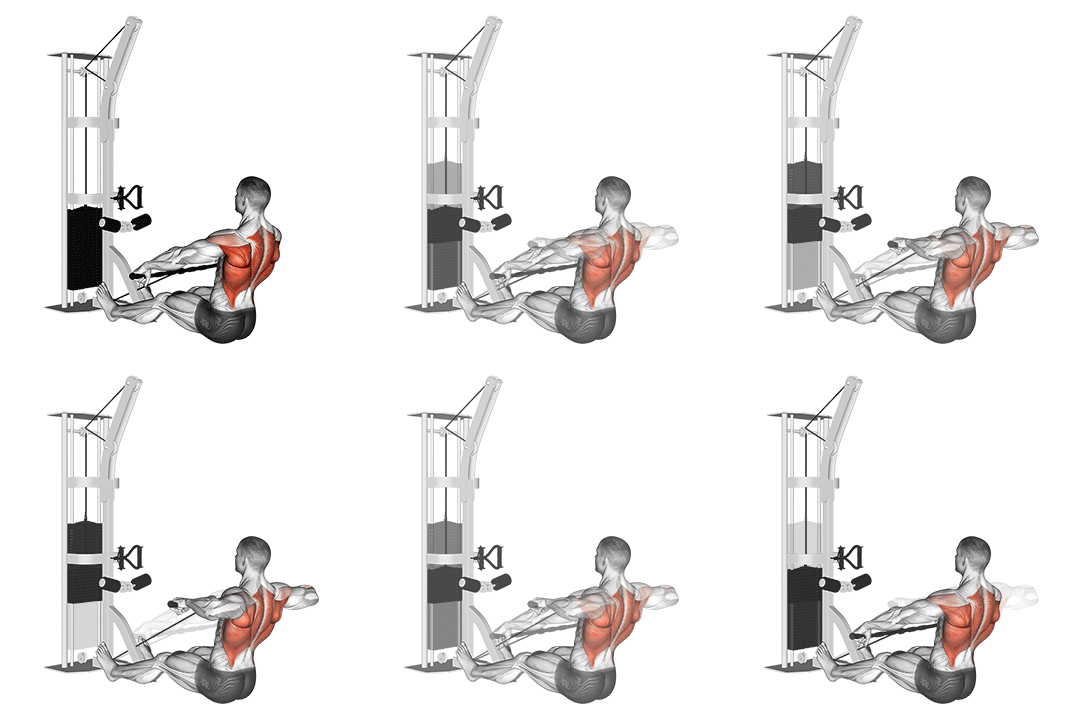
Cable Cross-over Lateral Pulldown
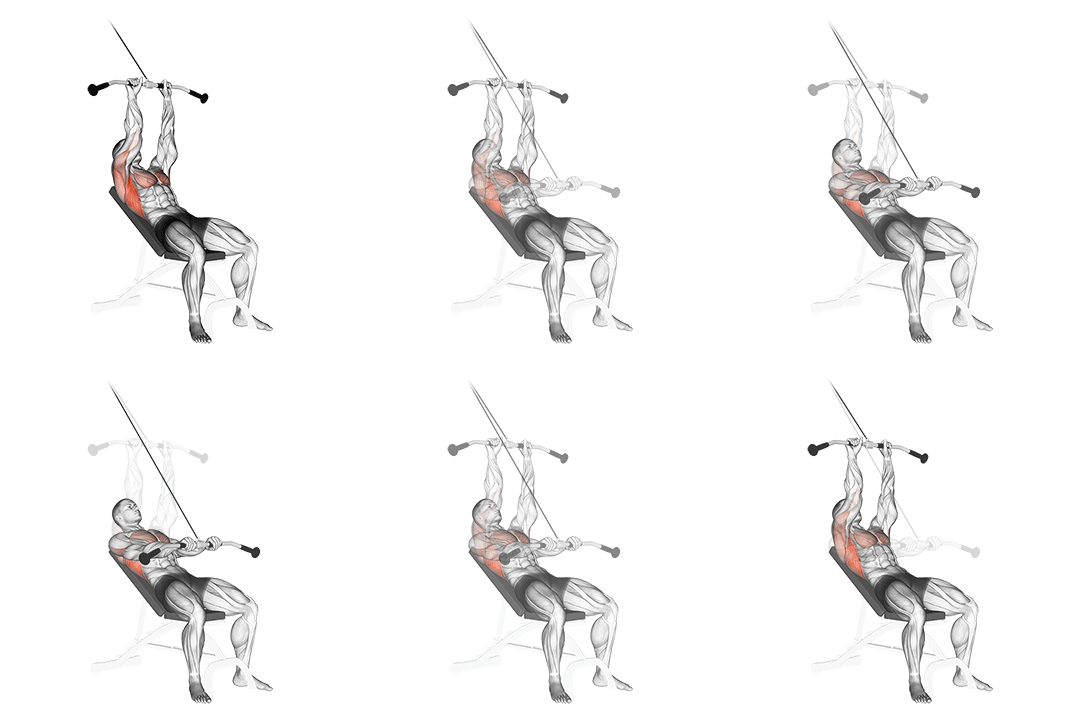
Cable Incline Pushdown
Head-to-Head Comparison
| Attribute | Cable Cross-over Lateral Pulldown | Cable Incline Pushdown |
|---|---|---|
| Target Muscle |
Lats
|
Lats
|
| Body Part |
Back
|
Back
|
| Equipment |
Cable
|
Cable
|
| Difficulty |
Intermediate
|
Intermediate
|
| Movement Type |
Compound
|
Compound
|
| Secondary Muscles |
3
|
2
|
Secondary Muscles Activated
Cable Cross-over Lateral Pulldown
Cable Incline Pushdown
Visual Comparison
Overview
Cable Cross-over Lateral Pulldown vs Cable Incline Pushdown — two cable-based back moves that both claim to hit the lats. You’ll get a clear, practical comparison: how each targets the lats and secondary muscles, the biomechanics behind the movement, exact technique cues, equipment needs, progression tips, and which to pick for hypertrophy, strength, beginners, or home workouts. Read on and you’ll know which exercise to program, how many reps and sets to use (6–12 for heavy mass work, 8–15 for higher-volume sessions), and how to reduce injury risk.
Key Differences
- Both exercises target the Lats using Cable. The main differences are in their movement patterns and muscle activation angles.
Pros & Cons
Cable Cross-over Lateral Pulldown
+ Pros
- Stronger lat stretch and longer range of motion for muscle growth
- Greater recruitment of rhomboids and rear deltoids for upper-back thickness
- Multiple grip and trajectory variations to shift emphasis
- Better for progressive overload and heavy sets in the 6–12 rep range
− Cons
- Requires more cable travel or dual-pulley setups
- Higher demand on scapular control and motor coordination
- Greater shoulder strain risk if technique breaks down
Cable Incline Pushdown
+ Pros
- Easier to learn with bench support and a guided path
- Needs only a single high pulley and an incline surface
- Less scapular demand—good for controlled, higher-rep work (8–15 reps)
- Useful accessory to reduce lower-back involvement
− Cons
- Transfers load to triceps and anterior shoulder, reducing pure lat tension
- Smaller ROM for the lats compared with the pulldown
- Fewer meaningful variations for progressive lat-focused overload
When Each Exercise Wins
The pulldown gives a longer lat stretch and larger ROM, which increases mechanical tension and time under tension. Use 6–12 reps for heavier sets and 3–4 sets to maximize muscle growth.
Its ability to accept heavier loads and varied grips lets you progressively overload the lats and the posterior chain. Train with lower reps (4–8) and focus on controlled tempo and full scapular retraction.
The bench support and simpler movement path reduce coordination demands and spinal loading, making it easier to learn scapular positioning and safe loading patterns before moving to more technical pulldowns.
It can be approximated with a resistance band anchored high and an incline surface, while the Cross-over Lateral Pulldown needs a more elaborate pulley system or lat tower to replicate the same arc.
Frequently Asked Questions
Can I do both Cable Cross-over Lateral Pulldown and Cable Incline Pushdown in the same workout?
Yes. Do the Cross-over Lateral Pulldown first as your primary mover (3–4 sets, 6–12 reps) and follow with 2–3 sets of incline pushdowns at higher reps (8–15) to add volume without overloading the lower back.
Which exercise is better for beginners?
Cable Incline Pushdown is better for beginners because the bench stabilizes the torso and the movement path is simpler. This lets you learn scapular control and load management before progressing to more technical pulldowns.
How do the muscle activation patterns differ?
The pulldown emphasizes lat length-tension through a longer eccentric stretch and concentric shoulder adduction/extension. The incline pushdown shortens the lats sooner and shifts part of the load to elbow extension and the anterior shoulder, altering the peak activation window.
Can Cable Incline Pushdown replace Cable Cross-over Lateral Pulldown?
Not fully. The incline pushdown is a useful accessory and easier option, but it does not replicate the pulldown’s longer ROM and posterior chain recruitment. If your goal is maximal lat hypertrophy or strength, keep the pulldown as primary work.
Expert Verdict
Choose the Cable Cross-over Lateral Pulldown when your priority is maximizing lat mechanical tension and posterior chain recruitment. It gives a stronger stretch, more ROM, and better options for progressive overload (6–12 reps for mass; 4–8 for strength). Pick the Cable Incline Pushdown when you want an easier-to-learn accessory that minimizes lower-back involvement and is more accessible with limited equipment. Use the incline pushdown for higher-rep volume blocks (8–15 reps) or as a finisher. Program both across a mesocycle if you want variety: prioritize the pulldown for main back days and add incline pushdowns as targeted accessory work.
Also Compare
More comparisons with Cable Cross-over Lateral Pulldown
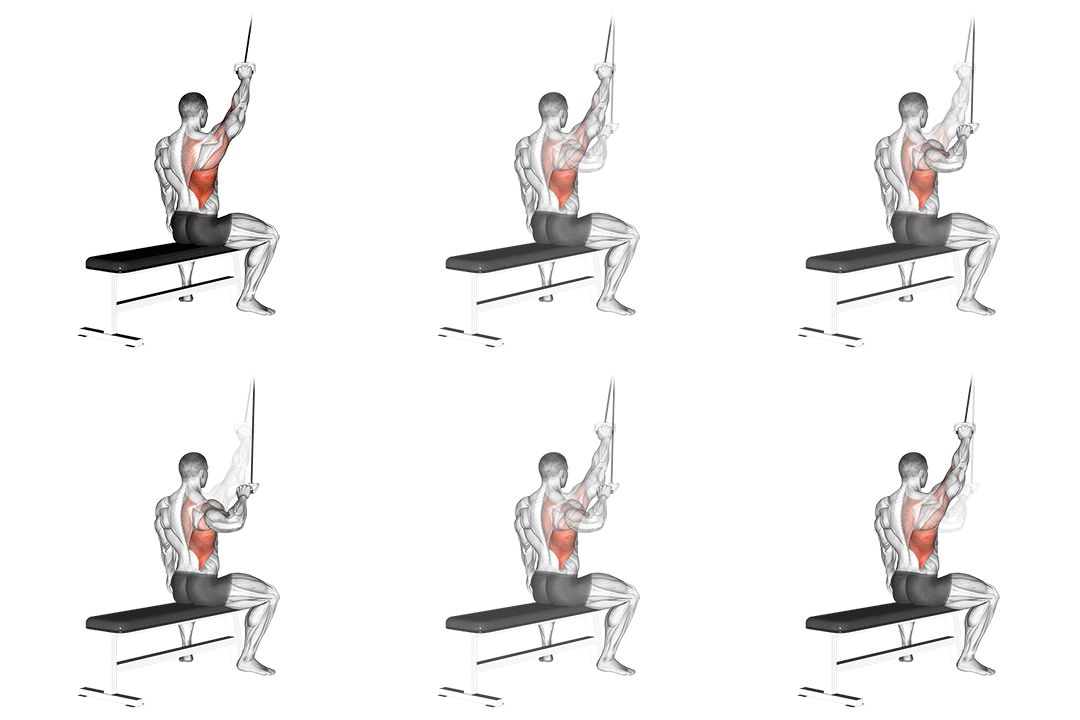
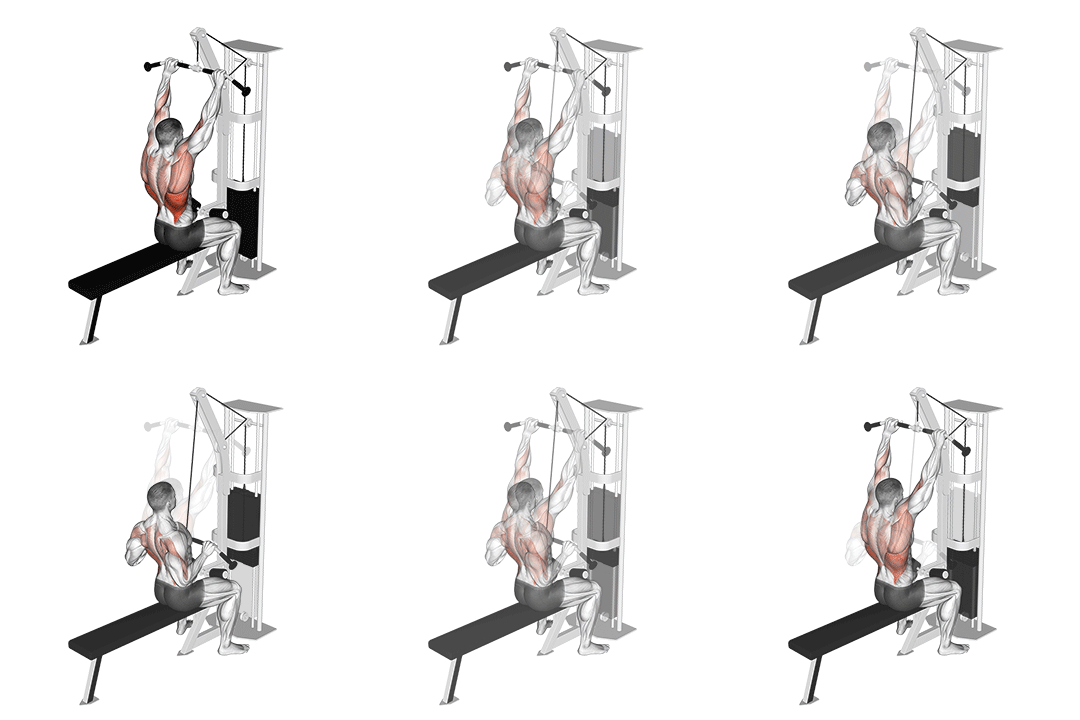
More comparisons with Cable Incline Pushdown
Compare More Exercises
Use our free comparison tool to analyze any two exercises head-to-head.
Compare Exercises