

Cable Cross-over Lateral Pulldown vs Cable Pulldown: Complete Comparison Guide
Cable Cross-over Lateral Pulldown vs Cable Pulldown — you’re comparing two cable-based lat builders that look similar but move differently. I’ll walk you through how each loads the lats, which secondary muscles get involved, the equipment needed, and how to pick the right tool for hypertrophy, strength, or convenience. You’ll get specific technique cues (grip, torso angle, scapular mechanics), recommended rep ranges, and clear scenarios where one exercise outperforms the other so you can choose with confidence.
Exercise Comparison
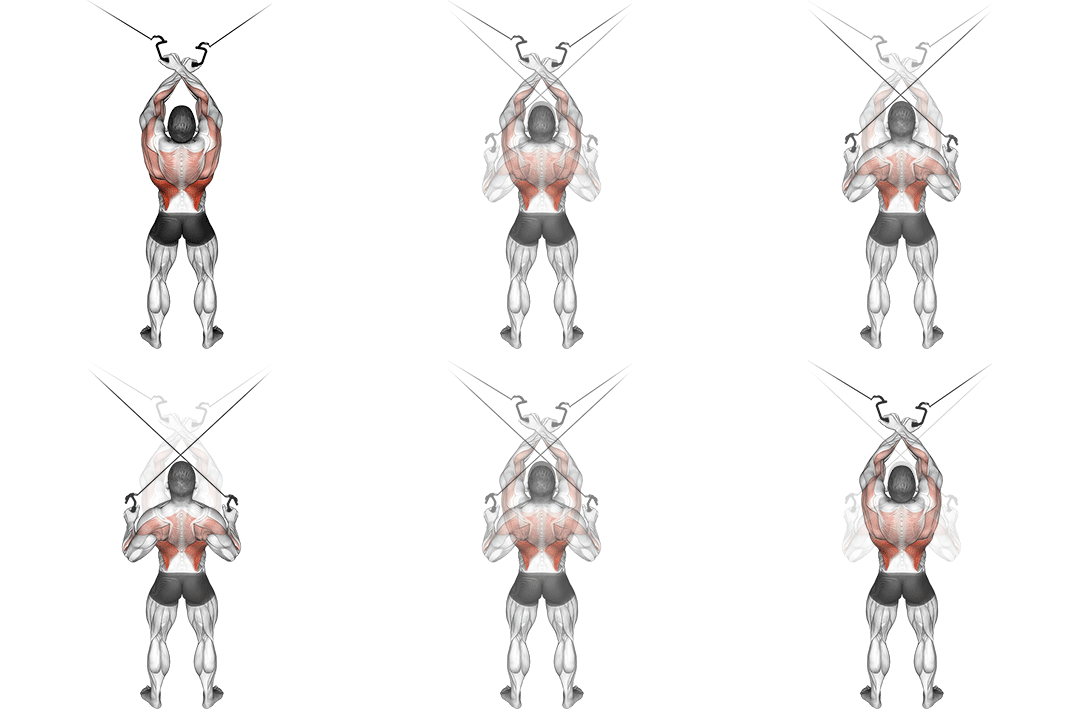
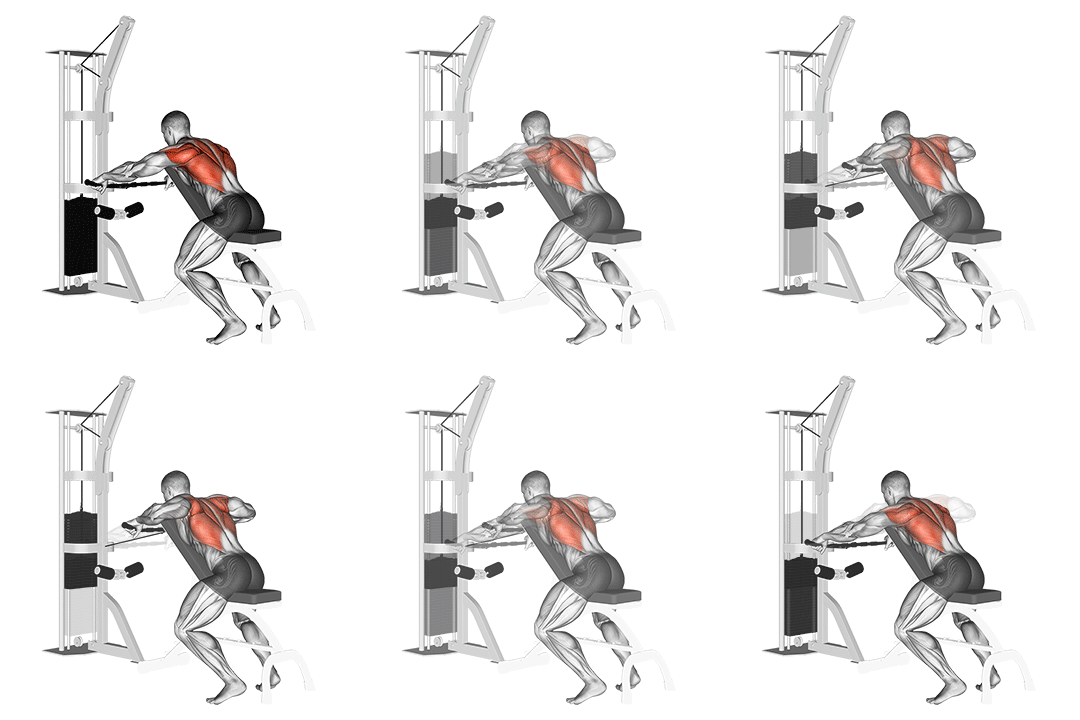
Cable Cross-over Lateral Pulldown
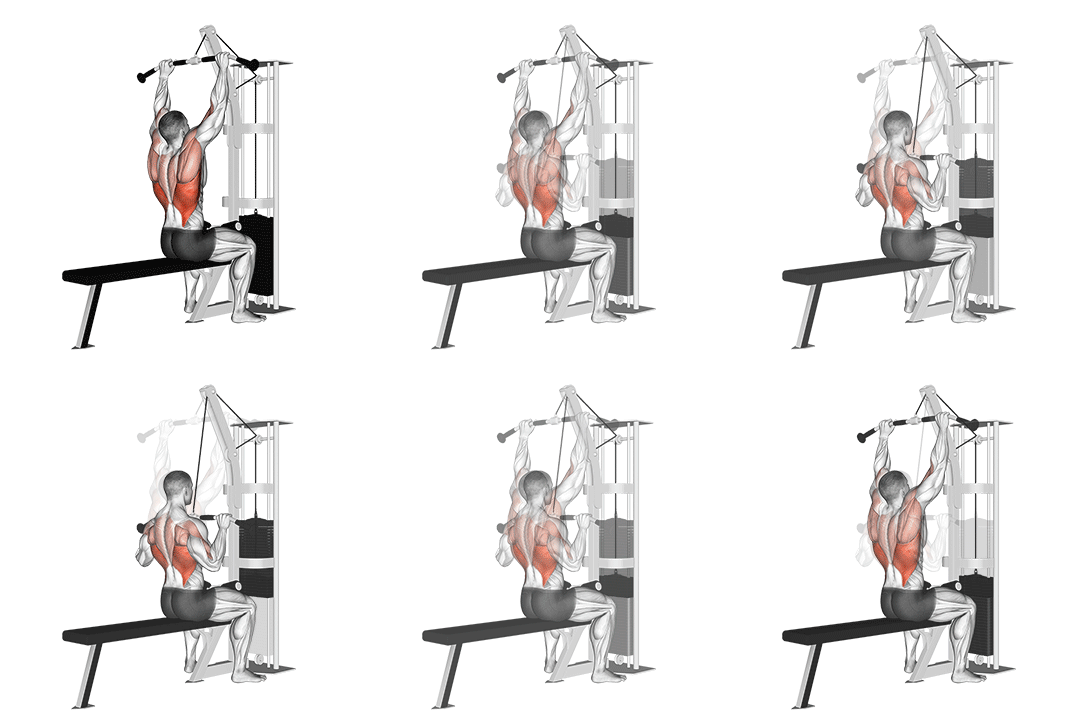
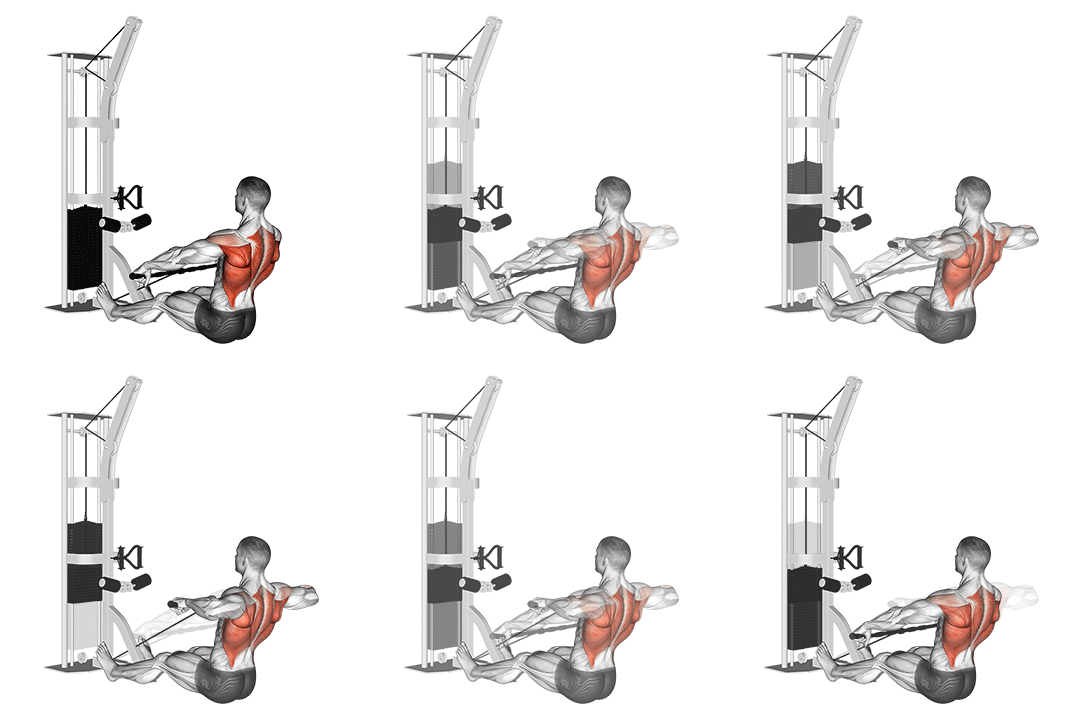
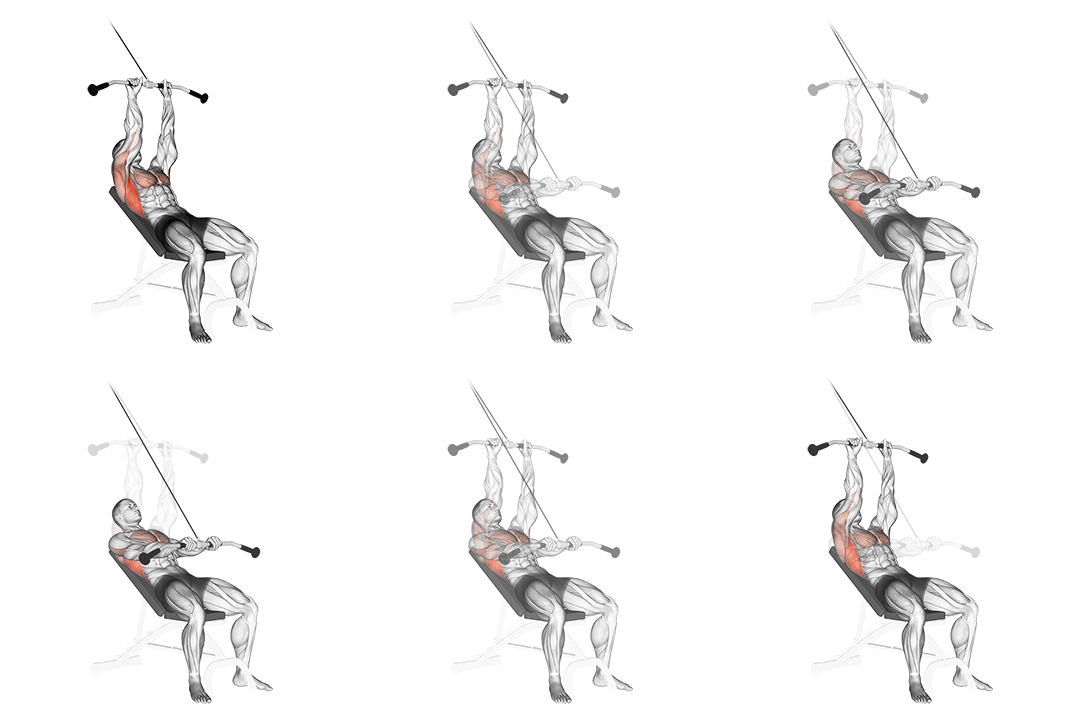
Cable Pulldown
Head-to-Head Comparison
| Attribute | Cable Cross-over Lateral Pulldown | Cable Pulldown |
|---|---|---|
| Target Muscle |
Lats
|
Lats
|
| Body Part |
Back
|
Back
|
| Equipment |
Cable
|
Cable
|
| Difficulty |
Intermediate
|
Intermediate
|
| Movement Type |
Compound
|
Compound
|
| Secondary Muscles |
3
|
2
|
Secondary Muscles Activated
Cable Cross-over Lateral Pulldown
Cable Pulldown
Visual Comparison
Overview
Cable Cross-over Lateral Pulldown vs Cable Pulldown — you’re comparing two cable-based lat builders that look similar but move differently. I’ll walk you through how each loads the lats, which secondary muscles get involved, the equipment needed, and how to pick the right tool for hypertrophy, strength, or convenience. You’ll get specific technique cues (grip, torso angle, scapular mechanics), recommended rep ranges, and clear scenarios where one exercise outperforms the other so you can choose with confidence.
Key Differences
- Both exercises target the Lats using Cable. The main differences are in their movement patterns and muscle activation angles.
Pros & Cons
Cable Cross-over Lateral Pulldown
+ Pros
- Targets lateral and upper-lat fibers via a mixed pull vector
- Better posterior deltoid and rhomboid engagement due to horizontal component
- Allows unique end-range tension for hypertrophy at ~8–15 reps
- Great for fixing muscular imbalances with unilateral variations
− Cons
- Requires a dual-pulley station and more setup
- Higher coordination demand; harder to load very heavy safely
- Risk of shoulder torque if elbows flare or rotation is uncontrolled
Cable Pulldown
+ Pros
- Widely available and easy to learn with stable cues
- Excellent for building vertical lat thickness and strength (3–8 reps)
- Simple progressive overload with heavier stacks or tempo change
- Lower technical demand reduces shoulder injury risk when performed correctly
− Cons
- Less transverse-plane stimulus for rear delts and rhomboids
- Can over-recruit biceps and forearms if grip and elbow position are wrong
- Standard bar can limit range of motion for people with long arms unless handles are switched
When Each Exercise Wins
The diagonal pull creates sustained tension at longer muscle lengths and hits lateral lat insertions and posterior delts more. Use 8–15 reps with 2–3 second eccentrics to exploit length-tension for growth.
A vertical force vector and seat stabilization let you handle heavier loads and train low-rep ranges (3–6). That mechanical advantage transfers better to heavy compound pulling patterns.
Its guided path, lower coordination demand, and easy setup let you learn scapular retraction and elbow drive without complex hand paths. Start with 8–12 reps focusing on technique.
A single high-pulley attachment or lat tower is more common and easier to replicate with band alternatives. The Cross-over needs a dual-pulley trainer, which is less typical at home.
Frequently Asked Questions
Can I do both Cable Cross-over Lateral Pulldown and Cable Pulldown in the same workout?
Yes — pair them intelligently. Use Cable Pulldown earlier for heavier sets (3–6 or 6–8 reps) and finish with Cable Cross-over Lateral Pulldown for 8–15 rep hypertrophy work and targeted lateral stimulation.
Which exercise is better for beginners?
Cable Pulldown is better for beginners because the vertical bar and seated position simplify technique and teach scapular control. Begin with moderate weight and 8–12 reps focusing on chest-up posture and full scapular retraction.
How do the muscle activation patterns differ?
Cable Pulldown follows a primarily sagittal-plane adduction pattern emphasizing long-axis lat fibers and elbow flexors. The Cross-over adds a transverse component, shifting load to lateral lat fibers, rear delts, and rhomboids by increasing scapular retraction and horizontal pull angle.
Can Cable Pulldown replace Cable Cross-over Lateral Pulldown?
Cable Pulldown can substitute when equipment is limited, but it won’t replicate the same lateral and posterior-deltoid emphasis. If your goal is specific outer-lat development, include the Cross-over when possible.
Expert Verdict
Use Cable Pulldown as your foundation: it’s accessible, easy to overload, and builds vertical lat thickness and pulling strength efficiently. Add Cable Cross-over Lateral Pulldown when you want targeted lateral-width development, extra posterior-delt and rhomboid stimulus, or to emphasize tension at long muscle lengths for hypertrophy. Program both: prioritize Cable Pulldown for heavy strength blocks (3–6 reps) and include Cross-over Lateral Pulldown during hypertrophy phases (8–15 reps, slower eccentrics). Follow strict scapular retraction cues and control rotation to minimize shoulder stress.
Also Compare
More comparisons with Cable Cross-over Lateral Pulldown
More comparisons with Cable Pulldown
Compare More Exercises
Use our free comparison tool to analyze any two exercises head-to-head.
Compare Exercises