

Cable Cross-over Lateral Pulldown vs Close-Grip Front Lat Pulldown: Complete Comparison Guide
'Cable Cross-over Lateral Pulldown vs Close-Grip Front Lat Pulldown' — two cable lat movers that look similar but load your shoulder and scapular mechanics differently. If you want clearer lats, more back thickness, or a safer way to load heavy rows, this comparison will help. You'll get side-by-side muscle activation notes, equipment and setup differences, technique cues (grip, torso angle, elbow path), rep ranges for hypertrophy and strength, and when to pick each move in your program. Read on and use the recommendations to match the exercise to your goals.
Exercise Comparison
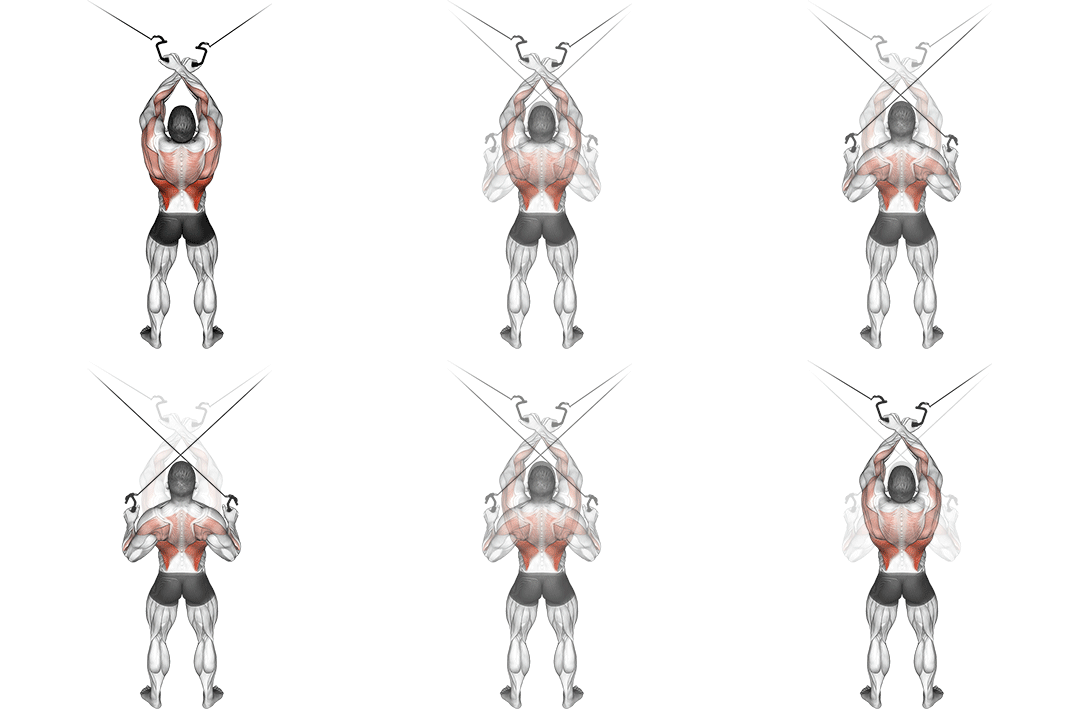
Cable Cross-over Lateral Pulldown
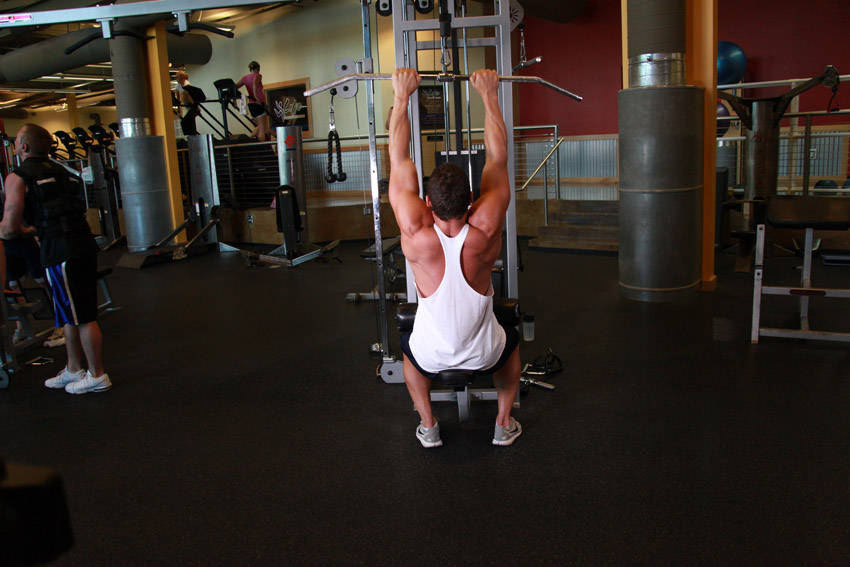
Close-grip Front Lat Pulldown
Head-to-Head Comparison
| Attribute | Cable Cross-over Lateral Pulldown | Close-grip Front Lat Pulldown |
|---|---|---|
| Target Muscle |
Lats
|
Lats
|
| Body Part |
Back
|
Back
|
| Equipment |
Cable
|
Cable
|
| Difficulty |
Intermediate
|
Intermediate
|
| Movement Type |
Compound
|
Compound
|
| Secondary Muscles |
3
|
3
|
Secondary Muscles Activated
Cable Cross-over Lateral Pulldown
Close-grip Front Lat Pulldown
Visual Comparison
Overview
'Cable Cross-over Lateral Pulldown vs Close-Grip Front Lat Pulldown' — two cable lat movers that look similar but load your shoulder and scapular mechanics differently. If you want clearer lats, more back thickness, or a safer way to load heavy rows, this comparison will help. You'll get side-by-side muscle activation notes, equipment and setup differences, technique cues (grip, torso angle, elbow path), rep ranges for hypertrophy and strength, and when to pick each move in your program. Read on and use the recommendations to match the exercise to your goals.
Key Differences
- Both exercises target the Lats using Cable. The main differences are in their movement patterns and muscle activation angles.
Pros & Cons
Cable Cross-over Lateral Pulldown
+ Pros
- Greater lateral/lower-lat emphasis through wider arc and horizontal force vector
- Strong unilateral options to fix left-right imbalances
- Better scapular retraction and rear deltoid engagement
- Fine-tunable pulley height to target different lat fibers
− Cons
- Requires a dual-pulley setup or more equipment
- Higher coordination demand — harder to master the arc
- Can stress posterior shoulder if overreached or done with poor scapular control
Close-grip Front Lat Pulldown
+ Pros
- Simple setup and stable movement pattern for heavy loading
- Easier to learn and scale with progressive overload
- Strong lower-lat and mid-back thickness stimulus with vertical pull
- Common equipment in most gyms (single high pulley + V-bar)
− Cons
- Narrow grip may under-recruit lateral fibers compared to wider arcs
- Can encourage excessive trunk lean if load is too heavy
- Less unilateral control to correct asymmetries
When Each Exercise Wins
Its adjustable pulley angle and wider arc let you load the lateral and lower lat fibers through a longer ROM, ideal for 8–15 rep ranges and peak time under tension. Use slow eccentrics (2–4 s) and partial holds at peak contraction to maximize hypertrophy.
The near-vertical pull and stable bar path let you load heavier (lower 4–6 rep ranges) while maintaining consistent mechanics. It’s easier to progressively add weight and track strength improvements.
Simpler cueing (drive elbows down, chest up) and a fixed single-station setup reduce coordination demands. Beginners can learn scapular retraction and elbow control before moving to more complex cable arcs.
Most home-friendly pulley setups mimic a standard lat machine and accept a V-bar; the exercise doesn’t require a dual-pulley crossover rig. If you have only bands or a single pulley, the close-grip pattern is easier to replicate.
Frequently Asked Questions
Can I do both Cable Cross-over Lateral Pulldown and Close-Grip Front Lat Pulldown in the same workout?
Yes. Use Close-Grip Front Lat Pulldown as the main heavy set (4–6 or 6–8 reps) and follow with Cable Cross-over Lateral Pulldown for 2–4 sets of 8–15 reps to finish the lats. This pairs vertical strength work with horizontal/lateral shaping.
Which exercise is better for beginners?
Close-Grip Front Lat Pulldown is better for beginners because its vertical path simplifies technique and stabilization. Start here to build scapular control, then add cable lateral variations once you can keep the torso steady and ribs down.
How do the muscle activation patterns differ?
The Cable Cross-over Lateral Pulldown shifts force vectors toward a horizontal component, increasing lateral and rear-deltoid involvement through the top 30° of the pull; the Close-Grip Front Lat Pulldown keeps a vertical vector, maximizing humeral extension and lower-lat tension during the mid-to-late range of motion.
Can Close-Grip Front Lat Pulldown replace Cable Cross-over Lateral Pulldown?
It can substitute for general lat development, especially where equipment is limited, but it won’t replicate the lateral fiber emphasis and unilateral control of the cable crossover. If your goal is targeted shaping or correcting side-to-side differences, keep the cable variation in your program.
Expert Verdict
Choose the Close-Grip Front Lat Pulldown when you want a sturdy, heavy-loading vertical pull to build back thickness and measurable strength — it’s easier to teach and scale (4–6 reps for strength, 6–12 for size). Pick the Cable Cross-over Lateral Pulldown when your goal is targeted lat shaping, correcting asymmetry, or emphasizing the lateral and lower lat fibers through varied pulley angles and unilateral work. Program both: use close-grip heavy sets for baseline strength and follow with cable lateral variations for volume, 8–15 reps with controlled 2–4 second eccentrics to maximize muscle growth.
Also Compare
More comparisons with Cable Cross-over Lateral Pulldown
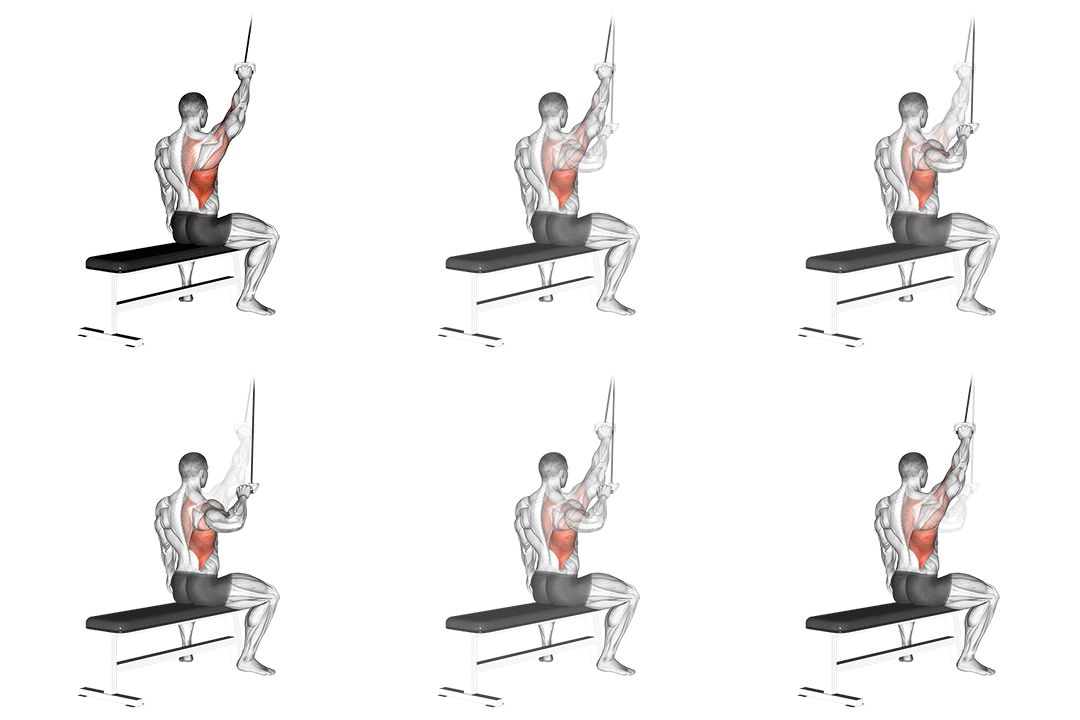
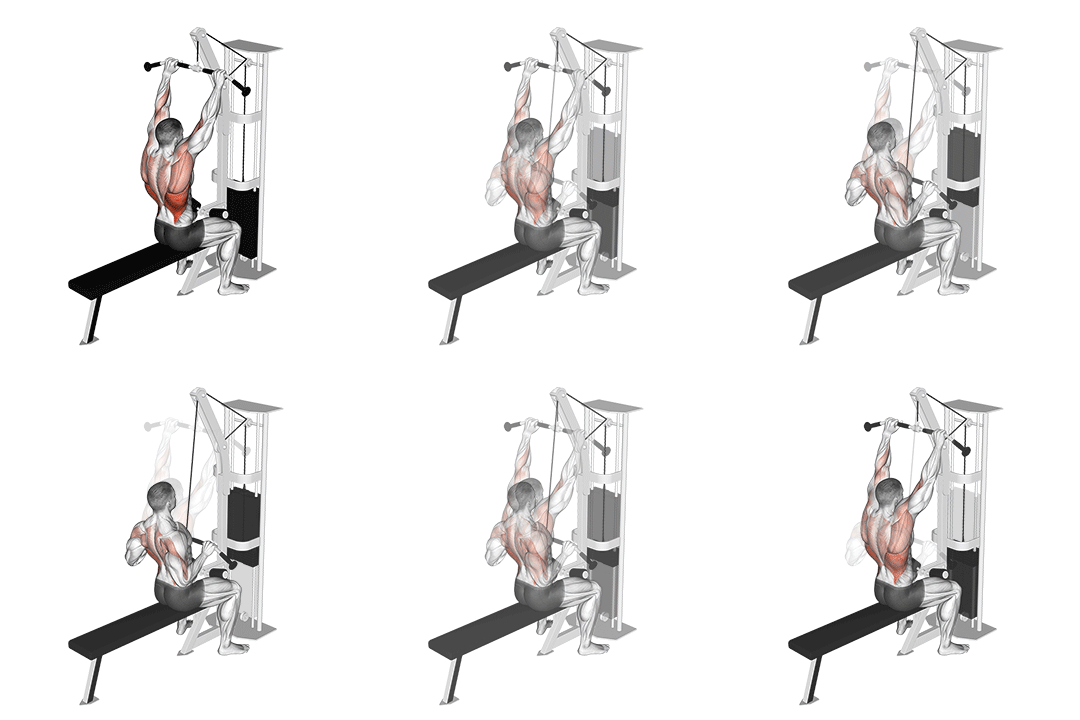
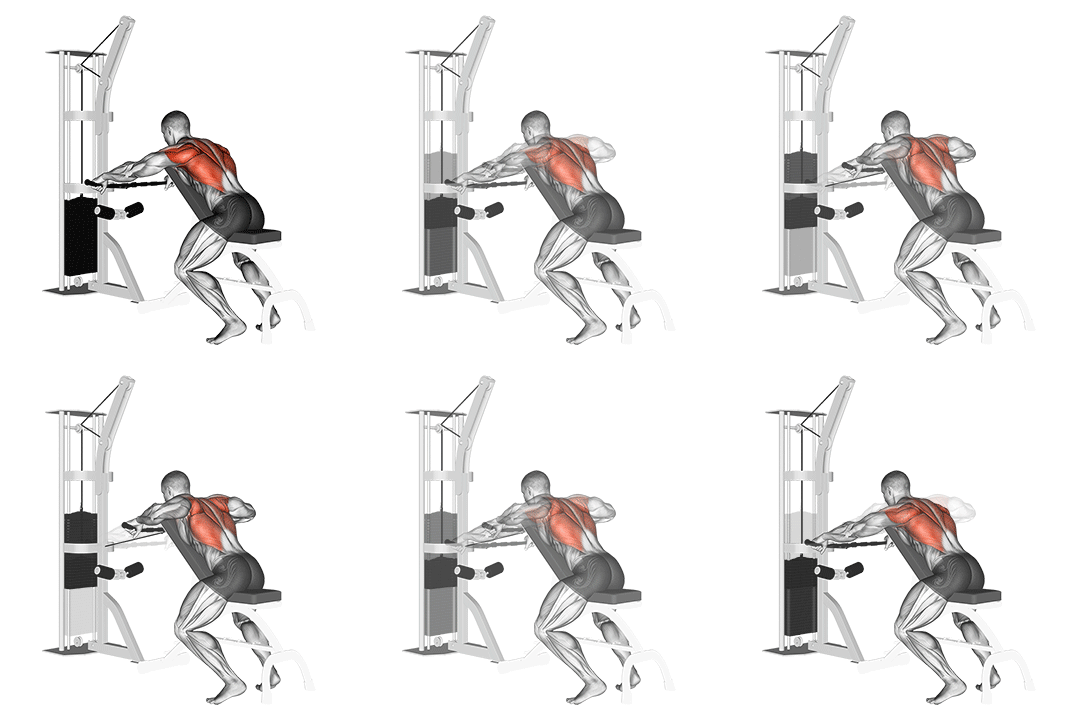
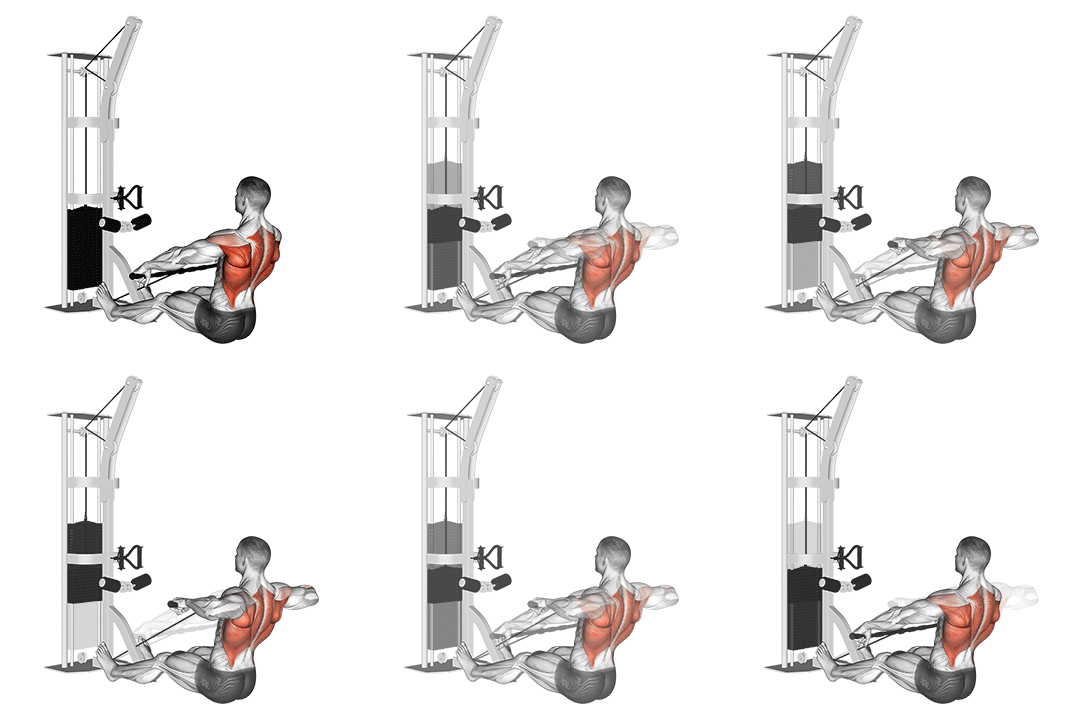
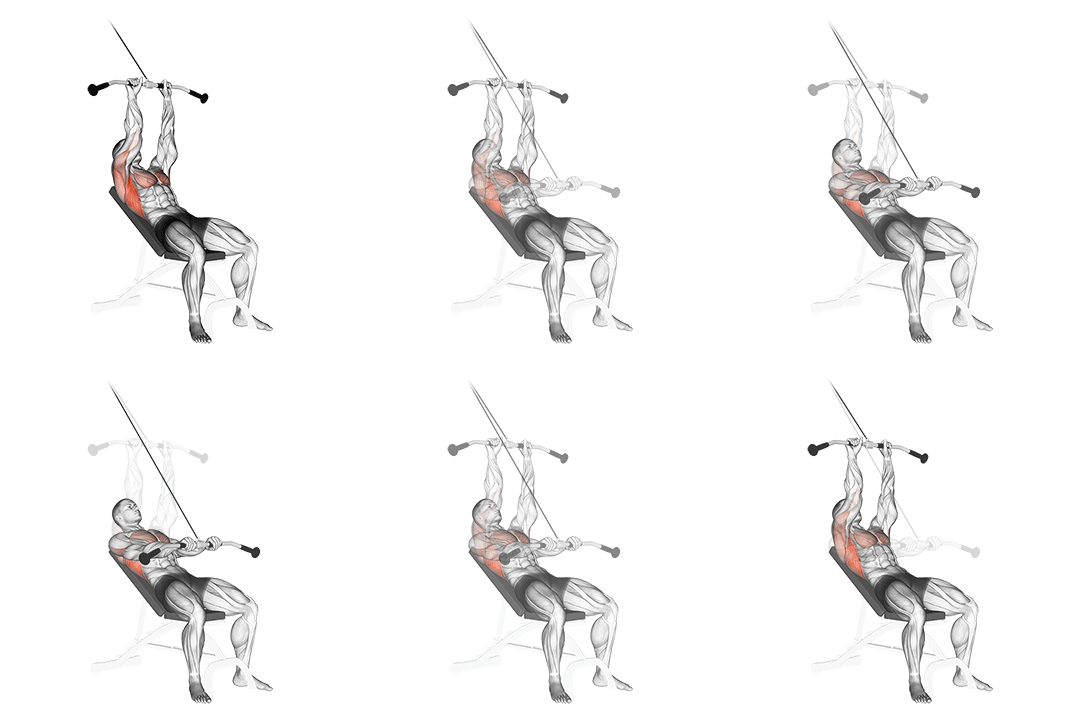
More comparisons with Close-grip Front Lat Pulldown
Compare More Exercises
Use our free comparison tool to analyze any two exercises head-to-head.
Compare Exercises