

Cable Cross-over Revers Fly vs Cable Forward Raise: Complete Comparison Guide
Cable Cross-over Revers Fly vs Cable Forward Raise: you’re comparing two cable isolation moves that target the delts from opposite vectors. I’ll walk you through how each hits the shoulder, what secondary muscles fire, the setup and technique cues you need, and which to pick for hypertrophy, strength, or beginner work. You’ll get concrete rep ranges, angles, and progression tips so you can pick the right move for your program and avoid common setup mistakes like wrong pulley height or excessive torso compensation.
Exercise Comparison
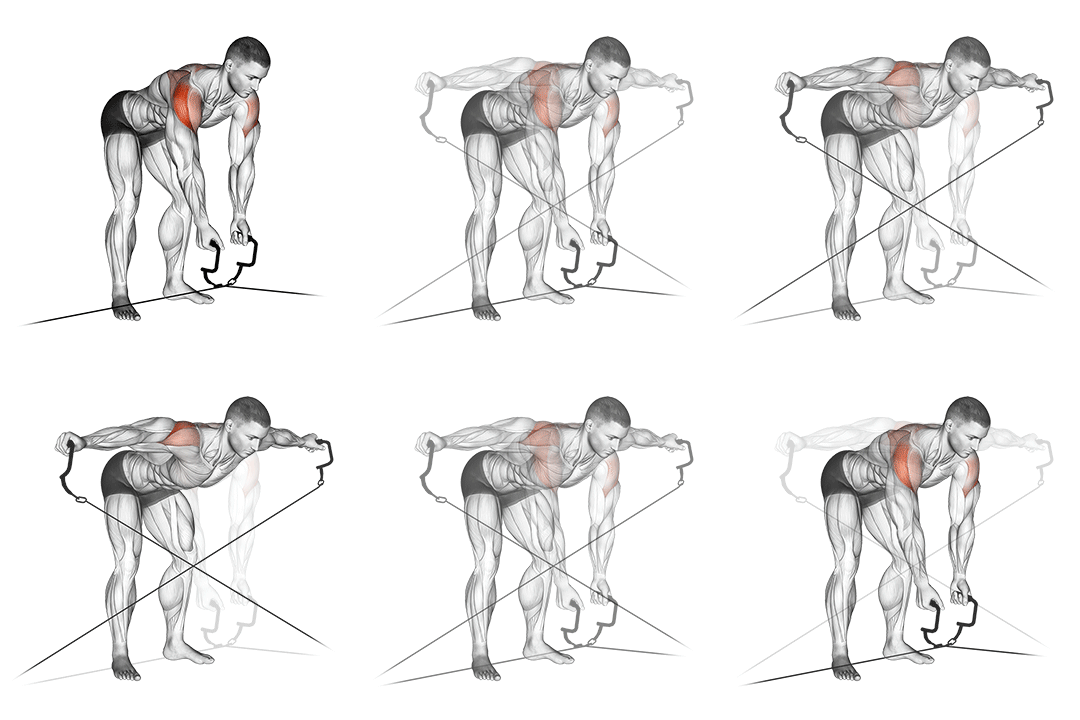
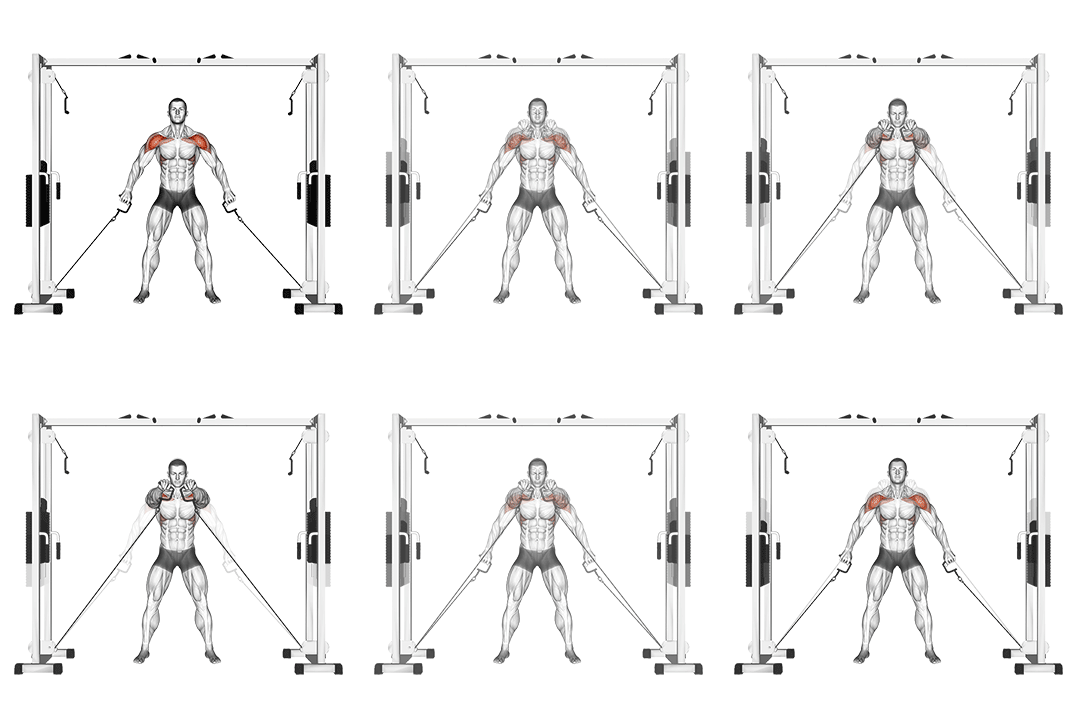
Cable Cross-over Revers Fly
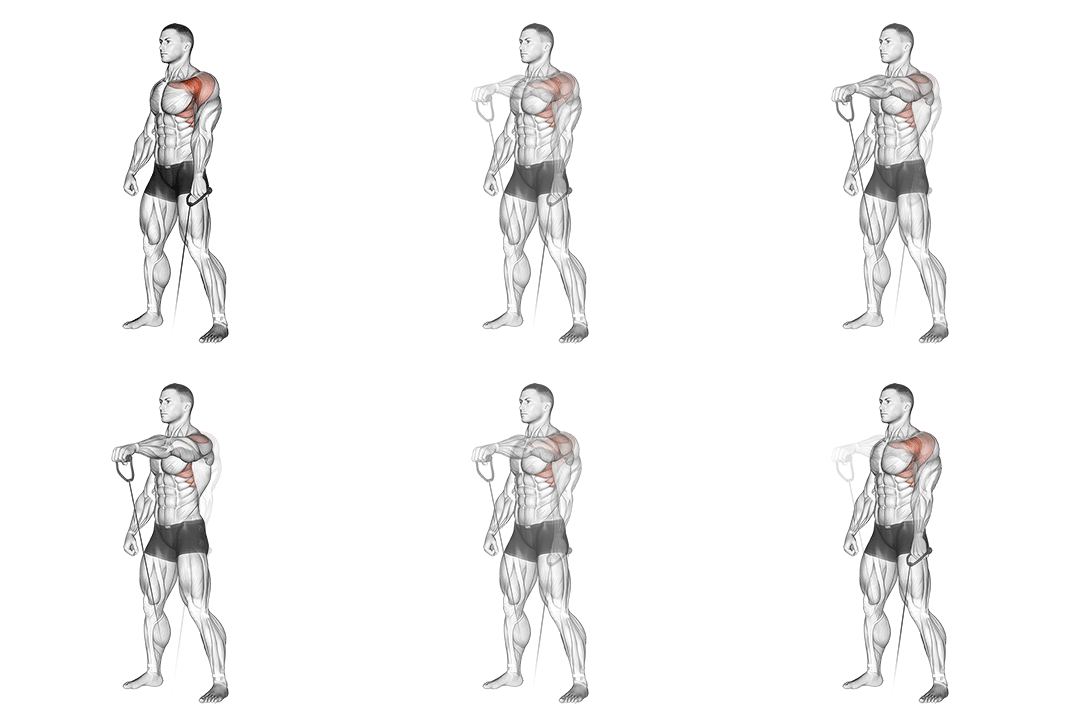
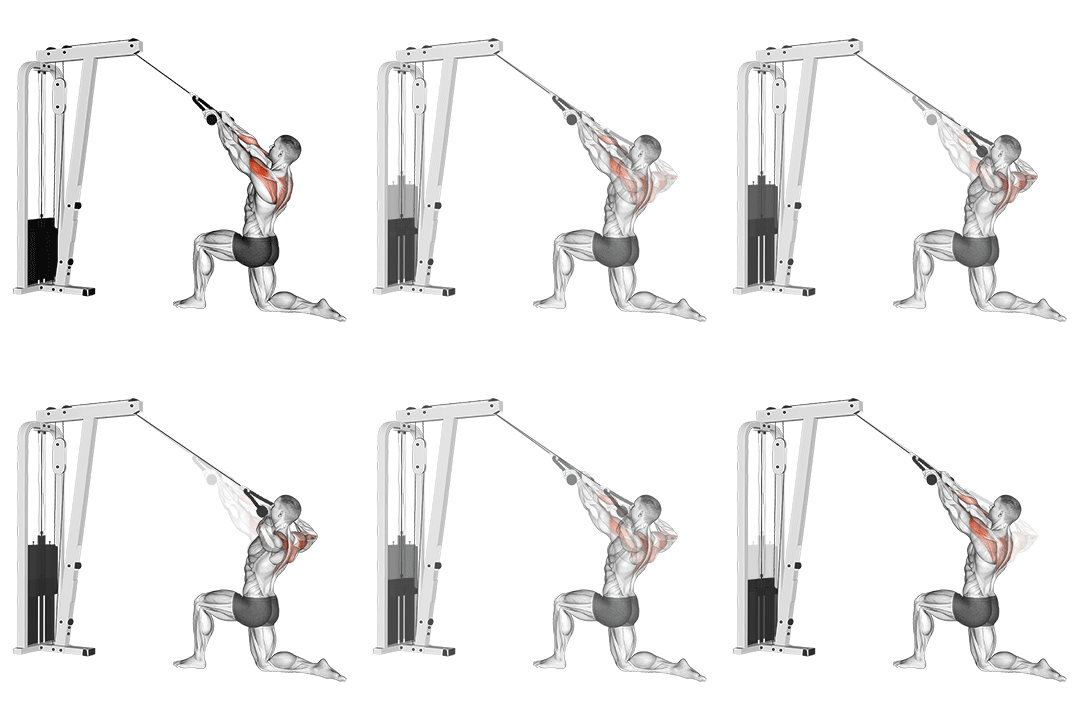
Cable Forward Raise
Head-to-Head Comparison
| Attribute | Cable Cross-over Revers Fly | Cable Forward Raise |
|---|---|---|
| Target Muscle |
Delts
|
Delts
|
| Body Part |
Shoulders
|
Shoulders
|
| Equipment |
Cable
|
Cable
|
| Difficulty |
Intermediate
|
Beginner
|
| Movement Type |
Isolation
|
Isolation
|
| Secondary Muscles |
2
|
2
|
Secondary Muscles Activated
Cable Cross-over Revers Fly
Cable Forward Raise
Visual Comparison
Overview
Cable Cross-over Revers Fly vs Cable Forward Raise: you’re comparing two cable isolation moves that target the delts from opposite vectors. I’ll walk you through how each hits the shoulder, what secondary muscles fire, the setup and technique cues you need, and which to pick for hypertrophy, strength, or beginner work. You’ll get concrete rep ranges, angles, and progression tips so you can pick the right move for your program and avoid common setup mistakes like wrong pulley height or excessive torso compensation.
Key Differences
- Difficulty levels differ: Cable Cross-over Revers Fly is intermediate, while Cable Forward Raise is beginner.
- Both exercises target the Delts using Cable. The main differences are in their movement patterns and muscle activation angles.
Pros & Cons
Cable Cross-over Revers Fly
+ Pros
- Directly targets posterior deltoid and upper-back stabilizers for improved posture
- Loads transverse extension with continuous tension from cables
- Multiple setup angles (high, mid, low pulley) let you shift emphasis on fibers
- Great for balancing anterior-dominant pressing movements and reducing shoulder imbalance
− Cons
- Requires two pulleys and more space than single-pulley exercises
- Higher technical demand—easy to cheat with torso swing or shrugs
- Harder to progressively overload with very heavy loads compared to compound lifts
Cable Forward Raise
+ Pros
- Simple single-plane movement that’s easy to teach and learn
- Requires minimal equipment—a single low or mid pulley
- Provides continuous tension and isolates the anterior deltoid effectively
- Low setup time and easy to integrate into superset or burnout rounds
− Cons
- Limited scapular and posterior chain engagement
- Higher chance of anterior shoulder irritation if taken above 90° or loaded too heavy
- Less versatile for long-term progressive overload compared with multi-angle cable work
When Each Exercise Wins
The reverse fly provides superior isolation of the posterior deltoid and secondary upper-back muscles, allowing longer time under tension across a transverse vector. Use 8–15 reps with 2–3 second eccentrics and varied pulley heights to maximize fiber recruitment and hypertrophy.
For pure strength at the shoulder joint in flexion patterns, the forward raise is easier to load consistently and to perform with heavy, controlled sets. Use 6–10 reps and focus on slow eccentrics and stable scapulae to build joint-specific strength.
Beginners benefit from the straightforward sagittal-plane movement and simpler setup of the forward raise. Keep the elbow soft (15–30°), use light load, and aim for 12–15 reps to build motor control before attempting transverse-plane variations.
Home setups or single-cable stations usually support low-pulley forward raises more readily than two-pulley reverse flies. If you have only one band or pulley, the forward raise offers effective anterior deltoid work with minimal equipment.
Frequently Asked Questions
Can I do both Cable Cross-over Revers Fly and Cable Forward Raise in the same workout?
Yes. Pairing them targets all heads of the deltoid in one session. Do the exercise matching your priority first (e.g., reverse fly first for posterior focus), then a 2–3 set higher-rep follow-up for the other head.
Which exercise is better for beginners?
Cable Forward Raise is better for beginners due to its single-plane movement and simpler setup. Start with light weight, a soft elbow (15–30°), and controlled eccentrics to build stability before adding reverse fly variations.
How do the muscle activation patterns differ?
Reverse fly activates posterior deltoid and scapular retractors most during horizontal abduction, peaking near 60–90° of transverse motion. Forward raise loads the anterior deltoid during shoulder flexion, with peak activation around 60–90° of elevation in the sagittal plane and continuous tension from the cable.
Can Cable Forward Raise replace Cable Cross-over Revers Fly?
No—if your goal is posterior deltoid or upper-back development the forward raise won’t replace the transverse-plane stimulus of the reverse fly. For balanced shoulder development, include both or substitute with other transverse-plane pulls like bent-over reverse flyes.
Expert Verdict
Use the Cable Cross-over Revers Fly when your priority is posterior shoulder development, posture correction, and upper-back balance. Its transverse-plane vector and scapular retraction demand make it the go-to for addressing rounded-shoulder posture and building the posterior deltoid and rhomboid complex. Choose the Cable Forward Raise when you need an accessible, beginner-friendly anterior delt isolation that’s quick to set up and easy to load for strength or volume work. For hypertrophy, prioritize 8–15 rep ranges and controlled tempo on both; for strength focus more load and lower reps on forward raises. Alternate them weekly or pair them in the same session—start with the movement aligned to your immediate goal.
Also Compare
More comparisons with Cable Cross-over Revers Fly
More comparisons with Cable Forward Raise
Compare More Exercises
Use our free comparison tool to analyze any two exercises head-to-head.
Compare Exercises