

Cable Cross-over Revers Fly vs Cable Front Raise: Complete Comparison Guide
Cable Cross-over Revers Fly vs Cable Front Raise — you want clearer shoulder development and efficient workouts, and this comparison gives you that. I’ll break down how each move loads the delts, which one hits secondary muscles like the rhomboids or triceps, the equipment and setup you need, plus reps, angles, and progression options. Read on so you can pick the right isolation move for posterior or anterior shoulder work, adjust technique to reduce injury risk, and stack these moves into a practical program.
Exercise Comparison
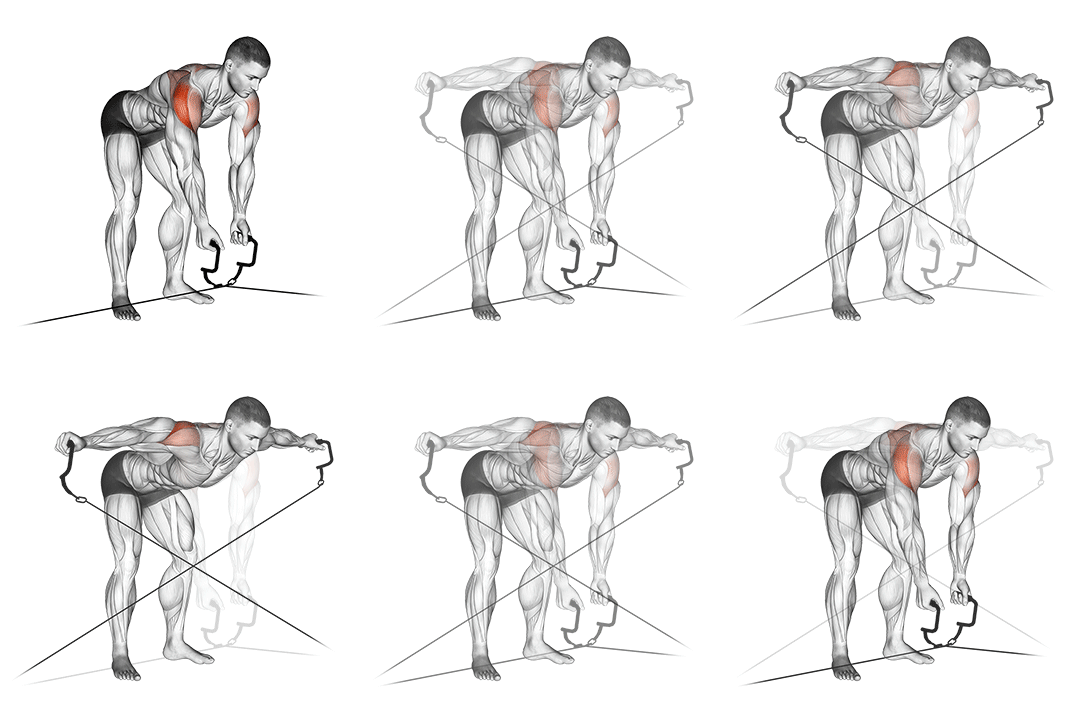
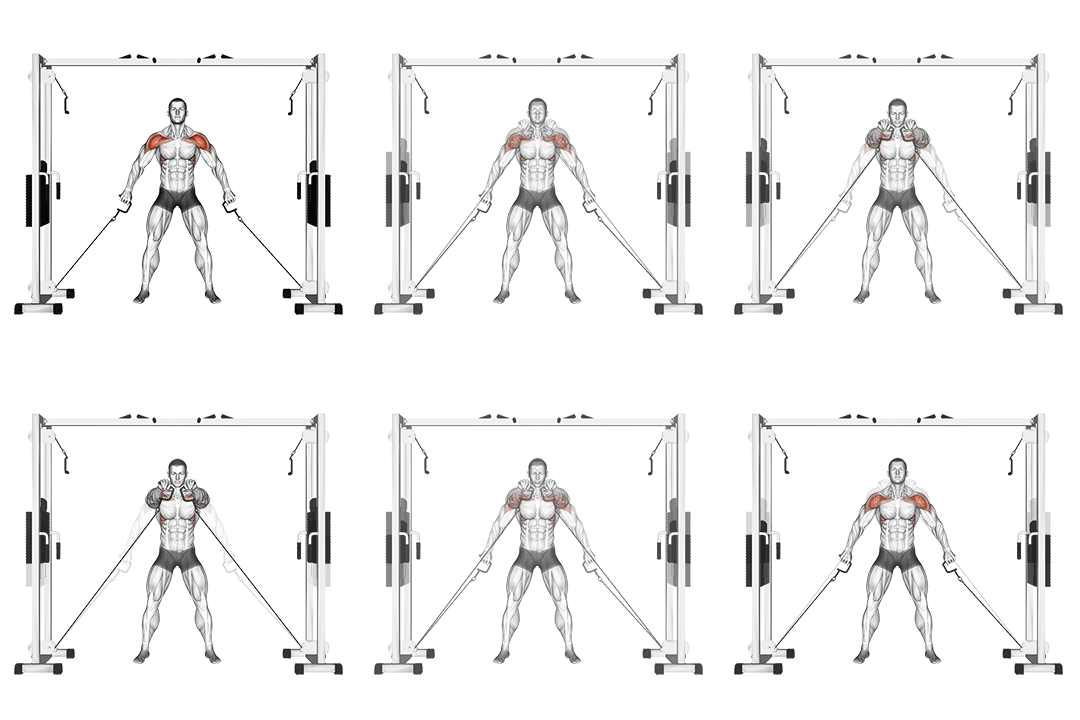
Cable Cross-over Revers Fly
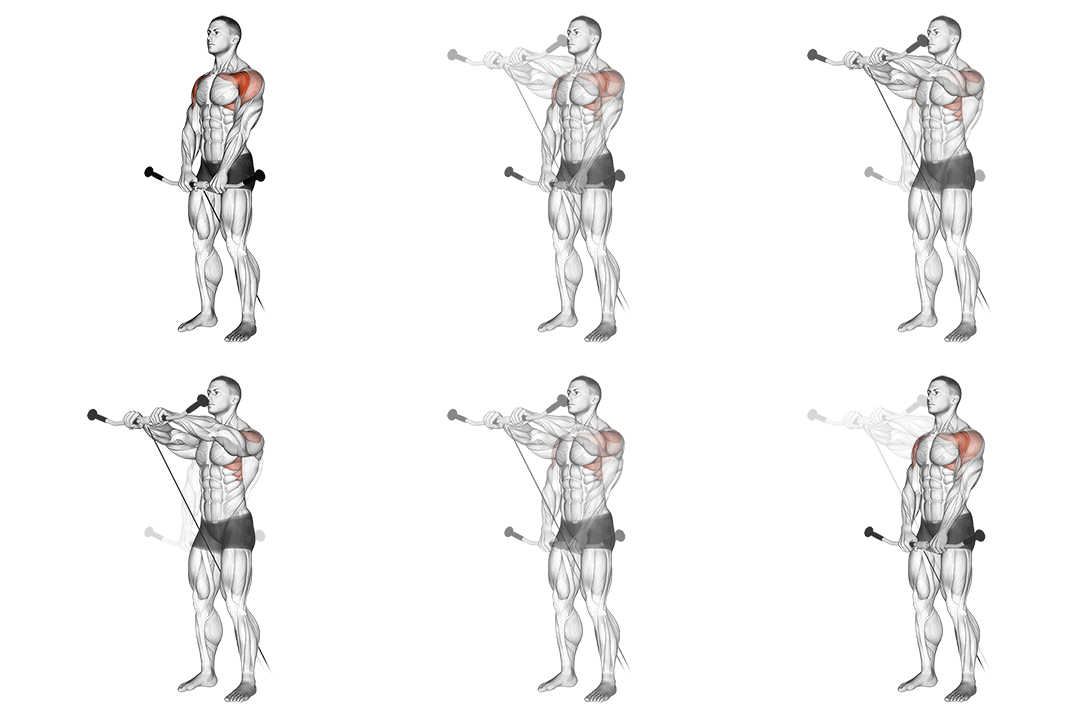
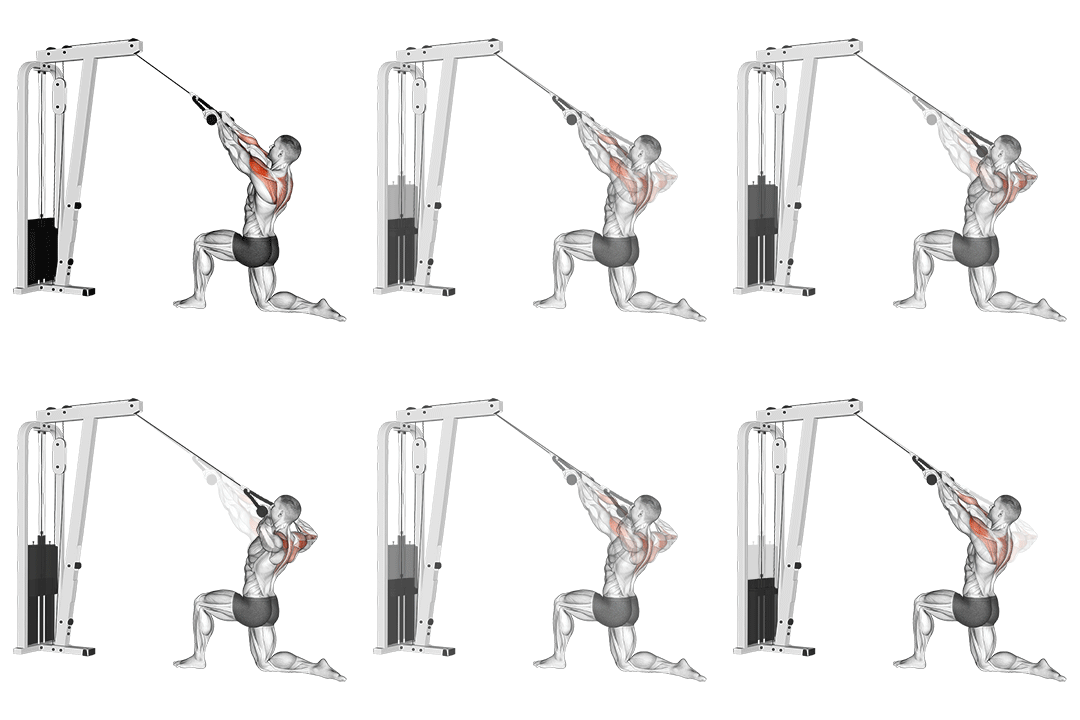
Cable Front Raise
Head-to-Head Comparison
| Attribute | Cable Cross-over Revers Fly | Cable Front Raise |
|---|---|---|
| Target Muscle |
Delts
|
Delts
|
| Body Part |
Shoulders
|
Shoulders
|
| Equipment |
Cable
|
Cable
|
| Difficulty |
Intermediate
|
Beginner
|
| Movement Type |
Isolation
|
Isolation
|
| Secondary Muscles |
2
|
2
|
Secondary Muscles Activated
Cable Cross-over Revers Fly
Cable Front Raise
Visual Comparison
Overview
Cable Cross-over Revers Fly vs Cable Front Raise — you want clearer shoulder development and efficient workouts, and this comparison gives you that. I’ll break down how each move loads the delts, which one hits secondary muscles like the rhomboids or triceps, the equipment and setup you need, plus reps, angles, and progression options. Read on so you can pick the right isolation move for posterior or anterior shoulder work, adjust technique to reduce injury risk, and stack these moves into a practical program.
Key Differences
- Difficulty levels differ: Cable Cross-over Revers Fly is intermediate, while Cable Front Raise is beginner.
- Both exercises target the Delts using Cable. The main differences are in their movement patterns and muscle activation angles.
Pros & Cons
Cable Cross-over Revers Fly
+ Pros
- Direct posterior deltoid isolation improves rear shoulder thickness and posture
- Strong scapular retraction cueing boosts rhomboid and middle trapezius activation
- Multiple pulley angle options allow targeted fiber emphasis (adjust 15°–30° increments)
- Good for correcting shoulder imbalances when done with strict eccentric control (2–4 sec)
− Cons
- Requires cable crossover or dual-pulley setup, less accessible in small gyms
- Technically demanding—needs scapular stability and controlled trunk angle
- Hard to load very heavy without losing form; momentum often substitutes for muscle tension
Cable Front Raise
+ Pros
- Simple single-plane movement that beginners can learn quickly
- Minimal equipment and setup—works with one pulley or resistance band
- Clear anterior deltoid stimulus for front shoulder development
- Easy to progress via unilateral work, tempo, or small weight increments
− Cons
- Higher chance of anterior impingement if lifted above 90° or with poor scapular control
- Less carryover to posterior shoulder or scapular stability—limited for posture correction
- Grip and wrist fatigue can limit training load before the deltoid is fully taxed
When Each Exercise Wins
The reverse fly places consistent transverse tension on the posterior deltoid and recruits scapular retractors, allowing you to target a lagging head with controlled eccentrics (8–15 reps, 2–4 sec eccentric). That focused mechanical tension typically produces better posterior shoulder hypertrophy.
For early-stage anterior shoulder strength and ability to handle vertical loads, the front raise is easier to progressively overload and train heavier with unilateral variations and higher-frequency practice, improving functional shoulder flexion strength.
It’s a single-plane movement with simple biomechanics, straightforward cues (keep a slight elbow bend, raise to ~80°), and minimal setup—making it faster to learn safe technique and build initial shoulder capacity.
You can replicate the front raise with a single low pulley, resistance band anchored low, or dumbbells. The reverse fly needs dual-pulley angles for best effect and is harder to simulate with limited gear.
Frequently Asked Questions
Can I do both Cable Cross-over Revers Fly and Cable Front Raise in the same workout?
Yes. Pairing them back-to-back targets both the posterior and anterior deltoid for balanced development. Sequence by goal—do the priority exercise first (heavier or technical) and use the other as a supplemental isolation set of 8–15 reps.
Which exercise is better for beginners?
Cable Front Raise is better for beginners because it’s a simpler single-plane movement with easier setup and technique. Teach scapular control and a slight elbow bend first, then add more complex transverse-plane work like reverse flies.
How do the muscle activation patterns differ?
Reverse flies produce transverse plane horizontal abduction that maximizes posterior delt and scapular retractor activation around 30°–60° of motion, while front raises use sagittal plane flexion, peaking anterior delt activation near 60°–90°. The force vectors and moment arms differ, changing length-tension and torque demands.
Can Cable Front Raise replace Cable Cross-over Revers Fly?
Not if your goal is posterior deltoid hypertrophy or scapular strength—front raises don’t sufficiently load transverse abduction patterns. If equipment or goals prioritize anterior development, front raises can stand alone, but for balanced shoulders keep both in your program over time.
Expert Verdict
Use Cable Cross-over Revers Fly when your goal is posterior deltoid development, improved scapular retraction, and correcting rounded-shoulder posture. Program it with 8–15 reps, controlled 2–4 second eccentrics, and varied pulley heights to hit different fibers. Choose Cable Front Raise if you need straightforward anterior deltoid work, easy progression, or limited equipment—use 8–12 reps, stop at ~80°–90° to protect the shoulder, and keep a slight elbow bend. Ideally, pair them across training blocks: prioritize the one that matches your weak point or current goal while maintaining balanced shoulder mechanics.
Also Compare
More comparisons with Cable Cross-over Revers Fly
More comparisons with Cable Front Raise
Compare More Exercises
Use our free comparison tool to analyze any two exercises head-to-head.
Compare Exercises