

Cable Cross-over Revers Fly vs Cable Front Shoulder Raise: Complete Comparison Guide
Cable Cross-over Revers Fly vs Cable Front Shoulder Raise — these two cable isolation moves look similar on paper but load your delts very differently. You’ll get a clear breakdown of which deltoid head each targets, the biomechanics (force vectors, moment arms, and length–tension relationships), exact technique cues (torso angle, elbow position, cable line) and practical programming tips like rep ranges and progression. Read on and you’ll know which exercise to use for posterior deltoid development, anterior shoulder strength, or simple accessory work in your next session.
Exercise Comparison
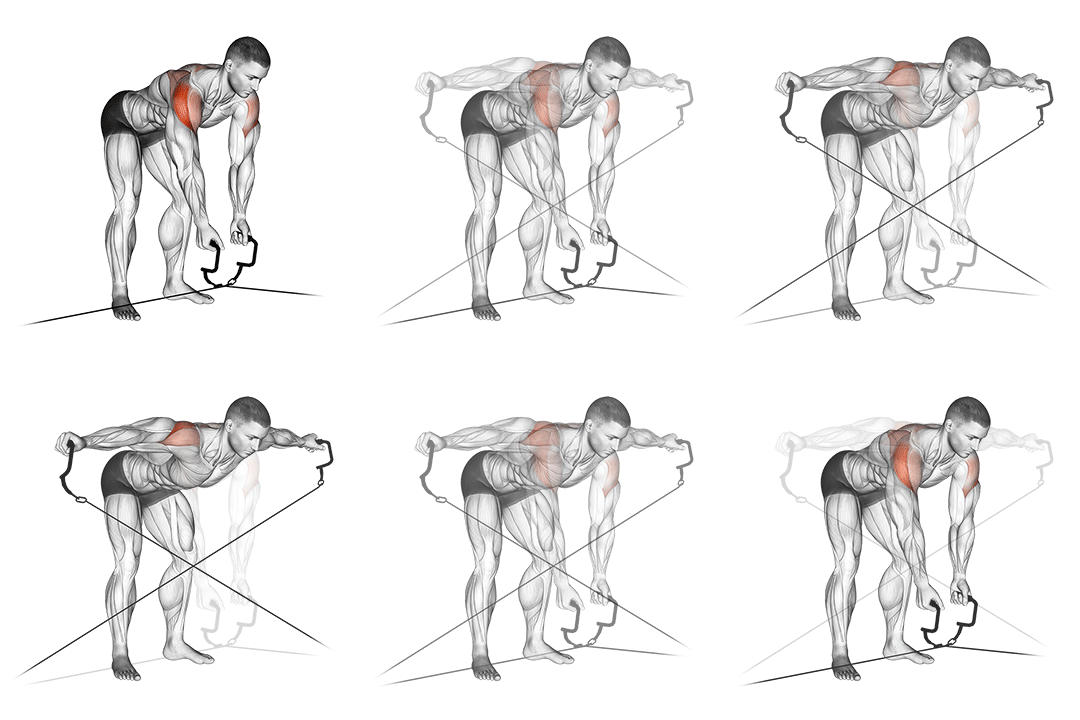
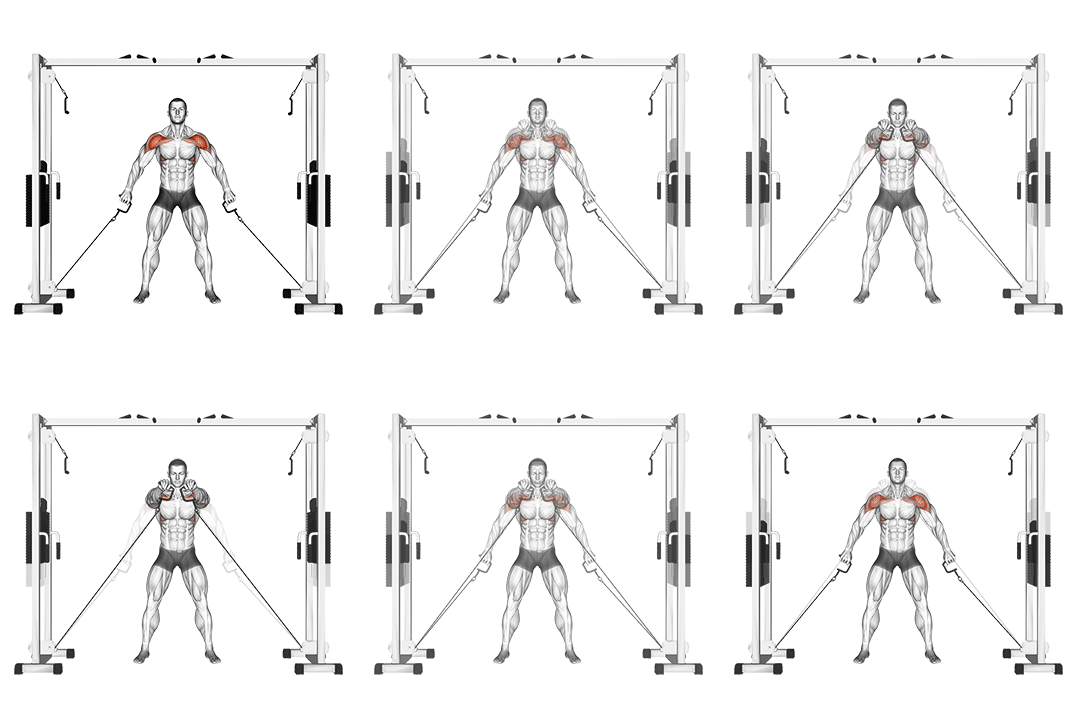
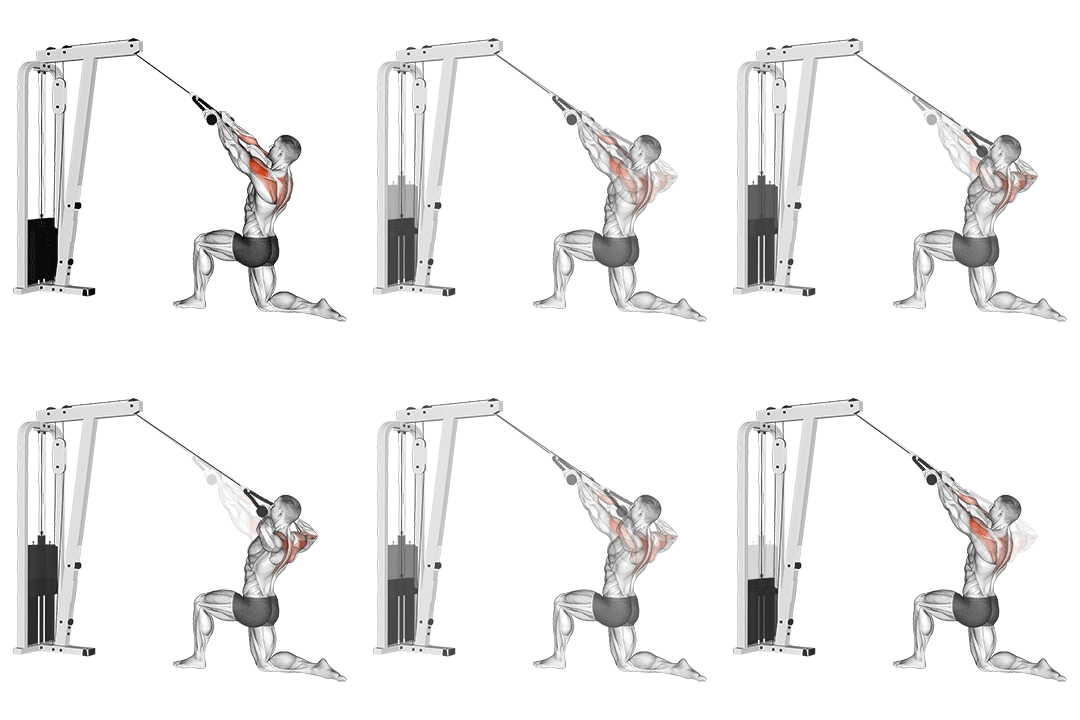
Cable Cross-over Revers Fly
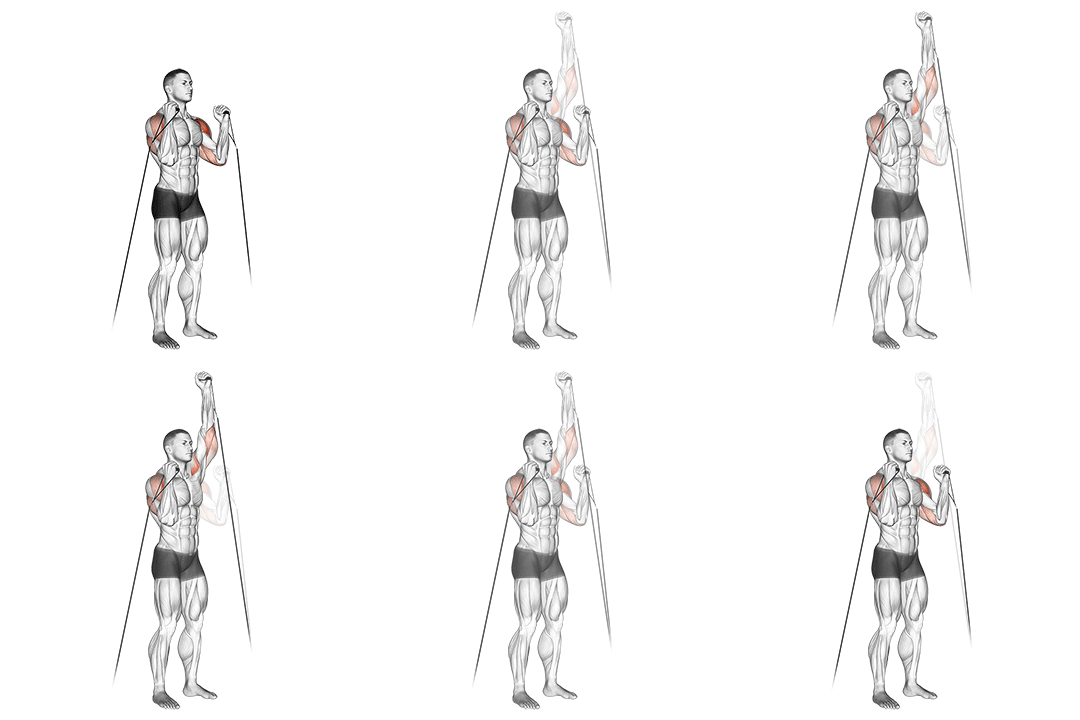
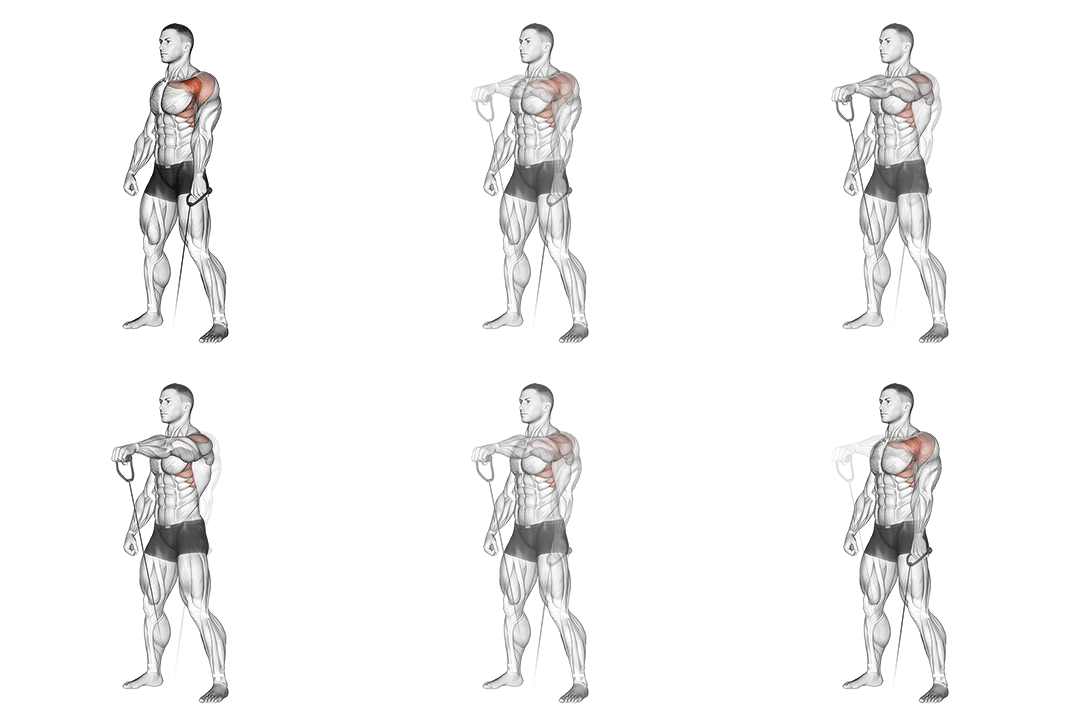
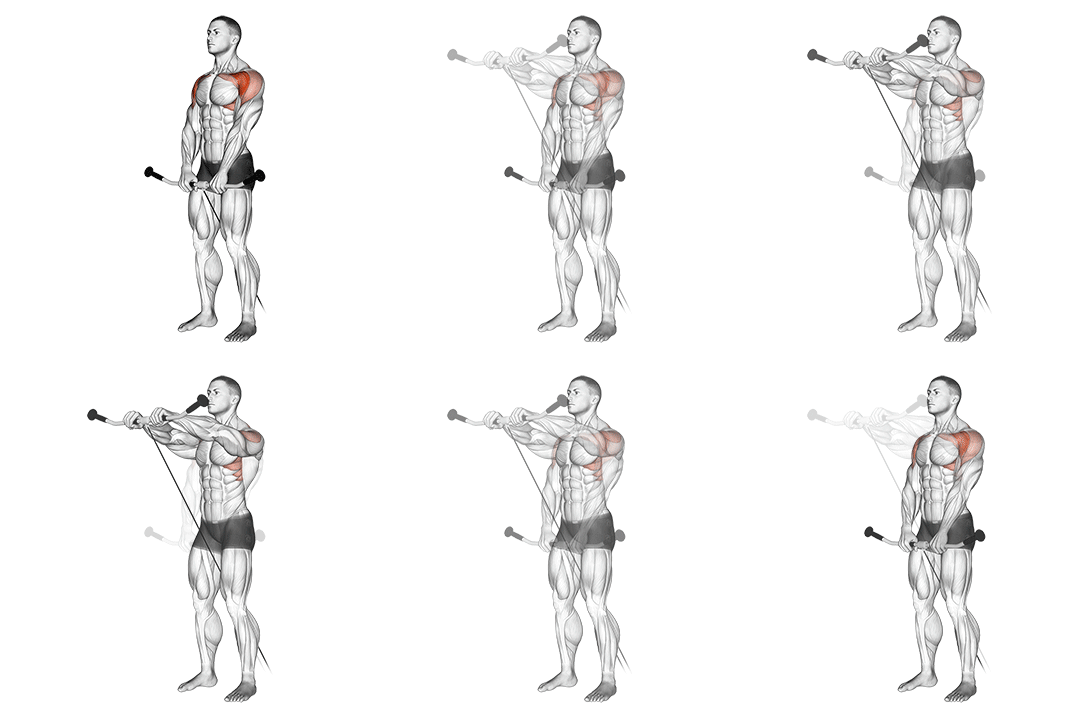
Cable Front Shoulder Raise
Head-to-Head Comparison
| Attribute | Cable Cross-over Revers Fly | Cable Front Shoulder Raise |
|---|---|---|
| Target Muscle |
Delts
|
Delts
|
| Body Part |
Shoulders
|
Shoulders
|
| Equipment |
Cable
|
Cable
|
| Difficulty |
Intermediate
|
Beginner
|
| Movement Type |
Isolation
|
Isolation
|
| Secondary Muscles |
2
|
2
|
Secondary Muscles Activated
Cable Cross-over Revers Fly
Cable Front Shoulder Raise
Visual Comparison
Overview
Cable Cross-over Revers Fly vs Cable Front Shoulder Raise — these two cable isolation moves look similar on paper but load your delts very differently. You’ll get a clear breakdown of which deltoid head each targets, the biomechanics (force vectors, moment arms, and length–tension relationships), exact technique cues (torso angle, elbow position, cable line) and practical programming tips like rep ranges and progression. Read on and you’ll know which exercise to use for posterior deltoid development, anterior shoulder strength, or simple accessory work in your next session.
Key Differences
- Difficulty levels differ: Cable Cross-over Revers Fly is intermediate, while Cable Front Shoulder Raise is beginner.
- Both exercises target the Delts using Cable. The main differences are in their movement patterns and muscle activation angles.
Pros & Cons
Cable Cross-over Revers Fly
+ Pros
- Superior posterior deltoid isolation and posture benefits via scapular retraction
- Engages rhomboids and middle traps for better scapular control
- Multiple angles (standing, seated, unilateral) allow targeted stimulus and tempo work
- Excellent for evening out anterior/posterior shoulder balance and injury prevention
− Cons
- Requires dual-pulley or crossover station for ideal cable line
- Harder to load very heavy without using momentum
- Technique-sensitive — poor torso angle or shrugging reduces posterior delt activation
Cable Front Shoulder Raise
+ Pros
- Easy to set up and replicate with a single pulley, dumbbell, or band
- Direct anterior deltoid targeting with simple motor pattern
- Beginner-friendly with straightforward load progression
- Good carryover to pressing movements by strengthening shoulder flexion
- Can be performed single-arm to correct imbalances and control ROM
− Cons
- Limited maximum loading due to lever arm and small muscle size
- Can encourage upper trap dominance and neck tension if shrugged
- Higher impingement risk if performed with internal rotation or excessive range
When Each Exercise Wins
The reverse fly isolates the posterior deltoid and allows longer time under tension with strict tempo and unilateral focus. Use 8–15 reps with 2–4 sets and slow eccentrics (2–3 seconds) to maximize muscle fiber recruitment and local metabolic stress.
For the anterior deltoid’s absolute strength, front raises let you load progressively and practice heavier singles or doubles more easily. Pair 6–10 reps with paused eccentrics and occasional higher-load sets; however, compound presses should still lead shoulder strength work.
Front raises have a simple sagittal-plane path and minimal setup, so beginners learn motor control quickly and progress load safely. Keep reps 10–15 and focus on scapular control and thumbs-up hand position to avoid impingement.
Front raises can be replicated easily with a single cable column, dumbbells, or bands and need less equipment setup than a dual-pulley reverse fly. Choose single-arm variations to manage space and ensure balanced development.
Frequently Asked Questions
Can I do both Cable Cross-over Revers Fly and Cable Front Shoulder Raise in the same workout?
Yes — pairing them targets both posterior and anterior delts for balanced development. Program the heavier or more technical move first (usually reverse fly if you want max posterior output) and use 2–4 sets of each with 8–15 reps to manage fatigue.
Which exercise is better for beginners?
Cable Front Shoulder Raise is better for beginners due to a simpler movement plane and easier setup. Start with 10–15 reps, light load, thumbs-up grip, and focus on strict form before increasing resistance.
How do the muscle activation patterns differ?
Reverse fly works transverse-plane horizontal abduction, increasing posterior deltoid and scapular retractor activation through a favorable moment arm and length–tension position. Front raises operate in the sagittal plane, recruiting anterior deltoid fibers as the shoulder flexes and changing muscle shortening as you approach 90°.
Can Cable Front Shoulder Raise replace Cable Cross-over Revers Fly?
Not if your goal is posterior deltoid development or scapular stability — the front raise emphasizes the anterior deltoid and upper traps instead. If limited by equipment, use bands or single-arm bent-over variations to mimic reverse fly mechanics rather than substituting with front raises.
Expert Verdict
Use the Cable Cross-over Revers Fly when your goal is posterior deltoid development, improved scapular control, and balancing anterior-dominant shoulder programs. Focus on a 20–45° torso hinge, slight elbow bend, cable line at shoulder height, 8–15 reps, and controlled tempo to maximize posterior delt activation. Choose the Cable Front Shoulder Raise when you need straightforward anterior deltoid work, easy setup, or a beginner-friendly movement; keep the thumbs-up grip, stop near 90° of flexion, and use 8–12 reps for strength or 12–20 for endurance. For best shoulder development, rotate both into your routine: front raises 1–2 times weekly and reverse flies 2–3 times weekly as accessory work, adjusting volume based on recovery and overall pressing workload.
Also Compare
More comparisons with Cable Cross-over Revers Fly
More comparisons with Cable Front Shoulder Raise
Compare More Exercises
Use our free comparison tool to analyze any two exercises head-to-head.
Compare Exercises