

Cable Cross-over Revers Fly vs Cable Kneeling Rear Delt Row (with Rope) (male): Complete Comparison
Cable Cross-over Revers Fly vs Cable Kneeling Rear Delt Row (with Rope) (male) — if you want stronger, fuller rear delts, you need to pick the right tool. I’ll walk you through how each movement loads the posterior deltoid, which secondary muscles get recruited, equipment and setup, technique cues, rep-range recommendations (8–20 reps), and when to pair or replace one with the other. Read on and you’ll know exactly which exercise to use for muscle growth, joint health, or time-efficient shoulder training.
Exercise Comparison
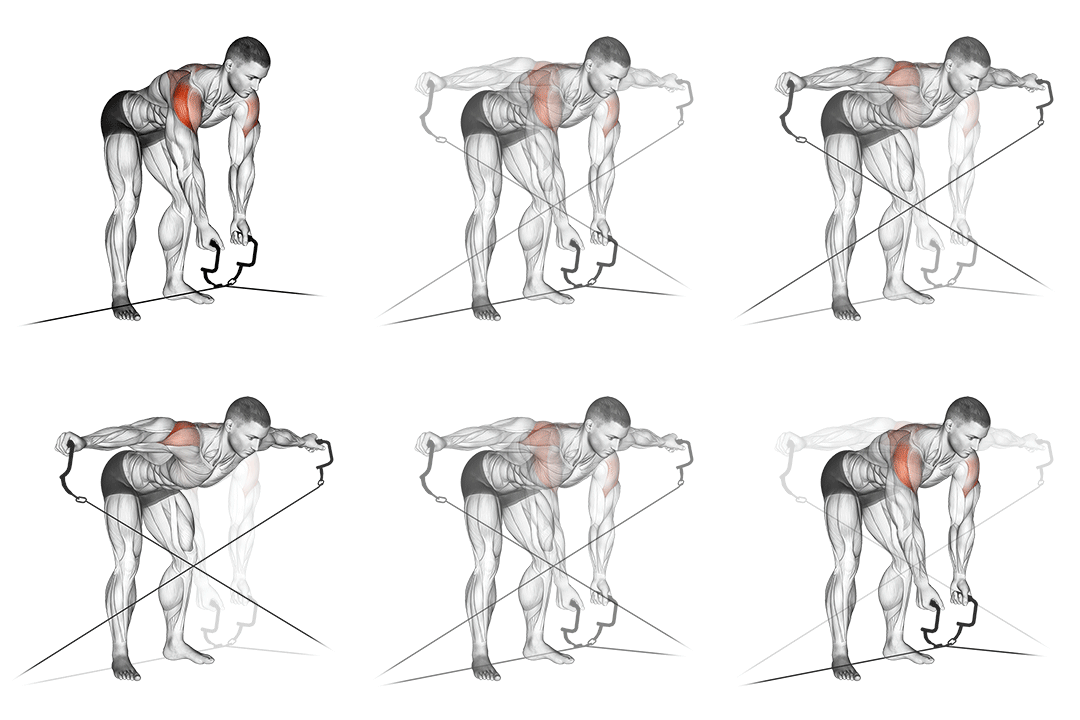
Cable Cross-over Revers Fly
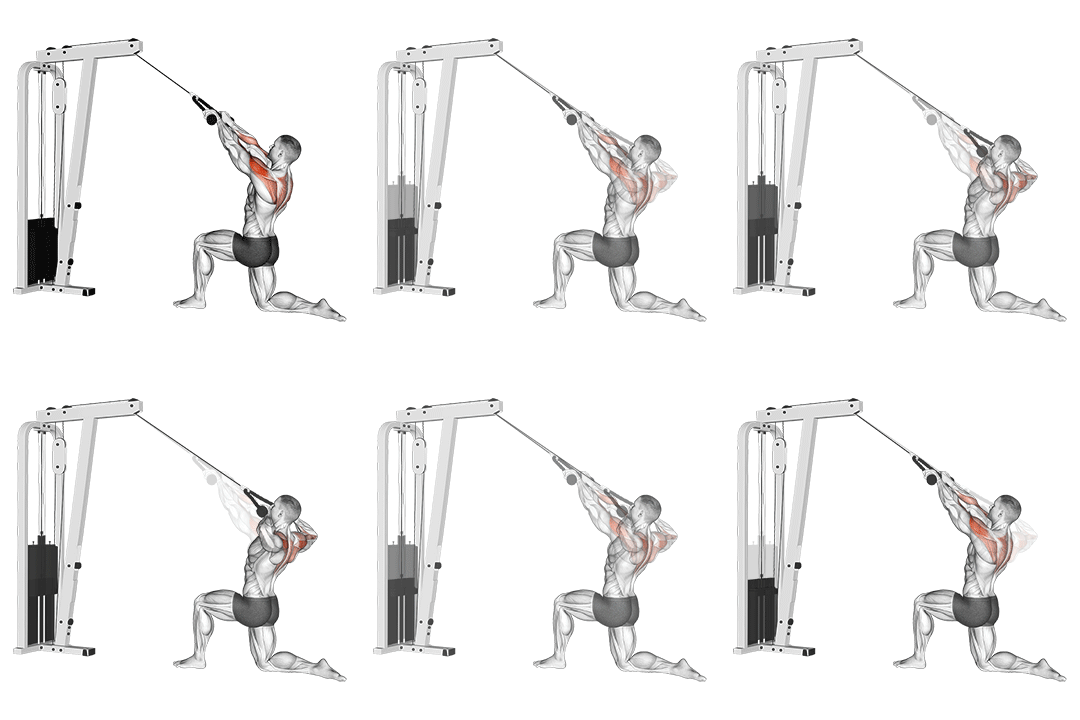
Cable Kneeling Rear Delt Row (with Rope) (male)
Head-to-Head Comparison
| Attribute | Cable Cross-over Revers Fly | Cable Kneeling Rear Delt Row (with Rope) (male) |
|---|---|---|
| Target Muscle |
Delts
|
Delts
|
| Body Part |
Shoulders
|
Shoulders
|
| Equipment |
Cable
|
Cable
|
| Difficulty |
Intermediate
|
Intermediate
|
| Movement Type |
Isolation
|
Compound
|
| Secondary Muscles |
2
|
3
|
Secondary Muscles Activated
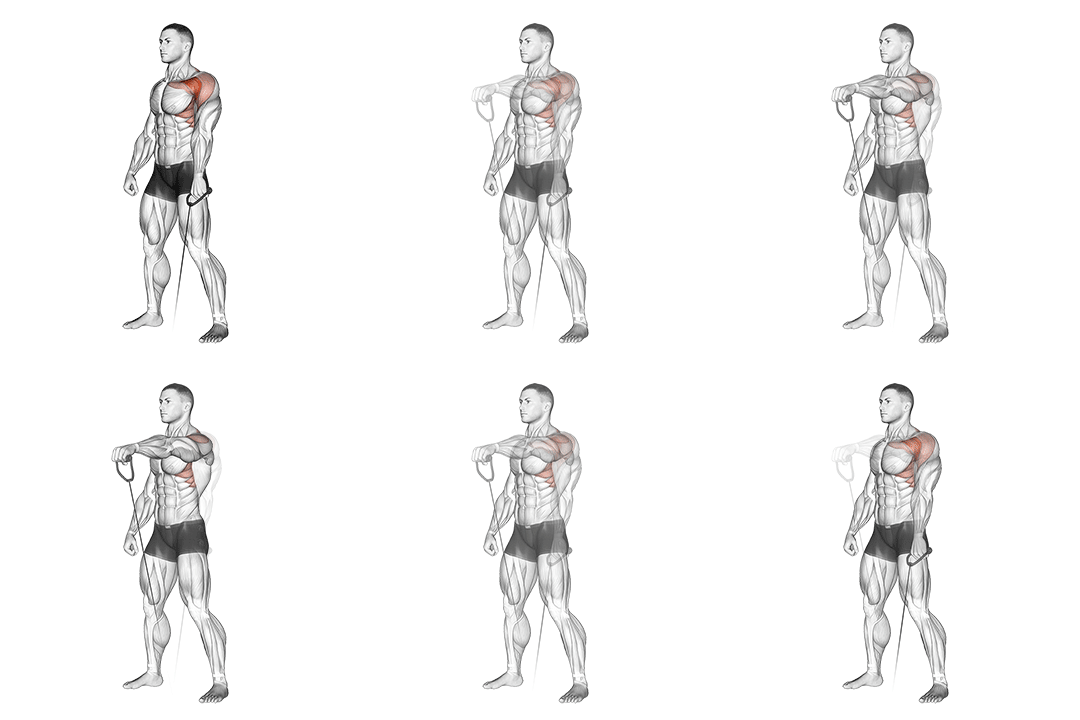
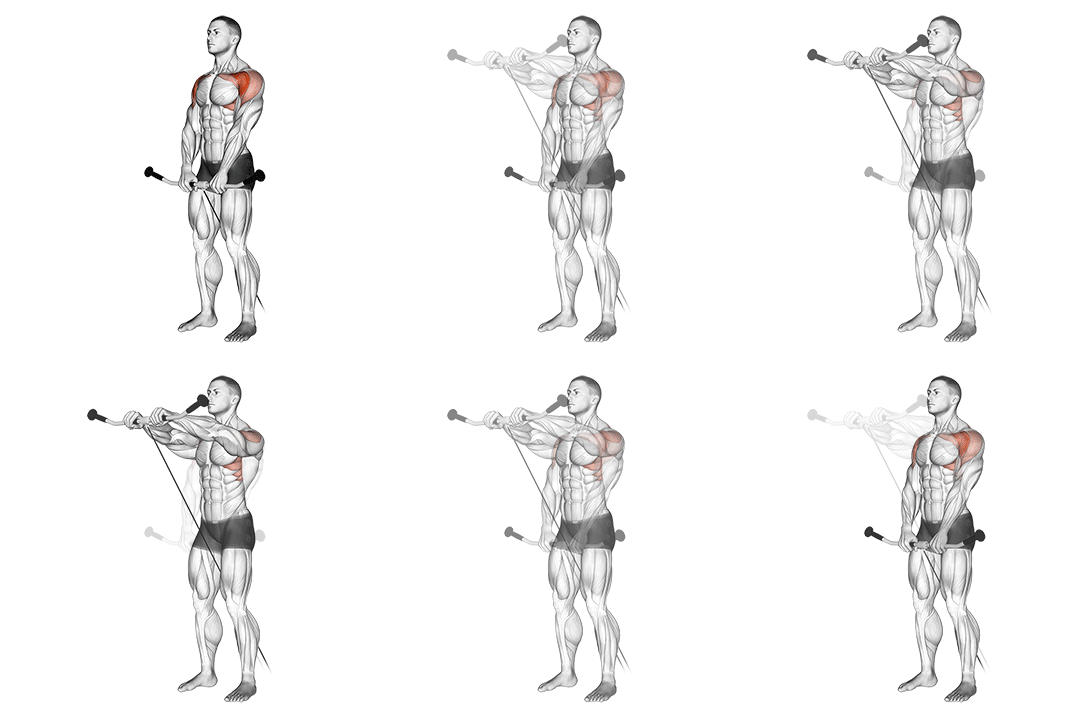
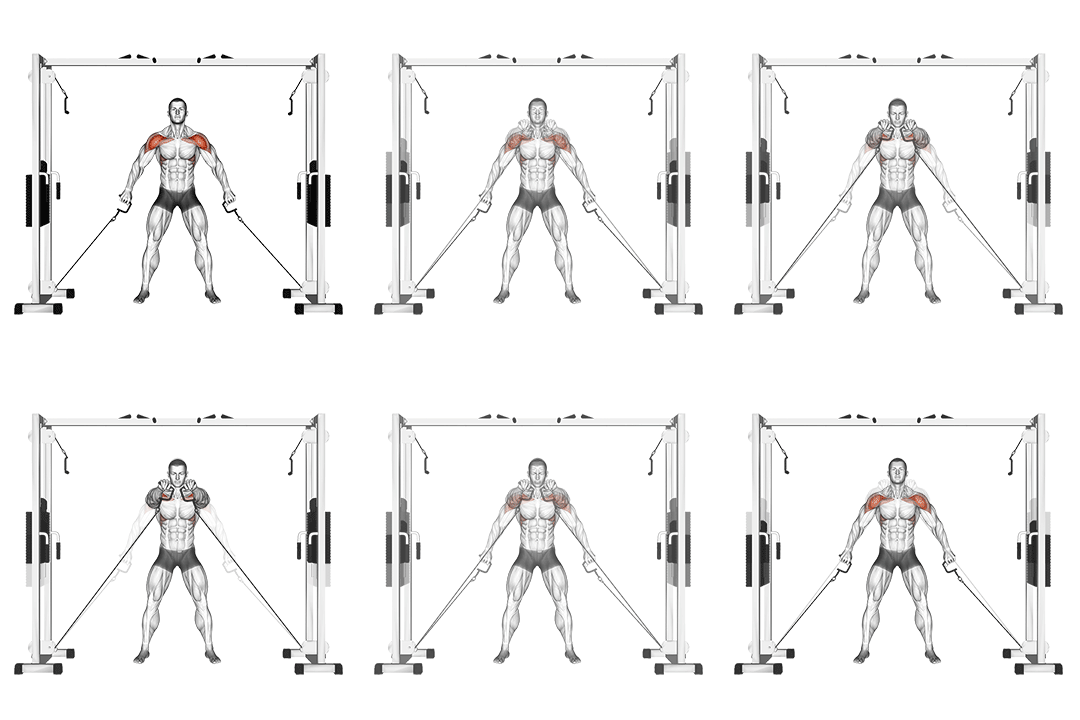
Cable Cross-over Revers Fly
Cable Kneeling Rear Delt Row (with Rope) (male)
Visual Comparison
Overview
Cable Cross-over Revers Fly vs Cable Kneeling Rear Delt Row (with Rope) (male) — if you want stronger, fuller rear delts, you need to pick the right tool. I’ll walk you through how each movement loads the posterior deltoid, which secondary muscles get recruited, equipment and setup, technique cues, rep-range recommendations (8–20 reps), and when to pair or replace one with the other. Read on and you’ll know exactly which exercise to use for muscle growth, joint health, or time-efficient shoulder training.
Key Differences
- Cable Cross-over Revers Fly is an isolation exercise, while Cable Kneeling Rear Delt Row (with Rope) (male) is a compound movement.
- Both exercises target the Delts using Cable. The main differences are in their movement patterns and muscle activation angles.
Pros & Cons
Cable Cross-over Revers Fly
+ Pros
- High posterior delt isolation with constant tension across the ROM
- Easy to cue external rotation and horizontal abduction for cleaner activation
- Low spinal loading—safer for athletes with back issues
- Effective for high-rep hypertrophy sets (12–20 reps) and time-under-tension work
− Cons
- Limited absolute load—harder to progressively overload with heavy weight
- Requires dual pulleys or crossover station, which aren’t always available
- Less carryover to compound pulling strength compared with rows
Cable Kneeling Rear Delt Row (with Rope) (male)
+ Pros
- Greater progression potential with heavier loads and overloaded sets
- Engages trapezius, rhomboids, and biceps for transferable pulling strength
- Single-pulley + rope setup is widely available in most gyms
- Can be loaded for lower-rep strength work (6–12 reps) or hypertrophy (8–15)
− Cons
- Less pure isolation of the posterior delt—biceps and traps can dominate
- Requires good kneeling posture and scapular control to avoid compensation
- Slightly higher injury risk if you let the elbows drive the motion
When Each Exercise Wins
The reverse fly keeps the posterior delt under continuous tension and minimizes assistance from the biceps, making it ideal for hypertrophy sets in the 10–20 rep range and for targeting peak contraction and stretch.
The kneeling row allows heavier loading and integrates larger muscle groups (traps, rhomboids, biceps), producing better transfer to compound pulling strength and progressive overload in the 6–12 rep range.
Isolation and simpler motor pattern make the reverse fly easier to learn for beginners; you can teach posterior delt activation, external rotation, and scapular retraction with light weight before progressing to compound rows.
If you have a single low cable or resistance band and a rope or handle, you can mimic the kneeling row more easily than setting up dual pulleys for a true crossover reverse fly.
Frequently Asked Questions
Can I do both Cable Cross-over Revers Fly and Cable Kneeling Rear Delt Row (with Rope) (male) in the same workout?
Yes. Start with the kneeling rear-delt row for heavier compound work (3–4 sets of 6–12 reps), then finish with 2–4 sets of 10–20 reps of reverse flys to increase time under tension and isolate the posterior delts.
Which exercise is better for beginners?
The Cable Cross-over Revers Fly is better for beginners because it simplifies the motor pattern and isolates the rear delts without heavy elbow involvement. Use light weight and focus on external rotation and scapular retraction to learn the feel.
How do the muscle activation patterns differ?
The reverse fly provides continuous horizontal abduction loading on the posterior delt and rhomboids, whereas the kneeling rope row shows a two-phase pattern: initial scapular retraction and elbow flexion, then posterior delt engagement as the rope spreads during the latter half of the pull.
Can Cable Kneeling Rear Delt Row (with Rope) (male) replace Cable Cross-over Revers Fly?
It can replace the reverse fly if your goal is stronger, more functional pulling and you can maintain posterior-delt focus, but it won’t match the isolation quality of the reverse fly for peak contraction and targeted hypertrophy.
Expert Verdict
Use the Cable Cross-over Revers Fly when your priority is isolating the posterior deltoid for muscle growth, improving shoulder aesthetics, or rehabbing weak rear-delt recruitment. Set the pulleys at chest height, hinge slightly at the hips, keep the shoulder at ~90° of abduction, and use 10–20 reps with a 2–3 second eccentric. Choose the Cable Kneeling Rear Delt Row (with Rope) when you want strength and functional carryover—it lets you load heavier, trains scapular retraction under load, and also builds the traps and biceps. For balanced development, program the reverse fly as an isolation finisher and the kneeling row as a compound primary movement once per week.
Also Compare
More comparisons with Cable Cross-over Revers Fly
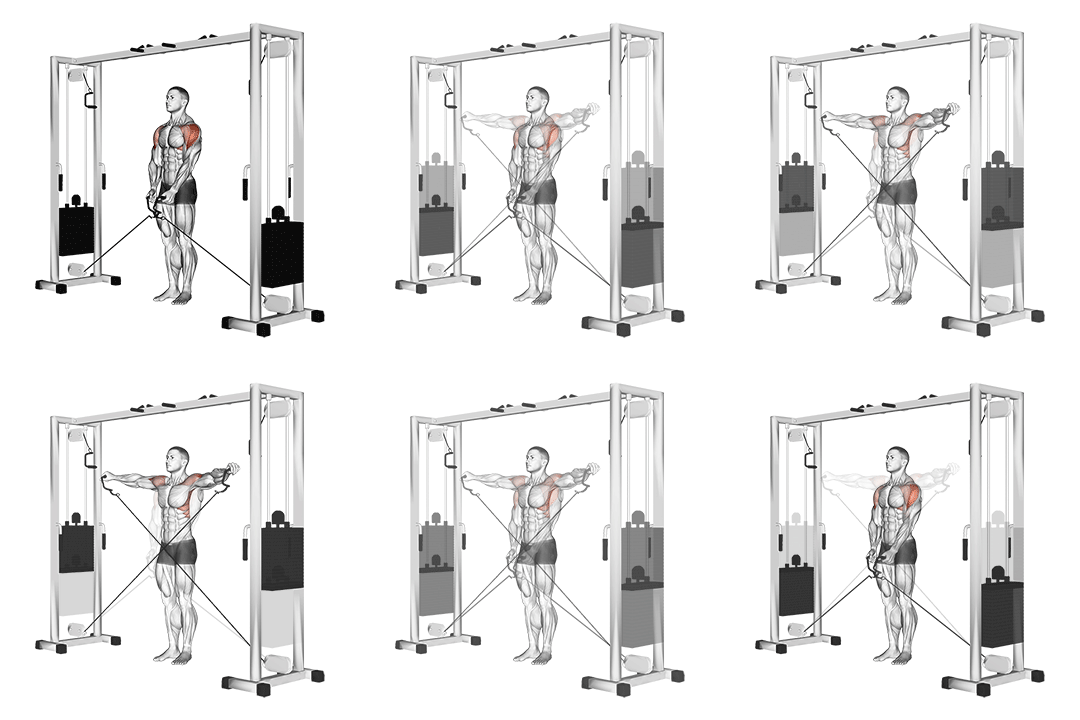
More comparisons with Cable Kneeling Rear Delt Row (with Rope) (male)
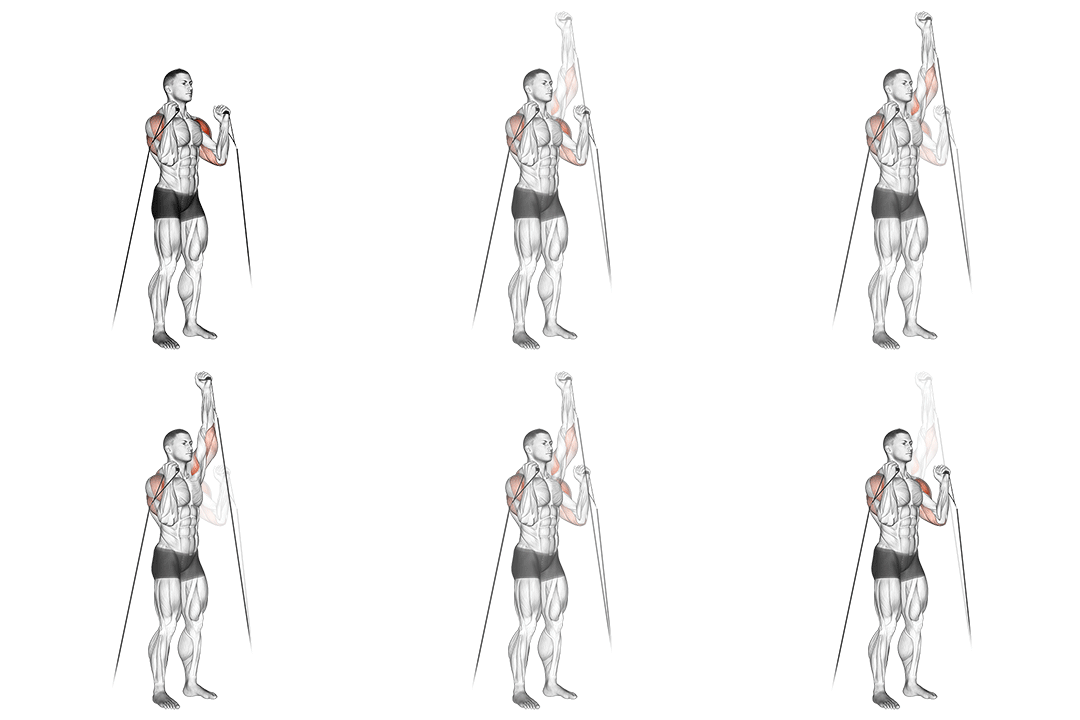
Compare More Exercises
Use our free comparison tool to analyze any two exercises head-to-head.
Compare Exercises