

Cable Cross-over Revers Fly vs Cable Lateral Raise: Complete Comparison Guide
Cable Cross-over Revers Fly vs Cable Lateral Raise — two cable isolation moves that both target the delts but load different heads and movement patterns. If you want clear guidance on which to pick for posterior shoulder development, lateral width, or rehab-friendly work, this comparison helps you choose. You’ll get technique cues, biomechanics (force vectors, muscle length-tension), specific rep ranges, and programming tips. Read on to learn which exercise better matches your goals, how to perform each with precise setup, and when to use them together for balanced shoulder development.
Exercise Comparison
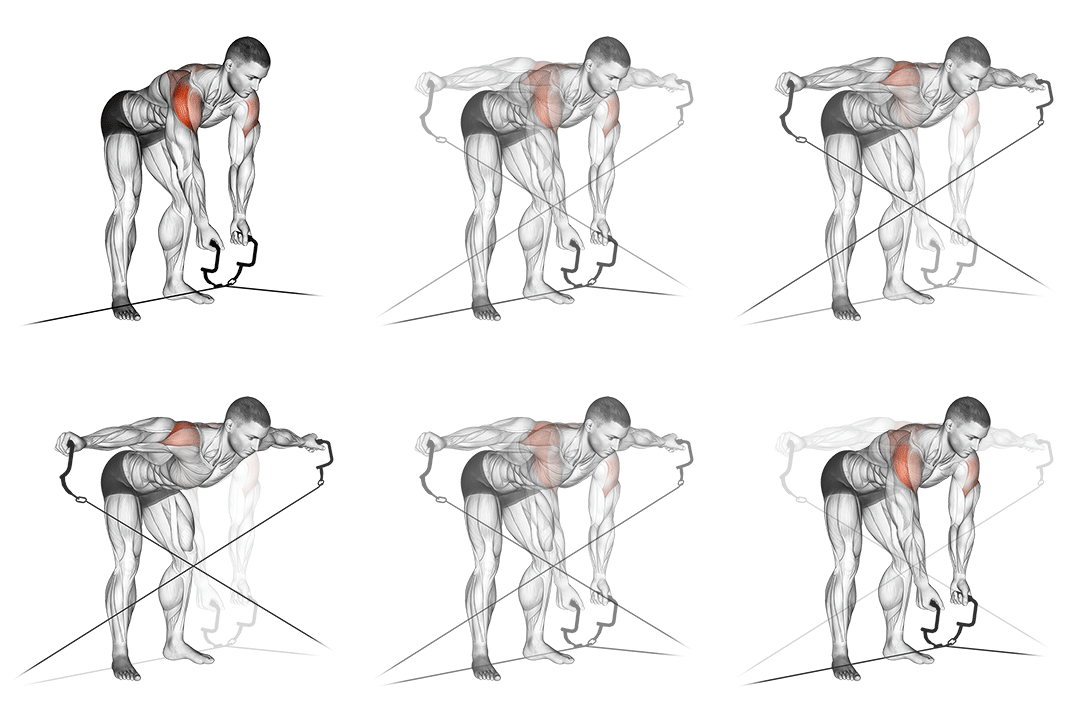
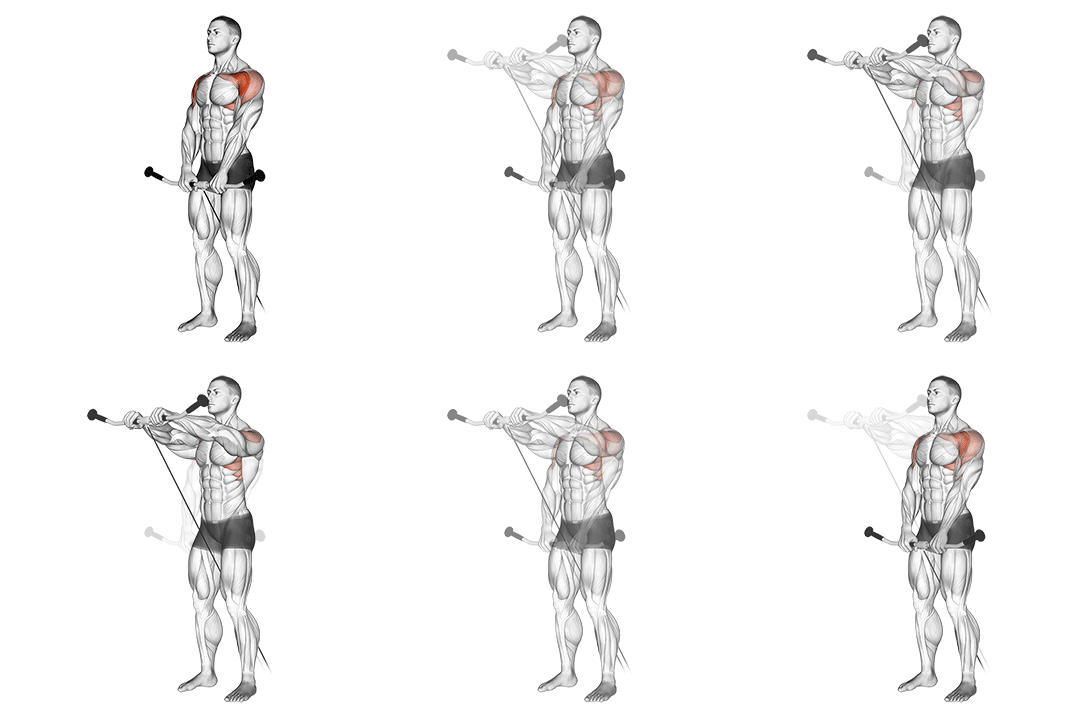
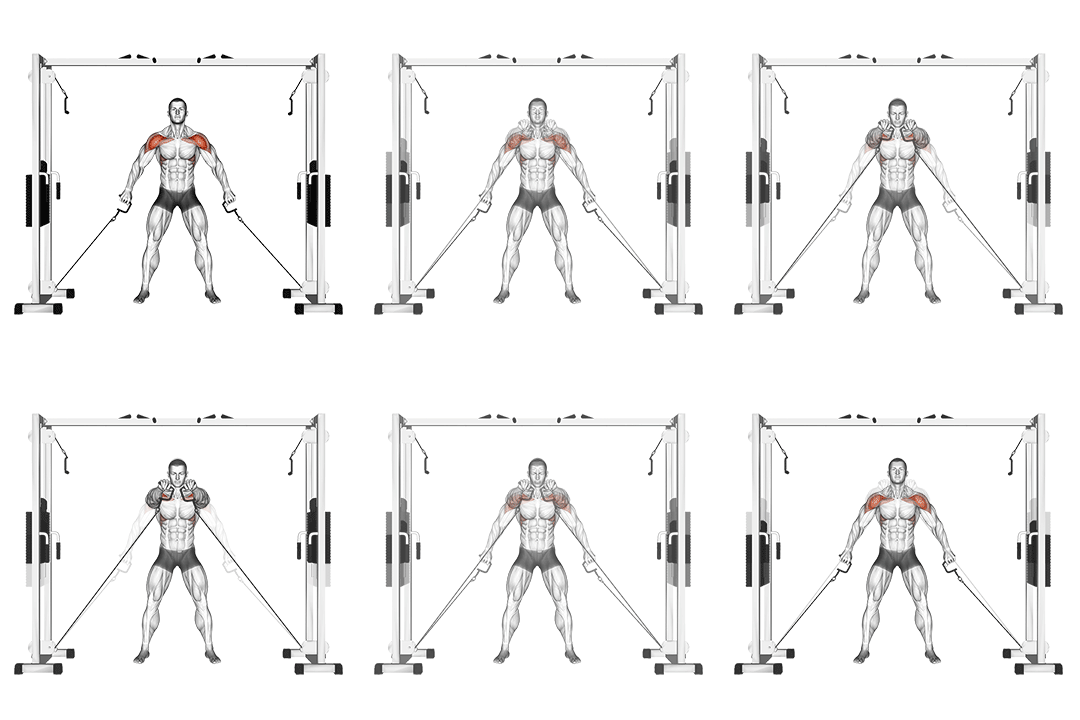
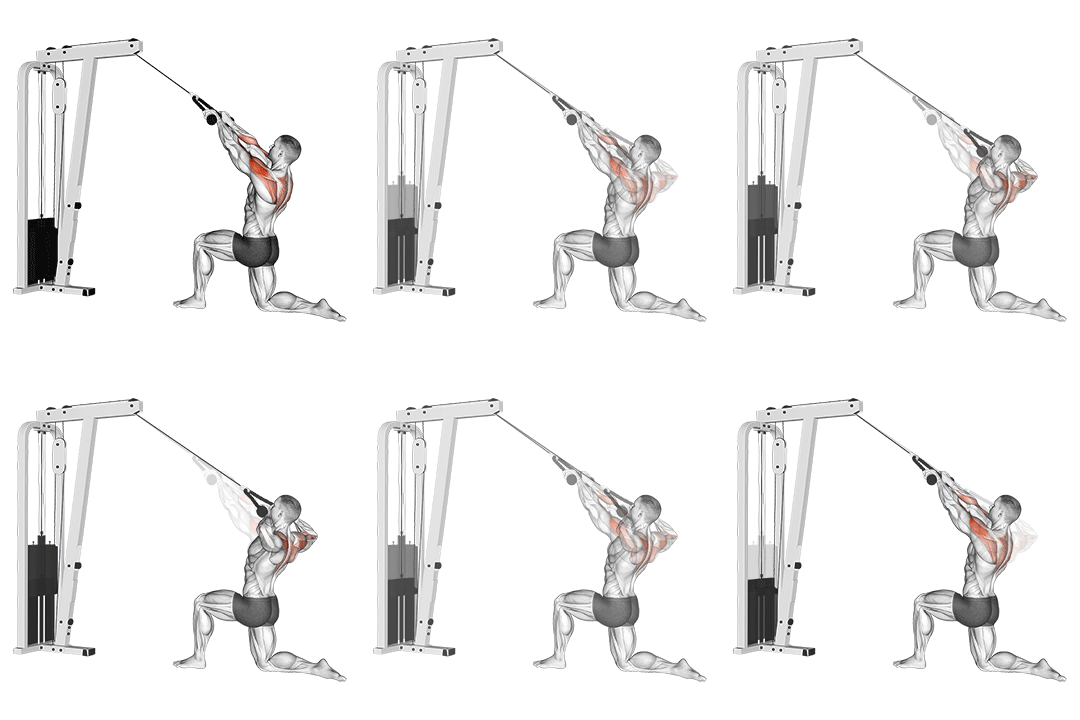
Cable Cross-over Revers Fly
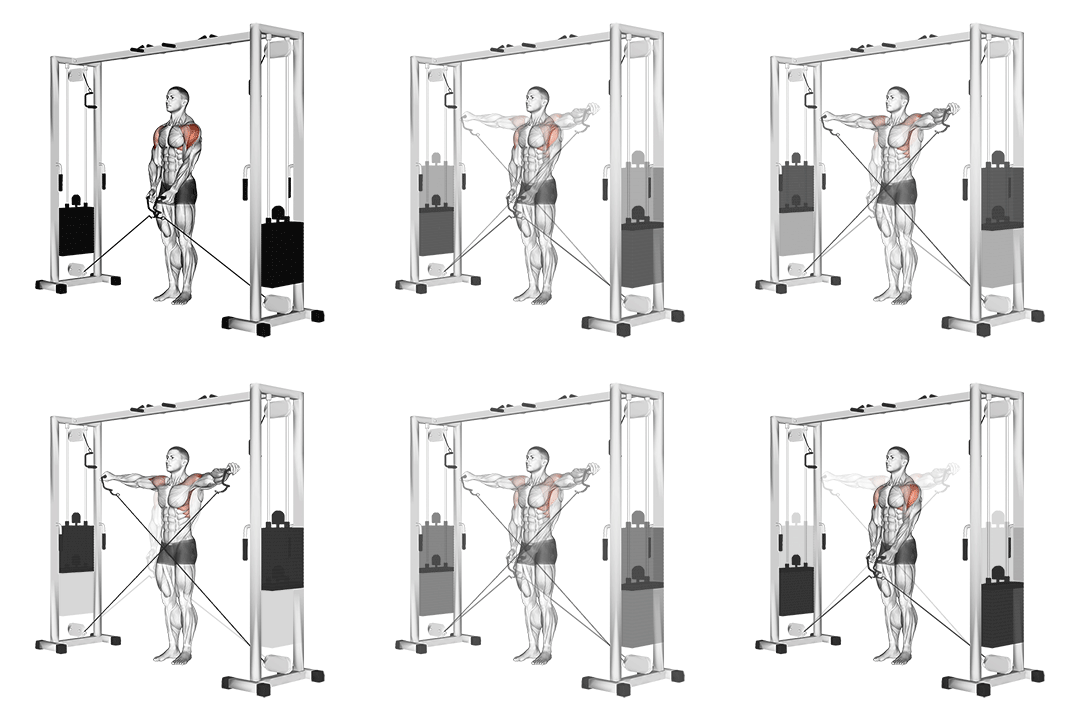
Cable Lateral Raise
Head-to-Head Comparison
| Attribute | Cable Cross-over Revers Fly | Cable Lateral Raise |
|---|---|---|
| Target Muscle |
Delts
|
Delts
|
| Body Part |
Shoulders
|
Shoulders
|
| Equipment |
Cable
|
Cable
|
| Difficulty |
Intermediate
|
Beginner
|
| Movement Type |
Isolation
|
Isolation
|
| Secondary Muscles |
2
|
2
|
Secondary Muscles Activated
Cable Cross-over Revers Fly
Cable Lateral Raise
Visual Comparison
Overview
Cable Cross-over Revers Fly vs Cable Lateral Raise — two cable isolation moves that both target the delts but load different heads and movement patterns. If you want clear guidance on which to pick for posterior shoulder development, lateral width, or rehab-friendly work, this comparison helps you choose. You’ll get technique cues, biomechanics (force vectors, muscle length-tension), specific rep ranges, and programming tips. Read on to learn which exercise better matches your goals, how to perform each with precise setup, and when to use them together for balanced shoulder development.
Key Differences
- Difficulty levels differ: Cable Cross-over Revers Fly is intermediate, while Cable Lateral Raise is beginner.
- Both exercises target the Delts using Cable. The main differences are in their movement patterns and muscle activation angles.
Pros & Cons
Cable Cross-over Revers Fly
+ Pros
- Strong posterior deltoid isolation and high posterior activation
- Greater rhomboid and middle trap engagement for scapular control
- Easy to vary pulley height to change line of pull and muscle emphasis
- Excellent for correcting rounded-shoulder posture and posterior chain balance
− Cons
- Requires more coordination of scapular retraction and external rotation
- Can load the lower back or trap if performed with improper torso posture
- Needs dual-pulley setup and more space than a single-pulley lateral raise
Cable Lateral Raise
+ Pros
- Simple setup and easy motor pattern — great for beginners
- Targets lateral delts effectively to add shoulder width
- Works well as a finisher with high-rep sets (10–20 reps)
- Low equipment demand — single pulley or even band alternative
− Cons
- Upper traps can quickly dominate, reducing pure lateral delt stimulus
- Limited progression ceiling before form breaks down
- Less effective at improving scapular retraction and posterior chain balance
When Each Exercise Wins
For focused hypertrophy of the posterior deltoid and upper back, the revers fly places the muscle at an advantageous length-tension relationship and allows tempo and angle variations. Use 8–15 reps with slow eccentrics (2–3s) to maximize time under tension.
For increasing pure lateral deltoid strength in the abduction pattern, lateral raises let you progressively load the middle deltoid safely. Use heavier sets of 6–12 reps with strict form, avoiding shrugging to keep torque focused on the delt.
Its single-plane motion and simple cueing (lead with the elbow, 20–60° arc) make it faster to learn. Start with 2–3 sets of 10–15 reps using light resistance to ingrain movement without trap compensation.
Requires only a single pulley or band alternative and minimal space, while the revers fly often needs a dual-pulley station or more setup. Bands can mimic lateral raise mechanics more readily at home.
Frequently Asked Questions
Can I do both Cable Cross-over Revers Fly and Cable Lateral Raise in the same workout?
Yes — pairing them creates full delt coverage. Do revers flies first if you want to prioritize posterior development, then perform lateral raises as a secondary movement or finisher with 8–15 and 10–20 rep ranges respectively.
Which exercise is better for beginners?
Cable Lateral Raise is better for beginners because it’s single-plane and easier to cue (lead with the elbow, avoid shrugging). Start light, master the 20–60° abduction arc, then add load gradually.
How do the muscle activation patterns differ?
Revers flys activate the posterior deltoid and scapular retractors more due to a horizontal force vector and external rotation. Lateral raises peak the lateral head via a vertical force vector and abduction moment arm between ~20–60° of elevation.
Can Cable Lateral Raise replace Cable Cross-over Revers Fly?
No — they emphasize different heads and movement planes. If your goal is posterior shoulder balance and scapular control, substitutes like bent-over reverse flys are closer; lateral raises won’t fully replace posterior delt stimulus.
Expert Verdict
Use the Cable Cross-over Revers Fly when you need targeted posterior deltoid work, scapular retraction strength, or to correct rounded shoulders. Its horizontal pull vector and emphasis on external rotation make it ideal for posterior development and posture work. Choose the Cable Lateral Raise for straightforward lateral delt size and strength, quick setup, and beginner-friendly programming. For balanced shoulder development include both across the week: prioritize revers flies after pressing sessions or on pull days for posture, and slot lateral raises as finishers or primary lateral work on shoulder-focused days. Program 8–15 reps for revers flies and 8–12 (or 10–20 as a finisher) for lateral raises.
Also Compare
More comparisons with Cable Cross-over Revers Fly
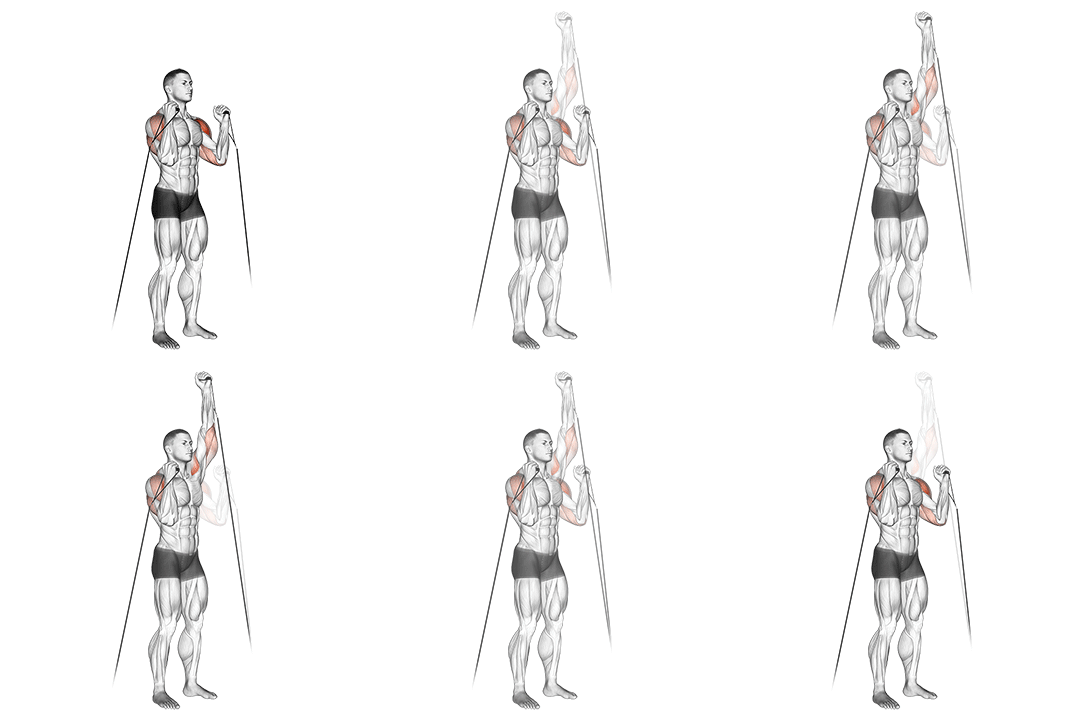
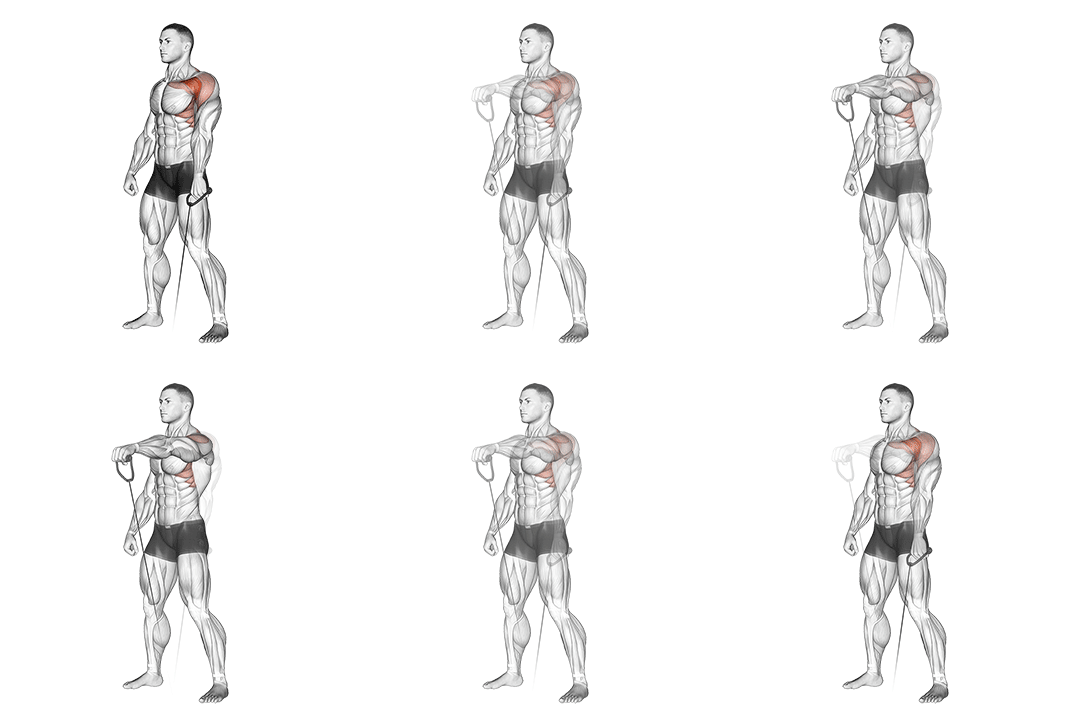
More comparisons with Cable Lateral Raise
Compare More Exercises
Use our free comparison tool to analyze any two exercises head-to-head.
Compare Exercises