

Cable Cross-over Revers Fly vs Face Pull: Complete Comparison Guide
Cable Cross-over Revers Fly vs Face Pull — two cable exercises that both target the posterior delts but load the shoulder complex differently. If you want blunt, actionable guidance, this comparison breaks down muscle activation, required equipment, technique cues, injury risk, and programming tips. You’ll learn which exercise best isolates the rear delts, which one builds scapular control and mid-back strength, how to cue each lift for cleaner movement, and rep ranges to use for hypertrophy, strength, and rehab. Read on so you can pick the right move for your shoulder goals.
Exercise Comparison
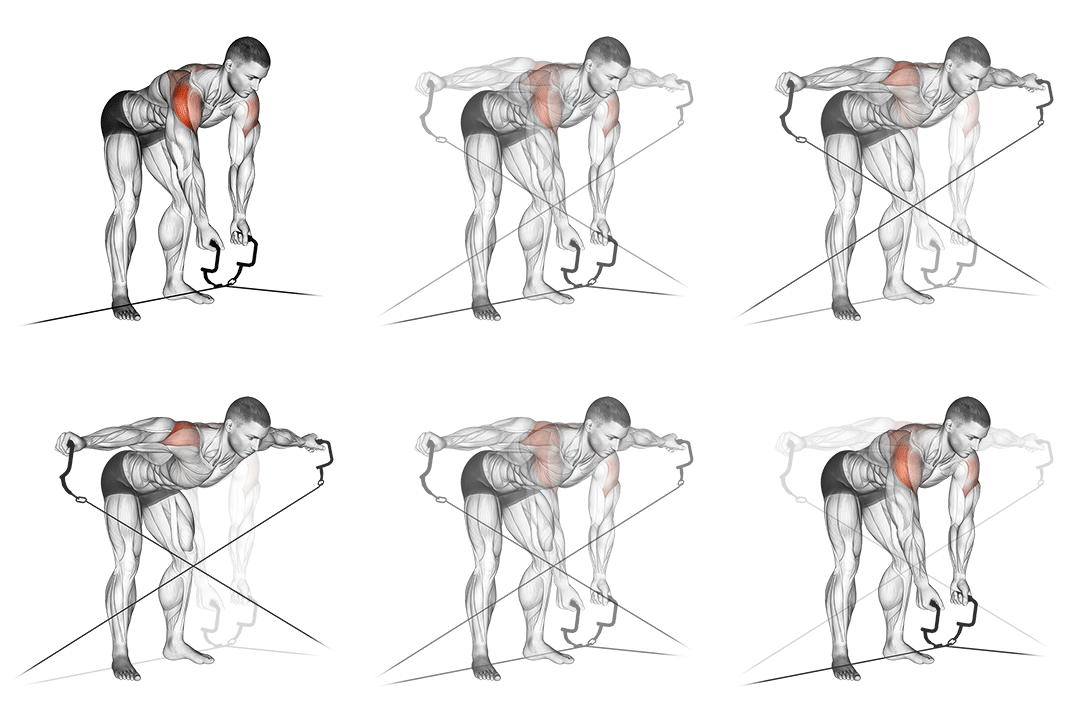
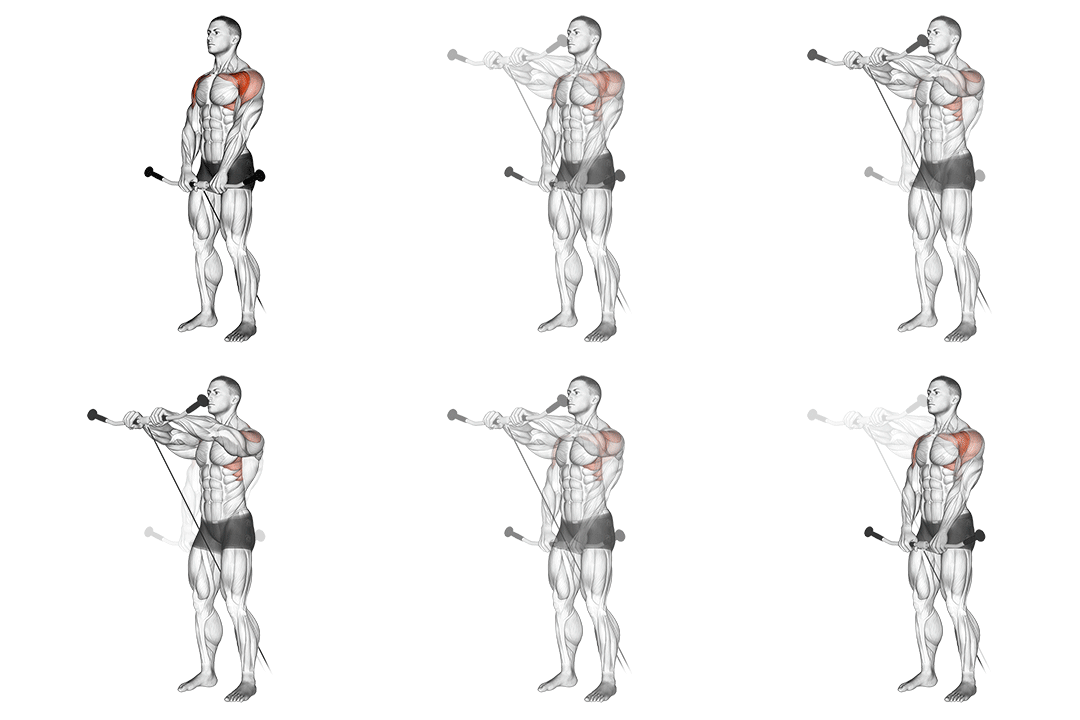
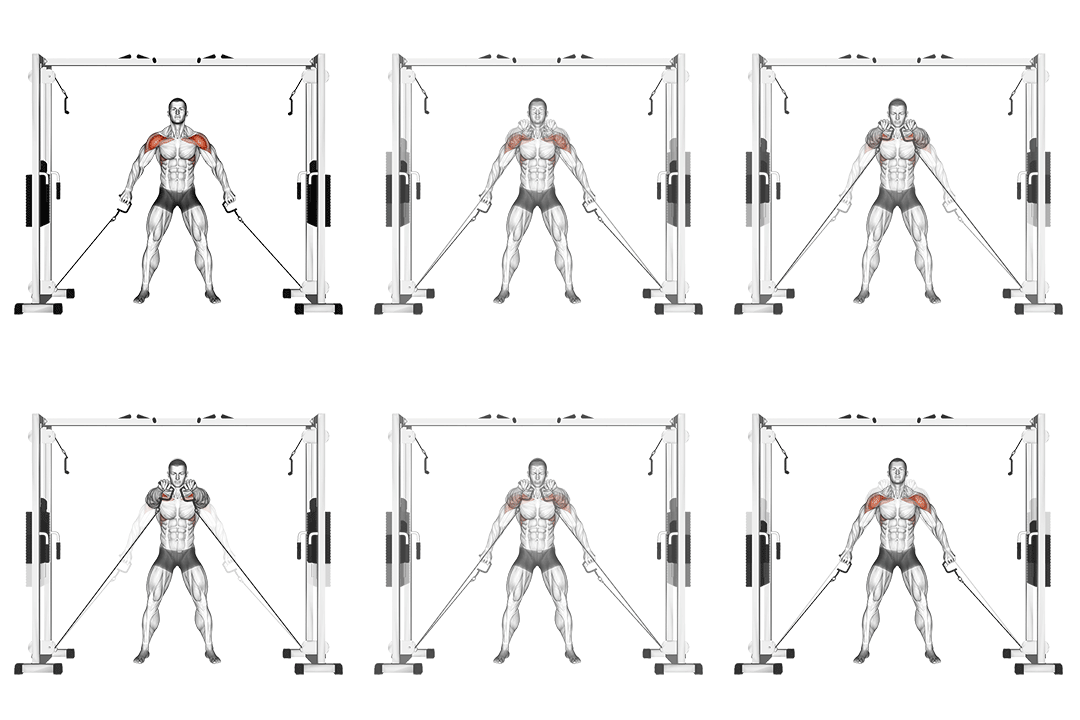
Cable Cross-over Revers Fly
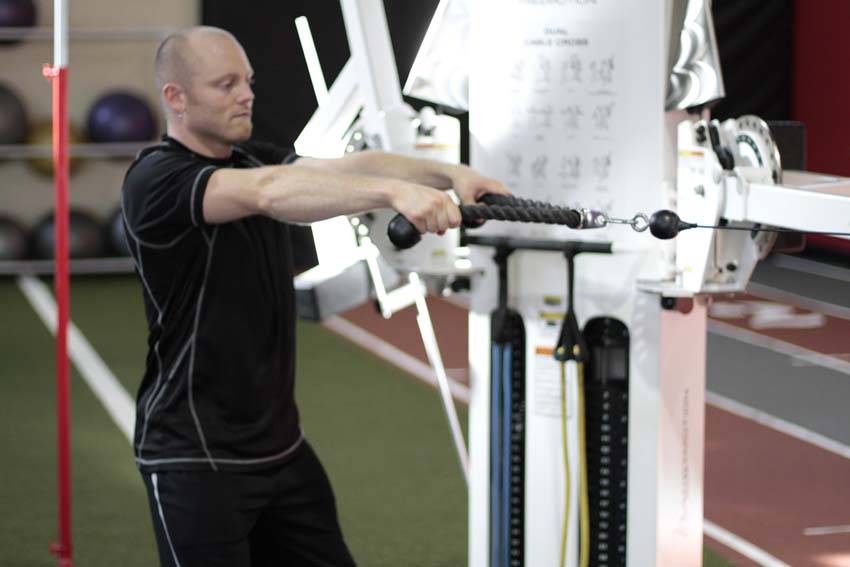
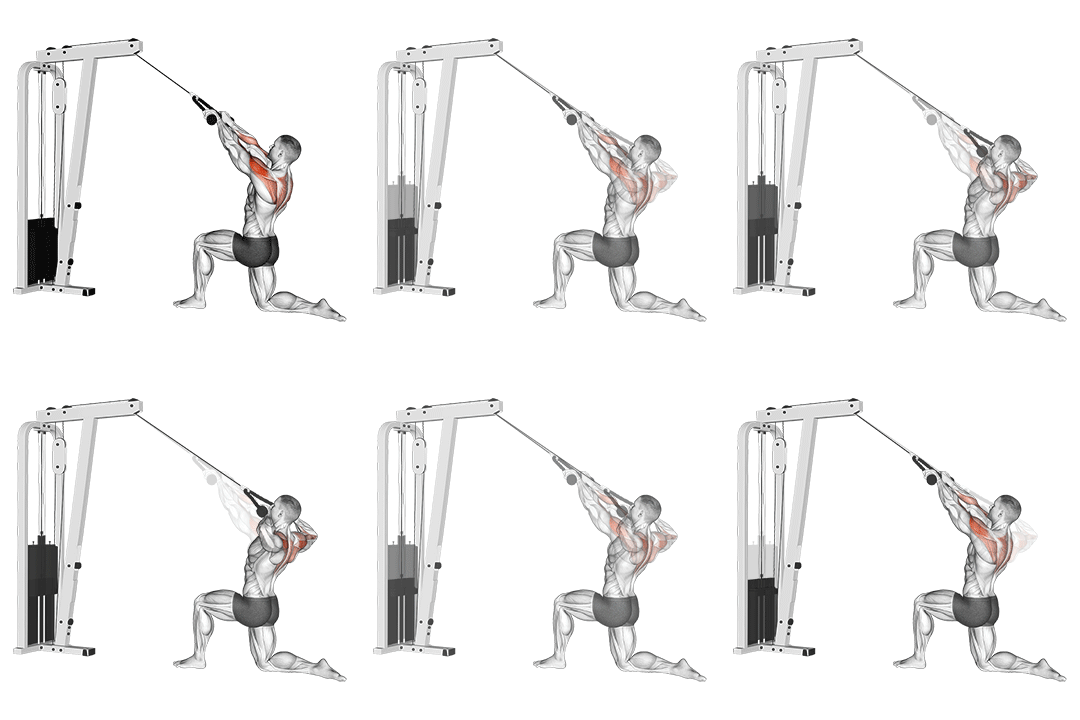
Face Pull
Head-to-Head Comparison
| Attribute | Cable Cross-over Revers Fly | Face Pull |
|---|---|---|
| Target Muscle |
Delts
|
Delts
|
| Body Part |
Shoulders
|
Shoulders
|
| Equipment |
Cable
|
Cable
|
| Difficulty |
Intermediate
|
Intermediate
|
| Movement Type |
Isolation
|
Compound
|
| Secondary Muscles |
2
|
1
|
Secondary Muscles Activated
Cable Cross-over Revers Fly
Face Pull
Visual Comparison
Overview
Cable Cross-over Revers Fly vs Face Pull — two cable exercises that both target the posterior delts but load the shoulder complex differently. If you want blunt, actionable guidance, this comparison breaks down muscle activation, required equipment, technique cues, injury risk, and programming tips. You’ll learn which exercise best isolates the rear delts, which one builds scapular control and mid-back strength, how to cue each lift for cleaner movement, and rep ranges to use for hypertrophy, strength, and rehab. Read on so you can pick the right move for your shoulder goals.
Key Differences
- Cable Cross-over Revers Fly is an isolation exercise, while Face Pull is a compound movement.
- Both exercises target the Delts using Cable. The main differences are in their movement patterns and muscle activation angles.
Pros & Cons
Cable Cross-over Revers Fly
+ Pros
- Direct isolation of posterior deltoid for targeted hypertrophy
- Consistent transverse-plane force vector maximizes rear-delt length-tension
- Easy to focus on single-arm work to fix side-to-side imbalances
- Clean, controlled reps reduce reliance on compensatory musculature when done correctly
− Cons
- Requires dual-pulley setup and precise cable angles
- Harder to add heavy progressive overload due to small muscle size
- Poor technique (swinging or scapular drift) quickly reduces effectiveness
Face Pull
+ Pros
- Trains posterior delts plus external rotators and mid/lower traps for shoulder health
- Simple setup with rope and high pulley or band substitutes for home
- Allows heavier and more varied loading patterns (tempo, sets, band tension)
- Improves scapular mechanics and posture by emphasizing retraction and depression
− Cons
- More complex motor pattern—requires cueing for external rotation to avoid dominant-trap pulling
- If performed incorrectly, upper traps can dominate and reduce posterior delt stimulus
- Less isolation of the rear delt compared to a focused reverse fly
When Each Exercise Wins
The reverse fly gives a purer transverse-plane load and better isolates the posterior deltoid, letting you target hypertrophy with 8–15 reps and strict tempo. Keeping elbows fixed and using slow eccentrics increases time under tension for the rear delt’s small fibers.
Face pulls are a compound pattern that recruits traps, rhomboids, and external rotators, allowing heavier or higher-tension loading and stronger neural adaptations. Use 6–12 rep ranges with controlled concentric drive to build pulling strength and scapular control.
Face pulls provide tactile feedback via the rope and train essential scapular retraction and external rotation—key movement patterns for safe pressing and overhead work. They’re easier to coach and translate to banded regressions for motor learning.
Face pulls adapt easily to resistance bands anchored at head height, making them practical without a gym cable machine. Reverse flyes with true cable crossovers are hard to replicate at home with constant tension.
Frequently Asked Questions
Can I do both Cable Cross-over Revers Fly and Face Pull in the same workout?
Yes. Start with face pulls to prime scapular retractors and external rotators, then follow with reverse flies for focused rear-delt hypertrophy. Keep total volume sensible—3–4 sets of each with 8–15 reps prevents overtraining.
Which exercise is better for beginners?
Face pulls are better for beginners because they teach scapular retraction and external rotation while allowing easy regressions with bands. They build the mobility and stability foundation needed before isolating the rear delts with reverse flies.
How do the muscle activation patterns differ?
Reverse flies emphasize posterior deltoid activation through transverse-plane horizontal abduction with peak tension mid-range, while face pulls combine posterior deltoid activation with strong early recruitment of rhomboids and middle/lower traps due to the retraction and external rotation components.
Can Face Pull replace Cable Cross-over Revers Fly?
Face pulls can substitute when you need a compound alternative that improves shoulder health, but they don’t fully replace the isolation stimulus of a reverse fly for targeted rear-delt hypertrophy. If hypertrophy is the main goal, include the reverse fly at least periodically.
Expert Verdict
Use Cable Cross-over Revers Fly when your priority is direct posterior deltoid hypertrophy and you can maintain strict form; program it for 8–15 reps with controlled eccentrics and minimal torso involvement. Choose Face Pulls when you want a multi-component shoulder exercise that builds scapular stability, external rotation strength, and mid-back development—aim for 8–12 heavy sets or 12–20 for endurance and rehab. For balanced shoulder health, include both in a program: face pulls early to teach scapular control and reverse flies after compound work for focused rear-delt stimulus. Always cue 70°–100° elbow elevation and scapular retraction to target the intended muscles safely.
Also Compare
More comparisons with Cable Cross-over Revers Fly
Compare More Exercises
Use our free comparison tool to analyze any two exercises head-to-head.
Compare Exercises