

Cable Cross-over Variation vs Incline Cable Flye: Complete Comparison Guide
Cable Cross-over Variation vs Incline Cable Flye — which one should you use to build a fuller chest? You’ll get a clear, practical breakdown that covers primary and secondary muscle activation, biomechanics (force vectors, length-tension), equipment needs, difficulty and progression options, plus technique cues and rep ranges. Read on to see which exercise better fits your goal: upper-chest shaping, overall pectoral hypertrophy, beginner learning, or minimal-equipment sessions.
Exercise Comparison
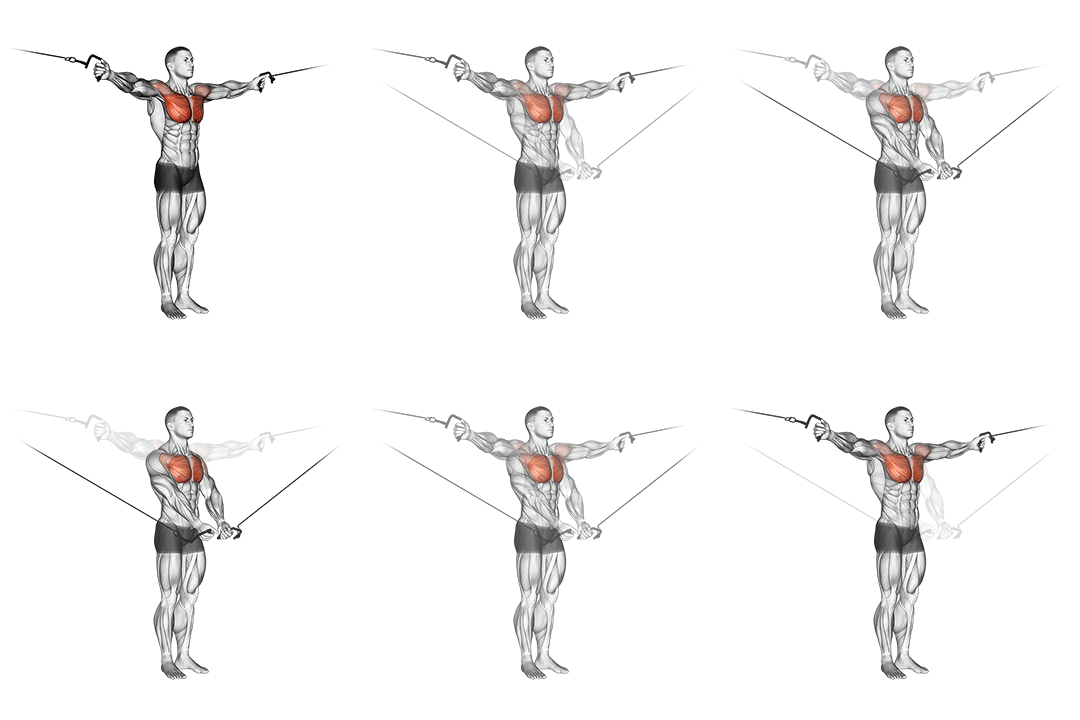
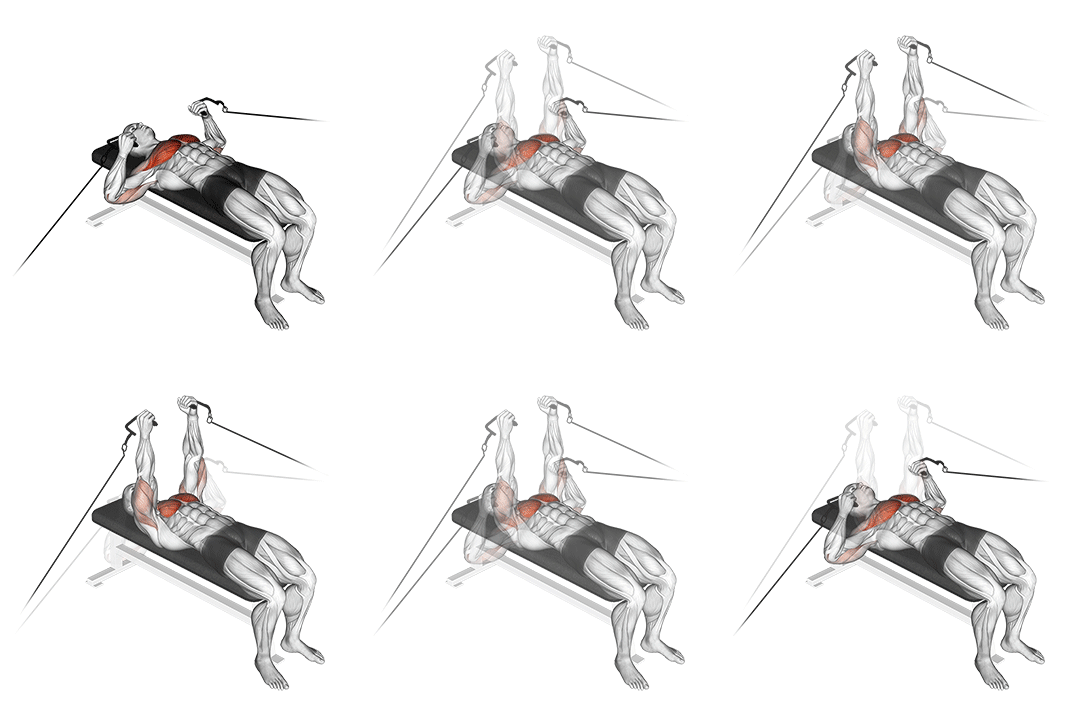
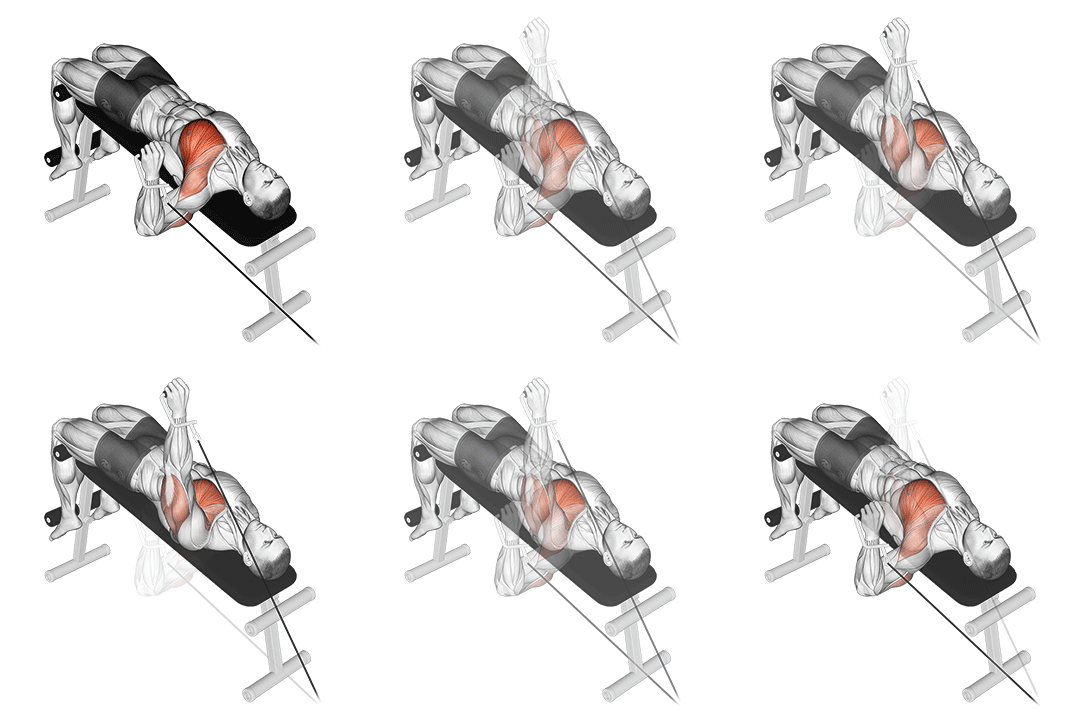
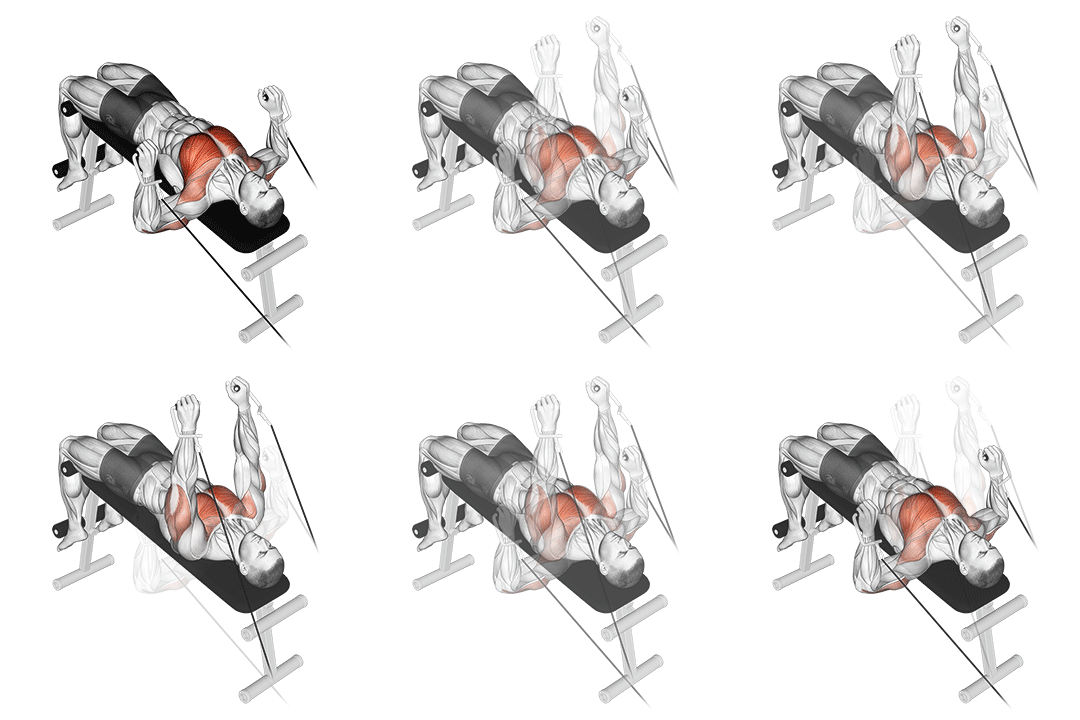
Cable Cross-over Variation
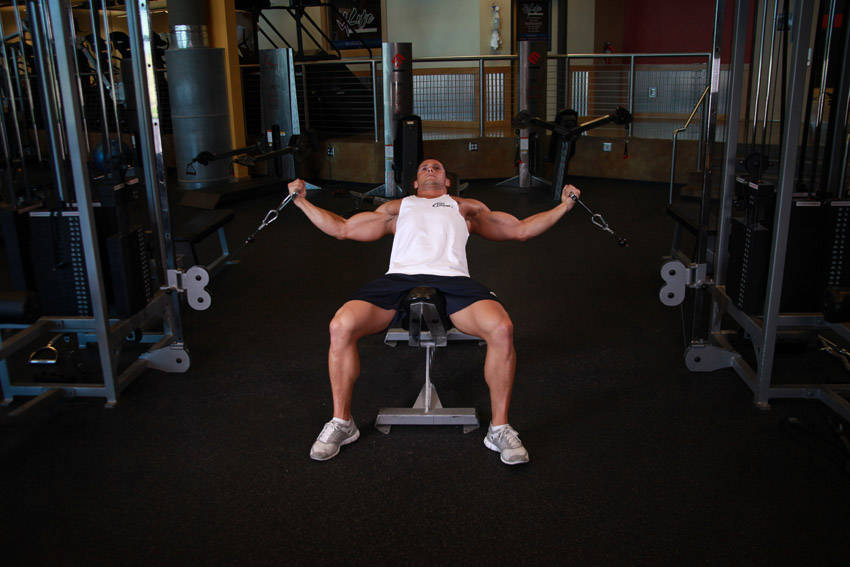
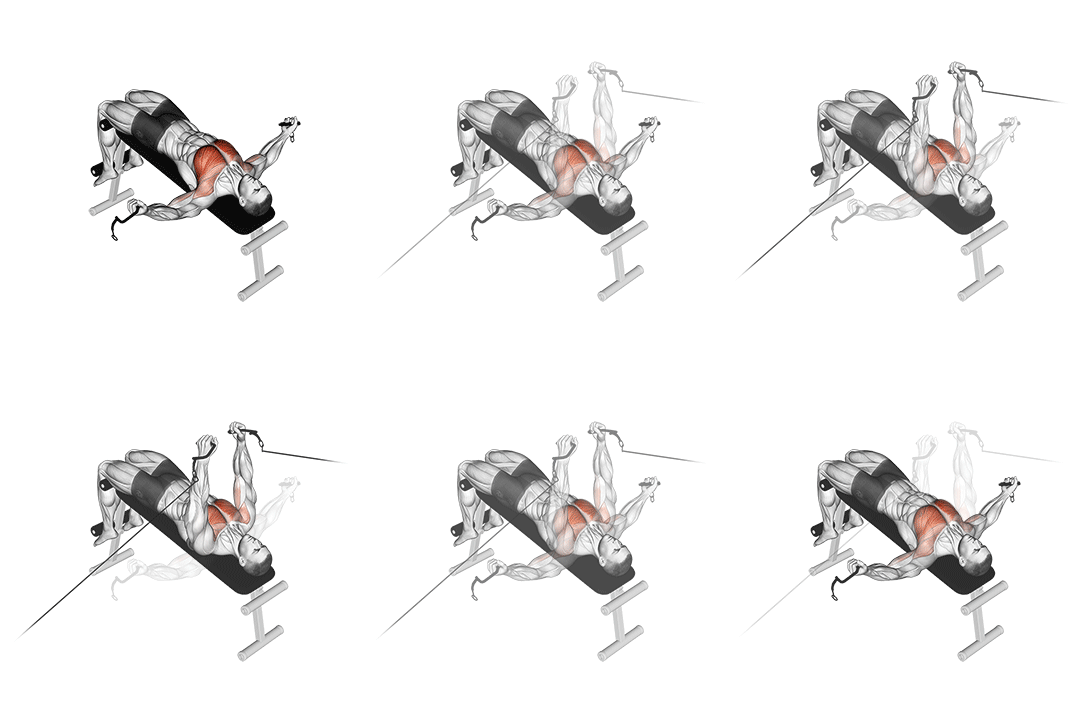
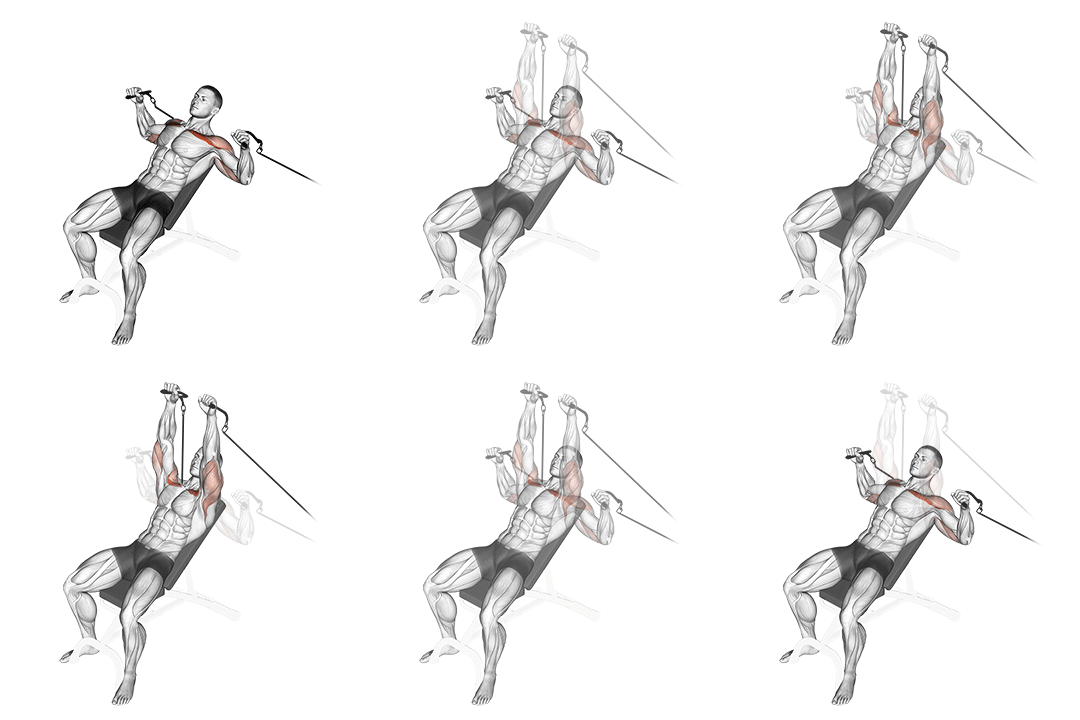
Incline Cable Flye
Head-to-Head Comparison
| Attribute | Cable Cross-over Variation | Incline Cable Flye |
|---|---|---|
| Target Muscle |
Pectorals
|
Pectorals
|
| Body Part |
Chest
|
Chest
|
| Equipment |
Cable
|
Cable
|
| Difficulty |
Intermediate
|
Beginner
|
| Movement Type |
Isolation
|
Isolation
|
| Secondary Muscles |
2
|
1
|
Secondary Muscles Activated
Cable Cross-over Variation
Incline Cable Flye
Visual Comparison
Overview
Cable Cross-over Variation vs Incline Cable Flye — which one should you use to build a fuller chest? You’ll get a clear, practical breakdown that covers primary and secondary muscle activation, biomechanics (force vectors, length-tension), equipment needs, difficulty and progression options, plus technique cues and rep ranges. Read on to see which exercise better fits your goal: upper-chest shaping, overall pectoral hypertrophy, beginner learning, or minimal-equipment sessions.
Key Differences
- Difficulty levels differ: Cable Cross-over Variation is intermediate, while Incline Cable Flye is beginner.
- Both exercises target the Pectorals using Cable. The main differences are in their movement patterns and muscle activation angles.
Pros & Cons
Cable Cross-over Variation
+ Pros
- Highly adjustable line-of-pull to target upper, mid, or lower pec fibers
- Continuous tension and strong peak contraction for hypertrophy
- Easily replicated with resistance bands for home training
- Ample progression options: unilateral, tempo, pulley height
− Cons
- Requires good scapular control and coordination
- Higher technical demand — risk of overreaching shoulder on eccentrics
- Dual-pulley station may not be available in all home setups
Incline Cable Flye
+ Pros
- Simple setup with torso stabilized on an incline bench
- Specifically biases upper (clavicular) pec fibers for cap development
- Beginner-friendly with predictable range of motion
- Lower triceps involvement lets you isolate the upper chest
− Cons
- Requires an adjustable bench and cable — less home-friendly
- Narrower progression options compared with varied cross-over angles
- Can stress anterior shoulder if bench angle is too steep (>45°) or ROM is excessive
When Each Exercise Wins
Cable cross-overs let you manipulate pulley height and torso position to maintain continuous tension and maximize peak contraction across different pectoral heads. Use 8–12 reps, 3–4 sets, and vary high/low/mid pulley angles to hit fibers from multiple vectors.
Although both are isolation moves, cross-overs allow heavier stacks, unilateral overload and tempo manipulation to increase mechanical tension. Use lower-rep schemes (6–8) with slow eccentrics and heavier loads to build upper-chest strength capacity.
The incline bench stabilizes the torso and simplifies motor control, letting beginners learn shoulder positioning and a safe 15°–20° elbow bend. Start with light weight and 10–15 reps focusing on stretch and controlled tempo.
The movement pattern is easily mimicked with anchored resistance bands, allowing similar force vectors and peak contraction without a cable station or bench. Use band height to simulate high/mid/low crossovers and 12–20 rep ranges for hypertrophy.
Frequently Asked Questions
Can I do both Cable Cross-over Variation and Incline Cable Flye in the same workout?
Yes. Use one as your primary chest isolation and the other as a finisher — for example, 3–4 sets of cable cross-overs (8–12 reps) then 2–3 sets of incline cable flyes (10–15 reps) to fatigue the upper fibers. Sequence them so the more technical or higher-load movement comes first.
Which exercise is better for beginners?
Incline Cable Flye is better for beginners because the bench stabilizes your torso and simplifies technique, allowing you to focus on a controlled eccentric and a 15°–20° elbow bend. Start light and work 10–15 reps to build motor control before progressing to cross-over variations.
How do the muscle activation patterns differ?
Activation differs by force vector and starting muscle length: incline flyes increase clavicular head activation by combining shoulder flexion with horizontal adduction at ~30°–45°, placing the upper pec at a longer length. Cross-overs change activation by pulley height — high-to-low favors upper fibers, low-to-high favors lower fibers — and provide varied horizontal adduction torque throughout the ROM.
Can Incline Cable Flye replace Cable Cross-over Variation?
Not entirely. If your goal is general pectoral hypertrophy and varied vector training, cross-overs offer more mechanical options and peak-contraction control. If you specifically need to emphasize the upper chest or simplify technique, incline flyes can replace cross-overs for that purpose, but you’ll lose some angle versatility.
Expert Verdict
Both exercises are valuable but serve slightly different roles. Use Cable Cross-over Variation when you want maximum control over line-of-pull, peak contraction and progressive overload across multiple planes — it’s the go-to for comprehensive pectoral hypertrophy and variety. Choose Incline Cable Flye when you need a beginner-friendly option that specifically targets the upper chest (clavicular head) with stable torso support; keep the bench between 30° and 45° and emphasize a slight elbow bend and slow eccentric. For balanced development, rotate both into your program: prioritize cross-overs for volume blocks and add incline flyes as an upper-chest finisher.
Also Compare
More comparisons with Cable Cross-over Variation
Compare More Exercises
Use our free comparison tool to analyze any two exercises head-to-head.
Compare Exercises