

Cable Floor Seated Wide-grip Row vs Close-Grip Front Lat Pulldown: Complete Comparison Guide
Cable Floor Seated Wide-grip Row vs Close-Grip Front Lat Pulldown — you’re picking two solid cable back moves. I’ll walk you through mechanics, muscle activation, equipment needs, technique cues, and which to choose for hypertrophy, strength, or convenience. You’ll also get practical rep ranges (6–12 for strength/hypertrophy blocks, 8–15 for volume work), progression tips, and injury-risk notes. For clarity I’ll reference {Exercise1} vs {Exercise2} when comparing force vectors, torso angles, and elbow paths so you can match each lift to your goals and training setup.
Exercise Comparison
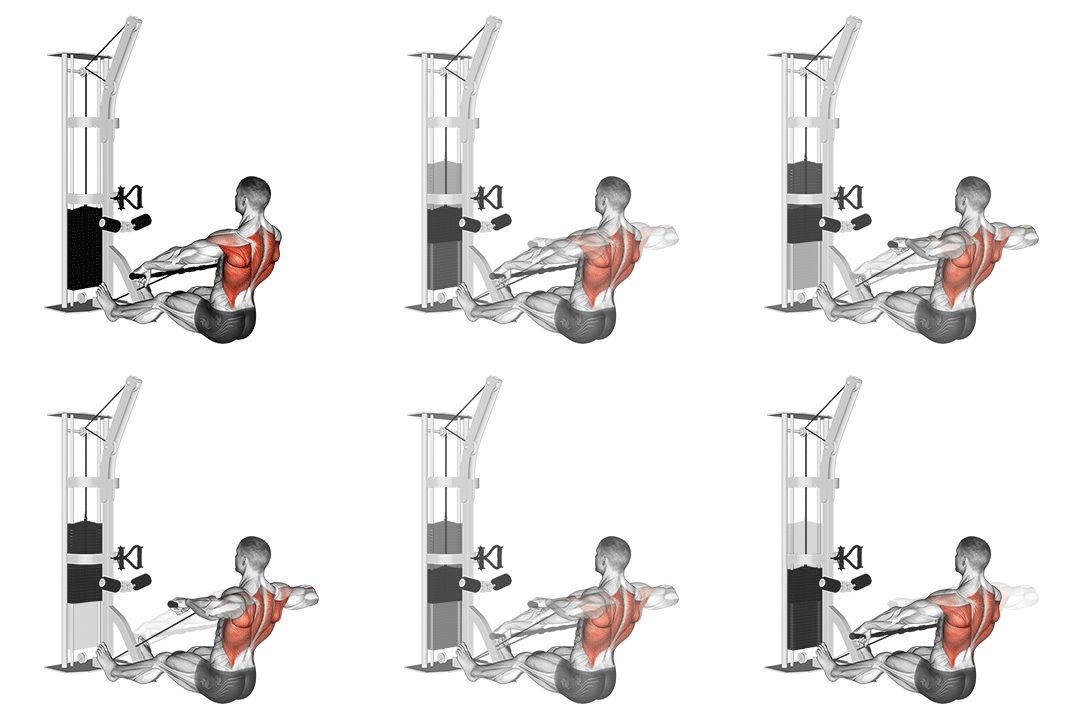
Cable Floor Seated Wide-grip Row
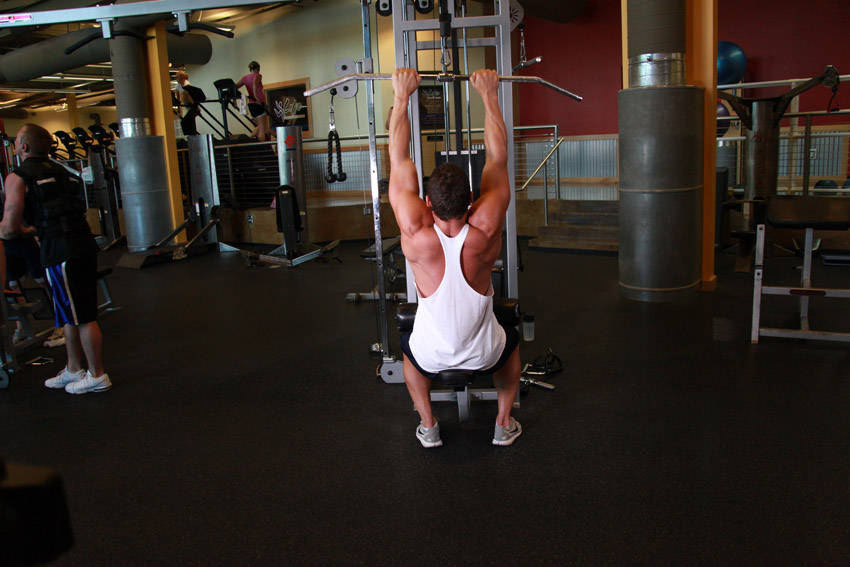
Close-grip Front Lat Pulldown
Head-to-Head Comparison
| Attribute | Cable Floor Seated Wide-grip Row | Close-grip Front Lat Pulldown |
|---|---|---|
| Target Muscle |
Lats
|
Lats
|
| Body Part |
Back
|
Back
|
| Equipment |
Cable
|
Cable
|
| Difficulty |
Intermediate
|
Intermediate
|
| Movement Type |
Compound
|
Compound
|
| Secondary Muscles |
2
|
3
|
Secondary Muscles Activated
Cable Floor Seated Wide-grip Row
Close-grip Front Lat Pulldown
Visual Comparison
Overview
Cable Floor Seated Wide-grip Row vs Close-Grip Front Lat Pulldown — you’re picking two solid cable back moves. I’ll walk you through mechanics, muscle activation, equipment needs, technique cues, and which to choose for hypertrophy, strength, or convenience. You’ll also get practical rep ranges (6–12 for strength/hypertrophy blocks, 8–15 for volume work), progression tips, and injury-risk notes. For clarity I’ll reference {Exercise1} vs {Exercise2} when comparing force vectors, torso angles, and elbow paths so you can match each lift to your goals and training setup.
Key Differences
- Both exercises target the Lats using Cable. The main differences are in their movement patterns and muscle activation angles.
Pros & Cons
Cable Floor Seated Wide-grip Row
+ Pros
- Stronger scapular retraction builds mid-back thickness and posture correction
- Horizontal pull vector emphasizes upper and mid-lat development
- Easy to implement unilateral variations for correcting side-to-side imbalances
- Allows heavy, controlled eccentric loading for hypertrophy (3–5s negatives)
− Cons
- Requires floor space and low-pulley setup
- Higher technical demand on scapular control and torso stabilization
- Can strain lower back if you use momentum or round the spine
Close-grip Front Lat Pulldown
+ Pros
- Readily available on most high-pulley stations and quick to set up
- Vertical pull targets lower lat fibers via longer muscle starting length
- Knee pads stabilize the hips, reducing compensatory body movement
- Easier for beginners to learn lat-loading cues and progressive overload
− Cons
- Closely engages biceps, which can limit back-specific loading for some lifters
- Less emphasis on middle trapezius and scapular retractors compared to rows
- Overhead start position can aggravate shoulders if technique is poor
When Each Exercise Wins
The horizontal force vector and emphasis on scapular retraction create more time under tension for mid-back and upper-lat fibers. Use 6–12 reps, slower eccentrics (2–4s), and paused 1–2s holds at full retraction to maximize muscle growth.
Pulldowns allow safer heavier loading with stabilized hips and a simpler motor pattern, letting you progressively increase load in 5–10% jumps. Use lower-rep sets (4–6) with full control and longer rest (2–3 minutes).
Its vertical path and knee stabilization make it easier to learn lat recruitment and progressive overload without mastering scapular mechanics. Start with 8–12 reps focusing on a long, controlled pull and avoiding shoulder shrugging.
If you have a low-pulley cable or resistance band setup and floor space, seated rows offer more adaptable grips and unilateral options. They can be done with bands if you lack a high-pulley lat station.
Frequently Asked Questions
Can I do both Cable Floor Seated Wide-grip Row and Close-Grip Front Lat Pulldown in the same workout?
Yes — pairing them works well if you sequence heavy, compound strength work first (pulldowns at 4–6 reps) then a higher-volume row (8–15 reps) as a hypertrophy finisher. Prioritize fresh technique: do the movement that requires the most technical precision first.
Which exercise is better for beginners?
Close-Grip Front Lat Pulldown is generally better for beginners because knee stabilization and a vertical path simplify learning lat engagement. Start with moderate weight and 8–12 controlled reps while practicing scapular depression before elbow drive.
How do the muscle activation patterns differ?
The row uses a horizontal pull vector, increasing mid-trap and rhomboid activation via scapular retraction and stressing lats during mid-range concentric. The pulldown uses a vertical vector that loads the lat at a longer starting length and shifts emphasis slightly toward lower lat fibers and biceps through a steeper elbow path.
Can Close-Grip Front Lat Pulldown replace Cable Floor Seated Wide-grip Row?
It can substitute when you lack floor space or low-pulley access, but it won’t duplicate the same scapular retraction stimulus and mid-back development. For balanced back work, include both across training cycles or add rowing variants to cover missing movement patterns.
Expert Verdict
Choose the Cable Floor Seated Wide-grip Row when your goal is back thickness, scapular control, and targeted mid-upper lat development — load with 6–12 reps, emphasize a neutral spine, and pause at full retraction. Pick the Close-Grip Front Lat Pulldown when you want straightforward progressive overload, or you’re coaching beginners and need a stable setup; use 4–8 reps for strength or 8–12 for hypertrophy. If possible, rotate both across phases: use pulldowns for high-load strength cycles and rows for volume and positional work to maximize overall lat development.
Also Compare
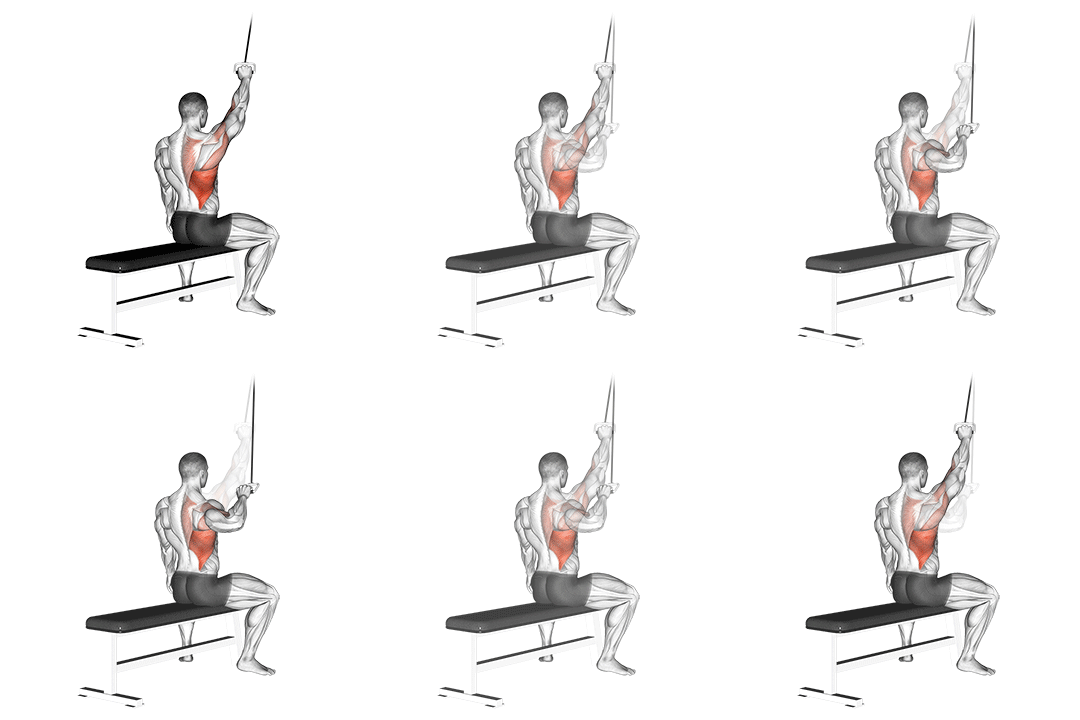
More comparisons with Cable Floor Seated Wide-grip Row
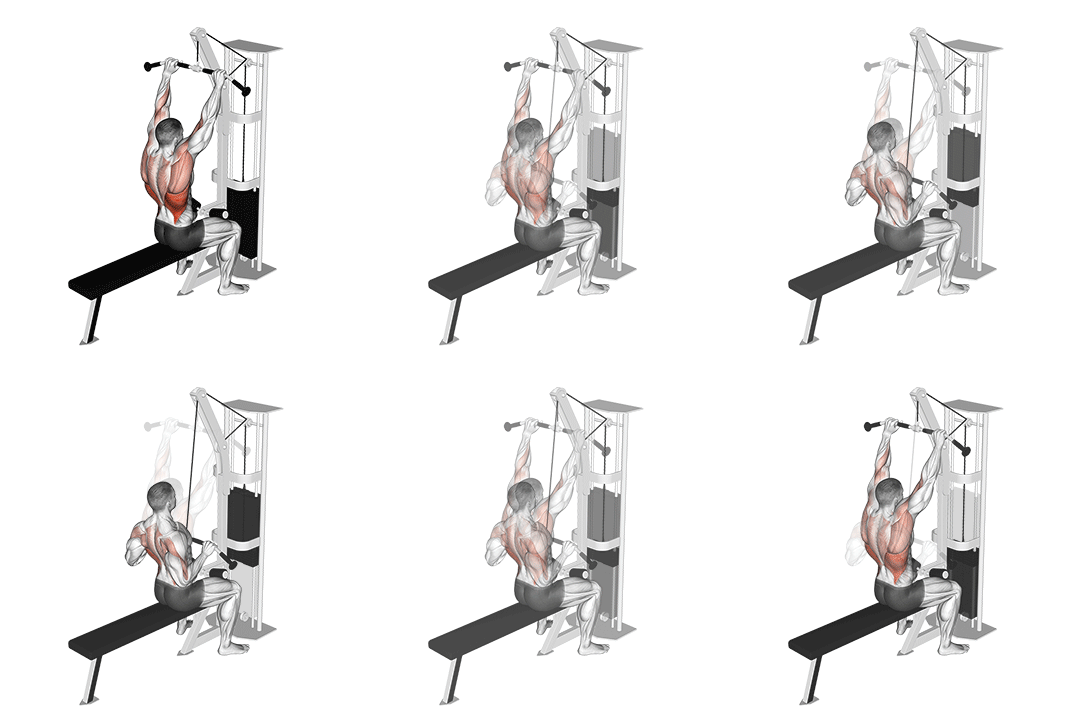
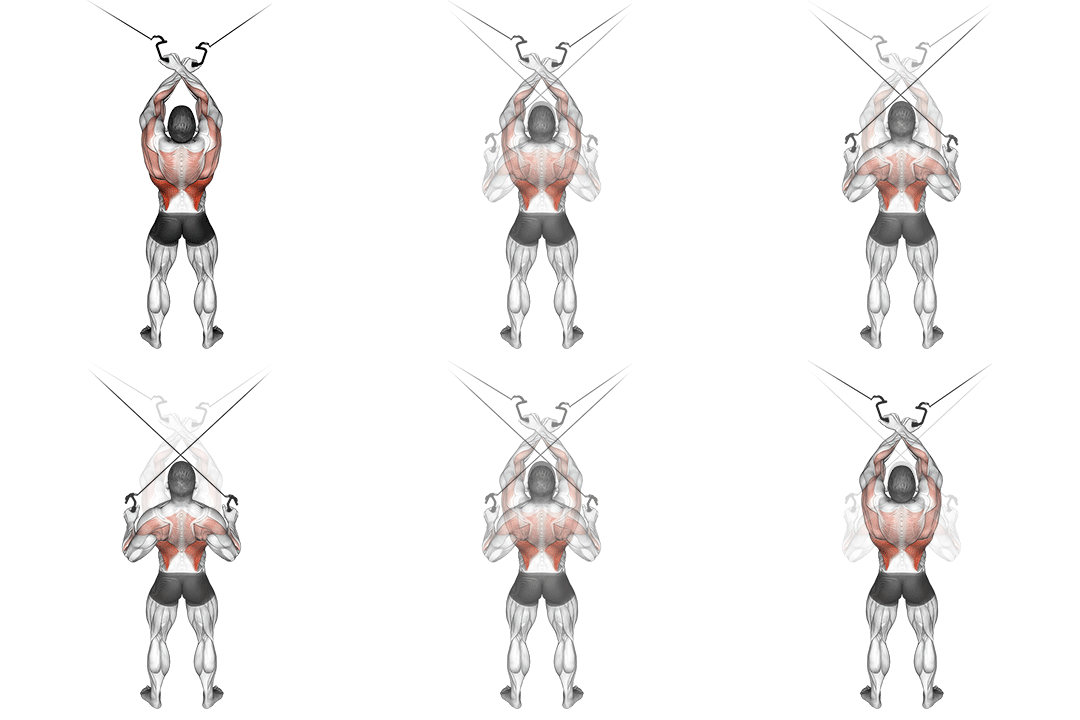
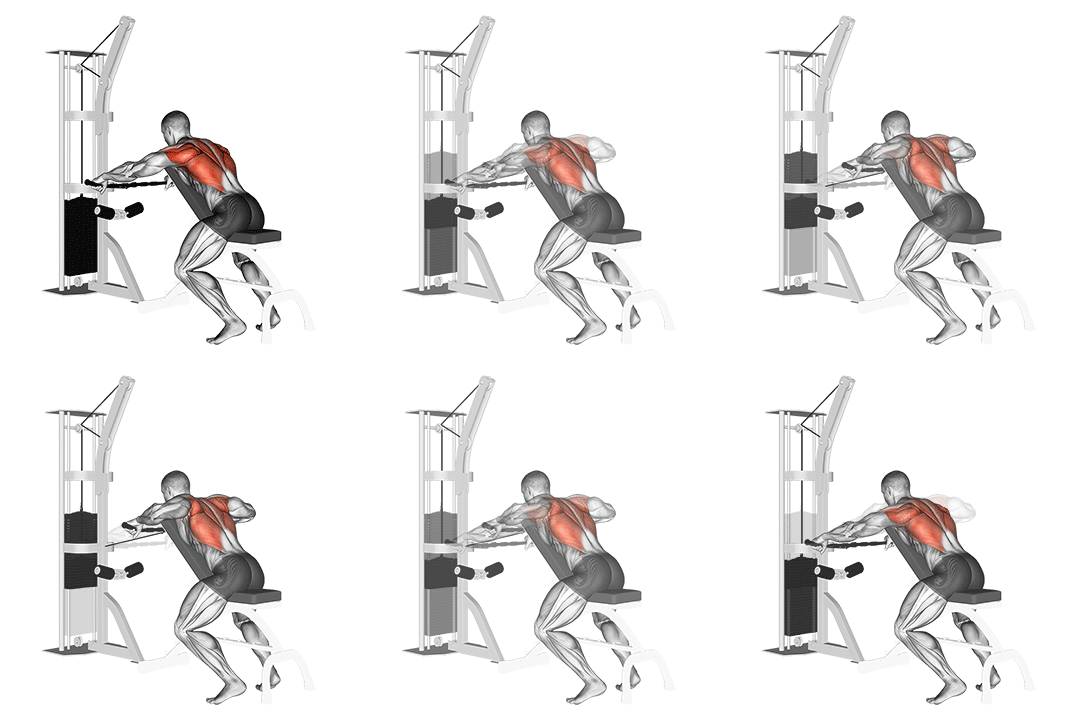
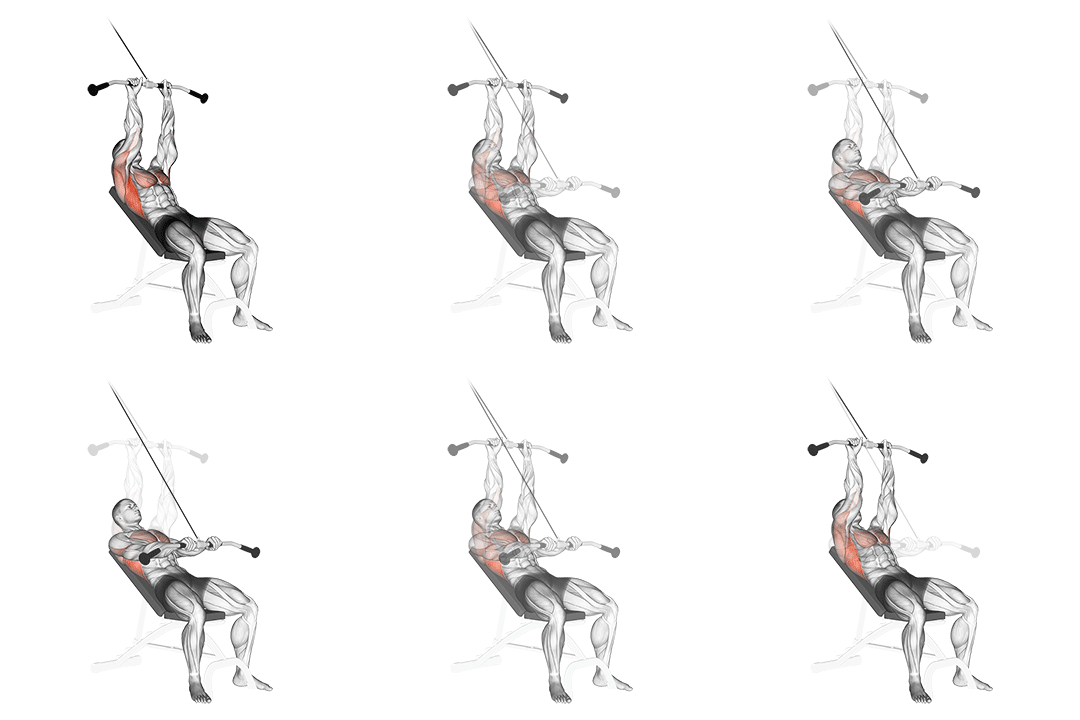
More comparisons with Close-grip Front Lat Pulldown
Compare More Exercises
Use our free comparison tool to analyze any two exercises head-to-head.
Compare Exercises