

Cable Forward Raise vs Cable Front Raise: Complete Comparison Guide
Cable Forward Raise vs Cable Front Raise — two isolation moves that both target your anterior deltoid. If you want clearer choices for shoulder development, this guide breaks down how the exercises differ in muscle activation, equipment setup, technique cues, and progression. You’ll get specific setup and form tips (body angle, elbow bend, line of pull), a head-to-head on secondary muscle recruitment, and practical recommendations for hypertrophy, strength, beginners, and home workouts so you can pick the best tool for your goals.
Exercise Comparison

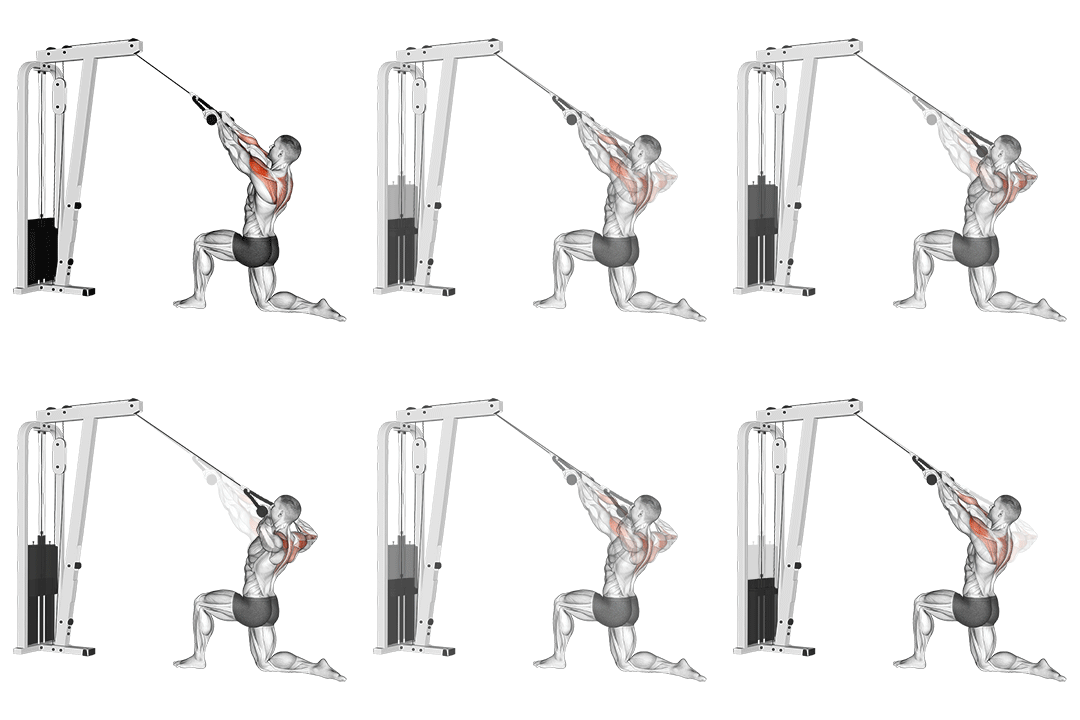
Cable Forward Raise
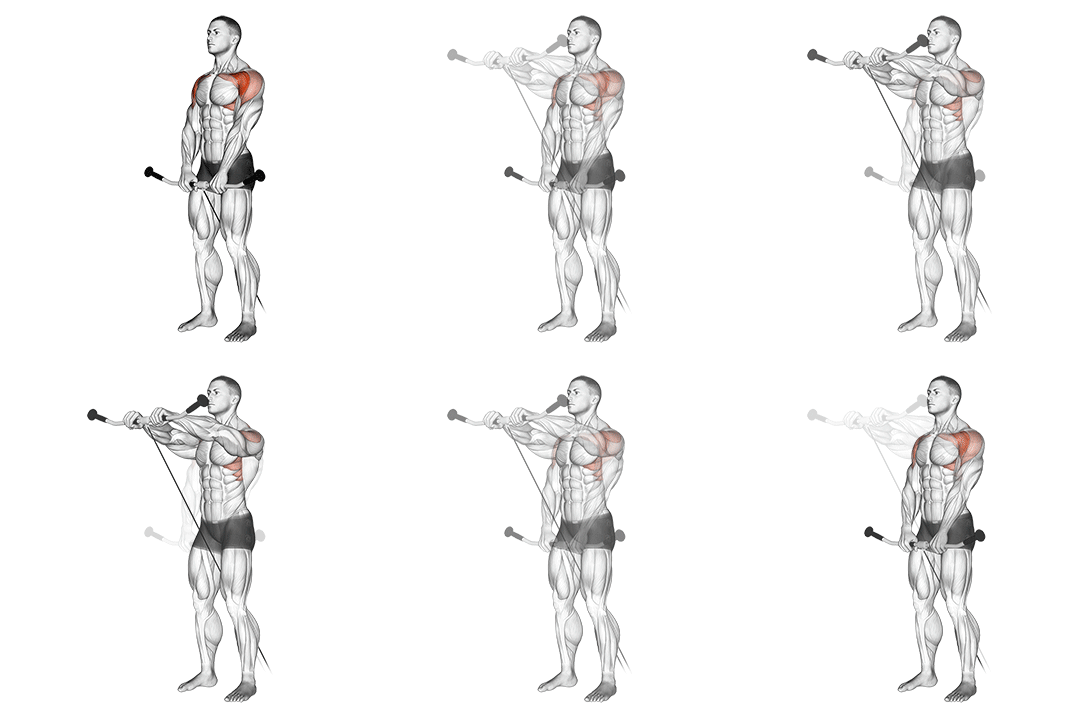
Cable Front Raise
Head-to-Head Comparison
| Attribute | Cable Forward Raise | Cable Front Raise |
|---|---|---|
| Target Muscle |
Delts
|
Delts
|
| Body Part |
Shoulders
|
Shoulders
|
| Equipment |
Cable
|
Cable
|
| Difficulty |
Beginner
|
Beginner
|
| Movement Type |
Isolation
|
Isolation
|
| Secondary Muscles |
2
|
2
|
Secondary Muscles Activated
Cable Forward Raise
Cable Front Raise
Visual Comparison
Overview
Cable Forward Raise vs Cable Front Raise — two isolation moves that both target your anterior deltoid. If you want clearer choices for shoulder development, this guide breaks down how the exercises differ in muscle activation, equipment setup, technique cues, and progression. You’ll get specific setup and form tips (body angle, elbow bend, line of pull), a head-to-head on secondary muscle recruitment, and practical recommendations for hypertrophy, strength, beginners, and home workouts so you can pick the best tool for your goals.
Key Differences
- Both exercises target the Delts using Cable. The main differences are in their movement patterns and muscle activation angles.
Pros & Cons
Cable Forward Raise
+ Pros
- Constant tension on the anterior deltoid through the arc
- Easy for unilateral work and correcting side-to-side imbalances
- Simple setup and minimal coordination required
- Good end-range focus for shoulder flexion (30–90°)
− Cons
- Harder to progressively overload bilaterally with some cable stations
- Can encourage torso lean or lumbar extension if overloaded
- Limited grip/attachment variety compared with bilateral setups
Cable Front Raise
+ Pros
- Easy to load bilaterally for progressive overload
- Versatile grips (bar, rope, neutral) allow slight shifts in force vector
- Easier to replicate with bands or dumbbells for home use
- Can target peak tension later in ROM depending on pulley height
− Cons
- Bilateral movement can hide side-to-side imbalances
- More prone to upper-trap recruitment if shoulders hike
- Requires stricter control to avoid momentum and trunk involvement
When Each Exercise Wins
Cable Front Raise wins because bilateral loading and varied attachments let you progressively increase volume and load (8–15 reps) while maintaining tension. Using a bar or rope allows incremental loading and consistent torque across sets, which favors muscle growth.
Cable Front Raise better supports heavier, bilateral loading and small weight jumps, which you need for strength-focused work (4–6 heavy reps or lower-rep technical sets). The mechanical advantage of a bar or dual handles makes it easier to apply higher absolute resistance safely.
Cable Forward Raise is simpler to learn: one plane of motion, clear line of pull, and easier single-arm control. That makes it ideal for establishing shoulder flexion motor patterns and scapular stability before adding bilateral complexity.
Cable Front Raise adapts more readily to resistance bands or dumbbells, allowing similar force vectors without a machine. That transferability gives it the edge when you don’t have a cable station available at home.
Frequently Asked Questions
Can I do both Cable Forward Raise and Cable Front Raise in the same workout?
Yes. Use the forward raise for unilateral pre-fatigue or motor control (2–3 sets of 8–12), then follow with bilateral front raises for volume and heavier loading (3–4 sets of 8–15). Sequence them so the simpler, unilateral pattern primes the deltoid without compromising form on heavier sets.
Which exercise is better for beginners?
Cable Forward Raise is usually better for beginners because it has a simpler path of motion and easier single-arm control, reducing compensation. It teaches shoulder flexion mechanics and scapular stability before adding bilateral loading demands.
How do the muscle activation patterns differ?
Both emphasize the anterior deltoid, but the line of pull shifts peak tension slightly. Forward raises often hit peak moment arm around 30–60° of flexion, while front raises with different pulley heights can bias peak tension toward 60–90°. Small changes in grip and pulley position also change trap and pec recruitment via force-vector shifts.
Can Cable Front Raise replace Cable Forward Raise?
Yes, Cable Front Raise can replace the forward raise for many lifters because it delivers similar anterior deltoid stimulus and offers easier progressive overload. If you need unilateral control work, keep the forward raise in rotation; otherwise, front raises cover most hypertrophy and strength needs.
Expert Verdict
Both moves target the anterior deltoid and are valid isolation tools. Choose Cable Forward Raise if you’re new to shoulder isolation, want to fix unilateral imbalances, or need a simple movement to teach clean shoulder flexion (use 8–12 controlled reps with a 10–20° elbow bend). Pick Cable Front Raise when your goal is progressive overload and muscle growth or you need a variation that translates to bands/dumbbells—load bilaterally and control scapular position (8–15 reps, pause at 60°). Use both across a training block: start with unilateral forward raises for control, then add front raises for volume and heavier loading to maximize muscle development.
Also Compare
More comparisons with Cable Forward Raise
More comparisons with Cable Front Raise
Compare More Exercises
Use our free comparison tool to analyze any two exercises head-to-head.
Compare Exercises