

Cable Forward Raise vs Cable Front Shoulder Raise: Complete Comparison Guide
Cable Forward Raise vs Cable Front Shoulder Raise is a side-by-side look at two cable-based shoulder isolation moves. You’ll learn which movement biases the anterior deltoid more, how the secondary muscles differ (triceps/forearms vs trapezius/biceps), technique cues to hit 8–15 reps safely, and when to pick each for hypertrophy, strength, or convenience. I’ll cover biomechanics—force vectors, moment arms, and scapular control—plus step-by-step form cues, progression options, and common errors to avoid. Read on to choose the raise that matches your shoulder mechanics and training goals.
Exercise Comparison
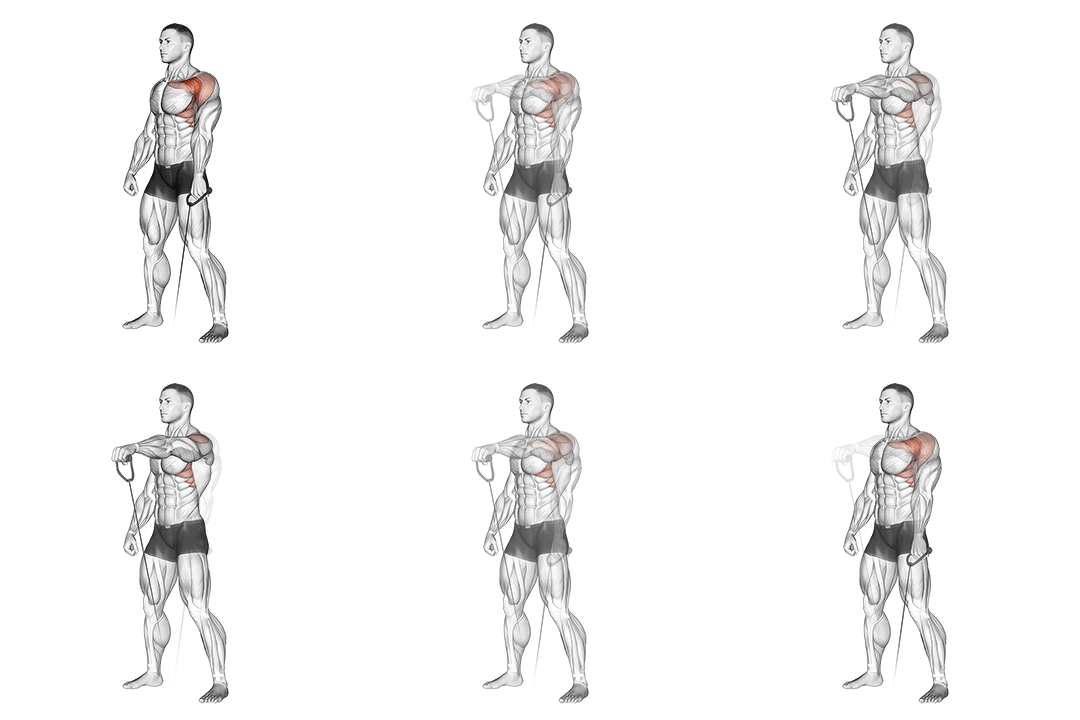
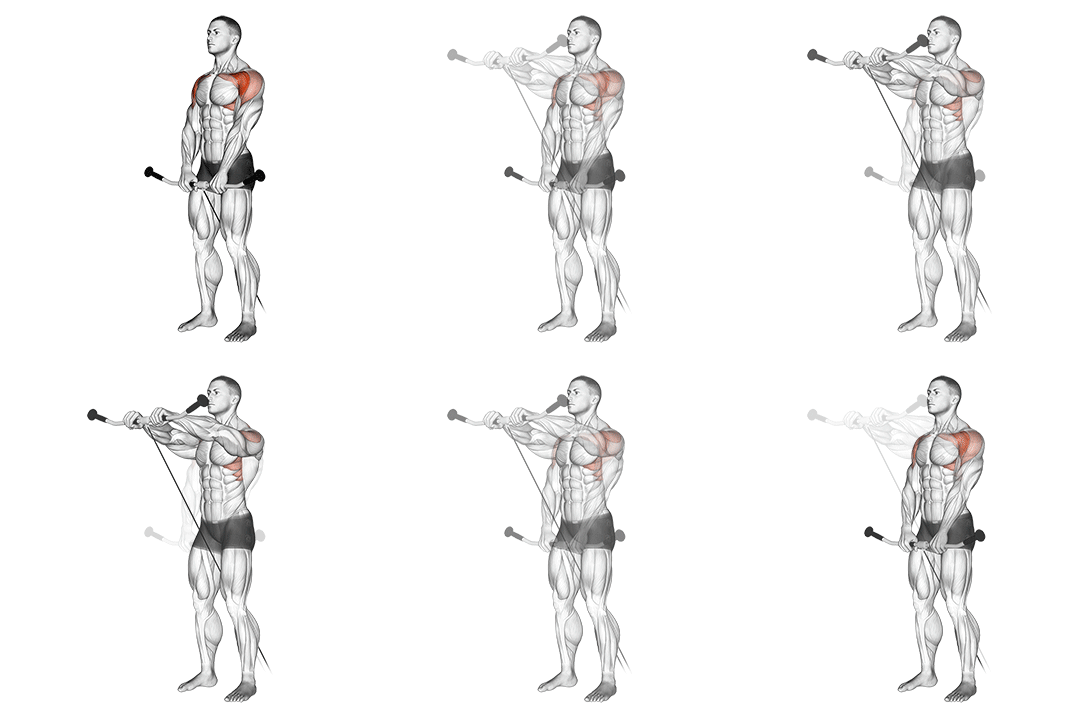
Cable Forward Raise
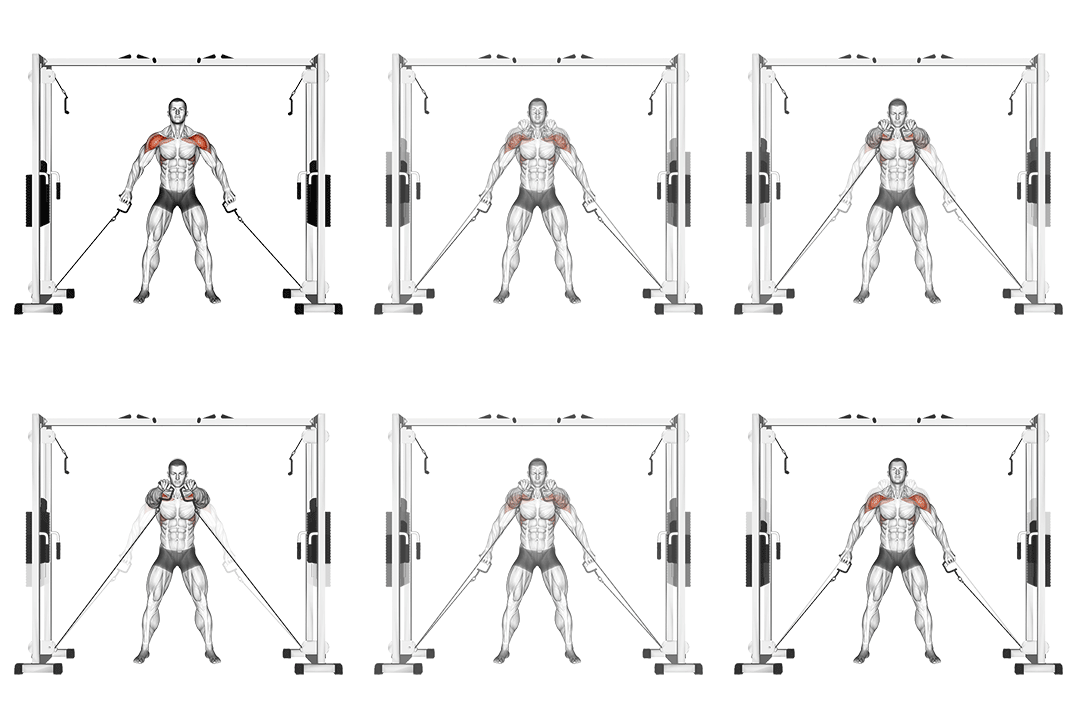
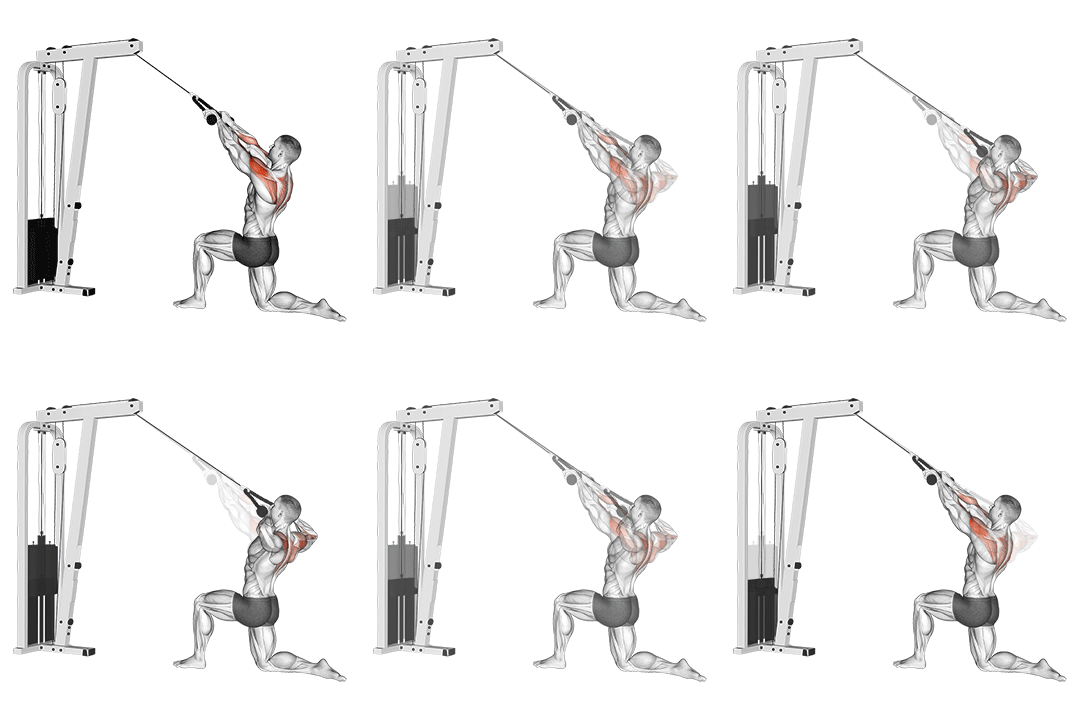
Cable Front Shoulder Raise
Head-to-Head Comparison
| Attribute | Cable Forward Raise | Cable Front Shoulder Raise |
|---|---|---|
| Target Muscle |
Delts
|
Delts
|
| Body Part |
Shoulders
|
Shoulders
|
| Equipment |
Cable
|
Cable
|
| Difficulty |
Beginner
|
Beginner
|
| Movement Type |
Isolation
|
Isolation
|
| Secondary Muscles |
2
|
2
|
Secondary Muscles Activated
Cable Forward Raise
Cable Front Shoulder Raise
Visual Comparison
Overview
Cable Forward Raise vs Cable Front Shoulder Raise is a side-by-side look at two cable-based shoulder isolation moves. You’ll learn which movement biases the anterior deltoid more, how the secondary muscles differ (triceps/forearms vs trapezius/biceps), technique cues to hit 8–15 reps safely, and when to pick each for hypertrophy, strength, or convenience. I’ll cover biomechanics—force vectors, moment arms, and scapular control—plus step-by-step form cues, progression options, and common errors to avoid. Read on to choose the raise that matches your shoulder mechanics and training goals.
Key Differences
- Both exercises target the Delts using Cable. The main differences are in their movement patterns and muscle activation angles.
Pros & Cons
Cable Forward Raise
+ Pros
- Simple setup with single-handle low pulley
- Direct anterior deltoid loading with minimal trapezius involvement
- Easy to cue: straight-arm, raise to shoulder height (0–90°), 15–20° elbow bend
- Lower learning curve for beginners and faster to load progressively
− Cons
- Limited variation compared with bar or rope attachments
- Can place more shear on elbow if locking the arm fully straight
- Less upper-trap engagement if you want a compound carryover to shrug strength
Cable Front Shoulder Raise
+ Pros
- Versatile with bar, rope, or single-handle for different force vectors
- Easier to perform bilateral sets for consistent loading
- Allows unilateral variations and tempo changes for progressive overload
- Can bias scapular upward rotation and trap if desired for mixed shoulder work
− Cons
- Slightly higher risk of shoulder hiking and trapezius dominance
- Can recruit biceps if elbows bend, reducing pure anterior deltoid stimulus
- Requires better scapular control to avoid impingement with high ranges
When Each Exercise Wins
It isolates the anterior deltoid with minimal trap takeover, letting you keep 8–15 reps with strict form and a full tension curve. That direct loading, combined with tempo and short rest, better targets deltoid muscle growth.
While neither is optimal for heavy strength like presses, the Front Shoulder Raise offers more loading variations (bilateral bar, single-arm heavy sets) and grip options, which permit progressive overload aimed at improving pressing accessory strength.
Its straightforward sagittal-plane path and low coordination demands make it easier to learn proper elbow and wrist position. Beginners can hit effective sets of 10–15 reps without mastering scapular control first.
If you have a multi-use cable or resistance band setup at home, the Front Shoulder Raise adapts well to bars, handles, and bands and allows bilateral loading to save time and equipment hassle.
Frequently Asked Questions
Can I do both Cable Forward Raise and Cable Front Shoulder Raise in the same workout?
Yes. Start with the stricter isolation (often the Forward Raise) for 3–4 sets of 8–12 to target the anterior deltoid, then use the Front Shoulder Raise for 2–3 lighter sets or as a variety for trap bias. Monitor total volume so you stay within 9–15 weekly sets per head for hypertrophy.
Which exercise is better for beginners?
Cable Forward Raise is better for beginners because the movement pattern is simpler and easier to cue. It reduces compensatory trap elevation and helps you learn ideal elbow and wrist position before introducing more complex variations.
How do the muscle activation patterns differ?
Both load the anterior deltoid during shoulder flexion, but the Front Shoulder Raise often adds trapezius and biceps activity if the shoulder hikes or the elbow bends. The Forward Raise maintains a cleaner sagittal vector and keeps stabilizer demand on the triceps and forearms for elbow and grip control.
Can Cable Front Shoulder Raise replace Cable Forward Raise?
It can replace it when your goal is variety or bilateral loading, but Front Shoulder Raise may recruit more traps and biceps, reducing pure anterior deltoid isolation. For targeted hypertrophy, keep the Forward Raise in rotation at least some training blocks.
Expert Verdict
Both raises target the anterior deltoid, but use them for different goals. Choose Cable Forward Raise when you want a dead-simple, high-fidelity anterior deltoid isolation that minimizes trap and biceps assistance—ideal for hypertrophy blocks and beginners working in 8–15 rep ranges. Pick Cable Front Shoulder Raise when you need variation, bilateral loading, or a tool to blend trap work with anterior deltoid stimulus; it offers more attachment and progression choices and suits accessory strength phases. Keep elbow bend at 15–20°, stop around shoulder height (0–90°), and prioritize scapular control to reduce impingement risk. Use both across phases for balanced shoulder development.
Also Compare
More comparisons with Cable Forward Raise
More comparisons with Cable Front Shoulder Raise
Compare More Exercises
Use our free comparison tool to analyze any two exercises head-to-head.
Compare Exercises