

Cable Forward Raise vs Cable Kneeling Rear Delt Row (with Rope) (male): Complete Comparison Guide
Cable Forward Raise vs Cable Kneeling Rear Delt Row (with Rope) (male) puts two cable shoulder moves head-to-head so you can pick the right tool for your program. You’ll get a clear breakdown of primary and secondary muscle activation, equipment needs, technique cues, difficulty and injury risk, plus practical set and rep ranges. Read on and you’ll know which exercise to use when you want targeted anterior delt isolation or a compound posterior-delt row that loads the upper back and allows heavier progressive overload.
Exercise Comparison
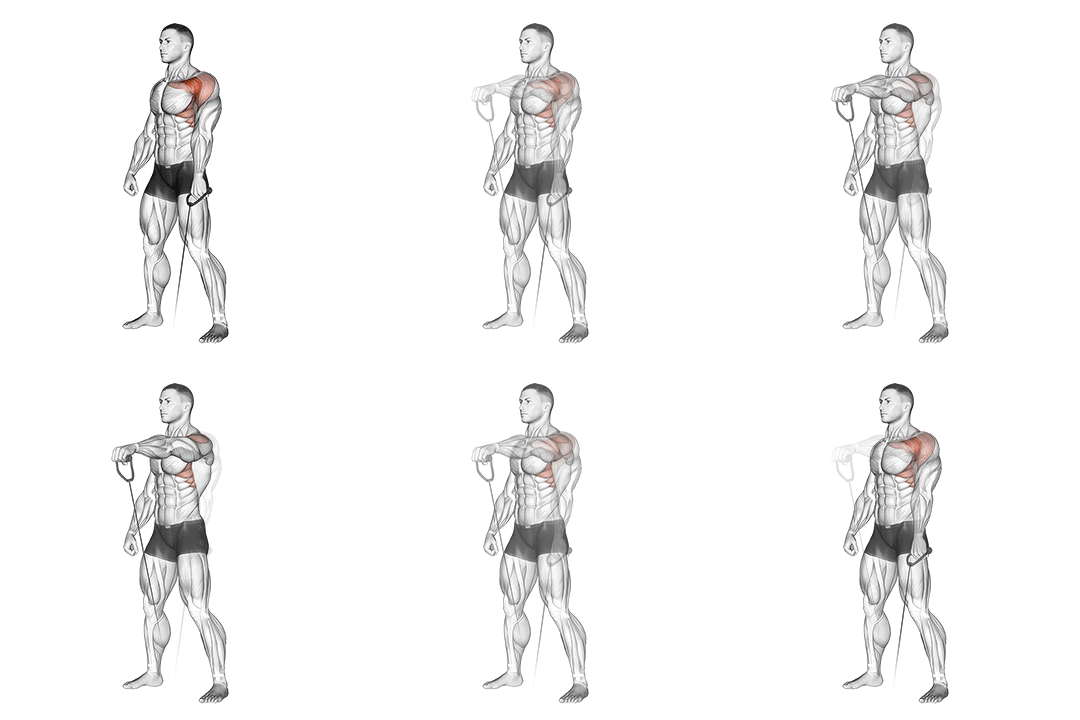
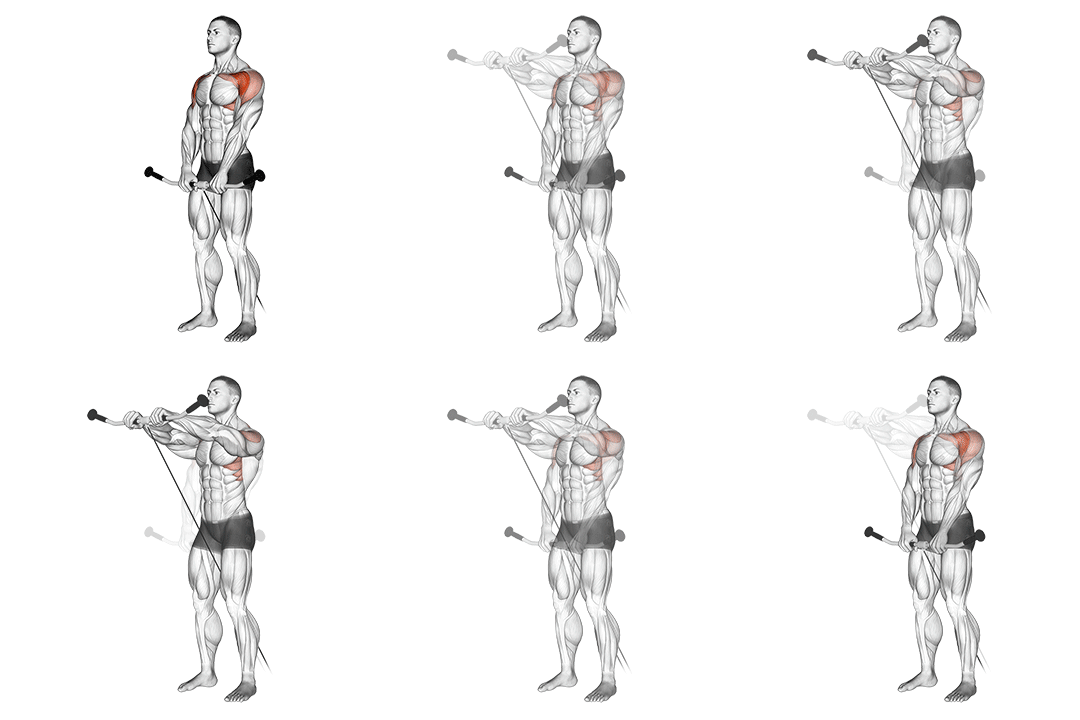
Cable Forward Raise
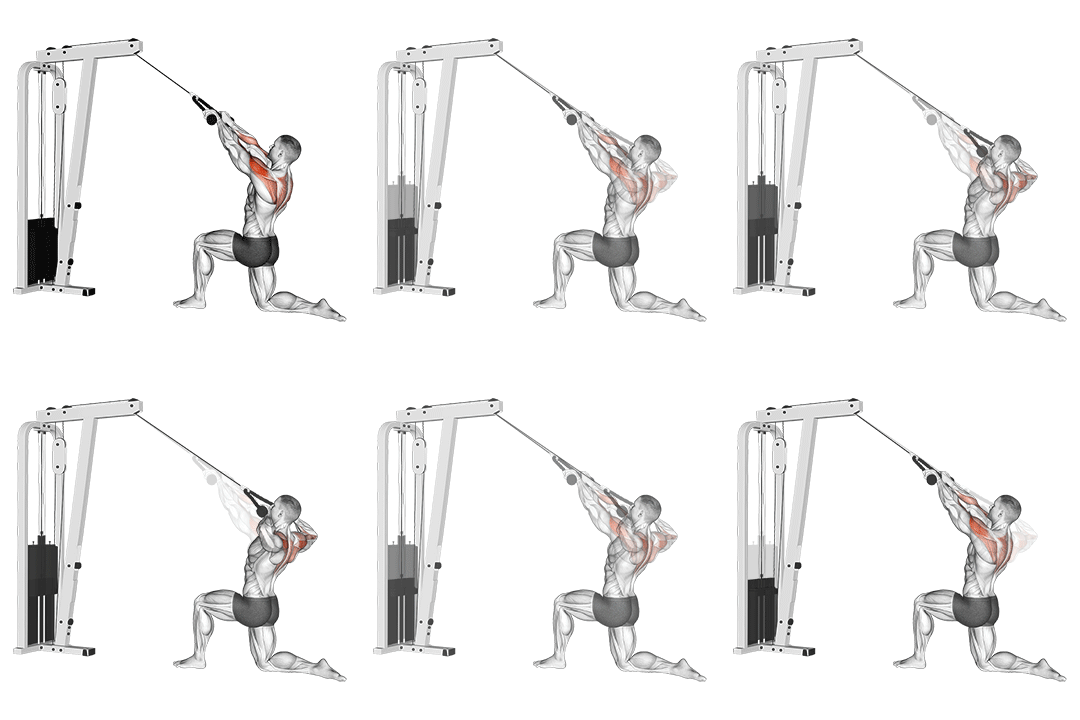
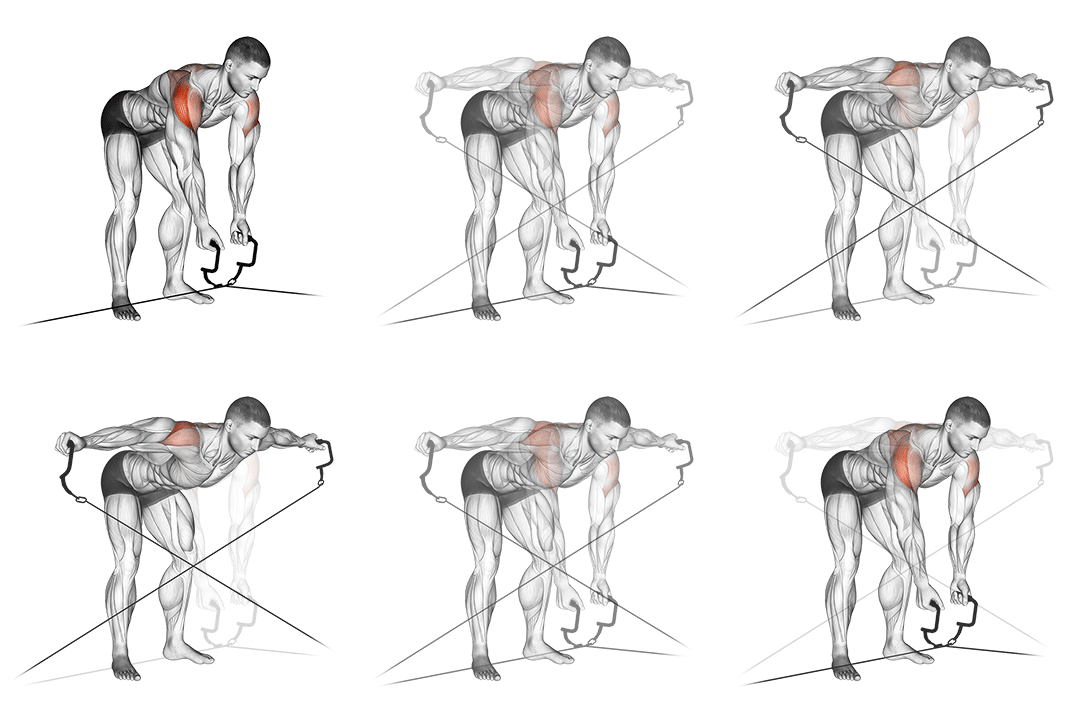
Cable Kneeling Rear Delt Row (with Rope) (male)
Head-to-Head Comparison
| Attribute | Cable Forward Raise | Cable Kneeling Rear Delt Row (with Rope) (male) |
|---|---|---|
| Target Muscle |
Delts
|
Delts
|
| Body Part |
Shoulders
|
Shoulders
|
| Equipment |
Cable
|
Cable
|
| Difficulty |
Beginner
|
Intermediate
|
| Movement Type |
Isolation
|
Compound
|
| Secondary Muscles |
2
|
3
|
Secondary Muscles Activated
Cable Forward Raise
Cable Kneeling Rear Delt Row (with Rope) (male)
Visual Comparison
Overview
Cable Forward Raise vs Cable Kneeling Rear Delt Row (with Rope) (male) puts two cable shoulder moves head-to-head so you can pick the right tool for your program. You’ll get a clear breakdown of primary and secondary muscle activation, equipment needs, technique cues, difficulty and injury risk, plus practical set and rep ranges. Read on and you’ll know which exercise to use when you want targeted anterior delt isolation or a compound posterior-delt row that loads the upper back and allows heavier progressive overload.
Key Differences
- Cable Forward Raise is an isolation exercise, while Cable Kneeling Rear Delt Row (with Rope) (male) is a compound movement.
- Difficulty levels differ: Cable Forward Raise is beginner, while Cable Kneeling Rear Delt Row (with Rope) (male) is intermediate.
- Both exercises target the Delts using Cable. The main differences are in their movement patterns and muscle activation angles.
Pros & Cons
Cable Forward Raise
+ Pros
- Direct anterior delt isolation for targeted muscle growth
- Low technical demand — quick to teach and learn
- Easy to scale reps (8–20) and use slow eccentrics for time under tension
- Minimal involvement of larger muscles so it complements compound lifts
− Cons
- Limited loading ceiling — hard to progressively overload with heavy resistance
- Can cause anterior impingement if performed with internal rotation or excessive elevation
- Less upper-back and scapular development compared to compound rows
Cable Kneeling Rear Delt Row (with Rope) (male)
+ Pros
- Strong posterior delt activation plus trapezius and rhomboid recruitment
- High progression potential — allows heavier loads and varied tempos
- Improves scapular retraction and upper-back posture
- Rope attachment enables a greater range of horizontal abduction and external rotation
− Cons
- Higher technical demand — needs good scapular control and elbow timing
- Requires rope attachment and open floor/kneeling space
- More fatigue from multi-muscle recruitment can limit subsequent pressing work
When Each Exercise Wins
The compound row lets you load the posterior delts plus traps and rhomboids, enabling heavier resistance and progressive overload. Use 6–12 reps with controlled 2–3 second eccentrics to maximize mechanical tension and muscle growth.
Because it’s a multi-joint mover, you can apply greater absolute load and train force production across scapular and humeral joints. Focus on lower-rep sets (4–8) with strict form to build strength.
Its single-joint nature and simple movement path make it easier to learn and execute safely. Beginners benefit from 10–15 rep sets to build muscle endurance and motor control before adding compound rear-delt work.
Forward raises translate easily to resistance bands or dumbbells when cables aren’t available, keeping the movement accessible. Use 12–20 reps or bands with consistent tension to simulate cable resistance.
Frequently Asked Questions
Can I do both Cable Forward Raise and Cable Kneeling Rear Delt Row (with Rope) (male) in the same workout?
Yes — pair them intelligently. Do the Kneeling Rear Delt Row earlier to use heavier loads and train scapular control, then finish with Cable Forward Raises for targeted anterior-delt volume and metabolic stress.
Which exercise is better for beginners?
Cable Forward Raise is better for beginners because it’s single-joint and easier to control, letting you focus on shoulder flexion and safe ranges of motion without complex scapular mechanics.
How do the muscle activation patterns differ?
The forward raise applies a vertical force vector that concentrates tension on anterior deltoid fibers around 60–90° of flexion, while the kneeling rear-delt row applies a horizontal posterior force vector that emphasizes posterior deltoid and scapular retractors during the pulling phase.
Can Cable Kneeling Rear Delt Row (with Rope) (male) replace Cable Forward Raise?
Not entirely — the row develops posterior delts and upper back with heavier loads, but it won’t isolate the anterior deltoid the way a forward raise does. Use the row for strength and posture work and keep the forward raise for targeted anterior-delt volume if you want balanced shoulder development.
Expert Verdict
Use Cable Forward Raise when you need clean anterior-delt isolation, low technical demand, and a movement that’s easy to replicate with bands or dumbbells. It’s ideal for finishing shoulder sessions or correcting anterior-deltoid lag with higher-rep sets (10–20) and slow eccentrics. Choose Cable Kneeling Rear Delt Row (with Rope) (male) when you want posterior-delt emphasis plus upper-back development and heavier progressive overload; program it in 6–12 rep ranges with controlled scapular retraction to improve posture and build strength. For balanced shoulder development, cycle both: prioritize the row for strength/hypertrophy phases and the raise for targeted isolation and rehab work.
Also Compare
More comparisons with Cable Forward Raise
More comparisons with Cable Kneeling Rear Delt Row (with Rope) (male)
Compare More Exercises
Use our free comparison tool to analyze any two exercises head-to-head.
Compare Exercises