

Cable Forward Raise vs Cable Lateral Raise: Complete Comparison Guide
Cable Forward Raise vs Cable Lateral Raise — two cable isolation moves that both target the delts but load different planes of motion. You’ll get a clear breakdown of biomechanics, which delt head each exercise stresses, precise technique cues (angles, grip, tempo), accessory muscle involvement, and practical programming tips with rep ranges. I’ll show you when to pick the forward raise or the lateral raise for hypertrophy, strength carryover, rehab-friendly work, and simple home alternatives so you can choose the exercise that matches your goals and current training level.
Exercise Comparison
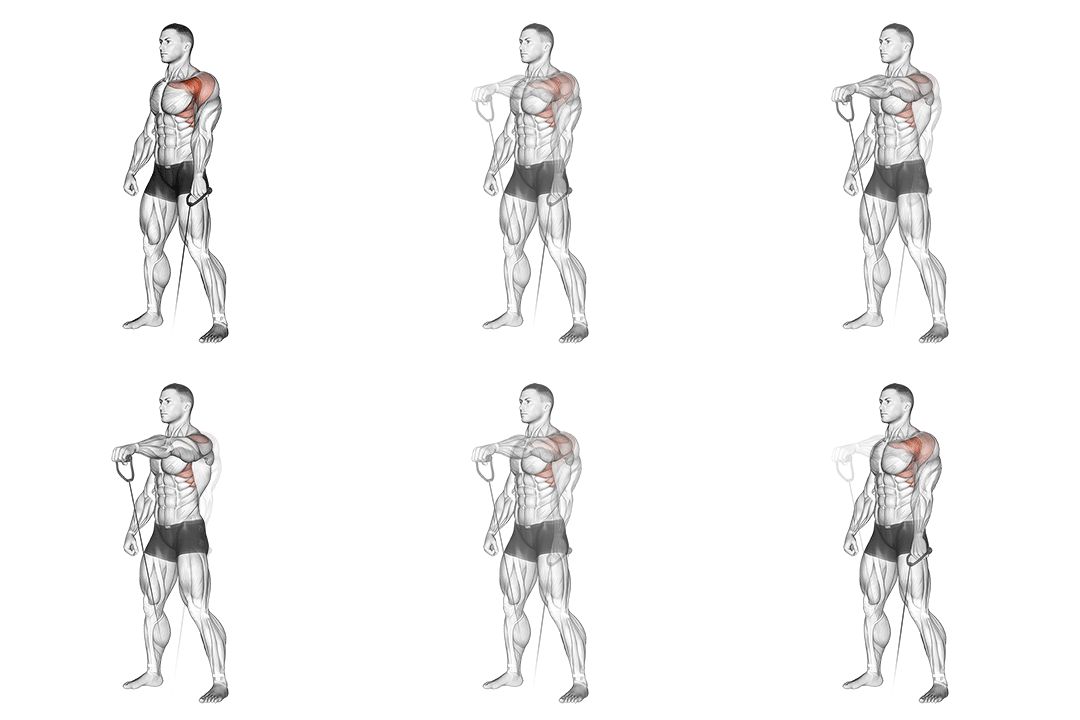
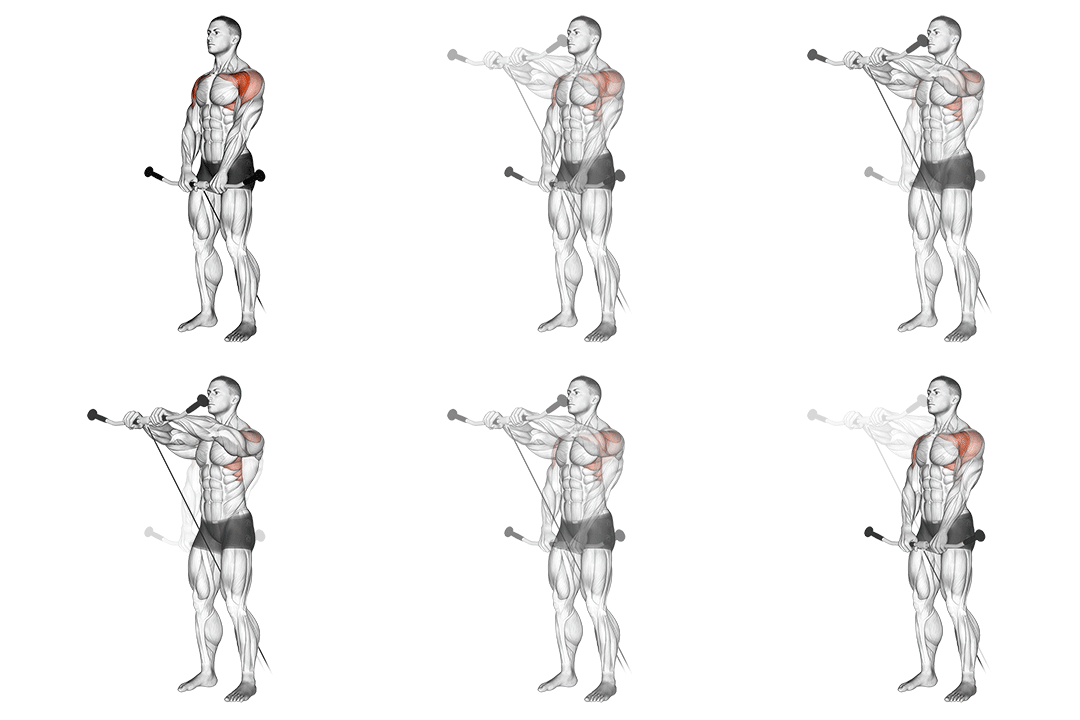
Cable Forward Raise
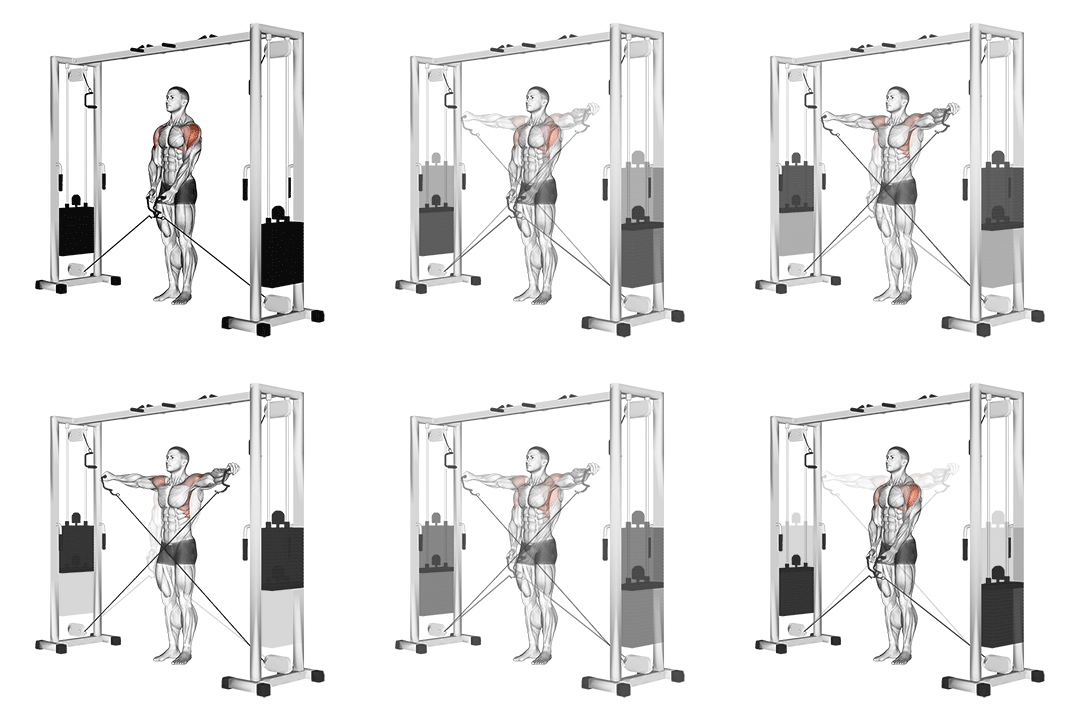
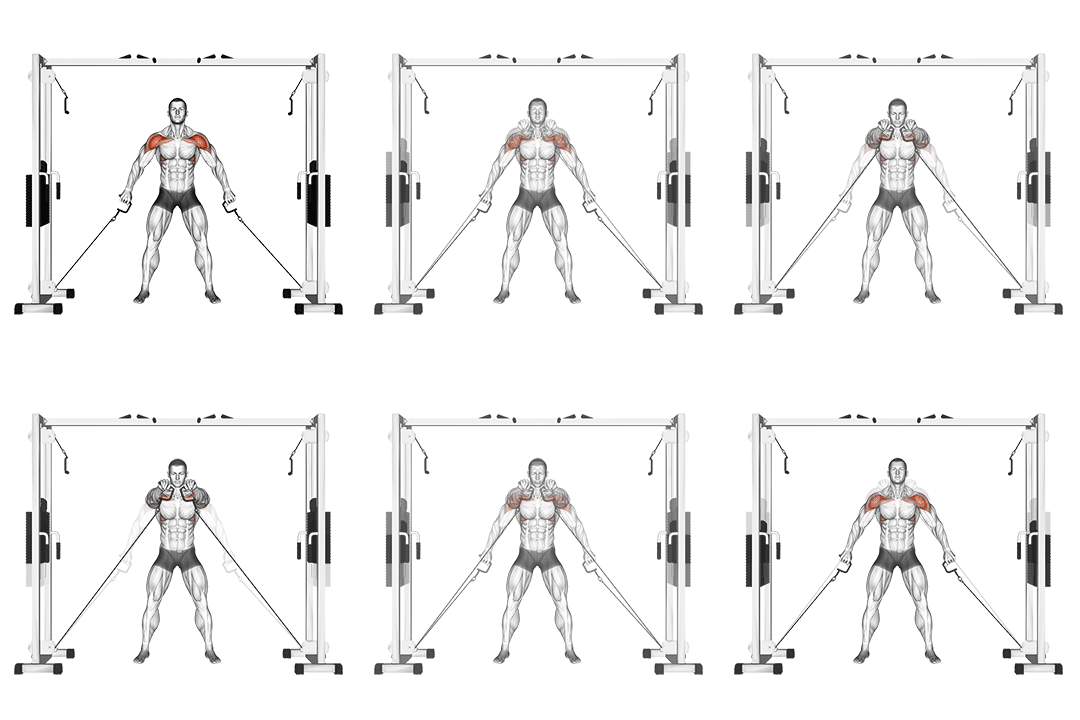
Cable Lateral Raise
Head-to-Head Comparison
| Attribute | Cable Forward Raise | Cable Lateral Raise |
|---|---|---|
| Target Muscle |
Delts
|
Delts
|
| Body Part |
Shoulders
|
Shoulders
|
| Equipment |
Cable
|
Cable
|
| Difficulty |
Beginner
|
Beginner
|
| Movement Type |
Isolation
|
Isolation
|
| Secondary Muscles |
2
|
2
|
Secondary Muscles Activated
Cable Forward Raise
Cable Lateral Raise
Visual Comparison
Overview
Cable Forward Raise vs Cable Lateral Raise — two cable isolation moves that both target the delts but load different planes of motion. You’ll get a clear breakdown of biomechanics, which delt head each exercise stresses, precise technique cues (angles, grip, tempo), accessory muscle involvement, and practical programming tips with rep ranges. I’ll show you when to pick the forward raise or the lateral raise for hypertrophy, strength carryover, rehab-friendly work, and simple home alternatives so you can choose the exercise that matches your goals and current training level.
Key Differences
- Both exercises target the Delts using Cable. The main differences are in their movement patterns and muscle activation angles.
Pros & Cons
Cable Forward Raise
+ Pros
- Direct anterior deltoid emphasis for front-head hypertrophy and pressing carryover
- Easy to replicate with dumbbells or bands for home training
- Simple sagittal-plane movement; quick to learn and coach
- Constant tension from cable keeps peak load through the rep
− Cons
- Less effective at building shoulder width (middle delt)
- Can overload anterior capsule at extreme forward elevation angles
- Limited progression variety compared with lateral plane partials
Cable Lateral Raise
+ Pros
- Optimizes middle deltoid activation for shoulder width and shape
- Cable allows steady lateral vector and constant tension through ROM
- Easy to load for high-rep time-under-tension hypertrophy (8–20 reps)
- Offers advanced variations (leaning, cross-body, 1.5s isometric holds) to increase stimulus
− Cons
- Higher technical demand—scapular control required to avoid trap takeover
- Greater risk of impingement if abducted with internal rotation or too heavy
- Harder to replicate with dumbbells if you want identical constant lateral tension
When Each Exercise Wins
Cable Lateral Raise targets the middle deltoid more directly, which increases shoulder width and lateral hypertrophy when trained in 8–15 rep ranges and with slow eccentrics. The lateral vector creates a larger moment arm at ~80–100° abduction, maximizing time under tension for middle-delt fibers.
While both are isolation moves, Cable Forward Raise better transfers to pressing strength by strengthening the anterior deltoid, a key contributor to overhead and bench pressing. Use heavier, lower-rep sets (6–8) as accessory work to improve pressing carryover.
The sagittal-plane motion is easier to teach and requires less scapular coordination, making it safer for novices. Start with light loads, 2–3 sets of 10–15 reps, and focus on strict elbow position to isolate the anterior delt.
Forward raises translate directly to dumbbells or resistance bands, so you can maintain similar loading and range without a cable machine. Bands reproduce the linear pull and are practical for 8–20 rep hypertrophy work at home.
Frequently Asked Questions
Can I do both Cable Forward Raise and Cable Lateral Raise in the same workout?
Yes — pairing them is effective. Start with the movement most relevant to your priority (e.g., lateral raises first for width), then perform the secondary movement for 2–4 sets each. Keep overall volume manageable (6–12 total sets for shoulder isolation per week per head) and use controlled tempo to avoid fatigue-driven form breakdown.
Which exercise is better for beginners?
Cable Forward Raise is generally better for beginners because the sagittal-plane motion is easier to control and coach. Beginners should use light loads, focus on a fixed elbow angle, and perform 2–3 sets of 10–15 reps to learn the pattern without shrugging or rocking.
How do the muscle activation patterns differ?
Forward raises maximize anterior deltoid activation through shoulder flexion, with peak torque around 60–100° of flexion, while lateral raises place the middle deltoid at a longer moment arm in the frontal plane with peak tension near 80–100° abduction. The different force vectors explain why each exercise stresses distinct delt fibers and recruits traps or triceps differently.
Can Cable Lateral Raise replace Cable Forward Raise?
Not if your goal is anterior-delt development or pressing carryover. Cable Lateral Raise can substitute for general shoulder work, but to target the anterior head and improve pressing mechanics you should keep Cable Forward Raises or a comparable sagittal-plane movement in your program.
Expert Verdict
Use the Cable Forward Raise when you need a beginner-friendly, press-transfer accessory that isolates the anterior deltoid and is easy to replicate with bands or dumbbells. Choose the Cable Lateral Raise when your goal is to develop middle-delt thickness and shoulder width; prioritize strict scapular control, lighter loads, and higher tempo to avoid trap dominance. Program both in a balanced shoulder routine: 2–4 sets of Cable Lateral Raises (8–15 reps) twice weekly for width, and 2–3 sets of Cable Forward Raises (6–12 reps) when you want pressing assistance or anterior delt emphasis. Switch emphasis by manipulating plane, angle, and tempo based on your phase.
Also Compare
More comparisons with Cable Forward Raise
More comparisons with Cable Lateral Raise
Compare More Exercises
Use our free comparison tool to analyze any two exercises head-to-head.
Compare Exercises