

Cable Forward Raise vs Face Pull: Complete Comparison Guide
Cable Forward Raise vs Face Pull — you’re comparing two cable-based shoulder moves that hit the delts differently. I’ll walk you through muscle activation, equipment needs, difficulty, and when to pick each for muscle growth, strength, posture, or rehab. You’ll get clear technique cues (elbow position, torso angle, scapular mechanics), rep and set ranges, and a decisive recommendation so you can choose the right movement for your program and reduce shoulder pain while improving shoulder balance.
Exercise Comparison
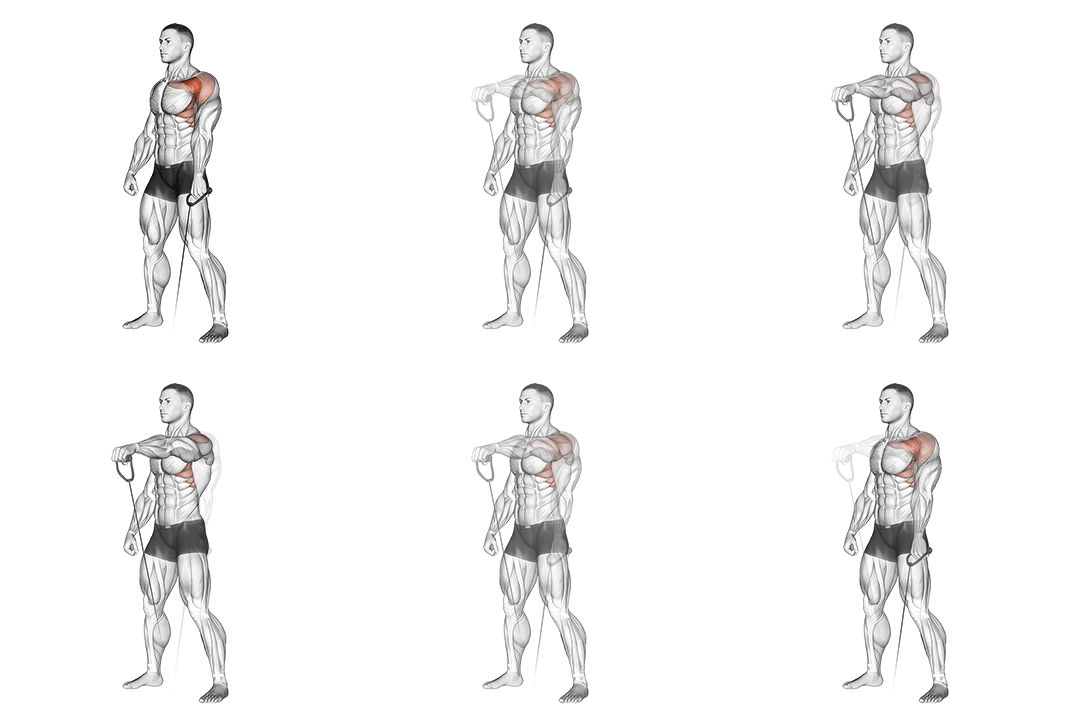
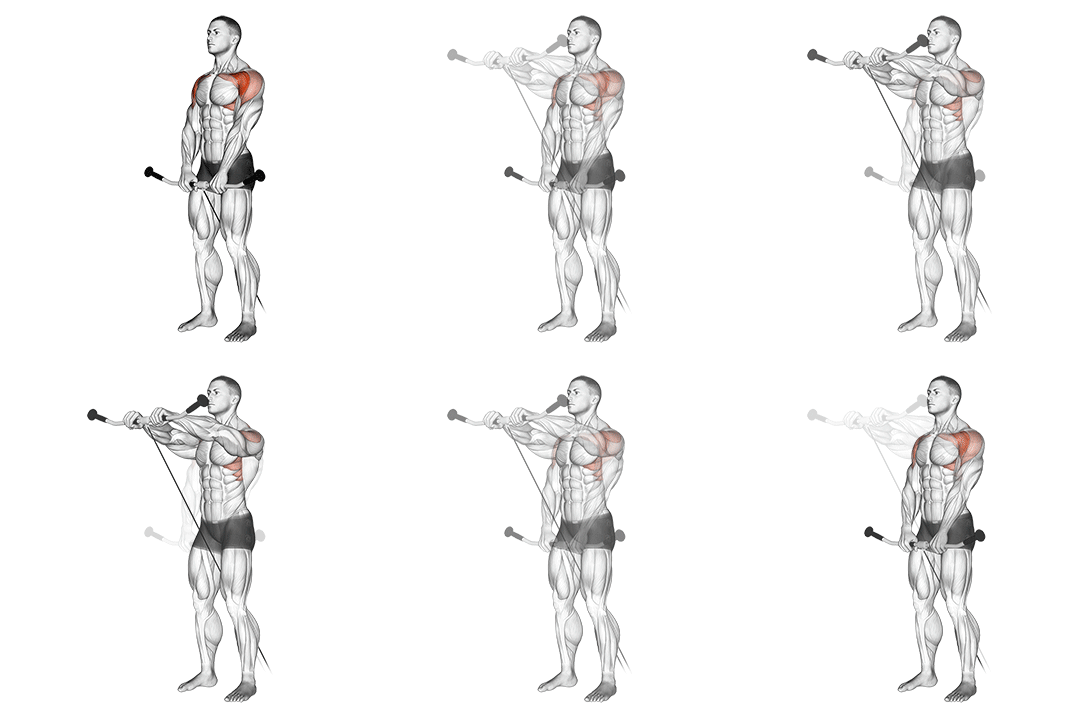
Cable Forward Raise
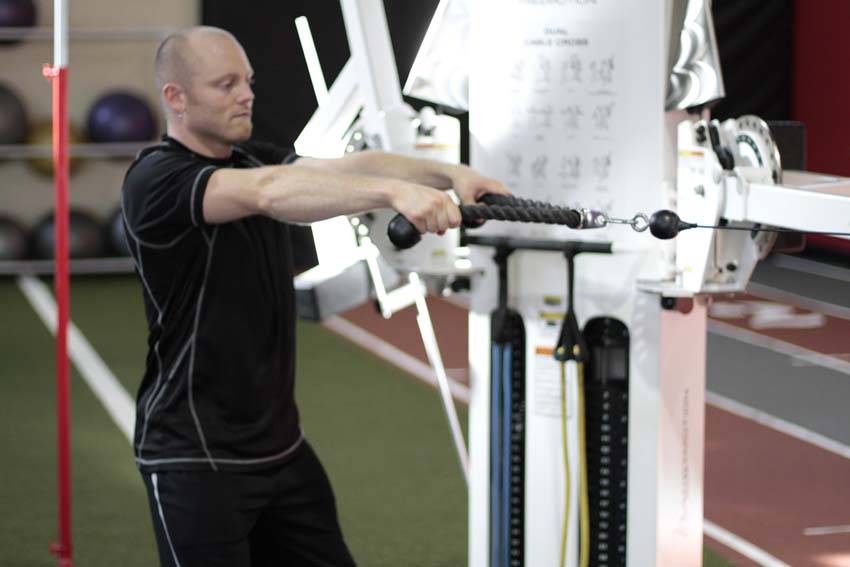
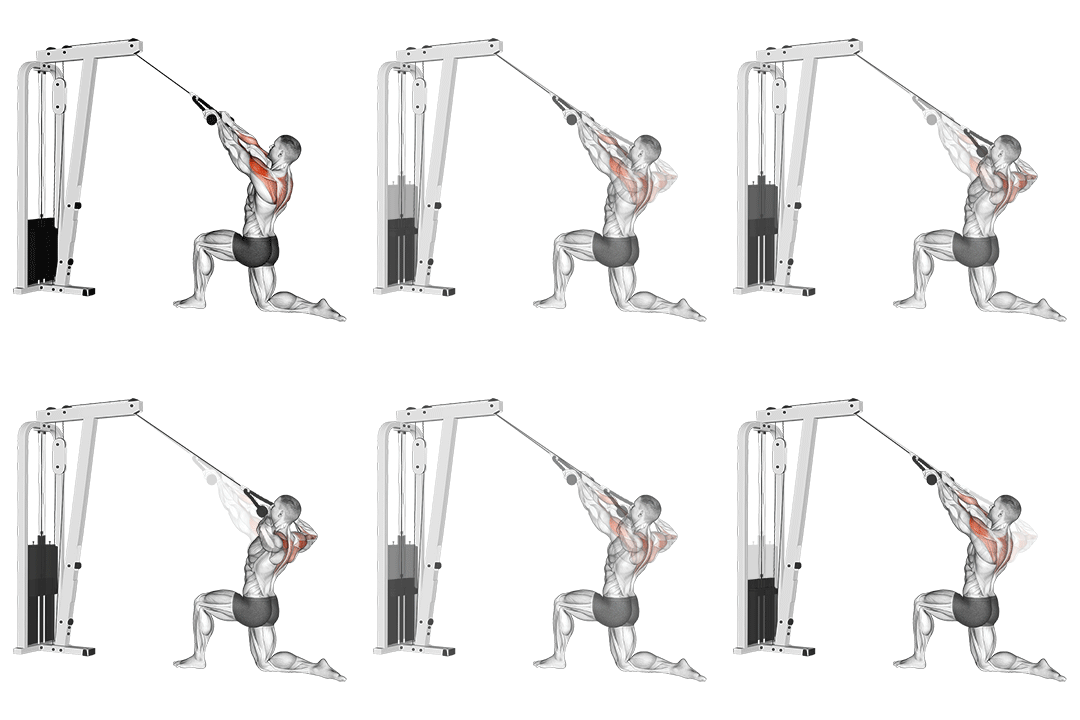
Face Pull
Head-to-Head Comparison
| Attribute | Cable Forward Raise | Face Pull |
|---|---|---|
| Target Muscle |
Delts
|
Delts
|
| Body Part |
Shoulders
|
Shoulders
|
| Equipment |
Cable
|
Cable
|
| Difficulty |
Beginner
|
Intermediate
|
| Movement Type |
Isolation
|
Compound
|
| Secondary Muscles |
2
|
1
|
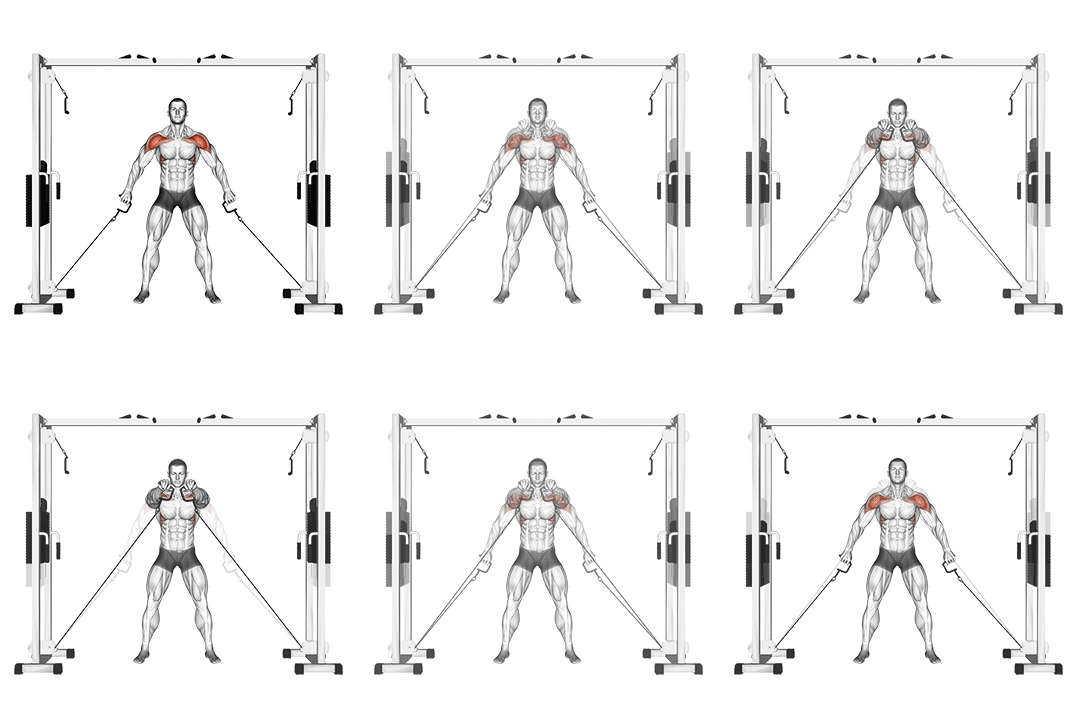
Secondary Muscles Activated
Cable Forward Raise
Face Pull
Visual Comparison
Overview
Cable Forward Raise vs Face Pull — you’re comparing two cable-based shoulder moves that hit the delts differently. I’ll walk you through muscle activation, equipment needs, difficulty, and when to pick each for muscle growth, strength, posture, or rehab. You’ll get clear technique cues (elbow position, torso angle, scapular mechanics), rep and set ranges, and a decisive recommendation so you can choose the right movement for your program and reduce shoulder pain while improving shoulder balance.
Key Differences
- Cable Forward Raise is an isolation exercise, while Face Pull is a compound movement.
- Difficulty levels differ: Cable Forward Raise is beginner, while Face Pull is intermediate.
- Both exercises target the Delts using Cable. The main differences are in their movement patterns and muscle activation angles.
Pros & Cons
Cable Forward Raise
+ Pros
- Direct anterior deltoid isolation for targeted muscle growth
- Simple motor pattern—easy to teach and progress
- Can be done with cables, dumbbells, or bands at home
- Low systemic fatigue—useful as a finish for shoulder days
− Cons
- Limited involvement of posterior stabilizers and middle back
- Higher risk of anterior shoulder impingement if done with poor form
- Less carryover to compound pulling strength and posture
Face Pull
+ Pros
- Builds posterior deltoid and middle-back strength for better posture
- Reinforces external rotation and scapular retraction—reduces shoulder pain risk
- Compound pattern with higher transfer to horizontal pulling strength
- Allows many loading variations and tempo-based progressions
− Cons
- Technique-demanding—needs correct elbow path and external rotation
- Requires a rope or band anchored at the right height for full benefit
- Can be underloaded for hypertrophy if form is sacrificed for weight
When Each Exercise Wins
Cable Forward Raise lets you isolate the anterior deltoid and create time under tension (8–15 reps, 3–5 sets), producing targeted hypertrophy. Its single-joint nature makes progressive overload and peak contraction control easier than the multi-joint face pull.
Face Pull is the stronger choice for functional upper-body strength because it trains posterior deltoids, traps, and scapular stabilizers together, improving force transfer in horizontal pulling. You can progressively load it and use heavier sets (6–12 reps) to develop pulling capacity and posture.
Cable Forward Raise has a simpler movement pattern and lower coordination demand, so beginners can learn proper bracing, elbow position, and range of motion quickly. Start with light resistance and 10–15 reps to build motor control before adding complex pulling patterns.
You can replicate the forward raise with dumbbells or bands without a cable column, making it the most practical home option. Face Pulls need a band anchor at head height and a handle or rope to achieve the right external rotation, which is possible but less convenient.
Frequently Asked Questions
Can I do both Cable Forward Raise and Face Pull in the same workout?
Yes. Pair them to train both anterior and posterior deltoids in one session—do face pulls earlier to pre-activate posterior stabilizers, then finish with cable forward raises for focused anterior deltoid hypertrophy. Keep total volume in check: 6–12 total working sets per shoulder session.
Which exercise is better for beginners?
Cable Forward Raise is better for most beginners because it’s a single-joint movement with an easy sagittal-plane path and simpler coaching cues. Start light, master form, then add face pulls to build scapular control and posterior strength.
How do the muscle activation patterns differ?
Forward raises produce peak anterior deltoid activation around 60–90° of shoulder flexion due to a large anterior force vector and moment arm. Face pulls shift activation to posterior delts and middle traps during horizontal abduction and external rotation, emphasizing scapular retraction and rotator cuff control.
Can Face Pull replace Cable Forward Raise?
Not fully—face pulls strengthen posterior delts and scapular muscles but don’t produce the same anterior deltoid isolation or peak flexion torque as the forward raise. If your goal is targeted anterior deltoid hypertrophy, keep the forward raise; use face pulls to balance your shoulder program.
Expert Verdict
Use the Cable Forward Raise when your priority is targeted anterior deltoid development, simple progression, or limited equipment—perform 3–5 sets of 8–15 reps with a controlled 1–2 second concentric and 2–3 second eccentric, elbows slightly bent and torso upright. Choose Face Pull when you want to build posterior delts, scapular stability, and transverse-plane strength—use 3–4 sets of 8–12 reps focusing on external rotation and full scapular retraction. For balanced shoulder health and maximum muscle development, program both: prioritize the raise for anterior mass and the face pull for posture, strength, and injury prevention.
Also Compare
More comparisons with Cable Forward Raise
Compare More Exercises
Use our free comparison tool to analyze any two exercises head-to-head.
Compare Exercises