

Cable Front Raise vs Cable Front Shoulder Raise: Complete Comparison Guide
Cable Front Raise vs Cable Front Shoulder Raise — both isolate the delts but they do it a little differently. If you want clear cues for technique, a breakdown of which muscles each recruits, and which exercise fits your goals (hypertrophy, strength, or a beginner plan), you’re in the right place. I’ll cover primary and secondary activation, equipment needs, progression options, injury risk, and specific technique cues like ideal arm angle (45–60°) and elbow bend (10–20°). Read on and pick the move that best fits your shoulder mechanics and training plan.
Exercise Comparison
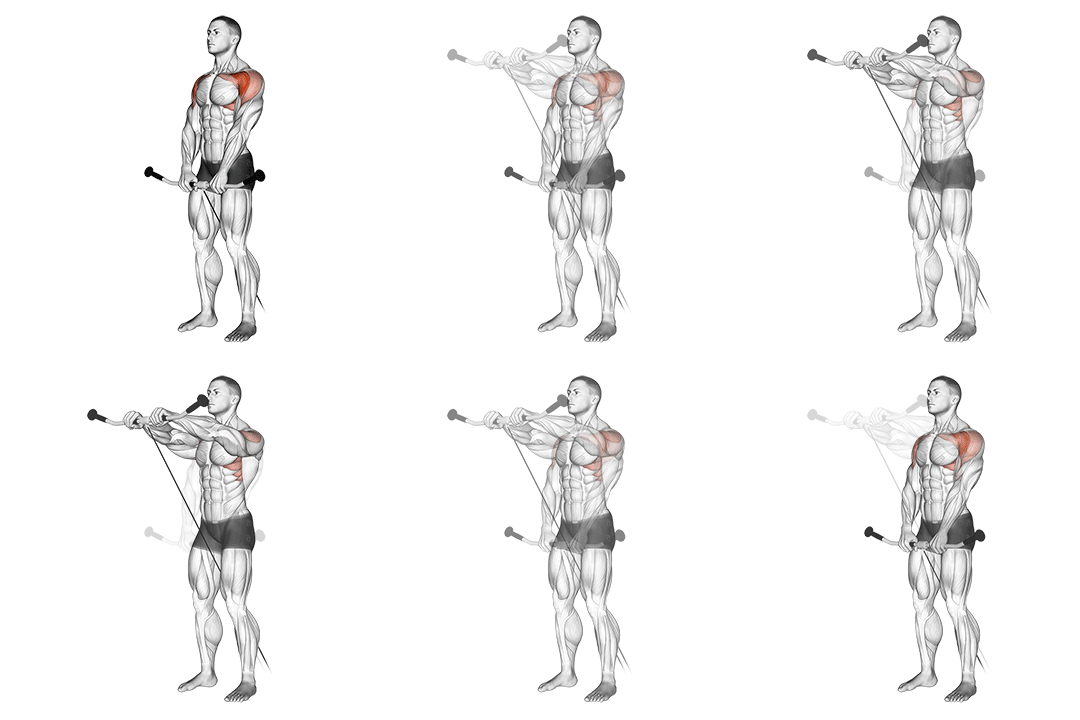
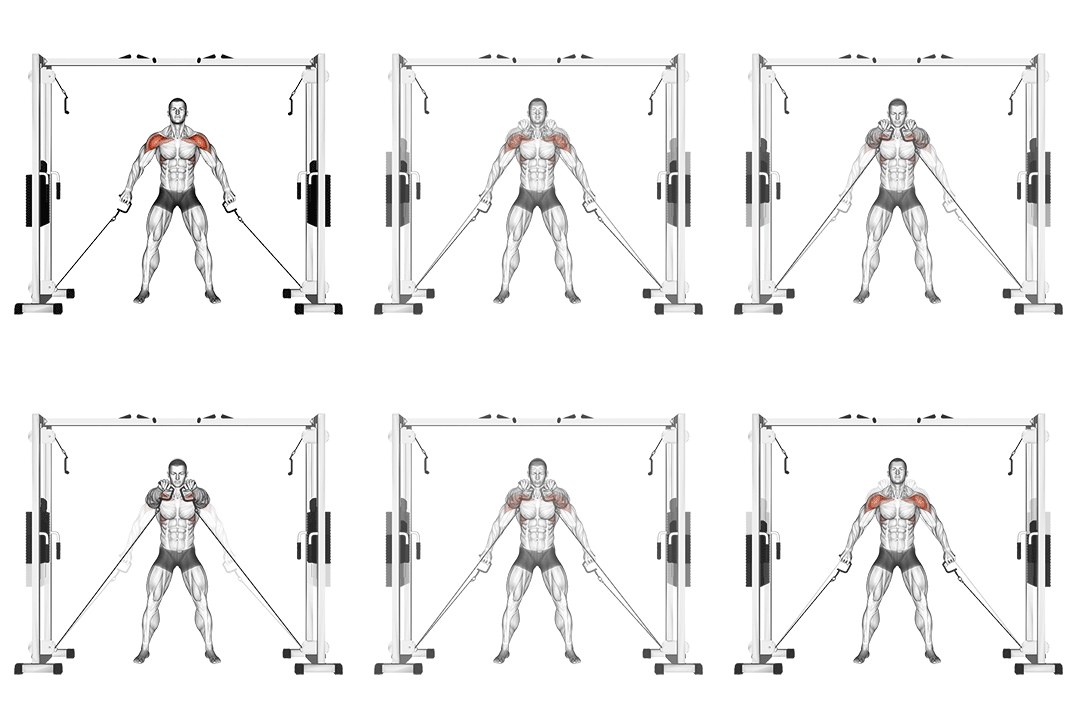
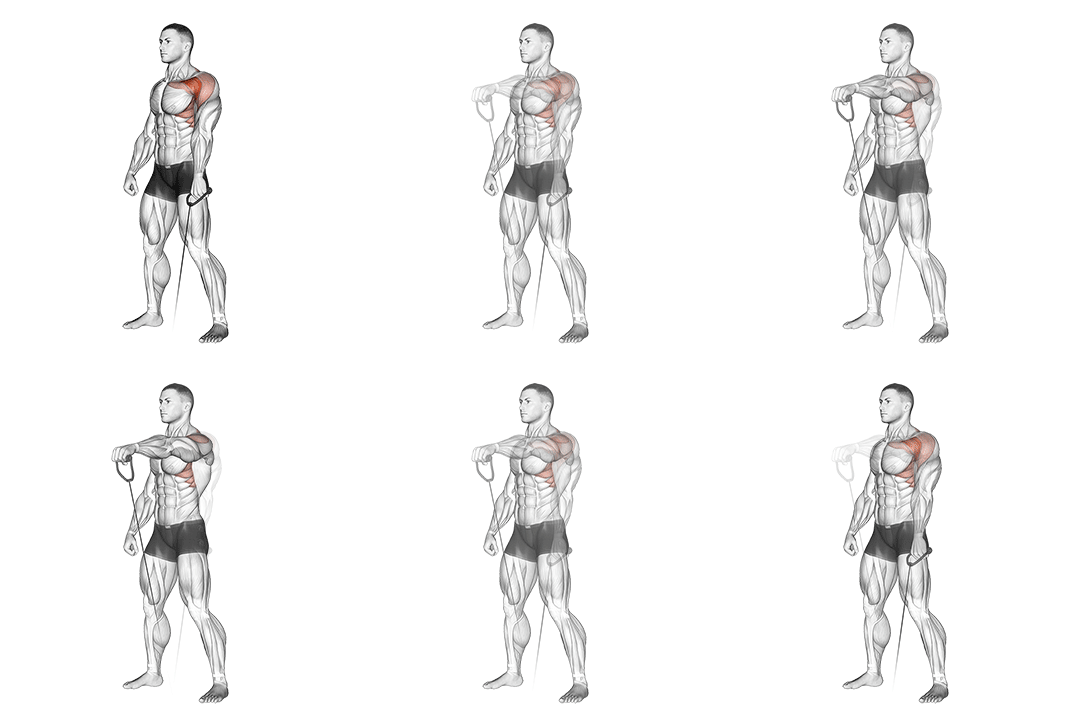
Cable Front Raise
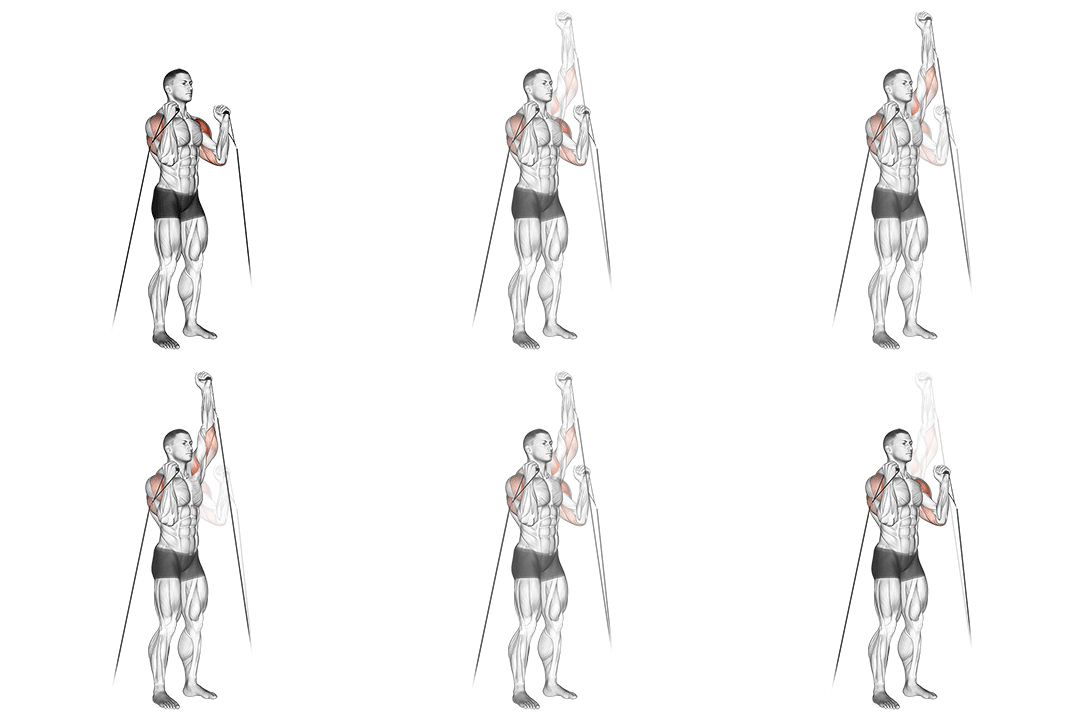
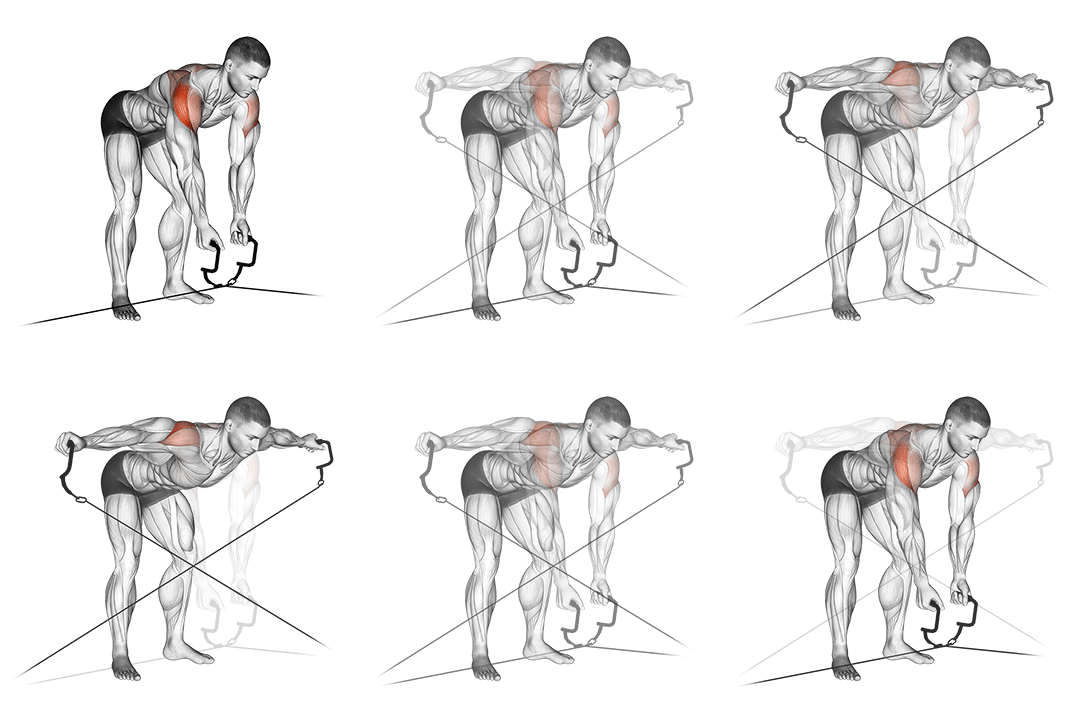
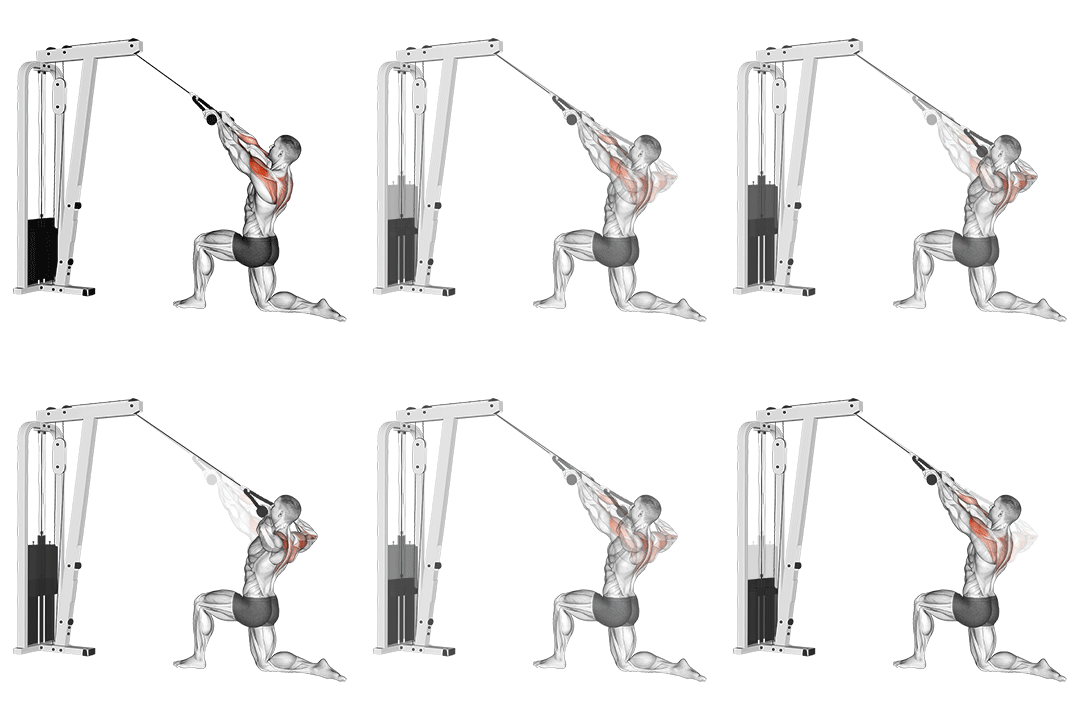
Cable Front Shoulder Raise
Head-to-Head Comparison
| Attribute | Cable Front Raise | Cable Front Shoulder Raise |
|---|---|---|
| Target Muscle |
Delts
|
Delts
|
| Body Part |
Shoulders
|
Shoulders
|
| Equipment |
Cable
|
Cable
|
| Difficulty |
Beginner
|
Beginner
|
| Movement Type |
Isolation
|
Isolation
|
| Secondary Muscles |
2
|
2
|
Secondary Muscles Activated
Cable Front Raise
Cable Front Shoulder Raise
Visual Comparison
Overview
Cable Front Raise vs Cable Front Shoulder Raise — both isolate the delts but they do it a little differently. If you want clear cues for technique, a breakdown of which muscles each recruits, and which exercise fits your goals (hypertrophy, strength, or a beginner plan), you’re in the right place. I’ll cover primary and secondary activation, equipment needs, progression options, injury risk, and specific technique cues like ideal arm angle (45–60°) and elbow bend (10–20°). Read on and pick the move that best fits your shoulder mechanics and training plan.
Key Differences
- Both exercises target the Delts using Cable. The main differences are in their movement patterns and muscle activation angles.
Pros & Cons
Cable Front Raise
+ Pros
- Direct anterior deltoid isolation with steady cable tension
- Simple setup for unilateral or bilateral work
- Easy to progress with small weight increments and tempo work
- Lower risk of excessive trapezius recruitment when done correctly
− Cons
- Limited carryover to compound pressing strength
- Torque increases quickly as arm raises—requires light loads at high range
- Can be boring as a strict isolation move for advanced lifters
Cable Front Shoulder Raise
+ Pros
- Still isolates delts while recruiting scapular stabilizers
- Can build shoulder-top fullness by engaging upper traps slightly
- Useful for teaching scapulothoracic control and upward rotation
- Works well as a variation to break plateaus or add variety
− Cons
- More trapezius and biceps stabilization—less pure anterior deltoid isolation
- Higher chance of neck/upper trap tension if form breaks down
- Slightly more technical setup and coordination required
When Each Exercise Wins
Cable Front Raise lets you maintain strict anterior deltoid tension through controlled 8–15 rep sets and micro-loaded progression. By minimizing scapular shrug and limiting end-range elevation to ~60°, you keep the load focused on the deltoid length-tension window for efficient muscle growth.
For building pressing strength and targeted shoulder capacity, the more controlled single-joint Cable Front Raise allows you to overload the anterior deltoid in progressive steps. The stable pattern translates better to pressing mechanics than a variant that recruits more traps.
Beginners pick up the straight-ahead flexion pattern faster and can use lighter loads with clear cues (lead with the elbow, 10–20° elbow bend). It has a shallow learning curve and lower coordination demands than the shoulder-raise variation.
Most home setups that mimic cable pull (resistance bands or single-pulley rigs) map directly to the Cable Front Raise pattern. The movement scales down well to bands and single-handle attachments, making it the more practical home choice.
Frequently Asked Questions
Can I do both Cable Front Raise and Cable Front Shoulder Raise in the same workout?
Yes. Start with the Cable Front Raise as the primary anterior deltoid work (8–12 reps), then add 2–3 lighter sets of the Cable Front Shoulder Raise for scapular control and upper-trap stimulus. Keep total volume reasonable—12–20 sets for shoulders per week is a good guideline.
Which exercise is better for beginners?
Cable Front Raise is better for beginners due to its simpler sagittal-plane path and easier setup. It requires less coordination and lets you focus on tempo and strict form while using light loads.
How do the muscle activation patterns differ?
Both drive anterior deltoid activation through shoulder flexion, but the Cable Front Shoulder Raise adds scapular upward rotation that increases upper-trap and biceps stabilization. The plain Cable Front Raise keeps more constant tension isolated to the deltoid and forearm stabilizers.
Can Cable Front Shoulder Raise replace Cable Front Raise?
It can in some programs, but it won’t be a straight substitute for pure anterior deltoid work because it recruits more traps and scapular muscles. If your goal is targeted deltoid hypertrophy, prioritize the Cable Front Raise and use the shoulder-raise as a supplementary variation.
Expert Verdict
Use the Cable Front Raise when you want precise anterior deltoid isolation, easy progression, and a low-skill exercise for hypertrophy (8–15 reps) or accessory strength. Keep the elbow soft (10–20°), lift to about 45–60° to stay in the deltoid’s optimal length-tension range, and avoid swinging. Choose the Cable Front Shoulder Raise when you want a variation that engages scapular stabilizers and the upper trap to improve shoulder mechanics or add fullness around the clavicle. Limit elevation past 60–70° and avoid shrugging to reduce neck strain. For most trainees—especially beginners and those prioritizing muscle growth—the standard Cable Front Raise is the go-to choice; the shoulder-raise variant is a useful accessory when you want scapular involvement or variety.
Also Compare
More comparisons with Cable Front Raise
More comparisons with Cable Front Shoulder Raise
Compare More Exercises
Use our free comparison tool to analyze any two exercises head-to-head.
Compare Exercises