

Cable Front Raise vs Cable Kneeling Rear Delt Row (with Rope) (male): Complete Comparison Guide
Cable Front Raise vs Cable Kneeling Rear Delt Row (with Rope) (male) — two cable shoulder moves that look similar on paper but load your delts very differently. If you want clear work on the anterior head, or balanced development including the posterior delts and upper back, this guide helps you choose. You’ll get technique cues, biomechanical reasoning (force vectors, length-tension), rep ranges, and practical setup tips. Read on to learn which exercise better matches your goal—muscle growth, strength, or a beginner-friendly option—and how to program each into your workouts.
Exercise Comparison
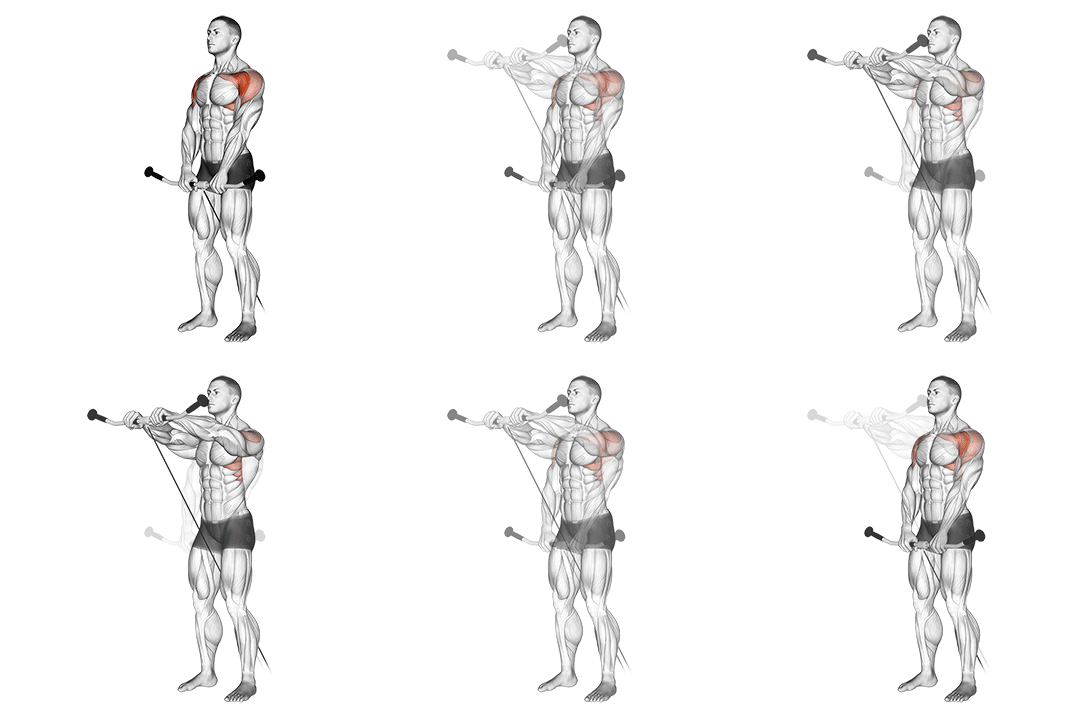
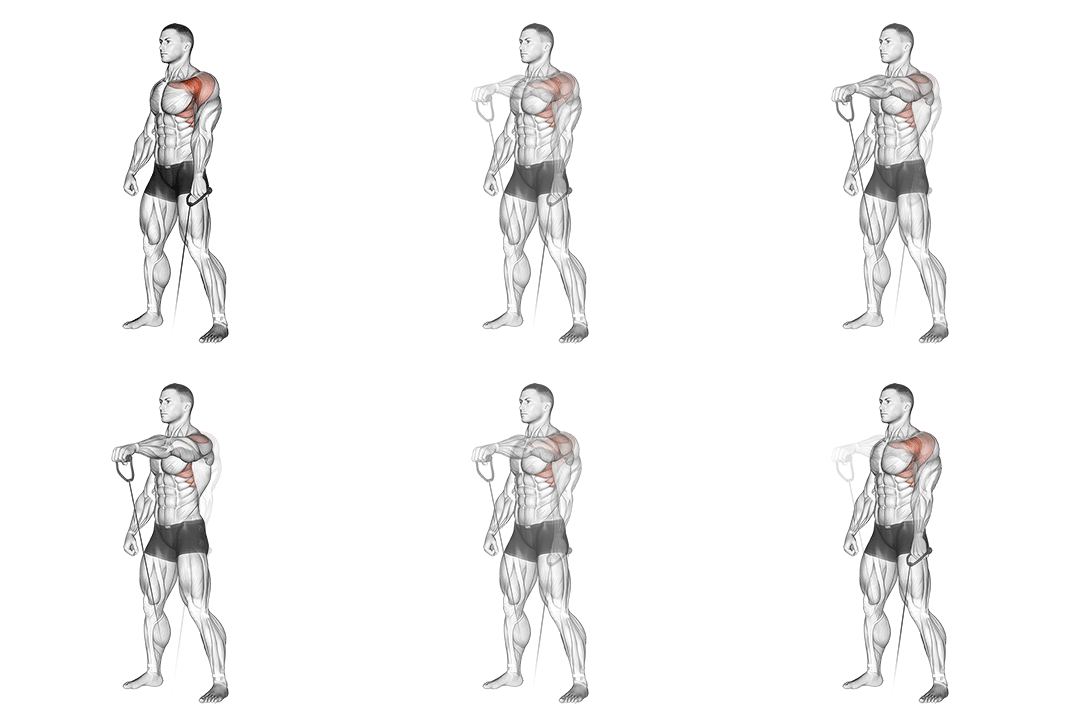
Cable Front Raise
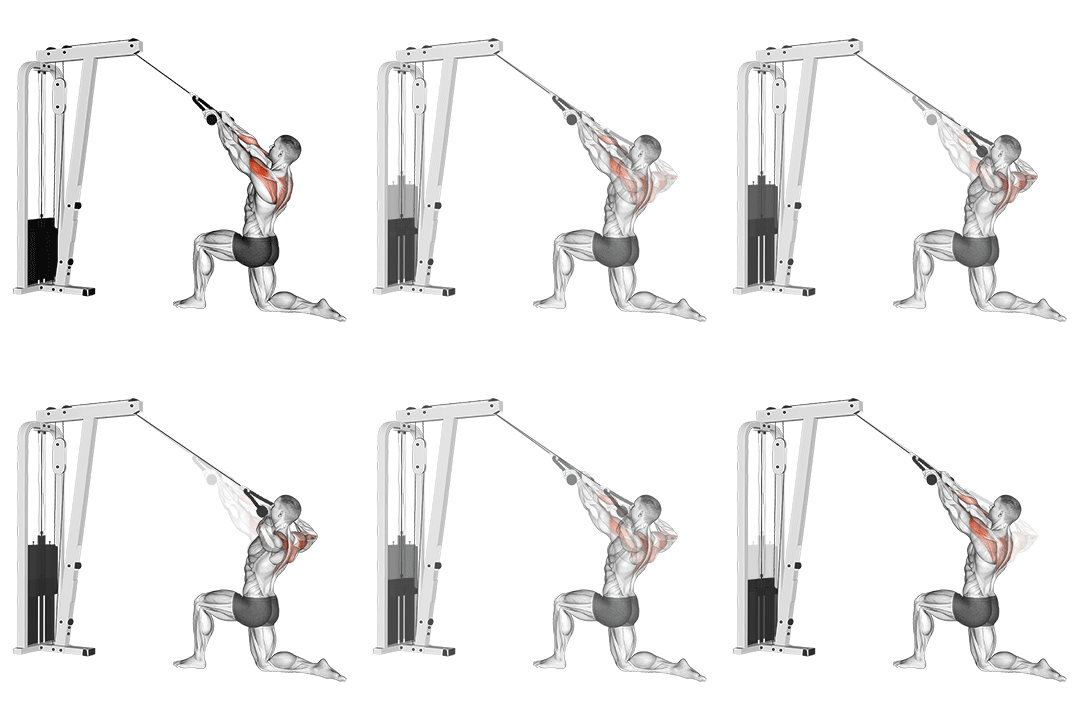
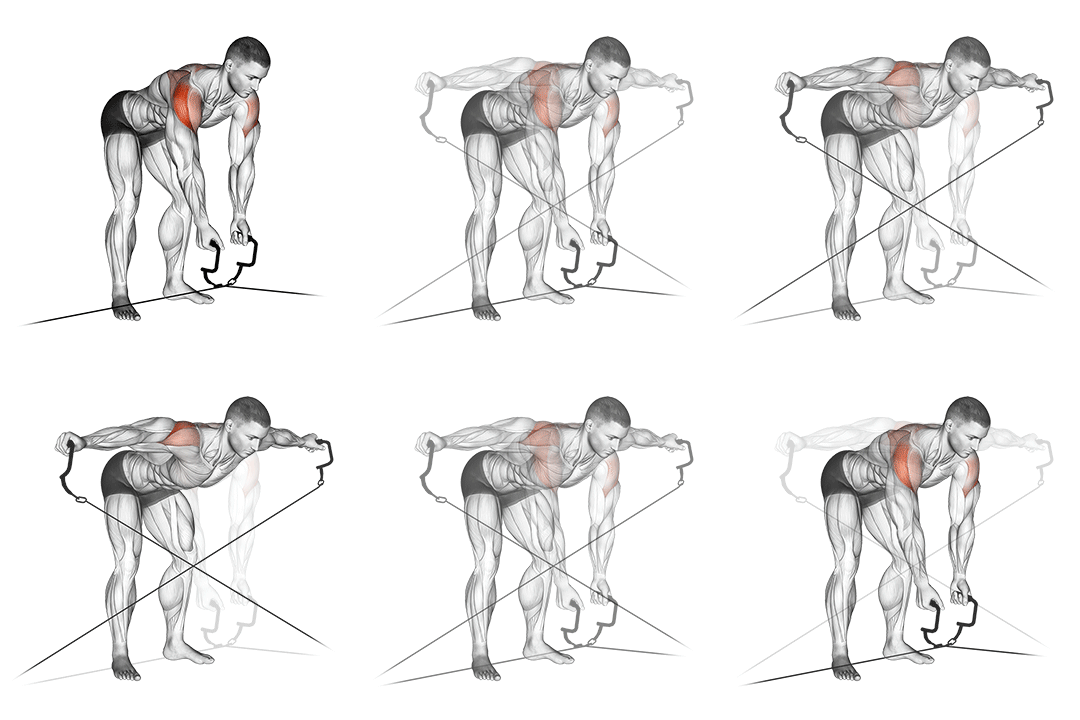
Cable Kneeling Rear Delt Row (with Rope) (male)
Head-to-Head Comparison
| Attribute | Cable Front Raise | Cable Kneeling Rear Delt Row (with Rope) (male) |
|---|---|---|
| Target Muscle |
Delts
|
Delts
|
| Body Part |
Shoulders
|
Shoulders
|
| Equipment |
Cable
|
Cable
|
| Difficulty |
Beginner
|
Intermediate
|
| Movement Type |
Isolation
|
Compound
|
| Secondary Muscles |
2
|
3
|
Secondary Muscles Activated
Cable Front Raise
Cable Kneeling Rear Delt Row (with Rope) (male)
Visual Comparison
Overview
Cable Front Raise vs Cable Kneeling Rear Delt Row (with Rope) (male) — two cable shoulder moves that look similar on paper but load your delts very differently. If you want clear work on the anterior head, or balanced development including the posterior delts and upper back, this guide helps you choose. You’ll get technique cues, biomechanical reasoning (force vectors, length-tension), rep ranges, and practical setup tips. Read on to learn which exercise better matches your goal—muscle growth, strength, or a beginner-friendly option—and how to program each into your workouts.
Key Differences
- Cable Front Raise is an isolation exercise, while Cable Kneeling Rear Delt Row (with Rope) (male) is a compound movement.
- Difficulty levels differ: Cable Front Raise is beginner, while Cable Kneeling Rear Delt Row (with Rope) (male) is intermediate.
- Both exercises target the Delts using Cable. The main differences are in their movement patterns and muscle activation angles.
Pros & Cons
Cable Front Raise
+ Pros
- Strong isolation of the anterior deltoid for targeted hypertrophy
- Simple setup and low coordination demand — beginner friendly
- Easy to perform unilateral work to fix imbalances
- Minimal involvement of larger back muscles allows focused shoulder work
− Cons
- Limited overall loading potential compared to compound rows
- Negligible posterior delt and upper-back stimulation
- Risk of using momentum if load is too heavy
Cable Kneeling Rear Delt Row (with Rope) (male)
+ Pros
- Better posterior delt activation plus trapezius and rhomboid engagement
- Higher overall work capacity due to compound nature
- Improves scapular control and posture when done correctly
- Easier to progress with heavier loads and tempo variations
− Cons
- Requires more motor control and setup (kneeling, rope attachment)
- Higher technical demand increases learning curve
- Greater chance of substituting traps for rear delts if elbows are too high
When Each Exercise Wins
Its compound pattern recruits posterior delts plus traps and rhomboids, allowing heavier loads and more total work per set. Use 8–12 reps and pause 1–2 seconds at peak scapular retraction to maximize time under tension.
The row lets you handle more load and build pulling strength through a larger range of motion; progress with 4–8 reps and focus on controlled eccentrics and full scapular engagement.
Lower coordination demands and simpler movement pattern make front raises ideal for newcomers to safely load the anterior deltoid. Start with 10–15 reps, strict tempo, and focus on a 30–60° range before progressing.
Front raises need only a single pulley or band substitute and require less space than the kneeling rope row, making them easier to perform at home with limited equipment.
Frequently Asked Questions
Can I do both Cable Front Raise and Cable Kneeling Rear Delt Row (with Rope) (male) in the same workout?
Yes. Pair them in the same session to target all three delt heads—start with the compound kneeling rear-delt row (6–12 reps) to use heavier loads, then finish with front raises (8–15 reps) for isolation and metabolic stress.
Which exercise is better for beginners?
Cable Front Raise is better for beginners due to its simple sagittal-plane motion and lower coordination requirements. Begin with light weight, strict tempo, and stop at shoulder height to limit impingement risk.
How do the muscle activation patterns differ?
Front raises create an anterior-predominant activation by producing a flexion moment arm on the shoulder; rear-delt rows place the force vector posterior to the humeral head, increasing posterior delt, trap, and rhomboid activation while requiring scapular retraction.
Can Cable Kneeling Rear Delt Row (with Rope) (male) replace Cable Front Raise?
Not completely. The kneeling row develops posterior delts and upper-back strength better, but it doesn’t isolate the anterior deltoid. If your goal is balanced shoulder development, include both; if you must choose one, pick the row for overall shoulder health and the front raise for anterior isolation.
Expert Verdict
Use Cable Front Raises when you want focused anterior deltoid work, simple setup, and a low-skill exercise for higher-rep hypertrophy or symmetry work. Aim for 8–15 reps, a slight elbow bend, and lift to about 80–90° while keeping shoulders depressed. Choose Cable Kneeling Rear Delt Rows (with Rope) when you need posterior delt development, improved scapular retraction, and a compound movement that carries over to pulling strength. Program rows for 6–12 reps with deliberate scapular squeeze and elbows flared ~90° from the torso. If your goal is balanced shoulder development and upper-back posture, prioritize the kneeling row; if you’re beginner or limited on equipment, pick the front raise.
Also Compare
More comparisons with Cable Front Raise
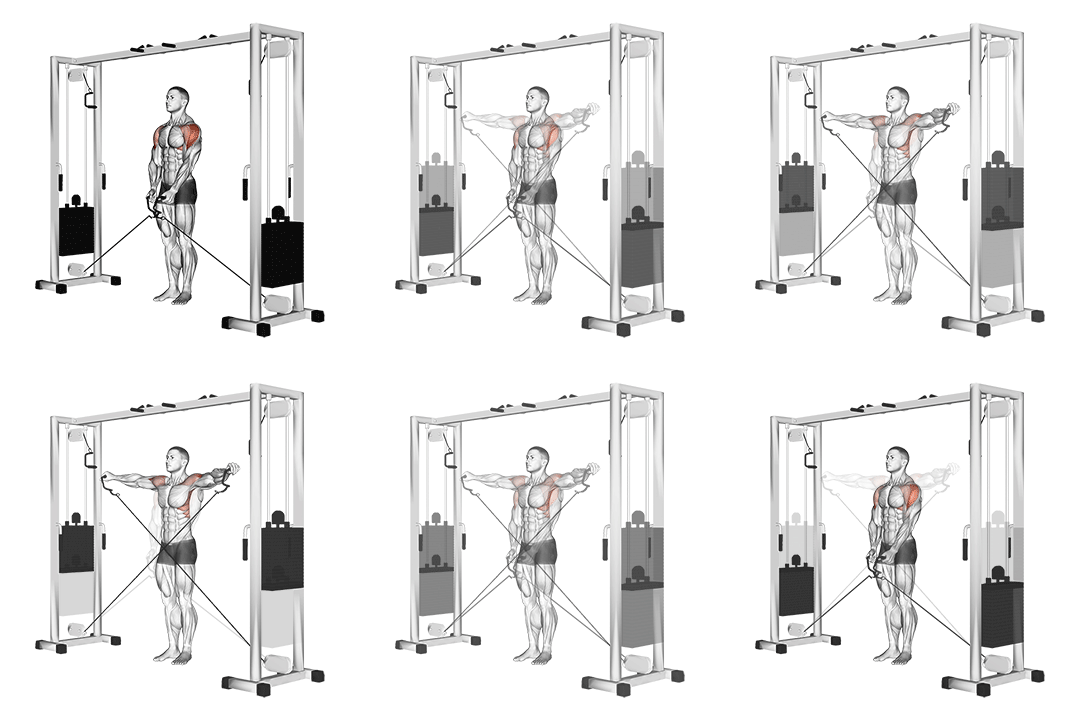
More comparisons with Cable Kneeling Rear Delt Row (with Rope) (male)
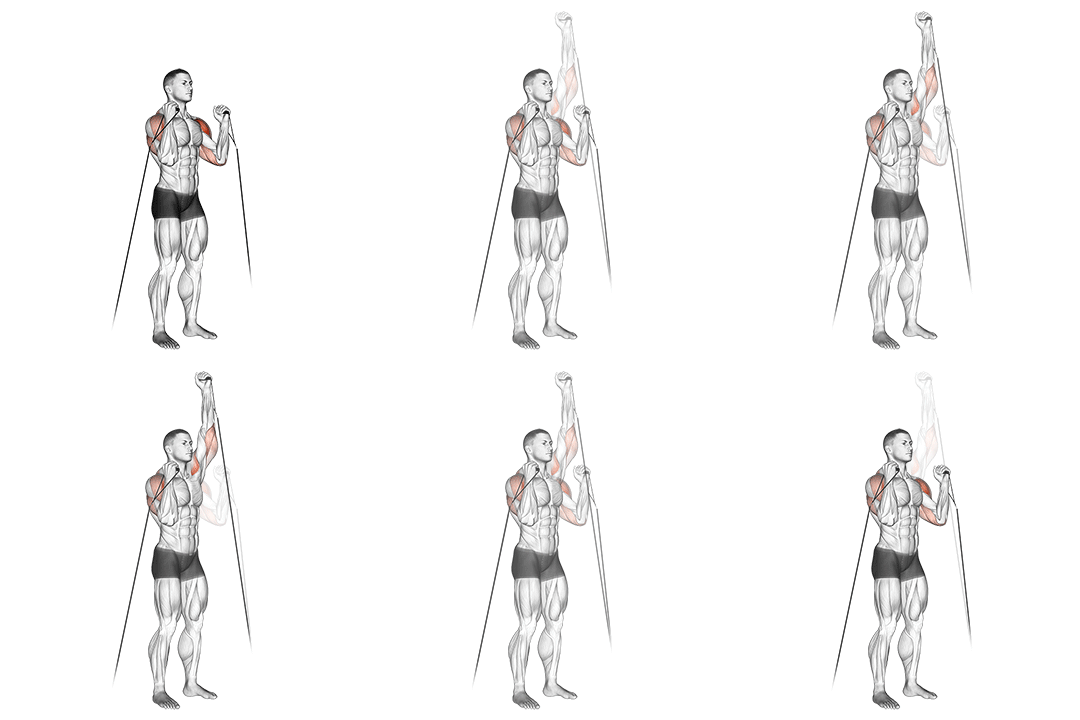
Compare More Exercises
Use our free comparison tool to analyze any two exercises head-to-head.
Compare Exercises