

Cable Front Raise vs Cable Lateral Raise: Complete Comparison Guide
Cable Front Raise vs Cable Lateral Raise — you want to know which shoulder isolation move is worth your time. This guide walks you through biomechanics, muscle activation, technique cues, programming tips, and injury risk so you can pick the best exercise for your goals. You’ll get clear comparisons of primary and secondary muscle work, equipment needs, and practical rep ranges (6–15 for strength/hypertrophy). Read on to learn exactly when to use each movement, how to perform them with clean form, and simple progressions to build shoulder size and function.
Exercise Comparison
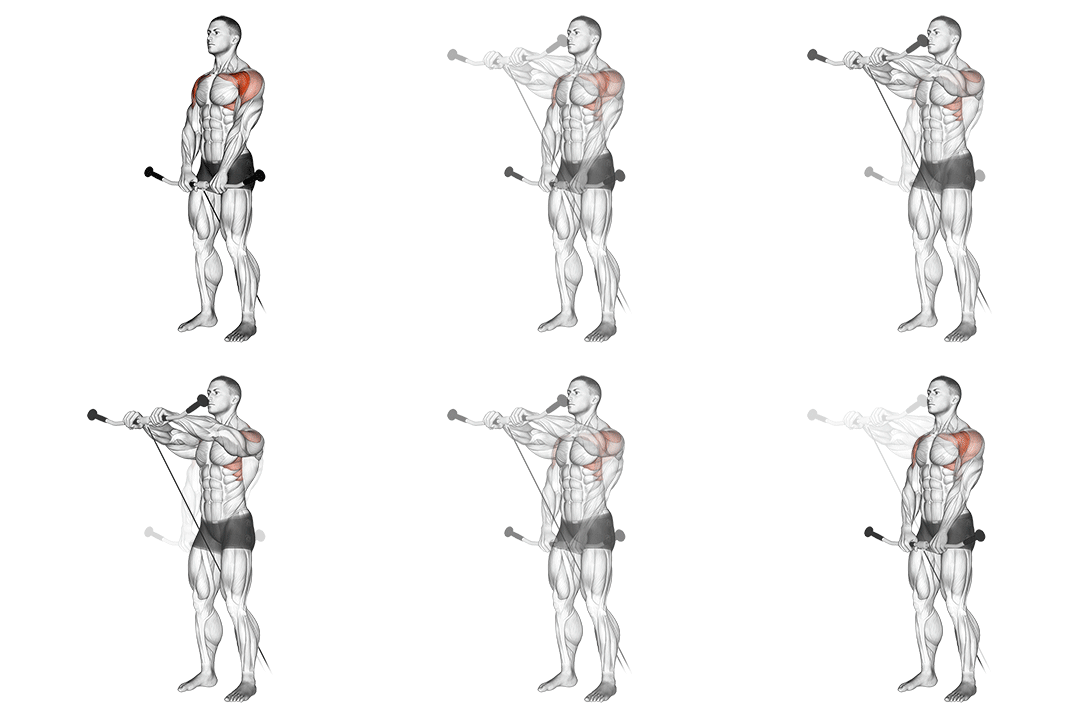
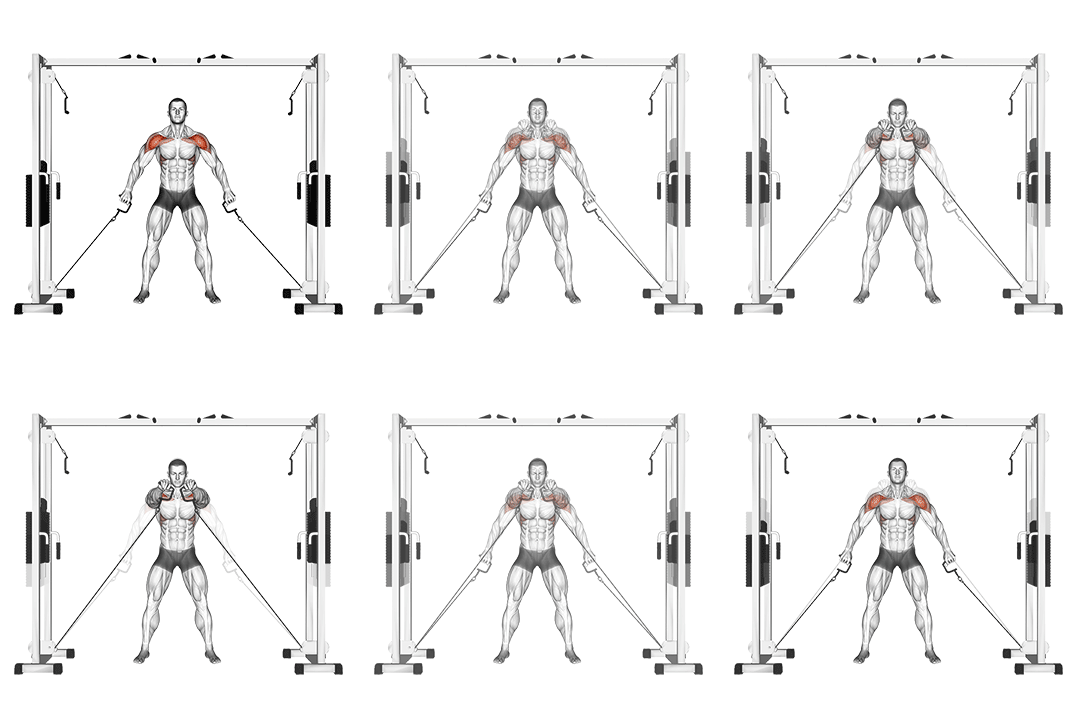
Cable Front Raise
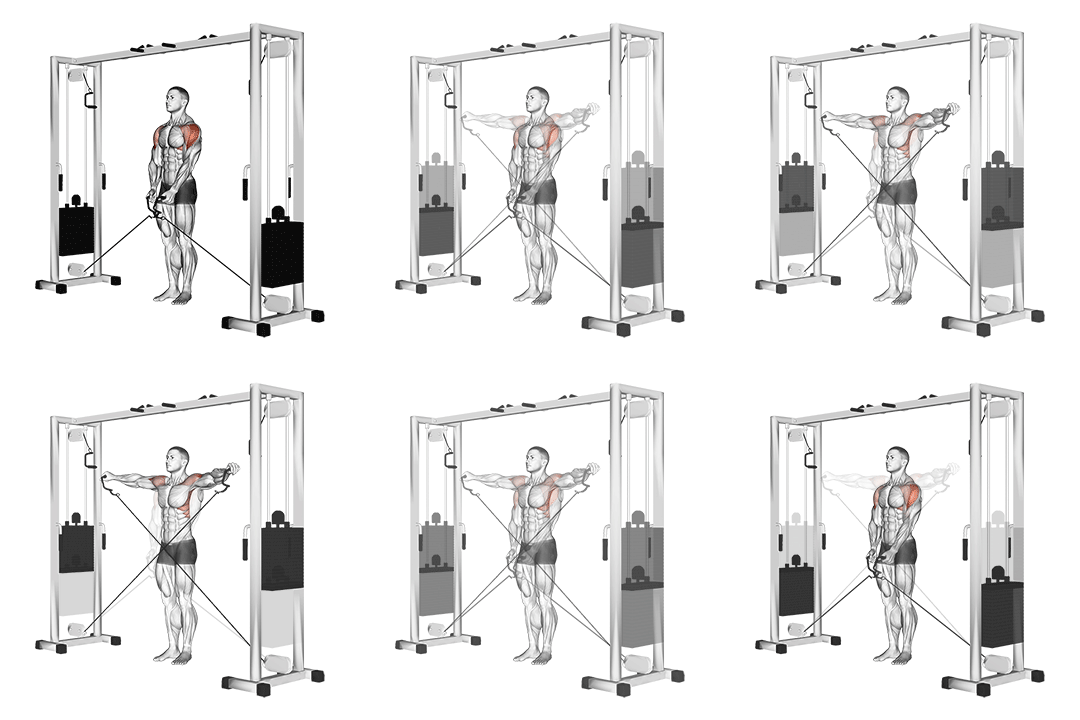
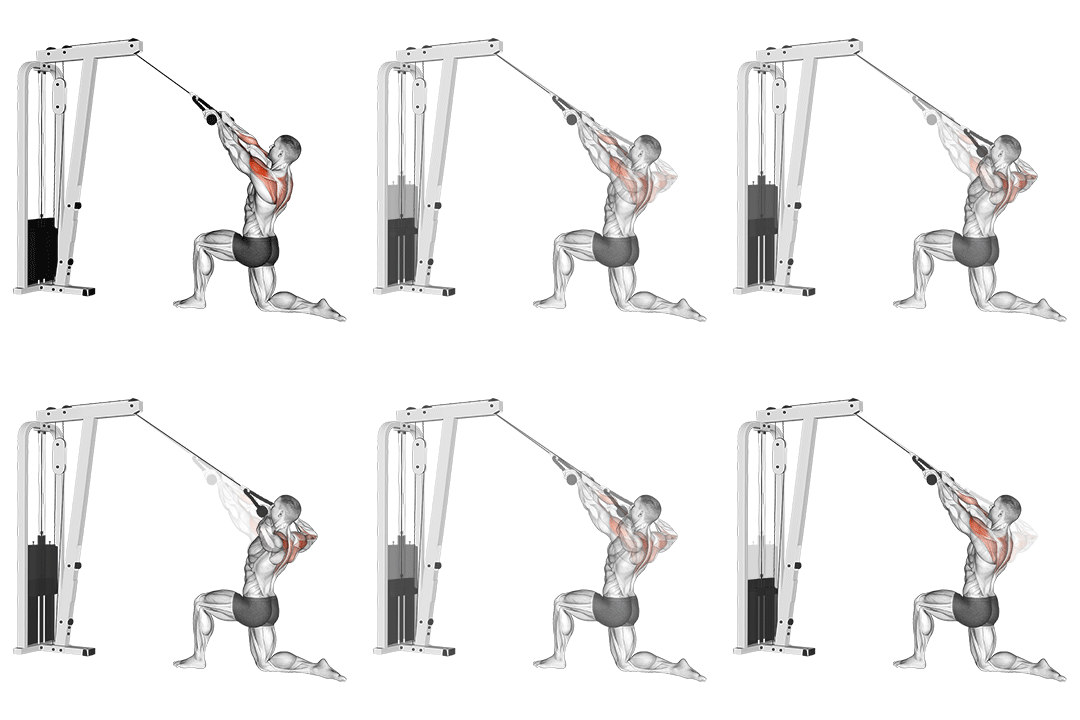
Cable Lateral Raise
Head-to-Head Comparison
| Attribute | Cable Front Raise | Cable Lateral Raise |
|---|---|---|
| Target Muscle |
Delts
|
Delts
|
| Body Part |
Shoulders
|
Shoulders
|
| Equipment |
Cable
|
Cable
|
| Difficulty |
Beginner
|
Beginner
|
| Movement Type |
Isolation
|
Isolation
|
| Secondary Muscles |
2
|
2
|
Secondary Muscles Activated
Cable Front Raise
Cable Lateral Raise
Visual Comparison
Overview
Cable Front Raise vs Cable Lateral Raise — you want to know which shoulder isolation move is worth your time. This guide walks you through biomechanics, muscle activation, technique cues, programming tips, and injury risk so you can pick the best exercise for your goals. You’ll get clear comparisons of primary and secondary muscle work, equipment needs, and practical rep ranges (6–15 for strength/hypertrophy). Read on to learn exactly when to use each movement, how to perform them with clean form, and simple progressions to build shoulder size and function.
Key Differences
- Both exercises target the Delts using Cable. The main differences are in their movement patterns and muscle activation angles.
Pros & Cons
Cable Front Raise
+ Pros
- Direct anterior deltoid targeting improves pressing transfer
- Simple sagittal-plane pattern, easy to coach and learn
- Constant cable tension keeps load consistent through range
- Can be loaded heavier safely than lateral raises for many lifters
− Cons
- Less effect on shoulder width than lateral work
- Can place stress on anterior shoulder with poor technique
- Grip and forearm fatigue may limit deltoid stimulus
Cable Lateral Raise
+ Pros
- Superior lateral deltoid activation for wider shoulders
- Encourages scapular control and trap co-activation
- Excellent unilateral work to correct imbalances
- Easily micro-loaded and varied with tempo/partials
− Cons
- Higher risk of impingement with poor form or heavy load
- Tends to be weaker movement — lighter loads needed
- Requires more motor control to avoid shoulder shrugging
When Each Exercise Wins
The lateral raise targets the middle deltoid, which increases shoulder width and overall deltoid cross-sectional area. Use 8–15 reps, constant-tension sets, and unilateral work to selectively overload the lateral head for hypertrophy.
For transferable strength to pressing and forward shoulder actions, the front raise lines up with the sagittal force vector and allows relatively heavier loading. Use lower reps (6–8) and controlled eccentrics to build force in the anterior deltoid.
Its straight-forward sagittal movement is easier to learn and coach, and beginners can develop shoulder stability with light weight and clear cues like a soft elbow and a 0–90° flexion range.
Front raise mechanics transfer well to resistance bands anchored at low points and require less lateral space and scapular control, making it simpler to replicate at home while keeping constant tension.
Frequently Asked Questions
Can I do both Cable Front Raise and Cable Lateral Raise in the same workout?
Yes. Pairing them gives balanced deltoid development — for example, do 3 sets of 8–12 front raises followed by 3 sets of 10–15 lateral raises. Sequence the heavier or priority movement first and keep total shoulder volume to 9–12 sets per week per head as a starting point.
Which exercise is better for beginners?
Cable Front Raise is generally better for beginners due to its simpler sagittal-plane mechanics and easier motor patterning. Start light, focus on controlled eccentrics, and maintain a soft elbow to protect the joint.
How do the muscle activation patterns differ?
Front raises concentrate activation in the anterior deltoid through shoulder flexion, while lateral raises maximize lateral deltoid activation via abduction/scaption. Scapular upward rotation and trap recruitment increase in lateral raises, and forearm/triceps stabilization is more apparent in front raises.
Can Cable Lateral Raise replace Cable Front Raise?
Not completely. If your goal is lateral head hypertrophy you can prioritize lateral raises, but replacing front raises removes targeted anterior deltoid stimulus that contributes to pressing strength. Use both when balanced shoulder development and function are goals.
Expert Verdict
Use the Cable Front Raise when you want straightforward anterior deltoid overload and transfer to pressing strength; keep the movement in the sagittal plane, use a slight elbow bend, control the eccentric for 2–3 seconds, and work in 6–12 reps for strength or 8–15 for hypertrophy. Choose the Cable Lateral Raise when your priority is width and lateral deltoid mass — keep thumbs-up, limit elevation to about 90° or perform 10–30° scaption, avoid shoulder shrugging, and emphasize tempo and unilateral sets. Both are valid isolation tools: match the exercise to the deltoid head you want to prioritize and program them in cycles (4–8 weeks) with progressive overload and attention to scapular mechanics.
Also Compare
More comparisons with Cable Front Raise

More comparisons with Cable Lateral Raise
Compare More Exercises
Use our free comparison tool to analyze any two exercises head-to-head.
Compare Exercises