

Cable Front Raise vs Face Pull: Complete Comparison Guide
Cable Front Raise vs Face Pull — two cable exercises that both hit the delts but in very different ways. You’ll get a clear breakdown of which movement targets which deltoid fibers, how each affects posture and shoulder health, the exact technique cues to use, and practical programming advice (sets, reps, and progressions). I’ll cover biomechanics like force vectors and length‑tension, common mistakes, equipment needs, and which exercise to pick based on your goals so you can choose the right move for your shoulders.
Exercise Comparison
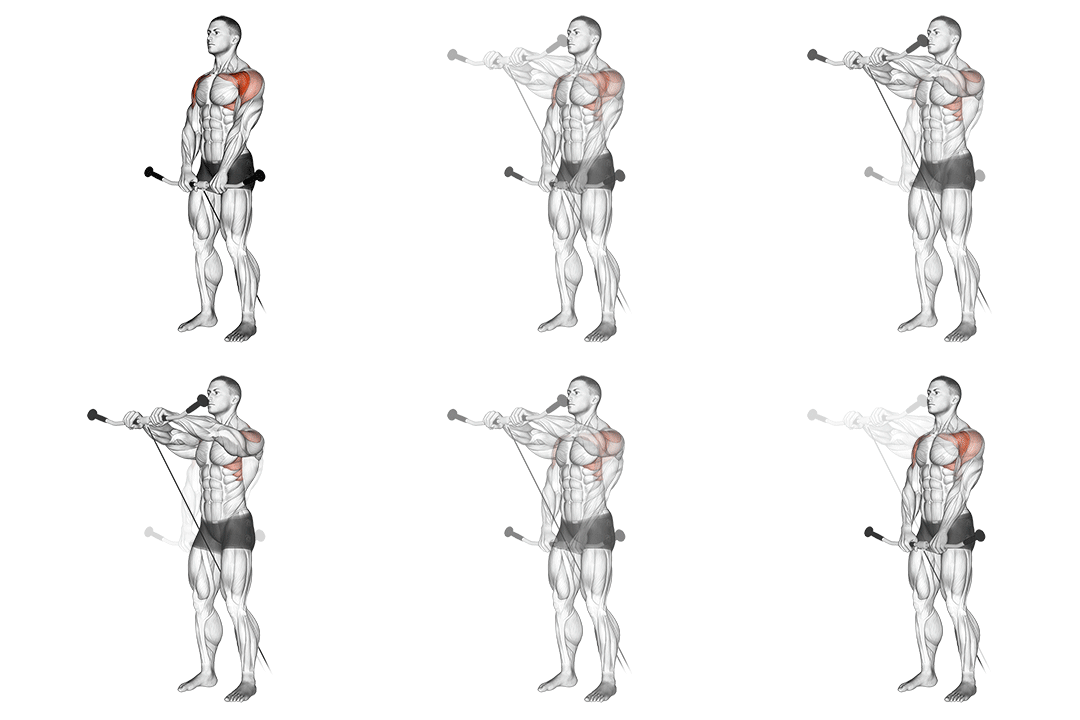
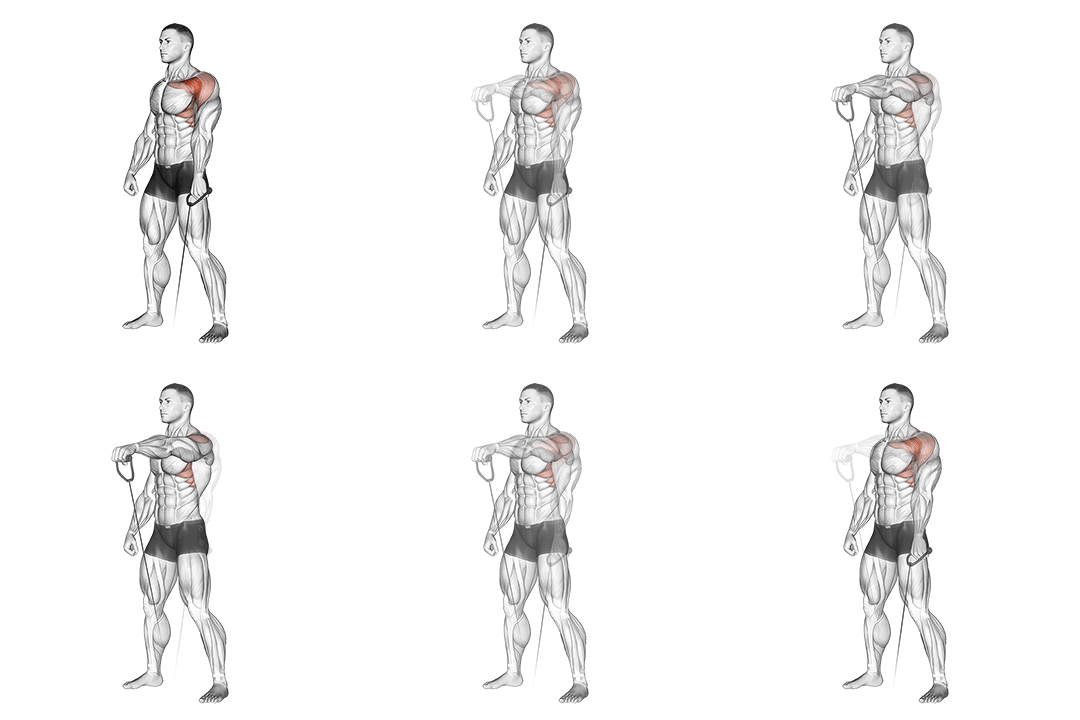
Cable Front Raise
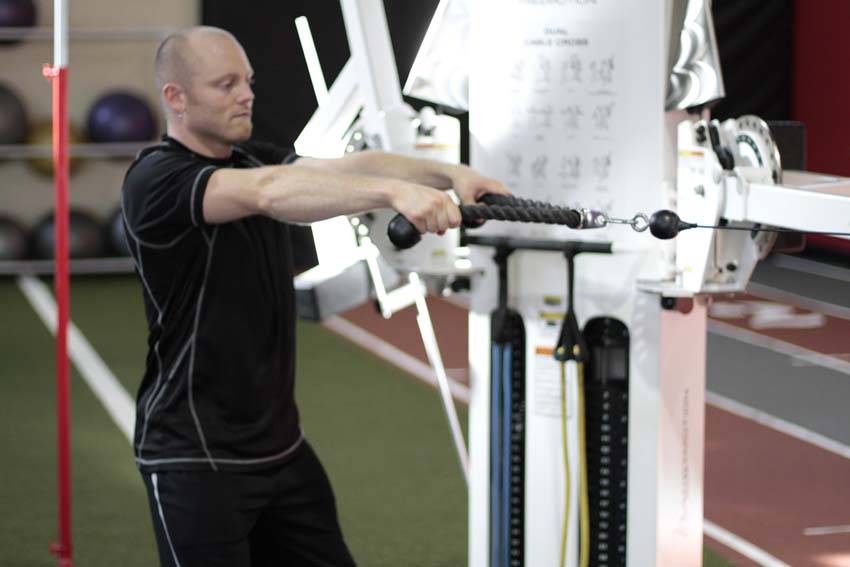
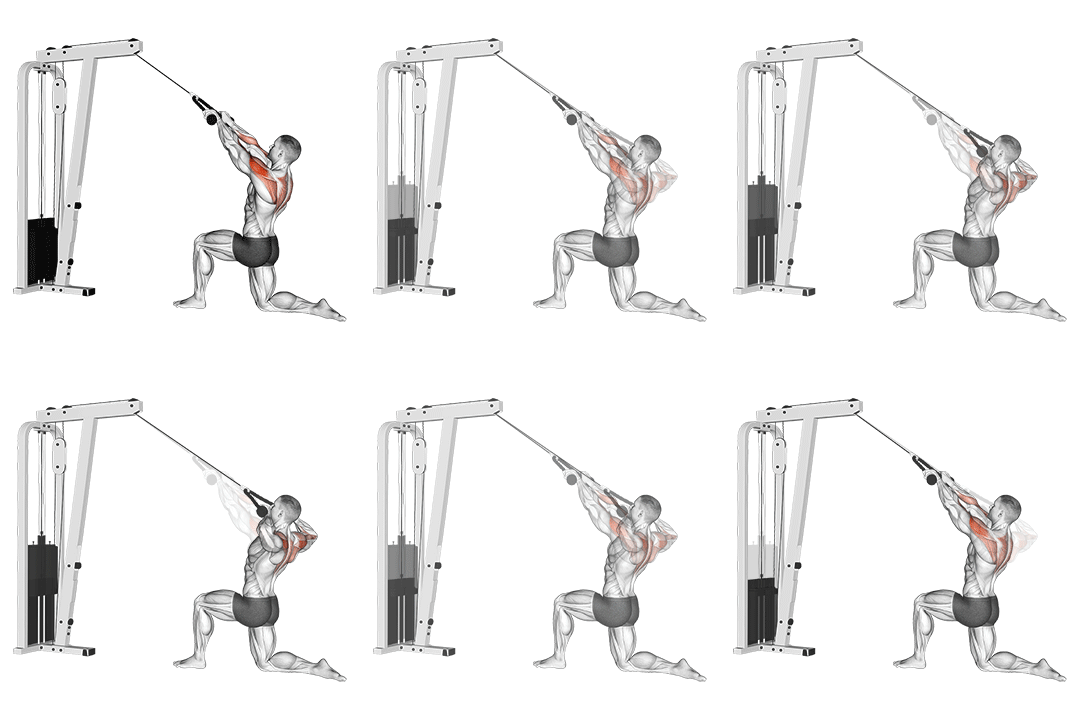
Face Pull
Head-to-Head Comparison
| Attribute | Cable Front Raise | Face Pull |
|---|---|---|
| Target Muscle |
Delts
|
Delts
|
| Body Part |
Shoulders
|
Shoulders
|
| Equipment |
Cable
|
Cable
|
| Difficulty |
Beginner
|
Intermediate
|
| Movement Type |
Isolation
|
Compound
|
| Secondary Muscles |
2
|
1
|
Secondary Muscles Activated
Cable Front Raise
Face Pull
Visual Comparison
Overview
Cable Front Raise vs Face Pull — two cable exercises that both hit the delts but in very different ways. You’ll get a clear breakdown of which movement targets which deltoid fibers, how each affects posture and shoulder health, the exact technique cues to use, and practical programming advice (sets, reps, and progressions). I’ll cover biomechanics like force vectors and length‑tension, common mistakes, equipment needs, and which exercise to pick based on your goals so you can choose the right move for your shoulders.
Key Differences
- Cable Front Raise is an isolation exercise, while Face Pull is a compound movement.
- Difficulty levels differ: Cable Front Raise is beginner, while Face Pull is intermediate.
- Both exercises target the Delts using Cable. The main differences are in their movement patterns and muscle activation angles.
Pros & Cons
Cable Front Raise
+ Pros
- Directly isolates anterior deltoid for targeted hypertrophy
- Simple technique: sagittal lift to ~60°–90° with soft elbow
- Easy to scale with dumbbells, bands, or cable
- Great as a finisher for shoulder days with reps of 8–20
− Cons
- Limited carryover to posterior chain or scapular control
- High torque at end range can irritate anterior shoulder if overloaded
- Less useful for posture or upper‑back development
Face Pull
+ Pros
- Loads posterior deltoid, external rotators, and mid‑traps for balanced shoulders
- Improves scapular retraction and posture—reduces forward‑shoulder bias
- Compound pattern allows heavier loading and carryover to pressing stability
- Low impingement risk when performed with correct external rotation
− Cons
- More technical: needs rope, proper elbow flare, and scapular control
- Harder to isolate anterior deltoid if that is your sole goal
- Requires coaching to ensure correct sequencing and avoid cervical shrug
When Each Exercise Wins
Cable Front Raise isolates the anterior deltoid and lets you accumulate time‑under‑tension with strict form. Use 3–4 sets of 8–15 reps, controlled 2–3 second eccentrics, and avoid momentum to maximize muscle fiber recruitment.
Face Pull is a compound pattern that recruits the mid‑back and posterior delts, allowing heavier relative loading and better carryover to pressing and pulling strength. Progress with heavier loads, lower reps (6–10) or slower eccentrics to build resilience.
The front raise has a simple sagittal path and clear finish position, making it easier to teach and perform safely. Start with light resistance, focus on a 60°–90° range of motion, and master tempo before adding load.
You can replicate the movement effectively with a dumbbell or band at home, while Face Pull needs a rope and an overhead pulley or a robust anchor at eye height for the correct vector. Front raises let you target the anterior delts with minimal gear.
Frequently Asked Questions
Can I do both Cable Front Raise and Face Pull in the same workout?
Yes. Do Face Pulls early as a warm‑up or mid‑workout to prime scapular stabilizers (2–3 sets of 12–15), then use Cable Front Raises as a finisher to overload the anterior deltoid (3 sets of 8–15). That sequencing preserves motor control for the technical face pull and prevents fatigue from degrading form.
Which exercise is better for beginners?
Cable Front Raise is friendlier for beginners because the movement is single‑joint and easier to cue: keep a soft elbow, lift to about 60°–90°, and control the descent. Teach Face Pulls early too for shoulder health, but monitor scapular retraction and external rotation to avoid compensation.
How do the muscle activation patterns differ?
Front raise loads the anterior deltoid via sagittal shoulder flexion with peak torque as the arm approaches horizontal, favoring anterior fibers and long‑lever torque. Face pull emphasizes posterior/lateral deltoid and scapular retractors through horizontal abduction plus external rotation, shifting the force vector posteriorly and recruiting rotator cuff and mid‑trapezius muscles.
Can Face Pull replace Cable Front Raise?
Not completely. Face Pulls will improve posterior deltoid and scapular strength but won’t isolate the anterior deltoid the way a Cable Front Raise does. If your goal is anterior deltoid hypertrophy, keep the front raise; if posture and shoulder health are priorities, favor face pulls.
Expert Verdict
Use Cable Front Raise when your priority is targeted anterior deltoid development or when you need a simple finisher you can do with dumbbells or bands. Keep reps in the 8–20 range, use a soft elbow, and control the eccentric to avoid anterior shoulder stress. Choose Face Pull when you need to build posterior deltoid strength, external rotator capacity, and scapular control—aim for 3–4 sets of 8–15 with a rope at eye level, elbow flare to ~90°, and a deliberate external rotation finish. For balanced shoulders and injury prevention, program Face Pulls more frequently (2–4x/week) and use Front Raises selectively for anterior hypertrophy.
Also Compare
More comparisons with Cable Front Raise
Compare More Exercises
Use our free comparison tool to analyze any two exercises head-to-head.
Compare Exercises