

Cable Front Shoulder Raise vs Cable Kneeling Rear Delt Row (with Rope) (male): Complete Comparison G
Cable Front Shoulder Raise vs Cable Kneeling Rear Delt Row (with Rope) (male) — two cable moves that target the delts from opposite angles. You’ll get a clear, practical comparison so you can choose the right lift for your program. I’ll cover which delt head each emphasizes, exact technique cues (elbow angle, scapular position, range-of-motion limits), equipment needs, rep ranges (8–15 for isolation, 6–12 for compound), and programming suggestions for hypertrophy, strength, and rehabilitation. Read on and you’ll know which exercise to use for your shoulder goals and why, based on biomechanics and muscle activation.
Exercise Comparison
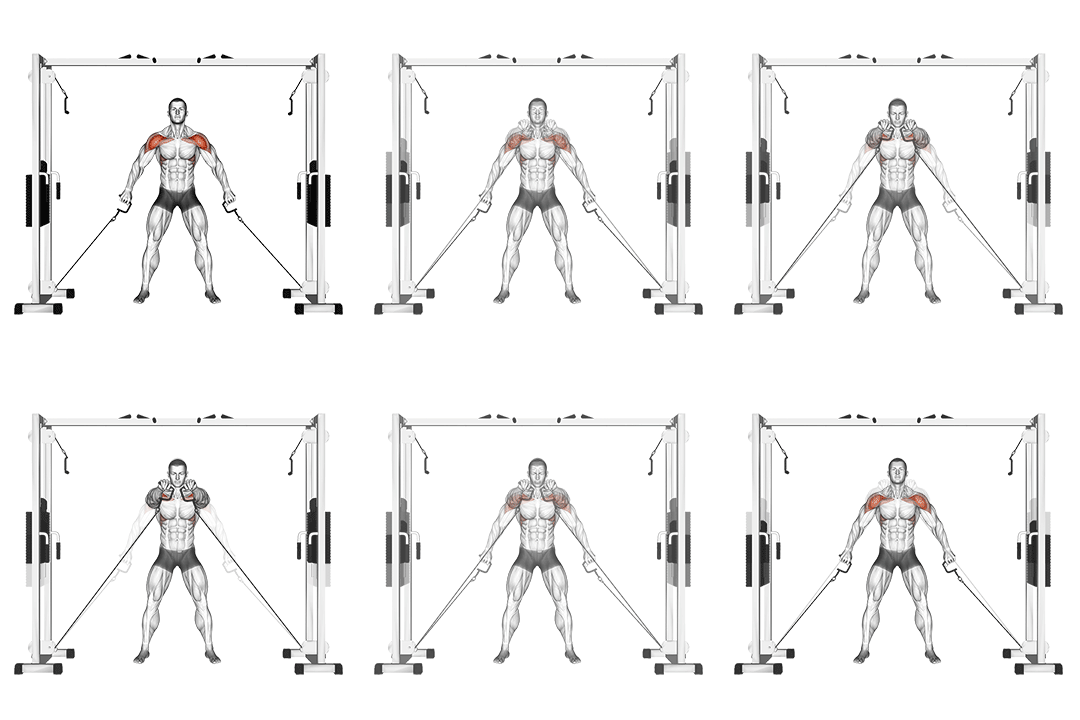
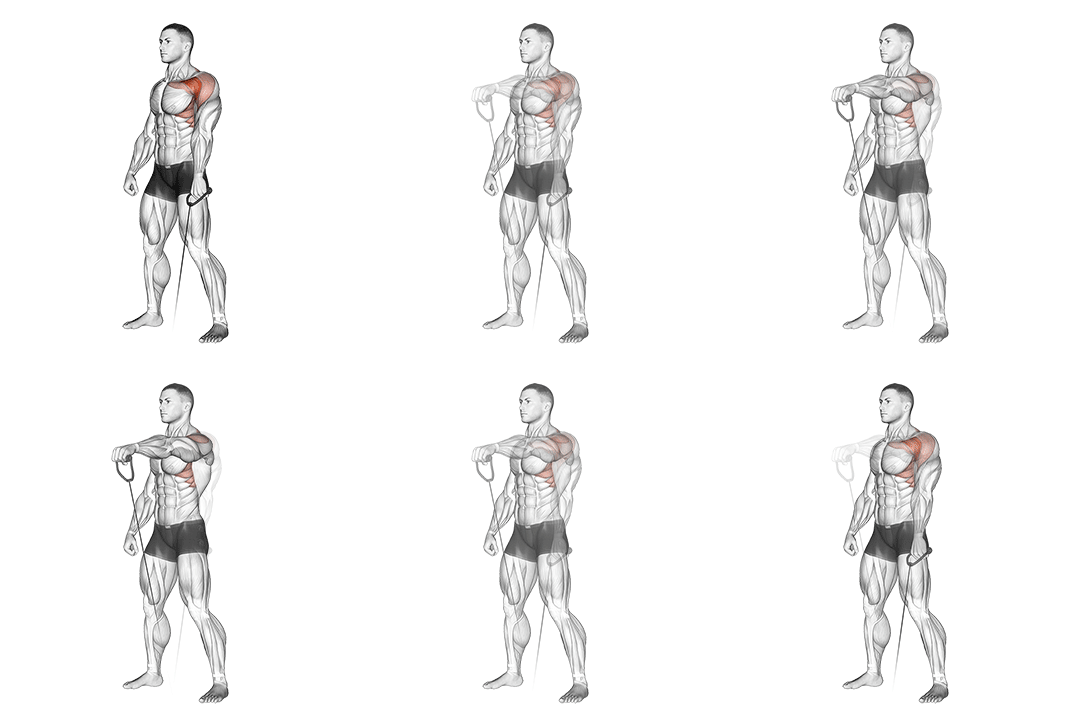
Cable Front Shoulder Raise
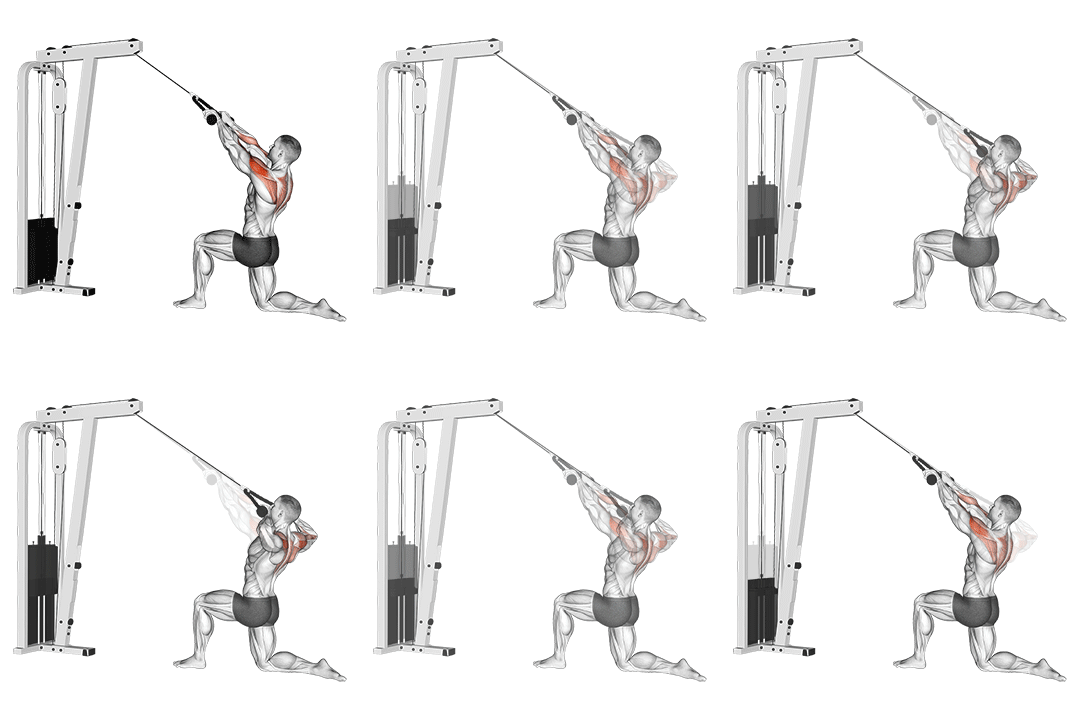
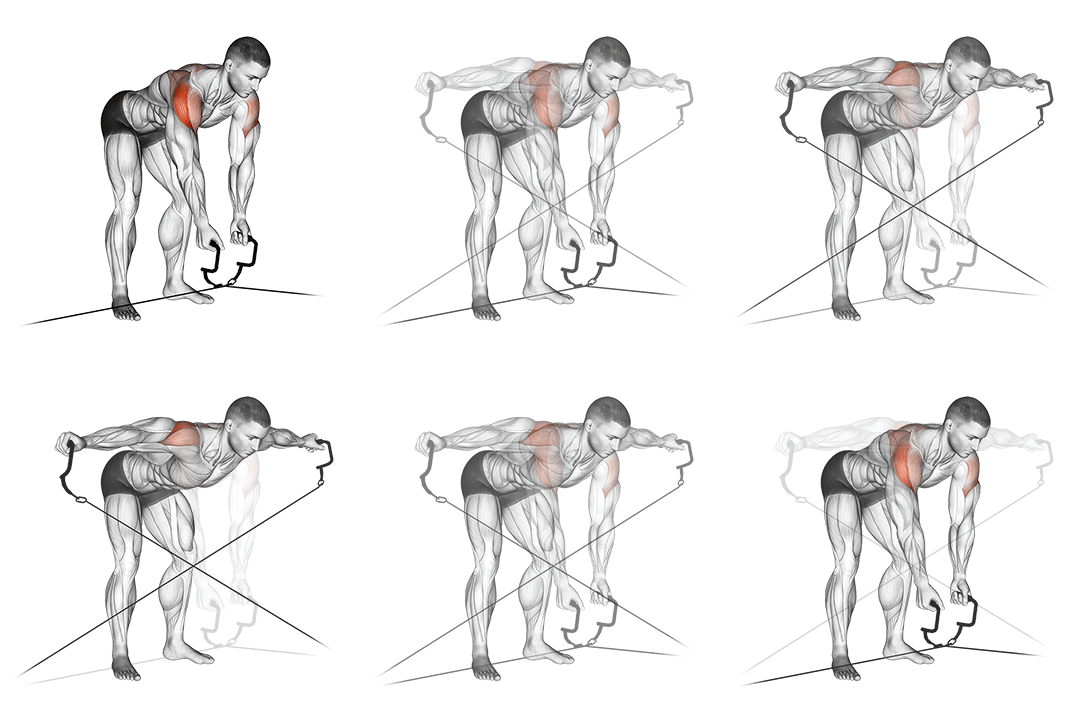
Cable Kneeling Rear Delt Row (with Rope) (male)
Head-to-Head Comparison
| Attribute | Cable Front Shoulder Raise | Cable Kneeling Rear Delt Row (with Rope) (male) |
|---|---|---|
| Target Muscle |
Delts
|
Delts
|
| Body Part |
Shoulders
|
Shoulders
|
| Equipment |
Cable
|
Cable
|
| Difficulty |
Beginner
|
Intermediate
|
| Movement Type |
Isolation
|
Compound
|
| Secondary Muscles |
2
|
3
|
Secondary Muscles Activated
Cable Front Shoulder Raise
Cable Kneeling Rear Delt Row (with Rope) (male)
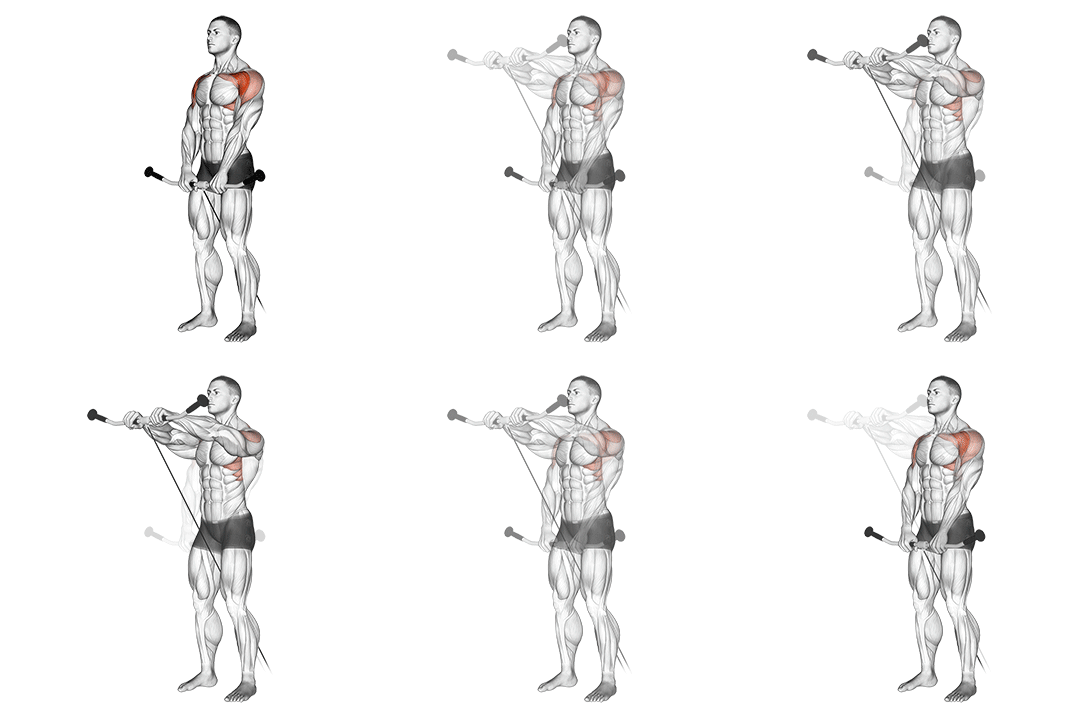
Visual Comparison
Overview
Cable Front Shoulder Raise vs Cable Kneeling Rear Delt Row (with Rope) (male) — two cable moves that target the delts from opposite angles. You’ll get a clear, practical comparison so you can choose the right lift for your program. I’ll cover which delt head each emphasizes, exact technique cues (elbow angle, scapular position, range-of-motion limits), equipment needs, rep ranges (8–15 for isolation, 6–12 for compound), and programming suggestions for hypertrophy, strength, and rehabilitation. Read on and you’ll know which exercise to use for your shoulder goals and why, based on biomechanics and muscle activation.
Key Differences
- Cable Front Shoulder Raise is an isolation exercise, while Cable Kneeling Rear Delt Row (with Rope) (male) is a compound movement.
- Difficulty levels differ: Cable Front Shoulder Raise is beginner, while Cable Kneeling Rear Delt Row (with Rope) (male) is intermediate.
- Both exercises target the Delts using Cable. The main differences are in their movement patterns and muscle activation angles.
Pros & Cons
Cable Front Shoulder Raise
+ Pros
- Direct anterior deltoid isolation for focused development
- Simple setup and easy to learn for beginners
- Low load needed—good for rehab and high-rep work
- Fine-tune unilateral imbalances with single-arm variations
− Cons
- Limited overall loading potential compared to compound pulls
- Can irritate the shoulder if taken too high (>80°) or with poor rotation
- Less scapular and posterior chain activation
Cable Kneeling Rear Delt Row (with Rope) (male)
+ Pros
- Strong posterior delt and scapular stabilizer recruitment
- Higher overall muscle recruitment—better for balanced shoulder development
- Greater overload and progression options (tempo, load, angle)
- Improves scapular retraction and posture when performed correctly
− Cons
- Requires better technique and scapular control
- More setup time (rope, kneeling pad, pulley height)
- Intermediate difficulty—less suitable for absolute beginners or acute rehab
When Each Exercise Wins
The rear-delt row recruits multiple muscles (posterior deltoid, mid-trapezius, rhomboids) allowing heavier loads and longer time under tension. Use 6–12 reps with controlled eccentrics to stimulate hypertrophy across the posterior shoulder complex.
Its compound pattern and ability to handle heavier resistance let you progress load more effectively than an isolation front raise. Emphasize 4–8 heavy sets with strict form and full scapular retraction for strength transfer.
Simple single-joint mechanics, lower coordination demand, and easy load control make it ideal for beginners to build anterior deltoid work and teach shoulder flexion mechanics in the sagittal plane.
If you have a single cable column or resistance band alternative, the front raise is easier to set up and requires less space. The kneeling rope row needs a proper cable station and more room to execute correctly.
Frequently Asked Questions
Can I do both Cable Front Shoulder Raise and Cable Kneeling Rear Delt Row (with Rope) (male) in the same workout?
Yes — pairing them is effective because they target different delt heads and movement planes. Do the compound rear-delt row first for strength (6–12 reps), then the isolation front raise for focused anterior work (8–15 reps) to avoid fatigue-driven technique breakdown.
Which exercise is better for beginners?
The Cable Front Shoulder Raise is better for beginners due to its single-joint pattern and easier load control. It helps teach shoulder flexion mechanics without the scapular coordination the kneeling row requires.
How do the muscle activation patterns differ?
The front raise emphasizes sagittal-plane shoulder flexion, producing peak anterior deltoid activation around 30–60° and relying less on scapular movement. The kneeling rear-delt row uses horizontal abduction and scapular retraction, increasing posterior deltoid, mid-trap, and rhomboid activation through a transverse-plane force vector.
Can Cable Kneeling Rear Delt Row (with Rope) (male) replace Cable Front Shoulder Raise?
Not if your goal is anterior deltoid isolation — the rear-delt row targets the posterior head and scapular muscles. Use the row to build rear-delt mass and scapular strength, but keep front raises or pressing variations if you need direct anterior delt development.
Expert Verdict
Use the Cable Front Shoulder Raise when you want targeted anterior deltoid work, easy setup, and a low-coordination isolation movement—ideal for beginners, high-rep hypertrophy (8–15 reps), or shoulder rehab where you avoid high-elevation stress. Choose the Cable Kneeling Rear Delt Row (with Rope) when you need posterior shoulder development, improved scapular retraction, and more total-muscle recruitment; program it for hypertrophy and strength with 6–12 reps and progressive overload. Pair them in a split: front raises on pressing days and kneeling rear-delt rows on pull or posterior-chain days to cover all delt heads and optimize shoulder balance.
Also Compare
More comparisons with Cable Front Shoulder Raise
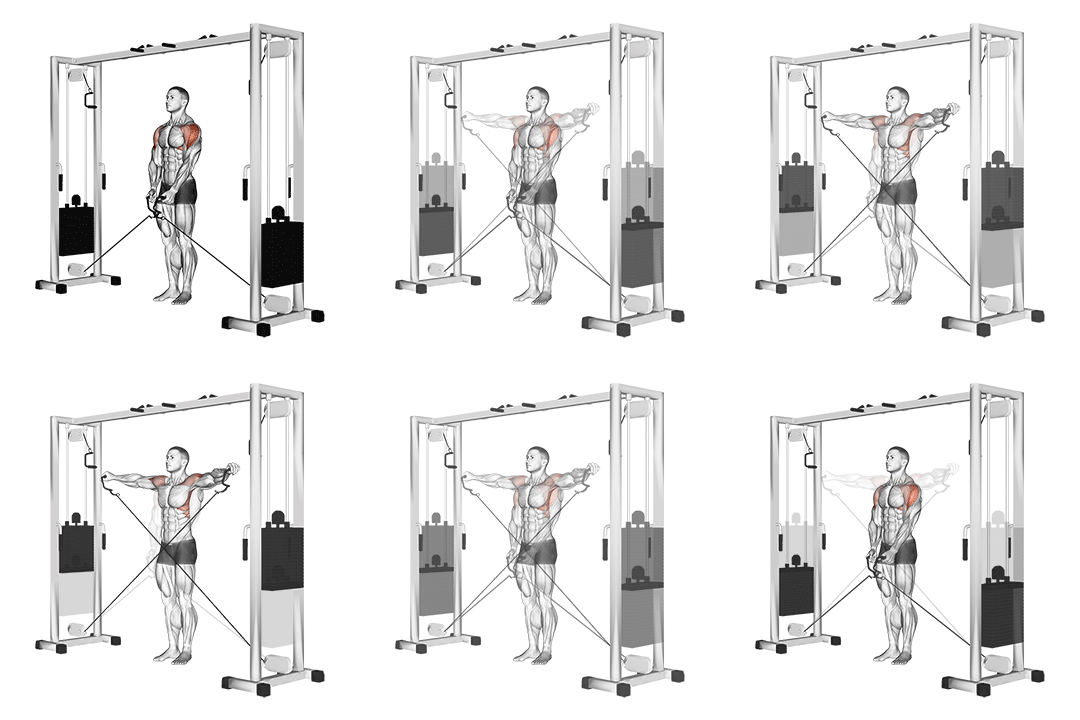
More comparisons with Cable Kneeling Rear Delt Row (with Rope) (male)
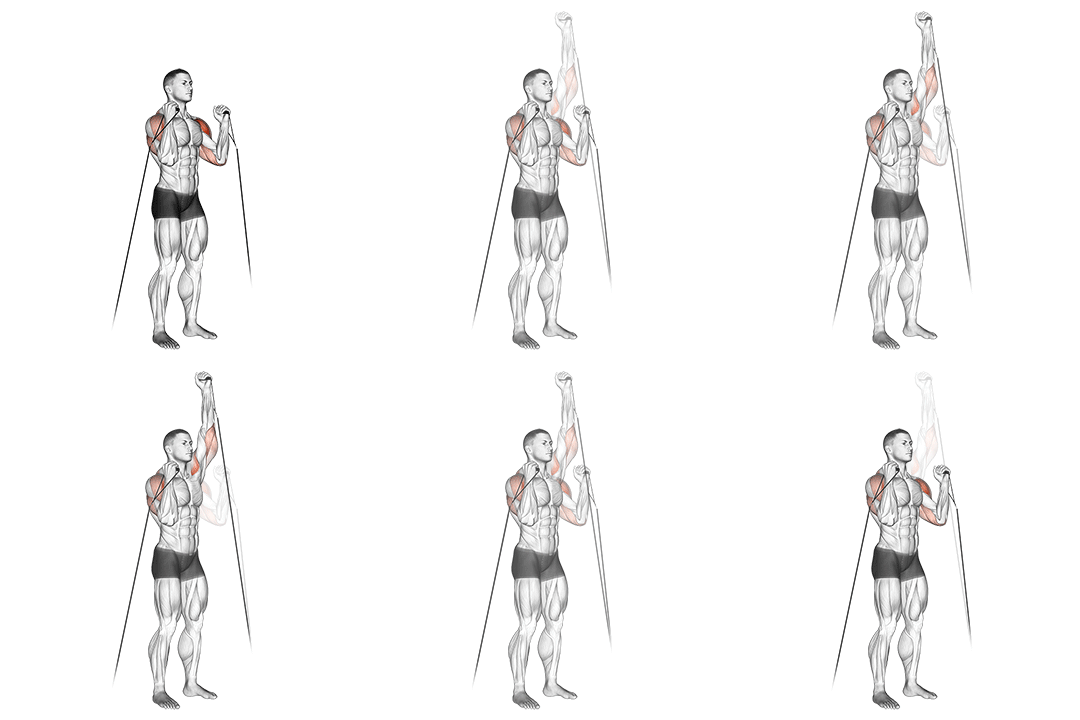
Compare More Exercises
Use our free comparison tool to analyze any two exercises head-to-head.
Compare Exercises