

Cable Front Shoulder Raise vs Cable Lateral Raise: Complete Comparison Guide
Cable Front Shoulder Raise vs Cable Lateral Raise — both isolate the delts but load the shoulder differently. If you want clear guidance on which movement to use for anterior head development, middle-deltoid width, injury prevention, and programming, this guide has your back. You’ll get technique cues, biomechanical comparisons (planes, moment arms, and length-tension), rep ranges, and practical progressions so you can pick the right raise for your goals and train smarter every session.
Exercise Comparison
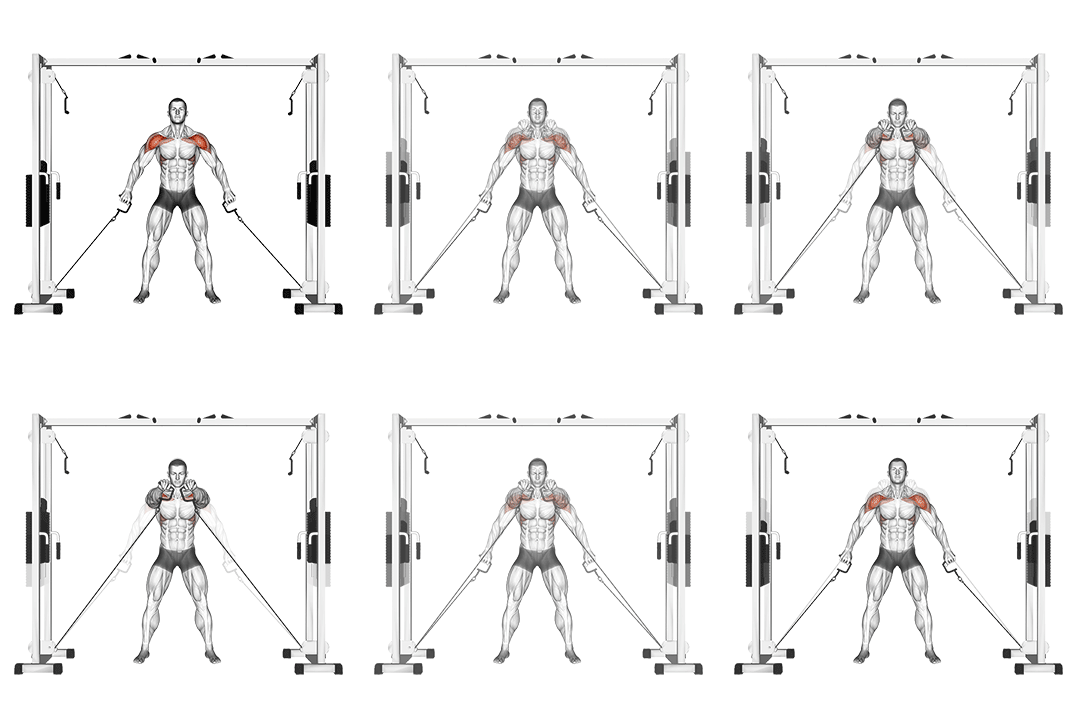
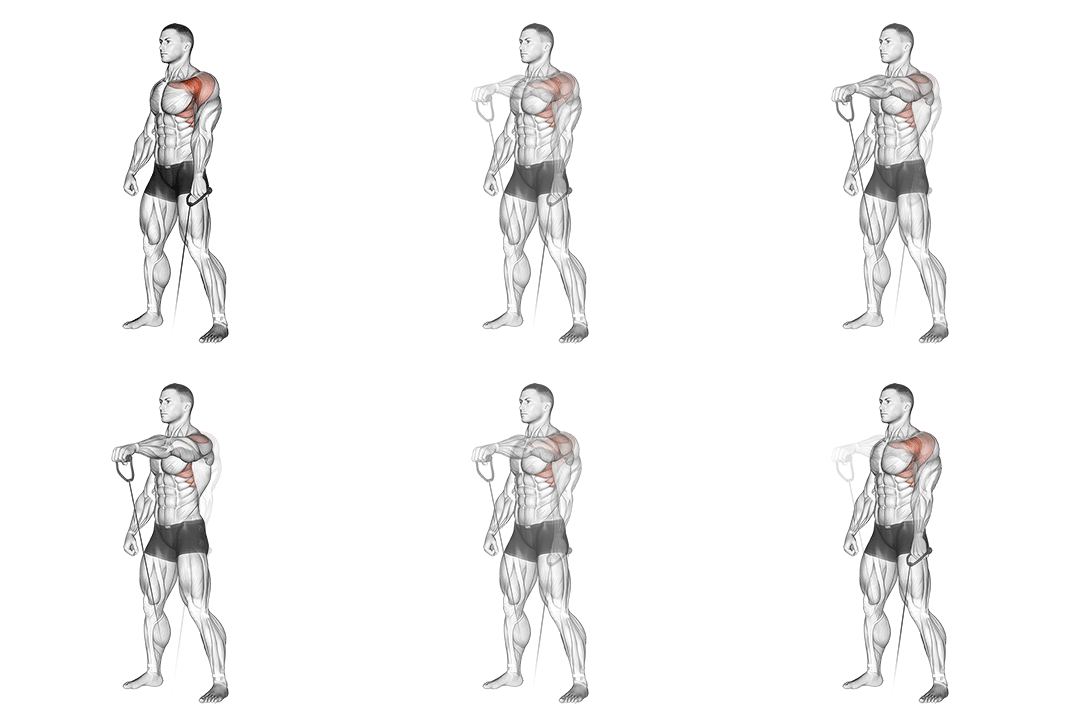
Cable Front Shoulder Raise
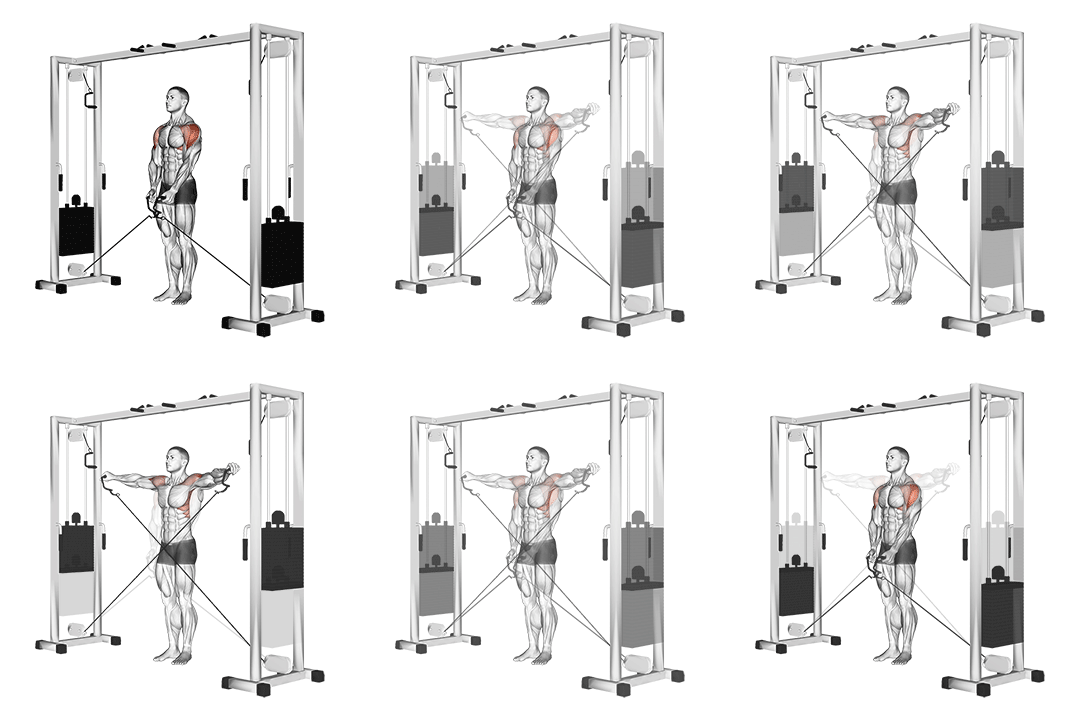
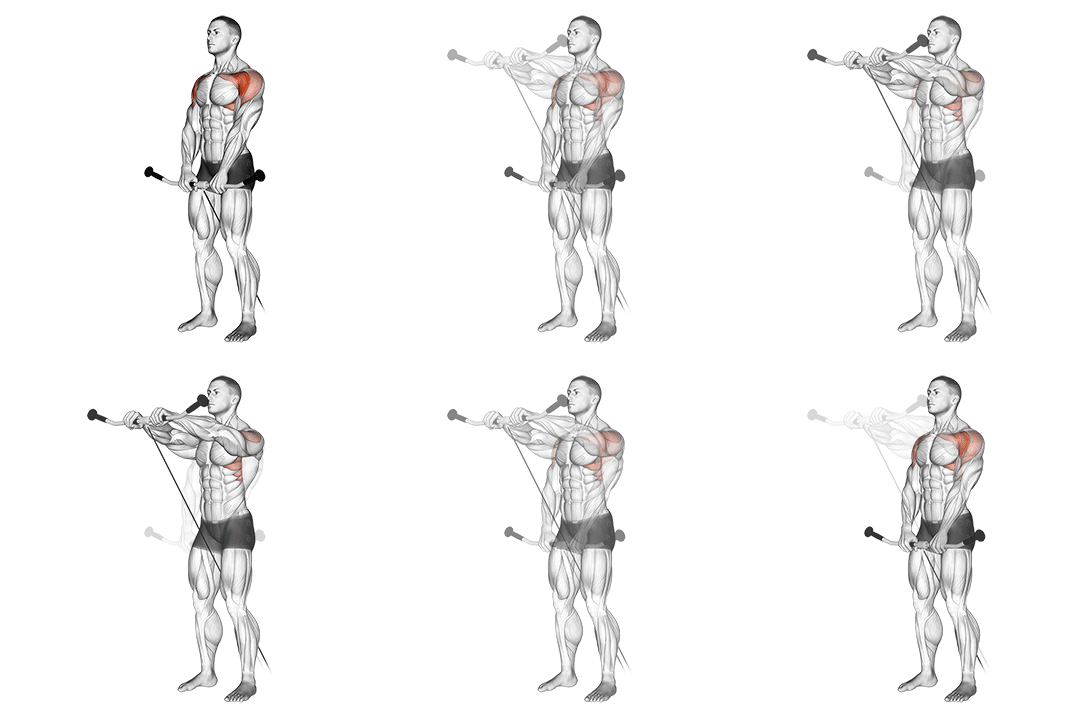
Cable Lateral Raise
Head-to-Head Comparison
| Attribute | Cable Front Shoulder Raise | Cable Lateral Raise |
|---|---|---|
| Target Muscle |
Delts
|
Delts
|
| Body Part |
Shoulders
|
Shoulders
|
| Equipment |
Cable
|
Cable
|
| Difficulty |
Beginner
|
Beginner
|
| Movement Type |
Isolation
|
Isolation
|
| Secondary Muscles |
2
|
2
|
Secondary Muscles Activated
Cable Front Shoulder Raise
Cable Lateral Raise
Visual Comparison
Overview
Cable Front Shoulder Raise vs Cable Lateral Raise — both isolate the delts but load the shoulder differently. If you want clear guidance on which movement to use for anterior head development, middle-deltoid width, injury prevention, and programming, this guide has your back. You’ll get technique cues, biomechanical comparisons (planes, moment arms, and length-tension), rep ranges, and practical progressions so you can pick the right raise for your goals and train smarter every session.
Key Differences
- Both exercises target the Delts using Cable. The main differences are in their movement patterns and muscle activation angles.
Pros & Cons
Cable Front Shoulder Raise
+ Pros
- Directly targets the anterior deltoid with a simple sagittal-plane movement
- Easier to learn and coach—good for beginners and tempo work
- Requires minimal lateral space and translates well to bands/dumbbells
- Cleaner isolation for front-head hypertrophy and defined shoulder caps
− Cons
- Limited effect on lateral deltoid width
- Potential to overload anterior shoulder if performed with heavy weight
- Less variety in angle manipulation compared to lateral raises
Cable Lateral Raise
+ Pros
- Directly targets the middle deltoid for shoulder width and cap development
- Multiple cable angles let you bias fibers (30° fwd or true lateral)
- Great for volume work with strict tempo and partial ranges
- Easily scaled with single-arm/unilateral variations to correct imbalances
− Cons
- Harder to perform without scapular drift—technique sensitive
- Higher risk to AC joint and rotator cuff with too-heavy loads
- Requires more lateral clearance and stable setup
When Each Exercise Wins
The lateral raise places a larger moment arm on the middle deltoid in the 30–60° range, which is ideal for increasing shoulder cross-sectional area. Use moderate loads for 8–15 reps, tempo eccentrics of 2–3 seconds, and 3–4 sets to maximize time under tension.
For pure strength you’ll get cleaner loading patterns in the front raise that let you increase absolute load and maintain stable technique. Train heavier singles to 6–8 reps with controlled tempo and progressive overload to build pressing transfer to compound lifts.
The sagittal plane pattern is easier to learn and self-correct, reducing compensation from upper traps or scapular hiking. Start with light weight for 10–15 reps focusing on a neutral wrist and slight elbow bend.
You can replicate the front raise with resistance bands or a single dumbbell when cables aren’t available, so it’s more practical for at-home programs. Lateral raises can be done with bands, but matching the consistent lateral line of pull is harder.
Frequently Asked Questions
Can I do both Cable Front Shoulder Raise and Cable Lateral Raise in the same workout?
Yes. Pair them by doing front raises early if you want press carryover, then lateral raises as a finisher for width. Keep total volume reasonable—limit isolation work to 6–12 sets combined for the delts that session to avoid overtraining.
Which exercise is better for beginners?
Cable Front Shoulder Raise is better for beginners because the sagittal path is easier to control and coach. Start with 2–3 sets of 10–15 reps focusing on a neutral wrist and slight elbow bend to protect the shoulder joint.
How do the muscle activation patterns differ?
Front raises bias the anterior deltoid via shoulder flexion and shorten the anterior fibers, while lateral raises load the middle deltoid through abduction where its moment arm peaks around 30–60°. Small changes in arm plane or rotation shift tension between heads and rotator cuff involvement.
Can Cable Lateral Raise replace Cable Front Shoulder Raise?
Not if your goal is anterior deltoid development or pressing transfer—lateral raises won’t load the front head as effectively. If your aim is overall shoulder hypertrophy you can include both, but for targeted anterior strength keep front raises in the program.
Expert Verdict
Use Cable Front Shoulder Raise when you need a straightforward, beginner-friendly movement to strengthen and thicken the anterior deltoid, improve pressing mechanics, or when gym space is limited. Choose Cable Lateral Raise when your priority is middle-deltoid hypertrophy and shoulder width—its lateral force vector and mid-range moment arm are optimal for that purpose. Program both across a week for balanced development: 2–3 sets of front raises (8–12 reps) after pressing work and 3–4 sets of lateral raises (10–15 reps) as direct shoulder isolation. Watch scapular control, maintain light-to-moderate loads, and vary angles to manage shoulder stress and maximize progress.
Also Compare
More comparisons with Cable Front Shoulder Raise
More comparisons with Cable Lateral Raise
Compare More Exercises
Use our free comparison tool to analyze any two exercises head-to-head.
Compare Exercises