

Cable Incline Bench Press vs Incline Cable Flye: Complete Comparison Guide
Cable Incline Bench Press vs Incline Cable Flye — you’re choosing between a compound press and an isolation flye for upper-chest development. I’ll walk you through muscle activation, biomechanics, equipment needs, difficulty, and when to pick each exercise for strength, hypertrophy, or beginner programming. You’ll get specific technique cues, recommended angles (30–45°), rep ranges, and clear scenarios showing which move fits your goals.
Exercise Comparison
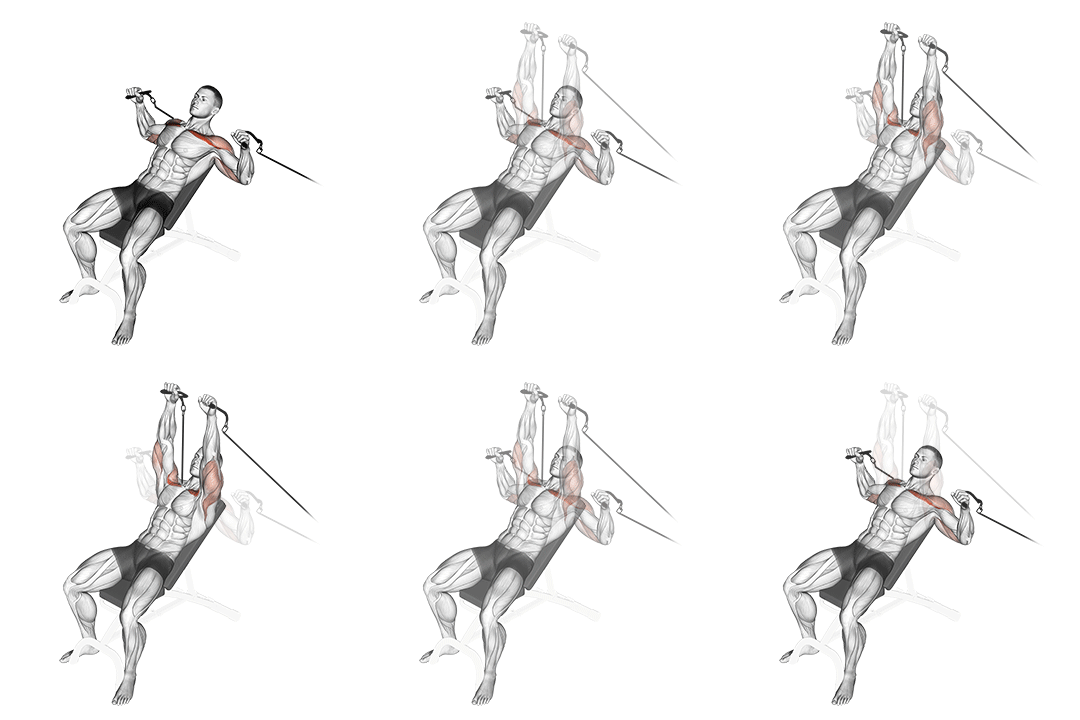
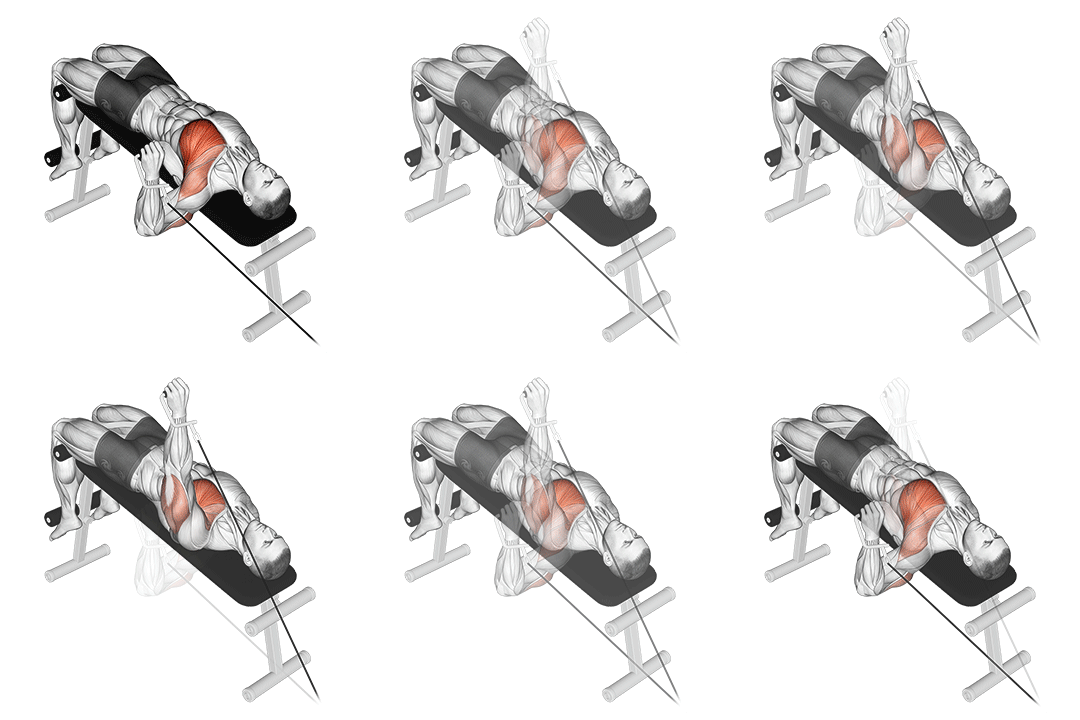
Cable Incline Bench Press
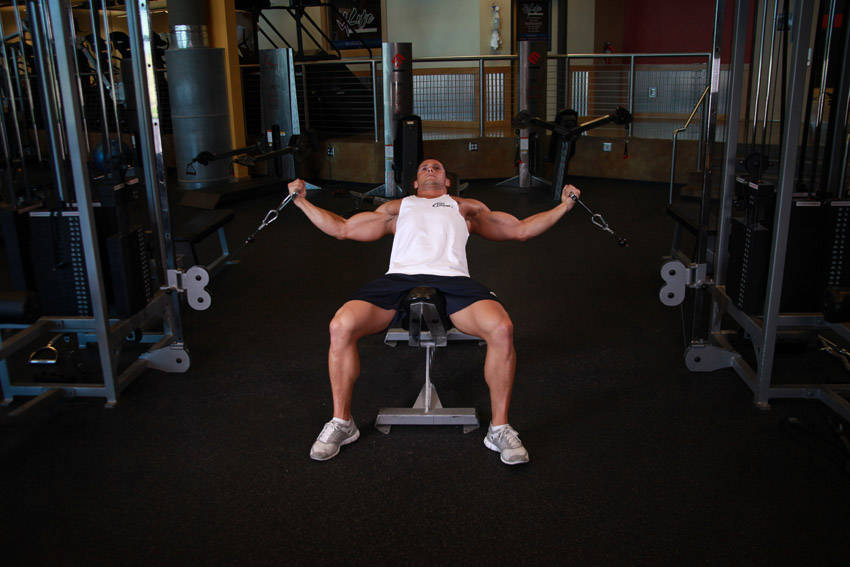
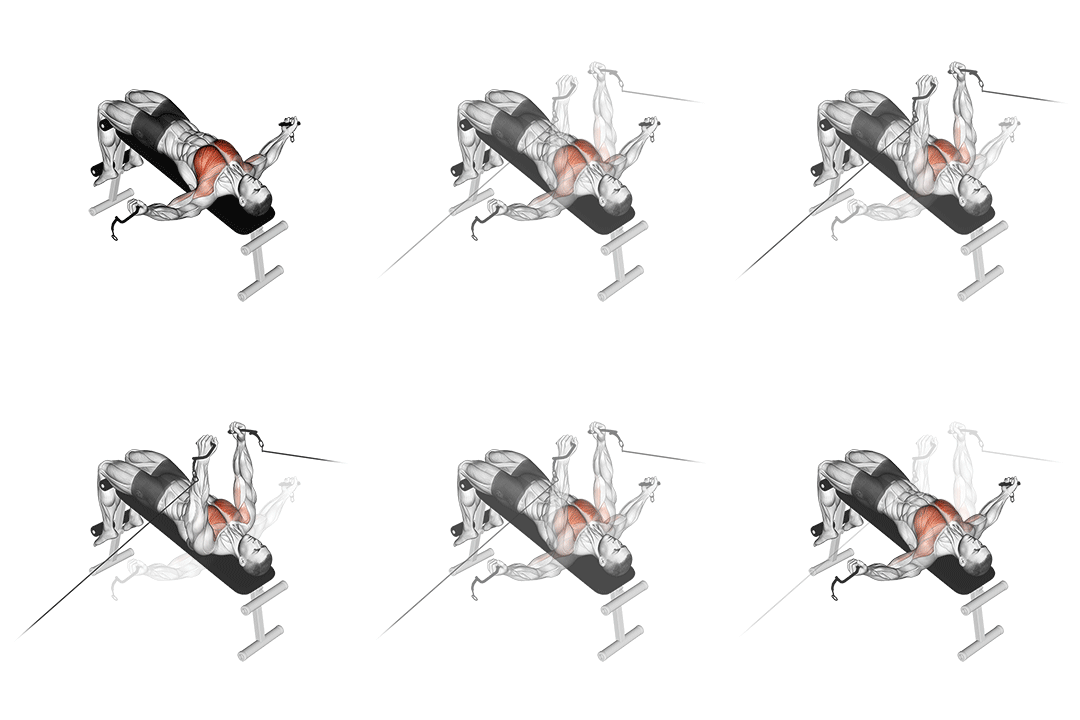
Incline Cable Flye
Head-to-Head Comparison
| Attribute | Cable Incline Bench Press | Incline Cable Flye |
|---|---|---|
| Target Muscle |
Pectorals
|
Pectorals
|
| Body Part |
Chest
|
Chest
|
| Equipment |
Cable
|
Cable
|
| Difficulty |
Intermediate
|
Beginner
|
| Movement Type |
Compound
|
Isolation
|
| Secondary Muscles |
2
|
1
|
Secondary Muscles Activated
Cable Incline Bench Press
Incline Cable Flye
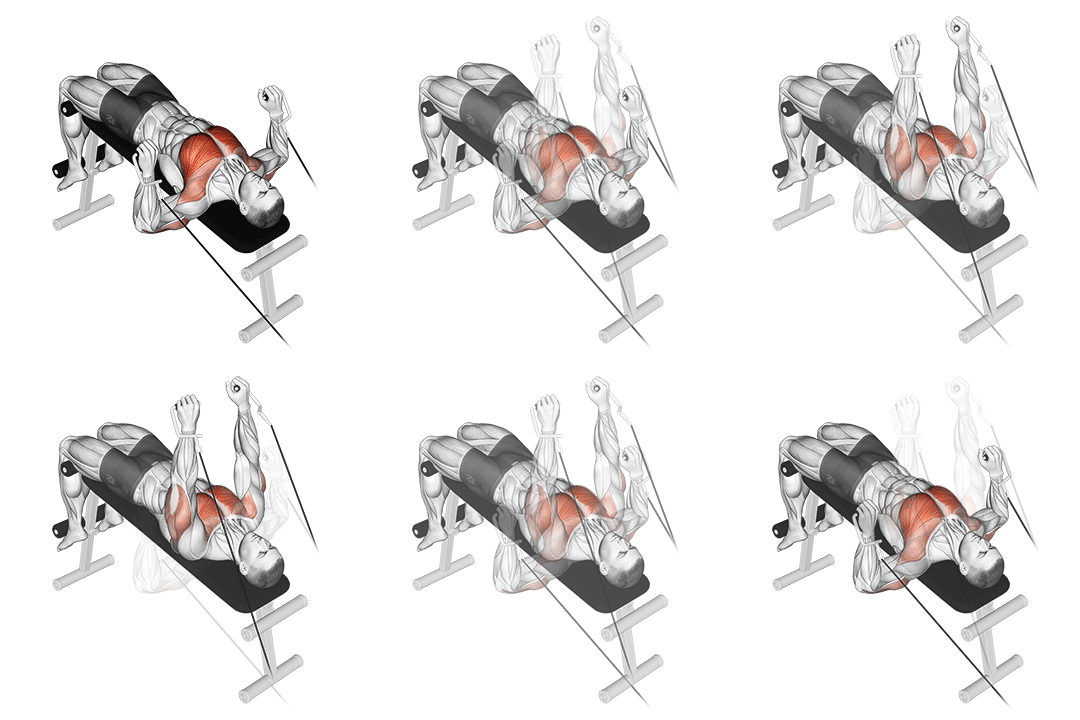
Visual Comparison
Overview
Cable Incline Bench Press vs Incline Cable Flye — you’re choosing between a compound press and an isolation flye for upper-chest development. I’ll walk you through muscle activation, biomechanics, equipment needs, difficulty, and when to pick each exercise for strength, hypertrophy, or beginner programming. You’ll get specific technique cues, recommended angles (30–45°), rep ranges, and clear scenarios showing which move fits your goals.
Key Differences
- Cable Incline Bench Press is a compound movement, while Incline Cable Flye is an isolation exercise.
- Difficulty levels differ: Cable Incline Bench Press is intermediate, while Incline Cable Flye is beginner.
- Both exercises target the Pectorals using Cable. The main differences are in their movement patterns and muscle activation angles.
Pros & Cons
Cable Incline Bench Press
+ Pros
- Builds pressing strength while heavily loading the pecs and triceps
- Allows clear progressive overload with heavier resistance
- Stable movement pattern that transfers to compound lifts
- Better for low-rep strength work (4–8) and mixed hypertrophy (6–12)
− Cons
- Higher triceps and anterior deltoid involvement reduces pure pec isolation
- Requires careful scapular setup to avoid shoulder strain
- Needs heavier loads and more setup space/equipment
Incline Cable Flye
+ Pros
- Excellent pec isolation and tension at long muscle lengths
- Lower technical barrier—easier for beginners to perform safely
- Maintains continuous tension through the arc, great for hypertrophy sets (8–15 reps)
- Requires less absolute load to be effective
− Cons
- Limited progression for maximal strength
- Higher risk of overstretching the anterior shoulder if too heavy
- Less carryover to compound pressing performance
When Each Exercise Wins
The flye increases time under tension and places the pecs under a greater eccentric stretch at long muscle lengths, which stimulates sarcomerogenesis and hypertrophy. Use 8–15 reps, slow eccentrics (2–4s), and a 30–45° bench to maximally load the clavicular fibers.
The press allows heavier loading and trains force production through concentric pressing patterns, key for strength. Program 4–6 reps with controlled tempo and progressive overload while keeping the bench angle near 30° to bias upper pecs without overloading shoulders.
Flyes are simpler to cue—keep a slight elbow bend and move through horizontal adduction—so novices can learn pec activation with lower injury risk. Start with light resistance and 10–15 reps to ingrain movement patterns.
Flyes require less absolute load and can be performed with resistance bands or a single cable column and an incline surface, making them more adaptable to limited equipment. The press needs heavier, stable setups that many home gyms lack.
Frequently Asked Questions
Can I do both Cable Incline Bench Press and Incline Cable Flye in the same workout?
Yes. Do the press first to prioritize force production, then follow with flyes as a finisher to increase time under tension and isolate the pecs. Keep total sets reasonable—3–5 sets of pressing and 2–4 sets of flyes—to avoid excessive fatigue.
Which exercise is better for beginners?
Incline Cable Flye is generally better for beginners because it has a simpler movement pattern and lower load requirements, which makes it easier to learn pec activation. Start light, keep a 10–15 rep range, and focus on a controlled arc with a 10–20° elbow bend.
How do the muscle activation patterns differ?
The press produces higher concentric force and more triceps/deltoid activation because of elbow extension torque and vertical force vectors, while the flye keeps constant horizontal adduction torque and increases eccentric stretch on the pecs. That means the press is stronger for force output and the flye for length-tension loading.
Can Incline Cable Flye replace Cable Incline Bench Press?
The flye can replace the press if your goal is pure pec isolation or you lack heavy loading options, but it won’t substitute for pressing strength or triceps development. For complete upper-chest development, use flyes as a complement rather than a strict replacement.
Expert Verdict
Pick the Cable Incline Bench Press when you want to build pressing strength and increase overall upper-body load capacity—use it in 4–8 rep strength blocks or 6–12 for heavier hypertrophy sets. Choose the Incline Cable Flye when your goal is targeted pec hypertrophy, especially to emphasize stretch-mediated growth; program 8–15 reps with slow eccentrics and a 30–45° bench. For balanced chest development, include both: follow a compound-focused session (presses first) and finish with flyes as a high-tension accessory. Adjust angles, tempo, and load to manage shoulder stress and maximize pec activation.
Also Compare
More comparisons with Cable Incline Bench Press
Compare More Exercises
Use our free comparison tool to analyze any two exercises head-to-head.
Compare Exercises