

Cable One Arm Fly On Exercise Ball vs Cable One Arm Incline Fly On Exercise Ball: Complete Compariso
Cable One Arm Fly On Exercise Ball vs Cable One Arm Incline Fly On Exercise Ball — you’ve got two isolation variations that use a stability ball and a single cable arm to press length-tension and force-vector advantages into your chest work. This guide helps you pick: we’ll compare primary and secondary muscle activation, list exact setup and technique cues, look at biomechanics (force vectors and muscle length-tension), weigh difficulty and injury risk, and give clear winners for hypertrophy, strength, beginners, and home training.
Exercise Comparison
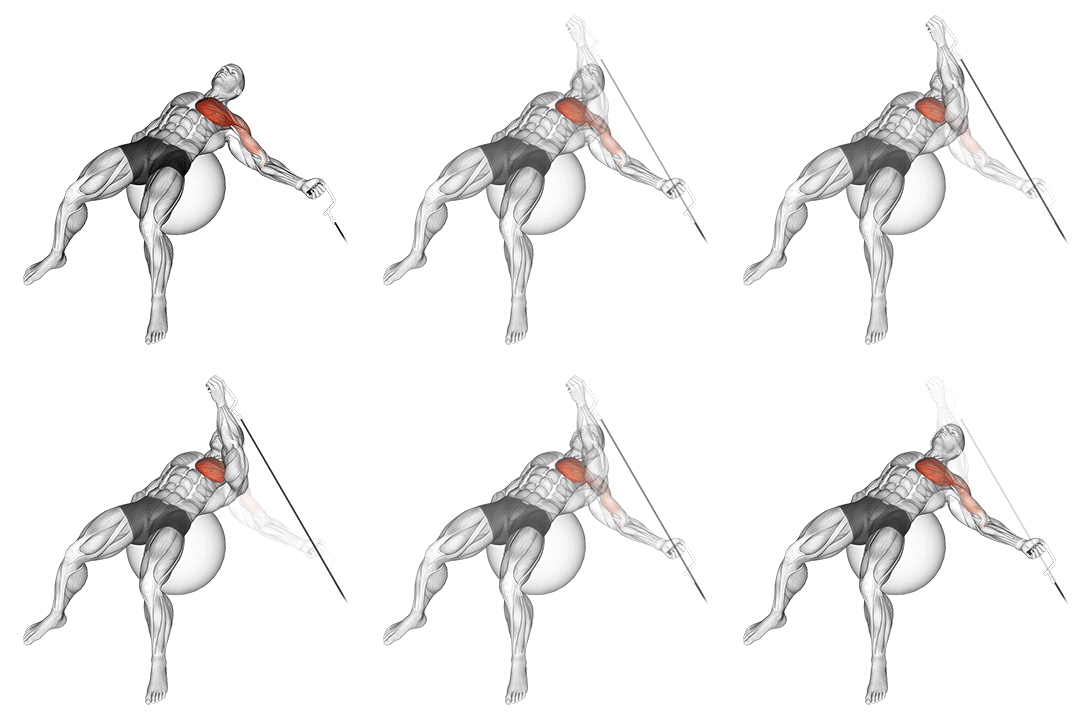
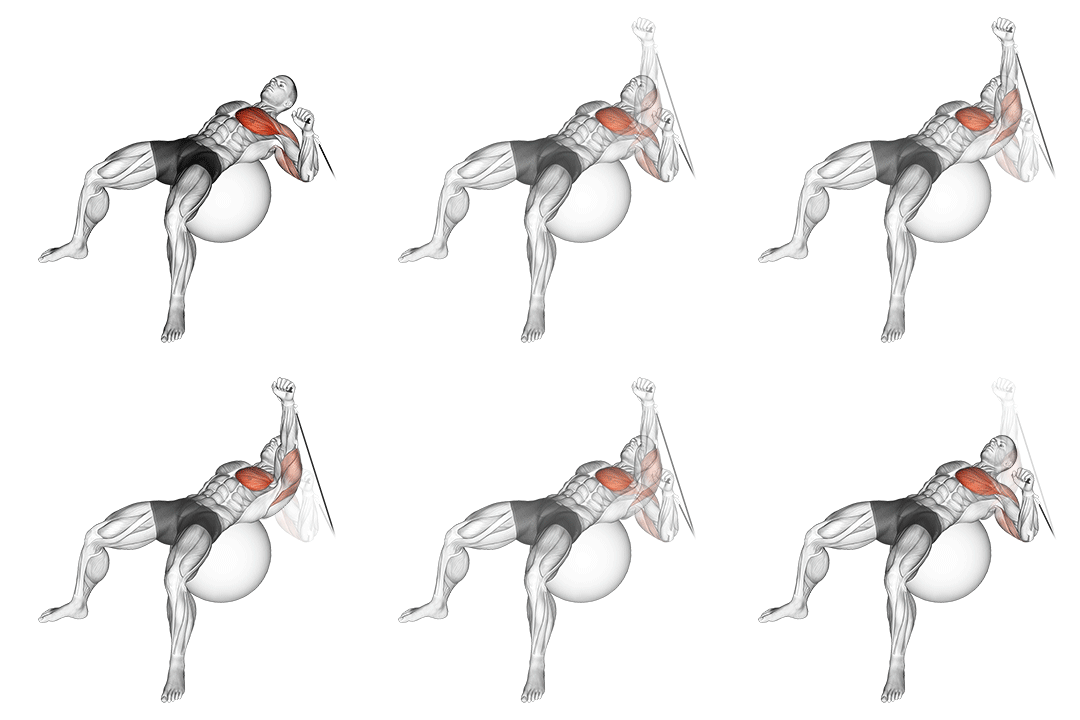
Cable One Arm Fly On Exercise Ball
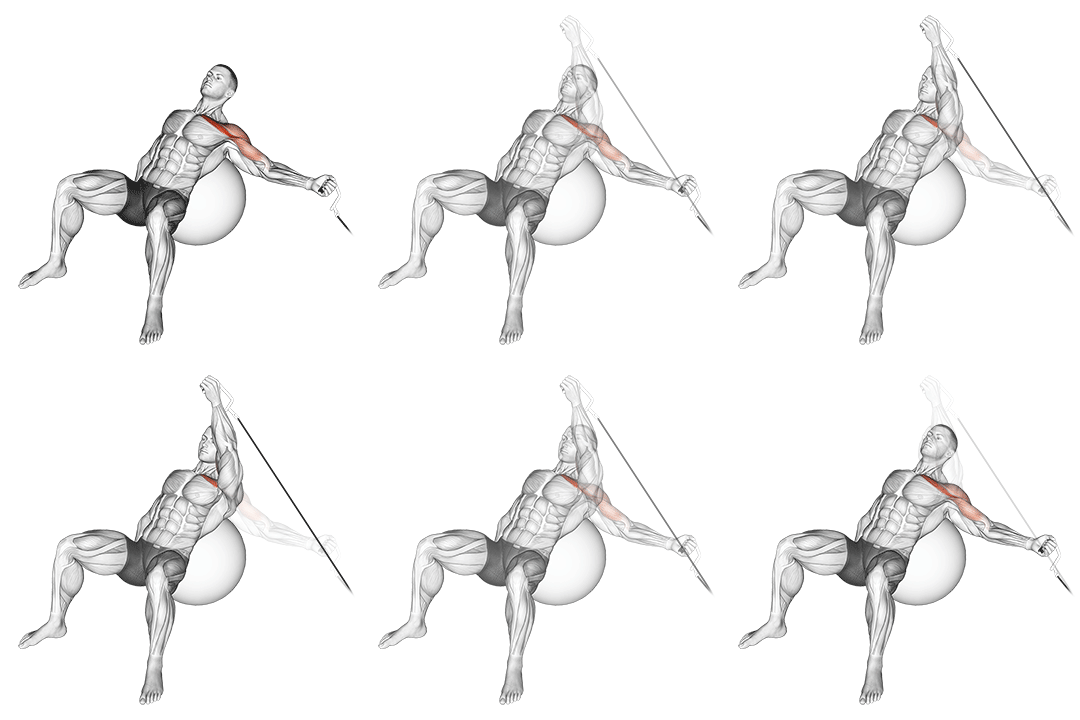
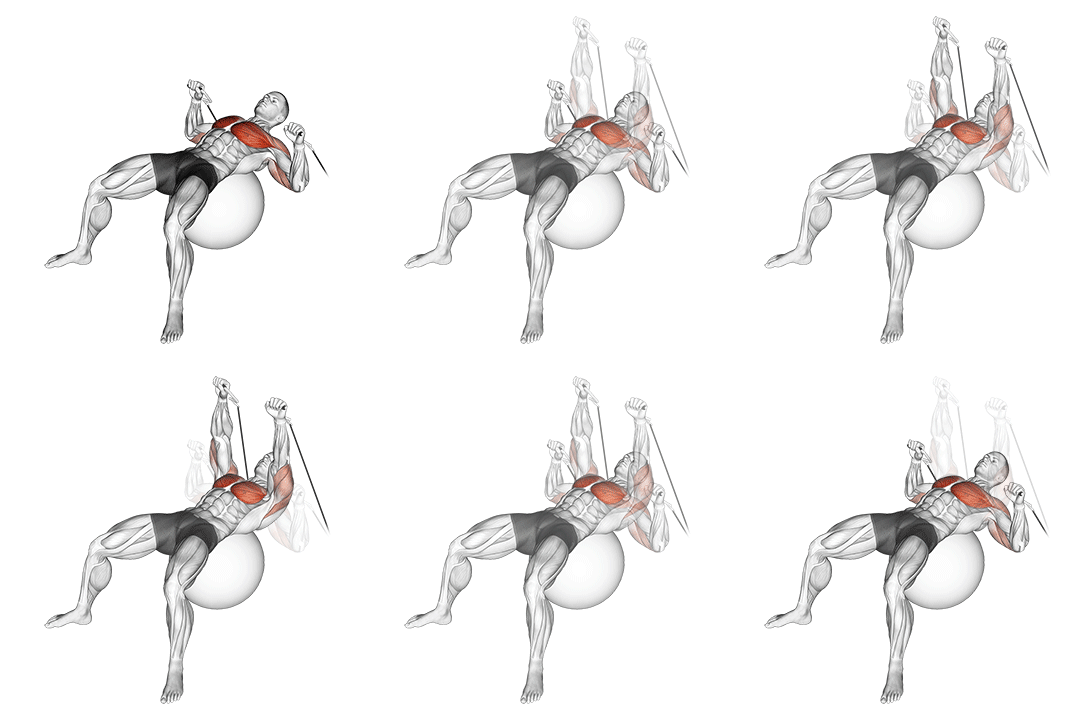
Cable One Arm Incline Fly On Exercise Ball
Head-to-Head Comparison
| Attribute | Cable One Arm Fly On Exercise Ball | Cable One Arm Incline Fly On Exercise Ball |
|---|---|---|
| Target Muscle |
Pectorals
|
Pectorals
|
| Body Part |
Chest
|
Chest
|
| Equipment |
Stability-ball
|
Stability-ball
|
| Difficulty |
Intermediate
|
Intermediate
|
| Movement Type |
Isolation
|
Isolation
|
| Secondary Muscles |
2
|
2
|
Secondary Muscles Activated
Cable One Arm Fly On Exercise Ball
Cable One Arm Incline Fly On Exercise Ball
Visual Comparison
Overview
Cable One Arm Fly On Exercise Ball vs Cable One Arm Incline Fly On Exercise Ball — you’ve got two isolation variations that use a stability ball and a single cable arm to press length-tension and force-vector advantages into your chest work. This guide helps you pick: we’ll compare primary and secondary muscle activation, list exact setup and technique cues, look at biomechanics (force vectors and muscle length-tension), weigh difficulty and injury risk, and give clear winners for hypertrophy, strength, beginners, and home training.
Key Differences
- Both exercises target the Pectorals using Stability-ball. The main differences are in their movement patterns and muscle activation angles.
Pros & Cons
Cable One Arm Fly On Exercise Ball
+ Pros
- Stronger horizontal force vector for mid-pec activation
- Simpler pulley placement and setup on most cable stations
- Easier to progressively overload with consistent line-of-pull
- Greater core and pelvic stabilization demand improves anti-rotation
− Cons
- Less emphasis on upper chest development compared with incline
- Stability ball adds balance demand that can limit load
- Single-arm torque can expose shoulder mobility asymmetries
Cable One Arm Incline Fly On Exercise Ball
+ Pros
- Biases clavicular (upper) fibers for targeted upper-pec work
- Changes force vector to complement flat pressing movements
- Can improve shoulder flexion control and scapular stability
- Useful for sculpting upper-chest insertion and slope
− Cons
- Requires precise ball and pulley angle (30–45°) to be effective
- Slightly higher anterior deltoid and shoulder stress
- Balance demands plus incline positioning can reduce usable load
When Each Exercise Wins
The incline shifts the force vector to load upper-pec fibers more (about 10–20% greater emphasis), and controlled 8–12 rep sets at 2–0–2 tempo maximize time under tension for targeted hypertrophy.
While both are isolation moves, the flatter horizontal vector allows slightly heavier and more consistent loading, making it a better accessory to build pressing strength and mid-pec density with 6–10 rep ranges.
It has simpler pulley setup and a more intuitive adduction path; beginners can focus on scapular retraction, a soft 10–20° elbow bend, and stable foot placement before progressing to inclined variations.
Most home setups replicate a basic cable pulley or band substitute at shoulder height; the flat alignment demands fewer angle tweaks and is easier to replicate with resistance bands and a stability ball.
Frequently Asked Questions
Can I do both Cable One Arm Fly On Exercise Ball and Cable One Arm Incline Fly On Exercise Ball in the same workout?
Yes. Use the incline first to pre-exhaust the upper pec for 8–10 reps, then follow with the flat one-arm fly for 8–12 reps to target mid-pec under fatigue. Keep total sets moderate (3–4 per variation) to avoid overworking the shoulder joint.
Which exercise is better for beginners?
Cable One Arm Fly On Exercise Ball is better for beginners because its horizontal path and simpler pulley placement make it easier to learn scapular control and proper elbow positioning before attempting incline angles.
How do the muscle activation patterns differ?
The incline version shifts the cable force upward, increasing clavicular head activation and anterior deltoid involvement; the flat-oriented fly produces a more horizontal adduction that emphasizes the sternal pec fibers and requires more core anti-rotation.
Can Cable One Arm Incline Fly On Exercise Ball replace Cable One Arm Fly On Exercise Ball?
It can replace it when your priority is upper-chest development, but it won’t load the mid-pec identically. For balanced chest development rotate both variations across training blocks to address different portions of the pectoralis major.
Expert Verdict
Pick the Cable One Arm Fly On Exercise Ball when you want consistent mid-pectoralis loading, simpler setup, and easier progression—use 3–5 sets of 6–12 reps, focus on a 2–3s eccentric and a slight elbow bend. Choose the Cable One Arm Incline Fly On Exercise Ball when you need extra upper-chest emphasis: set the ball so your torso is 30–45° and aim for 8–12 reps with a controlled 2–0–2 tempo. Maintain scapular retraction and core bracing on both variations to protect the shoulder and get the most muscle growth from each rep.
Also Compare
More comparisons with Cable One Arm Fly On Exercise Ball
More comparisons with Cable One Arm Incline Fly On Exercise Ball
Compare More Exercises
Use our free comparison tool to analyze any two exercises head-to-head.
Compare Exercises