

Cable One Arm Fly On Exercise Ball vs Cable One Arm Press On Exercise Ball: Complete Comparison Guid
Cable One Arm Fly On Exercise Ball vs Cable One Arm Press On Exercise Ball — two single-arm cable moves that use a stability ball but load your chest very differently. You’ll learn which exercise emphasizes stretch and isolation versus which allows heavier loading and carryover to pushing strength. I’ll cover primary and secondary muscle activation, exact setup and technique cues (elbow angle, ball placement, cable height), progression options, injury considerations, and clear recommendations for hypertrophy, strength, beginners, and home workouts so you can pick the right move for your goals.
Exercise Comparison
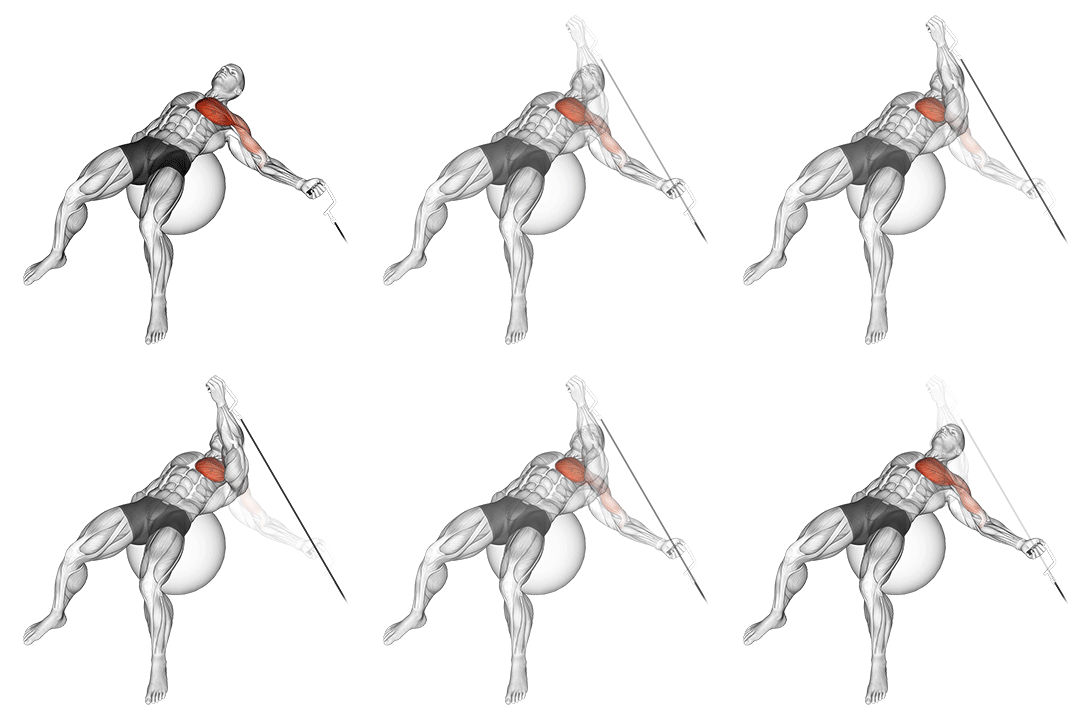
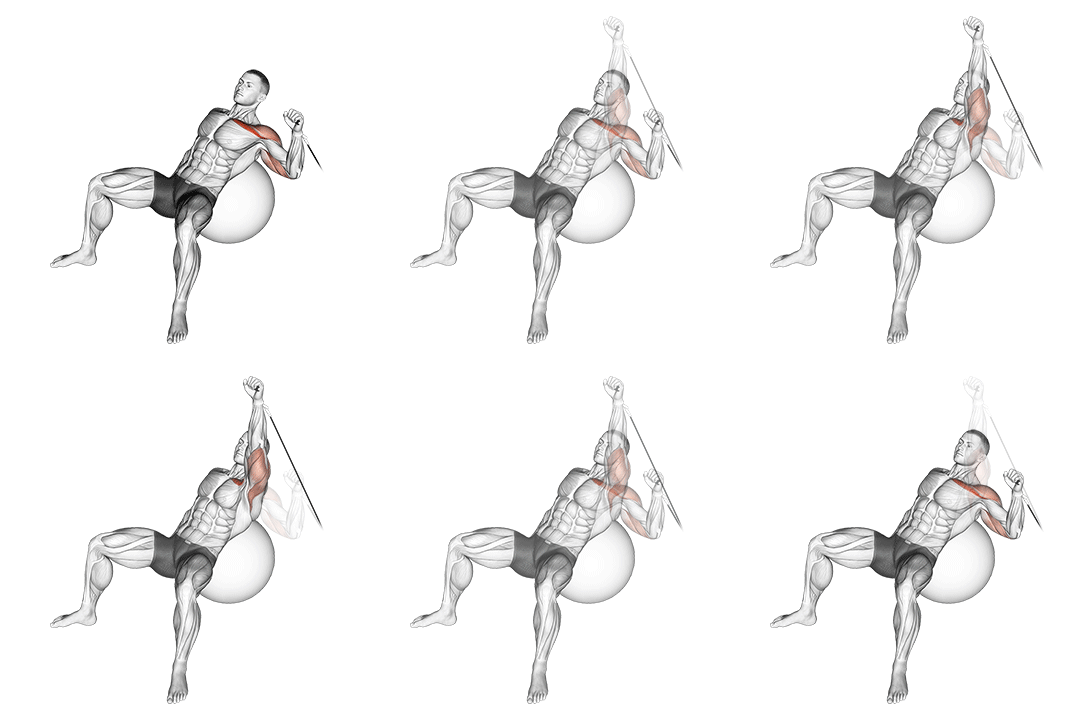
Cable One Arm Fly On Exercise Ball
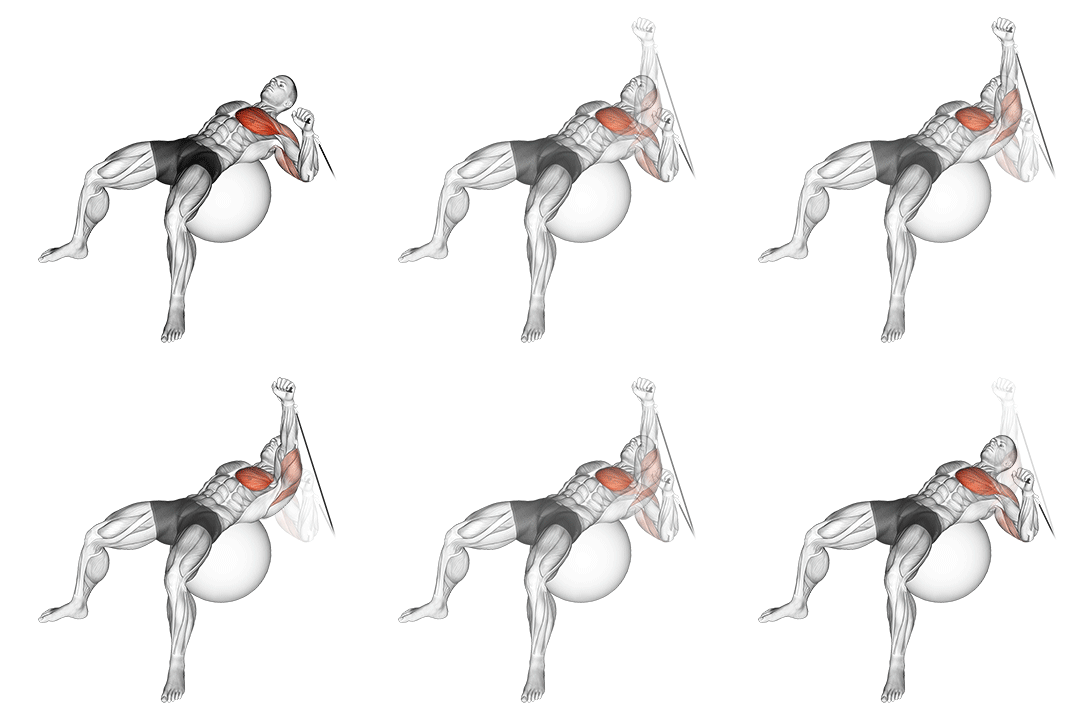
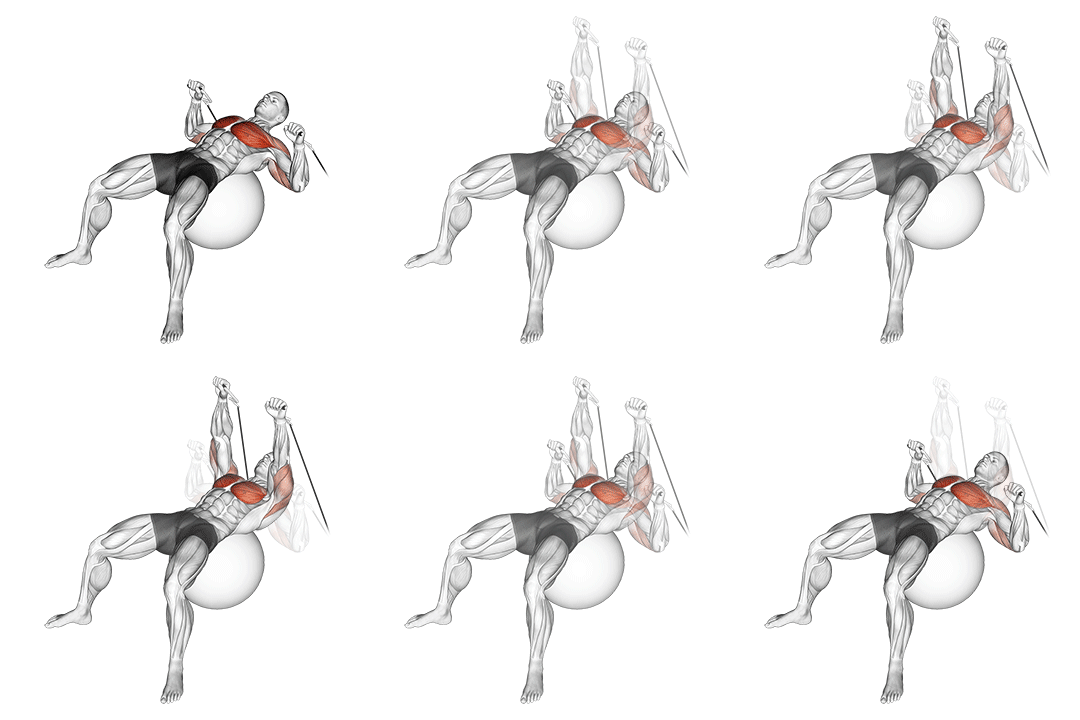
Cable One Arm Press On Exercise Ball
Head-to-Head Comparison
| Attribute | Cable One Arm Fly On Exercise Ball | Cable One Arm Press On Exercise Ball |
|---|---|---|
| Target Muscle |
Pectorals
|
Pectorals
|
| Body Part |
Chest
|
Chest
|
| Equipment |
Stability-ball
|
Stability-ball
|
| Difficulty |
Intermediate
|
Advanced
|
| Movement Type |
Isolation
|
Compound
|
| Secondary Muscles |
2
|
2
|
Secondary Muscles Activated
Cable One Arm Fly On Exercise Ball
Cable One Arm Press On Exercise Ball
Visual Comparison
Overview
Cable One Arm Fly On Exercise Ball vs Cable One Arm Press On Exercise Ball — two single-arm cable moves that use a stability ball but load your chest very differently. You’ll learn which exercise emphasizes stretch and isolation versus which allows heavier loading and carryover to pushing strength. I’ll cover primary and secondary muscle activation, exact setup and technique cues (elbow angle, ball placement, cable height), progression options, injury considerations, and clear recommendations for hypertrophy, strength, beginners, and home workouts so you can pick the right move for your goals.
Key Differences
- Cable One Arm Fly On Exercise Ball is an isolation exercise, while Cable One Arm Press On Exercise Ball is a compound movement.
- Difficulty levels differ: Cable One Arm Fly On Exercise Ball is intermediate, while Cable One Arm Press On Exercise Ball is advanced.
- Both exercises target the Pectorals using Stability-ball. The main differences are in their movement patterns and muscle activation angles.
Pros & Cons
Cable One Arm Fly On Exercise Ball
+ Pros
- Better isolation of pectorals and stretch-mediated stimulus
- Lower absolute load reduces joint compressive stress
- Easier setup and smaller weight jumps for precise progressive overload
- Safer for unilateral technique work and correcting imbalances
− Cons
- Limited ability to use heavy external loads for maximal strength
- Higher risk of overstretch if scapular control is poor
- Less carryover to compound pushing strength
Cable One Arm Press On Exercise Ball
+ Pros
- Greater overload potential for hypertrophy and strength
- Stronger carryover to pressing movements and athletic pushes
- Engages shoulders, triceps, and core—more functional
- Allows lower-rep strength phases (3–6) and heavier progressive loading
− Cons
- Higher technical demand and balance requirement on the ball
- Increased shoulder joint stress under heavy loads
- Requires careful progression to avoid compensatory torso rotation
When Each Exercise Wins
The press allows heavier loads and higher motor-unit recruitment which supports progressive overload (6–12+ rep ranges). Its compound vector recruits more fibers across the pec and deltoid, promoting greater cross-sectional growth when programmed with controlled sets and tempos.
Strength improvements require high force output and neural adaptation; the press lets you use heavier absolute loads and 3–6 rep schemes while challenging stabilizers, producing better transfer to bilateral pressing strength.
The fly isolates the chest and uses lower loads, letting you learn horizontal adduction, elbow positioning (~20–30° bend), and scapular control with less risk. This builds the motor patterns needed before advancing to unstable heavy presses.
Most home setups have lighter resistance options; the fly delivers a strong hypertrophy stimulus with bands or light cables and a stability ball, and it requires less technical balance than the heavy single-arm press.
Frequently Asked Questions
Can I do both Cable One Arm Fly On Exercise Ball and Cable One Arm Press On Exercise Ball in the same workout?
Yes. Start with the press if you prioritize strength to take advantage of fresher neuromuscular capacity, then finish with the fly for targeted fatigue and stretch. Keep total volume sensible—2–4 working sets per exercise or rotate them across workouts to avoid overuse.
Which exercise is better for beginners?
Cable One Arm Fly On Exercise Ball is better for beginners because it uses lighter loads and simpler motor patterns, allowing you to learn scapular stability and proper elbow angle (~20–30°) before adding instability and heavier pressing.
How do the muscle activation patterns differ?
The fly emphasizes sustained tension and lengthened pec loading through a broad eccentric and end-range isometric, while the press shifts activation toward concentric force production with greater triceps and anterior deltoid contribution, especially near lockout.
Can Cable One Arm Press On Exercise Ball replace Cable One Arm Fly On Exercise Ball?
Not entirely. The press can replicate much of the pec stimulus with heavier load, but it reduces isolated stretch under tension and changes the activation ratio between pec, deltoid, and triceps. Use the press when you need overload; keep the fly for targeted isolation and range-focused work.
Expert Verdict
Use the Cable One Arm Fly On Exercise Ball when your goal is targeted chest isolation, correcting unilateral imbalances, or working in higher rep ranges (8–15) with precise tempo and end-range stretch. Choose the Cable One Arm Press On Exercise Ball when you need heavier loading, strength carryover to pressing, and multi-joint stimulus—program 3–6 sets of 4–8 reps for strength or 6–12 for hypertrophy with strict core bracing. If you’re new to single-arm cable work, start with flies to build scapular control and gradually progress to presses as your stability and shoulder tolerance improve.
Also Compare
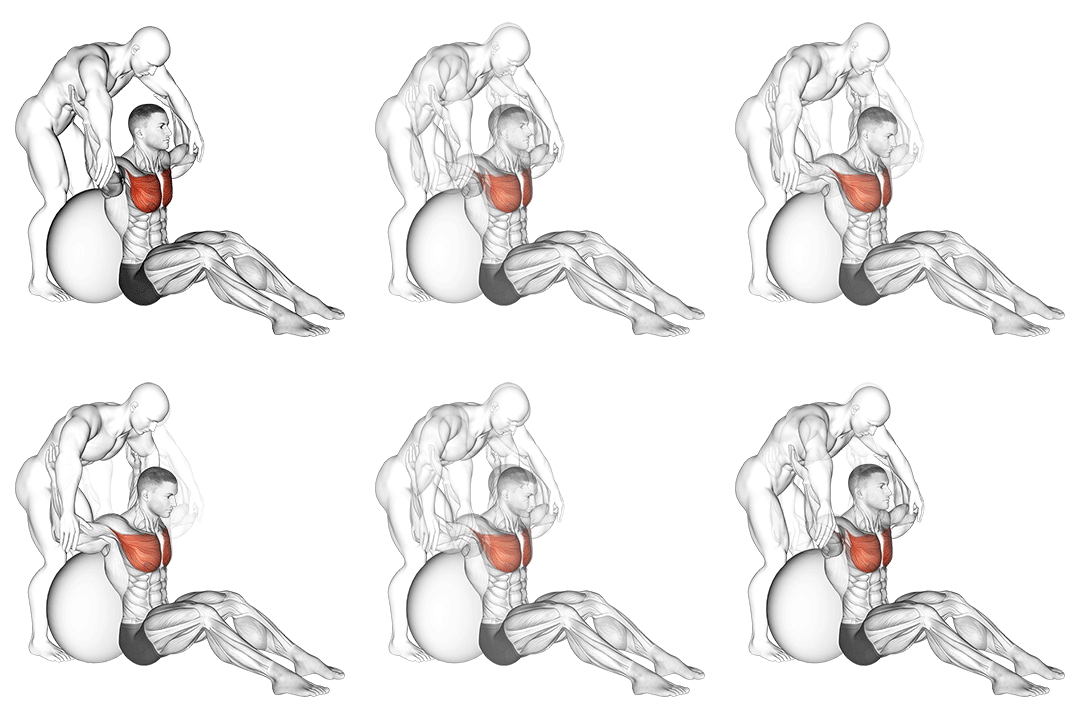
More comparisons with Cable One Arm Fly On Exercise Ball
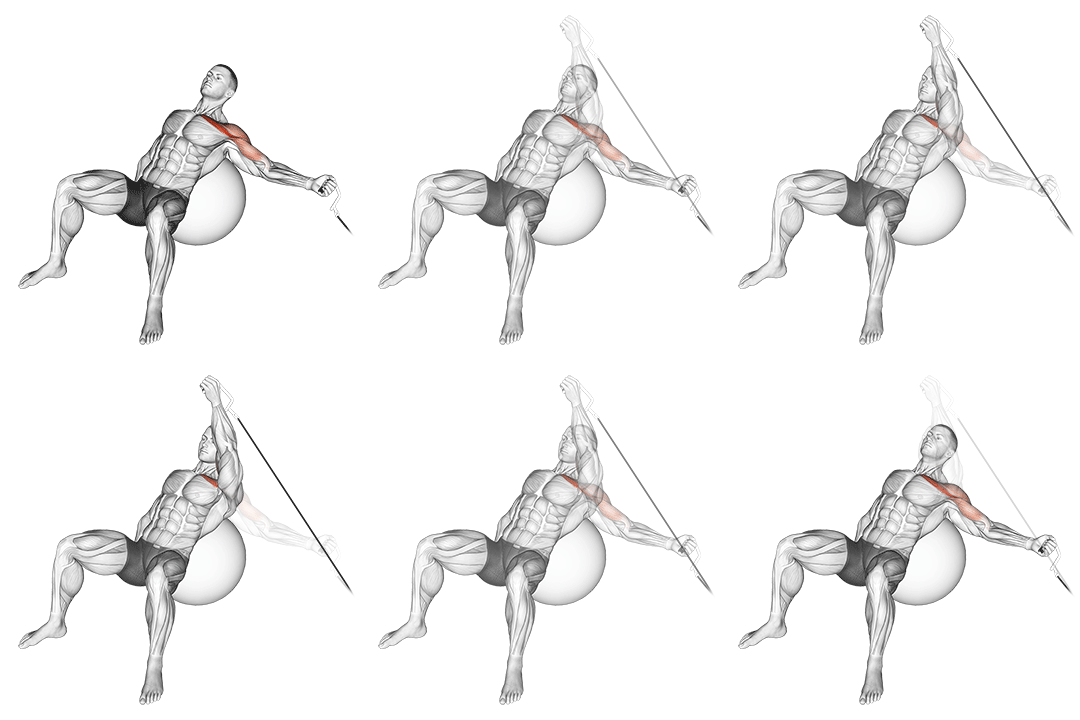
More comparisons with Cable One Arm Press On Exercise Ball
Compare More Exercises
Use our free comparison tool to analyze any two exercises head-to-head.
Compare Exercises