

Cable One Arm Fly On Exercise Ball vs Cable Press On Exercise Ball: Complete Comparison Guide
Cable One Arm Fly On Exercise Ball vs Cable Press On Exercise Ball — two chest moves that use a stability ball but stress your body differently. You’ll get a clear breakdown of which exercise targets the pectorals more directly, how secondary muscles like deltoids and triceps engage, and which option fits hypertrophy, strength, or home workouts. I’ll cover biomechanics, key technique cues, rep ranges (6–12 for strength/hypertrophy emphasis, 8–15 for isolation work), and practical progressions so you can pick the right move for your goals.
Exercise Comparison
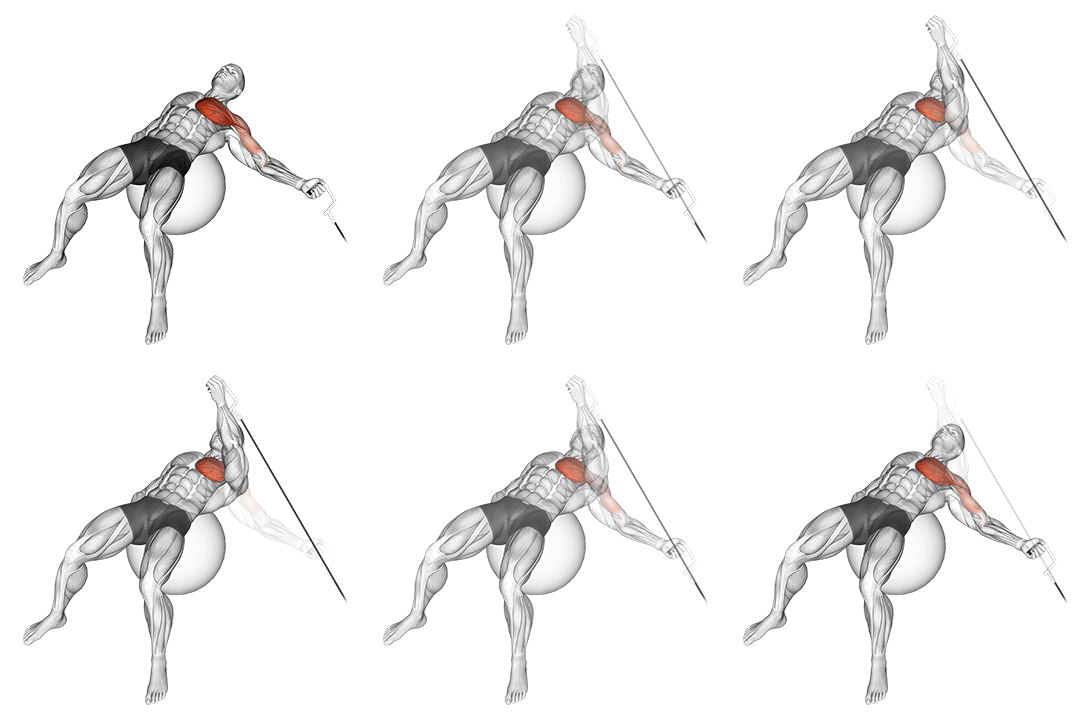
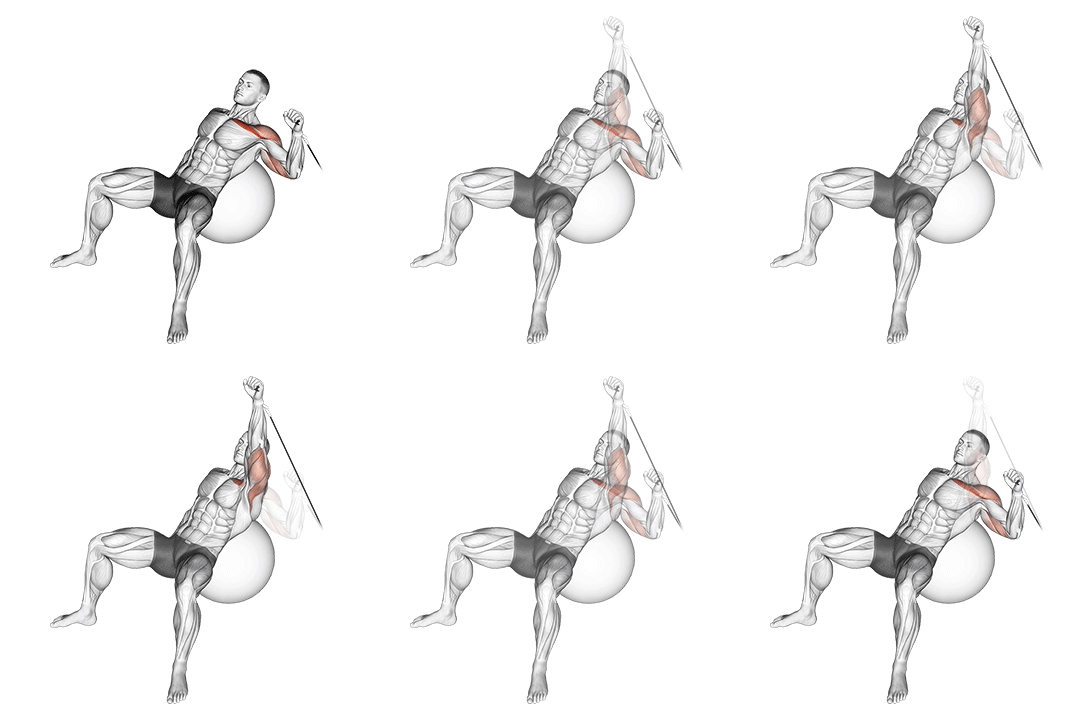
Cable One Arm Fly On Exercise Ball
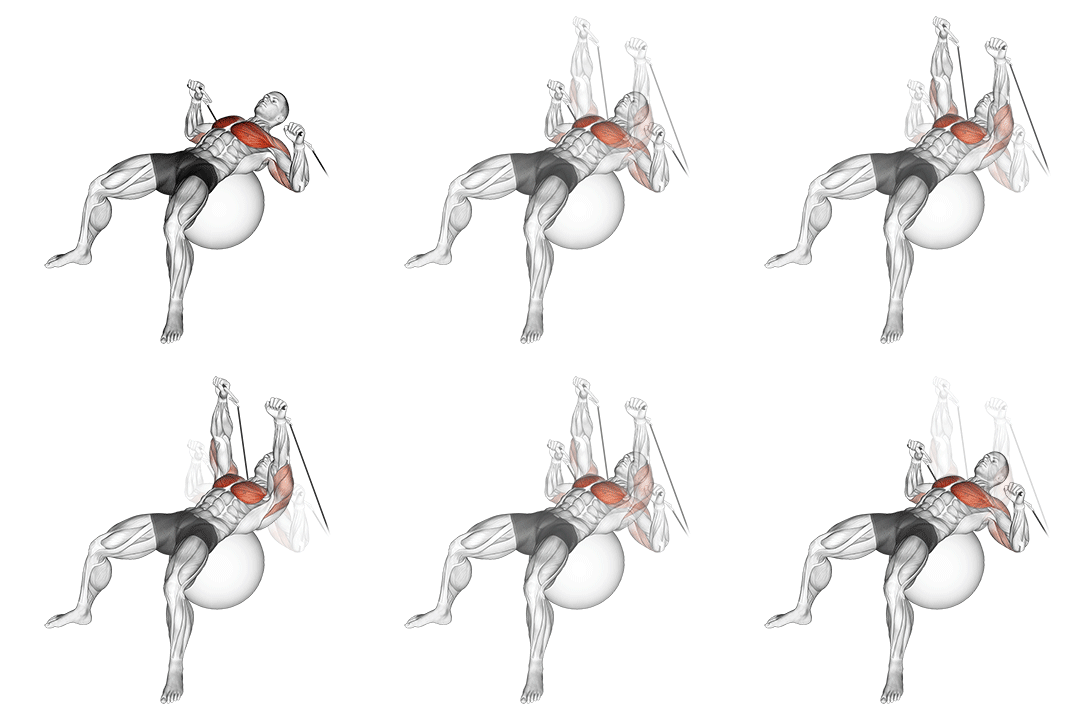
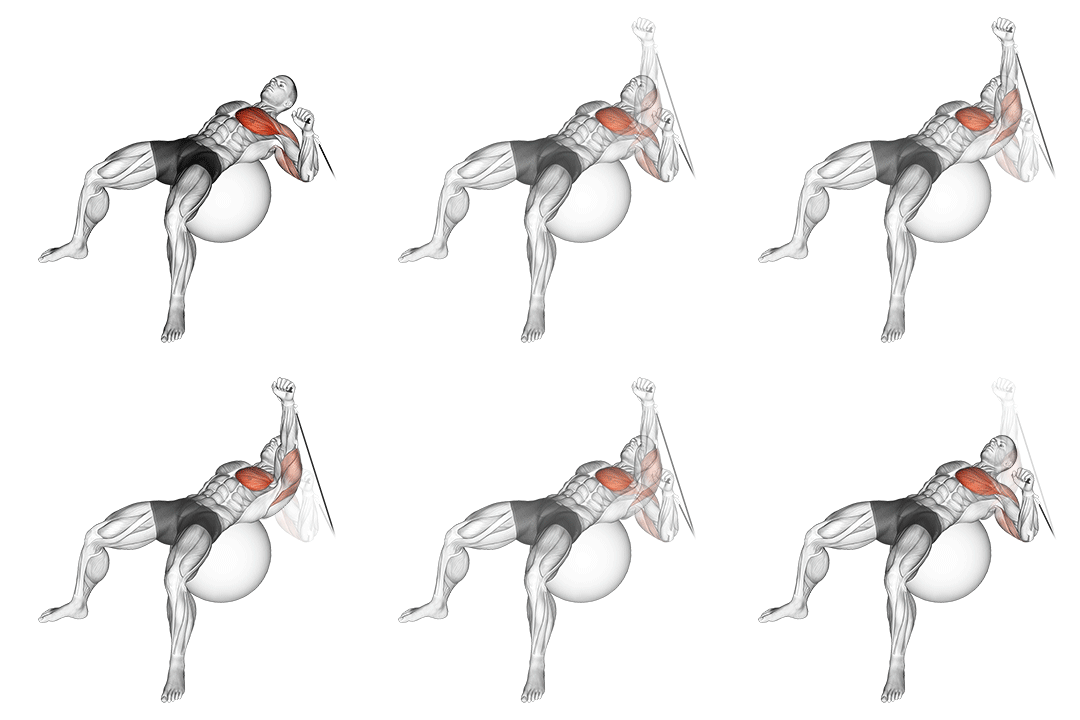
Cable Press On Exercise Ball
Head-to-Head Comparison
| Attribute | Cable One Arm Fly On Exercise Ball | Cable Press On Exercise Ball |
|---|---|---|
| Target Muscle |
Pectorals
|
Pectorals
|
| Body Part |
Chest
|
Chest
|
| Equipment |
Stability-ball
|
Stability-ball
|
| Difficulty |
Intermediate
|
Intermediate
|
| Movement Type |
Isolation
|
Compound
|
| Secondary Muscles |
2
|
2
|
Secondary Muscles Activated
Cable One Arm Fly On Exercise Ball
Cable Press On Exercise Ball
Visual Comparison
Overview
Cable One Arm Fly On Exercise Ball vs Cable Press On Exercise Ball — two chest moves that use a stability ball but stress your body differently. You’ll get a clear breakdown of which exercise targets the pectorals more directly, how secondary muscles like deltoids and triceps engage, and which option fits hypertrophy, strength, or home workouts. I’ll cover biomechanics, key technique cues, rep ranges (6–12 for strength/hypertrophy emphasis, 8–15 for isolation work), and practical progressions so you can pick the right move for your goals.
Key Differences
- Cable One Arm Fly On Exercise Ball is an isolation exercise, while Cable Press On Exercise Ball is a compound movement.
- Both exercises target the Pectorals using Stability-ball. The main differences are in their movement patterns and muscle activation angles.
Pros & Cons
Cable One Arm Fly On Exercise Ball
+ Pros
- High pec isolation — emphasizes horizontal adduction and mid-range pec loading
- Lower load requirement reduces compressive shoulder stress compared with heavy presses
- Single-arm format corrects left-right imbalances and improves unilateral control
- Easier setup for small gyms or single-cable towers
− Cons
- Limited maximal loading for heavy strength progressions
- Can overstretch anterior shoulder if taken too deep (end-range risk)
- Less triceps and deltoid development compared with pressing movements
Cable Press On Exercise Ball
+ Pros
- Compound pattern builds chest, shoulders, and triceps simultaneously
- Higher absolute loading potential for strength and muscle growth (use 3–6 or 6–12 rep ranges)
- Stability ball increases core and scapular stabilizer engagement
- Easily varied through grip, cable height, and tempo to manipulate force vectors
− Cons
- Higher coordination demand — balance and pressing need to be learned
- Greater cumulative shoulder and elbow stress under heavier loads
- Requires more equipment or a dual-pulley setup for optimal mechanics
When Each Exercise Wins
The press permits heavier loading and longer total work, which supports hypertrophy when paired with 6–12 reps and moderate rest. Its compound nature recruits more muscle mass per rep, increasing metabolic stress and mechanical tension across the chest.
Strength favors exercises that allow progressive overload; the press lets you increase resistance and practice force production through both shoulder and elbow extension. Use 3–6 reps and focus on stable scapular mechanics while limiting instability that reduces maximal force by ~10–20%.
Single-arm flies let new lifters learn horizontal adduction and chest contraction with simpler loading and less demand on pressing coordination. Start with 8–15 reps, light resistance, and focus on a controlled arc and scapular retraction.
Most home setups have a single cable or lighter equipment; the one-arm fly scales well with single-handle anchors and a stability ball. It requires less space and no heavy loading to be effective for chest development.
Frequently Asked Questions
What is the difference between Cable One Arm Fly On Exercise Ball and Cable Press On Exercise Ball?
Cable One Arm Fly On Exercise Ball primarily targets the Pectorals, while Cable Press On Exercise Ball focuses on the Pectorals. They also differ in equipment requirements: Cable One Arm Fly On Exercise Ball uses Stability-ball, while Cable Press On Exercise Ball requires Stability-ball.
Which is better: Cable One Arm Fly On Exercise Ball or Cable Press On Exercise Ball?
Neither exercise is universally better - it depends on your goals. Choose Cable One Arm Fly On Exercise Ball to emphasize the Pectorals. Choose Cable Press On Exercise Ball for focus on the Pectorals. Many training programs include both for balanced development.
Can I do Cable One Arm Fly On Exercise Ball and Cable Press On Exercise Ball in the same workout?
Yes, you can perform both exercises in the same workout. Since they target the same muscle group (Pectorals), consider spacing them apart or doing them on different days for optimal recovery.
Which exercise is harder: Cable One Arm Fly On Exercise Ball or Cable Press On Exercise Ball?
Cable One Arm Fly On Exercise Ball is rated as intermediate difficulty, while Cable Press On Exercise Ball is intermediate. Both exercises have similar difficulty levels.
Expert Verdict
Use Cable One Arm Fly On Exercise Ball when your goal is targeted chest development, unilateral correction, or when equipment is limited. Emphasize a controlled arc, avoid excessive end-range stretch (keep elbows slightly bent ~10–20°), and aim for 8–15 reps with slow eccentrics. Choose Cable Press On Exercise Ball when you want compound strength and higher mechanical tension across chest, shoulders, and triceps — load the press for 3–6 reps for strength or 6–12 for hypertrophy, and maintain solid scapular control on the ball. Both have roles: flies for isolation and control, presses for load and overall chest stimulus.
Also Compare
More comparisons with Cable One Arm Fly On Exercise Ball
More comparisons with Cable Press On Exercise Ball
Compare More Exercises
Use our free comparison tool to analyze any two exercises head-to-head.
Compare Exercises