

Cable One Arm Fly On Exercise Ball vs Chest Stretch With Exercise Ball: Complete Comparison Guide
Cable One Arm Fly On Exercise Ball vs Chest Stretch With Exercise Ball — you’re comparing two stability-ball moves that both target the pectorals but serve different goals. In this guide you’ll get clear, science-backed comparisons of muscle activation, equipment needs, technique cues, and injury risk. I’ll explain how each exercise loads the chest, when to use one for muscle growth or strength, and when the stretch is the smarter choice for mobility or recovery. Read the quick wins and actionable technique tips so you can pick the right move for your program.
Exercise Comparison
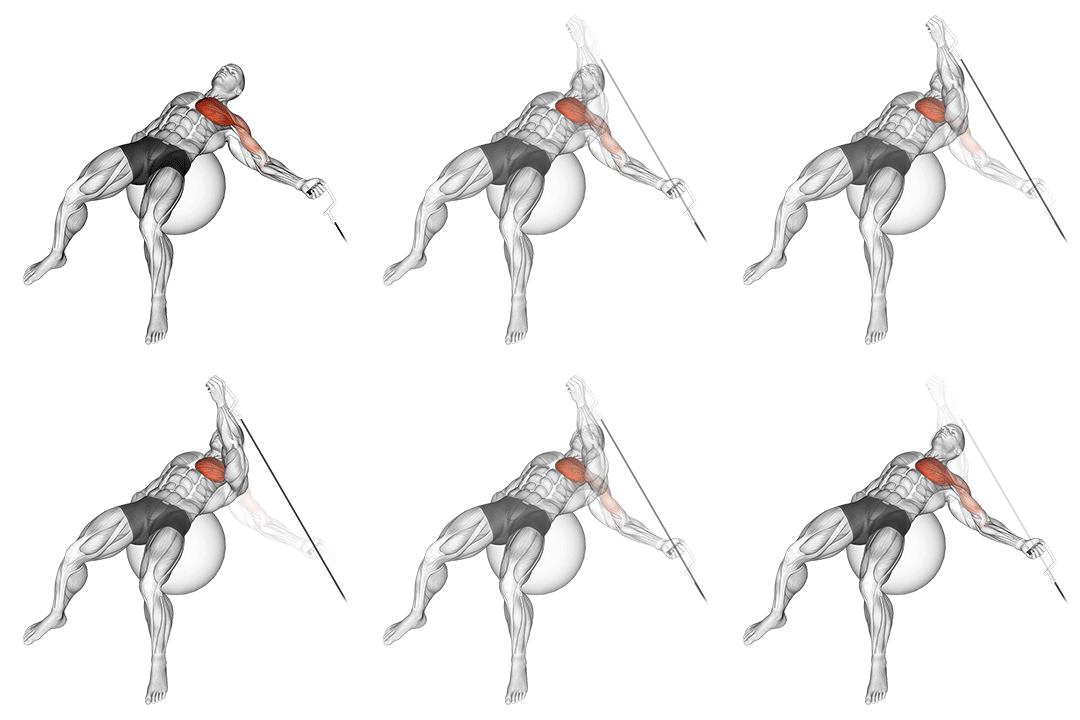
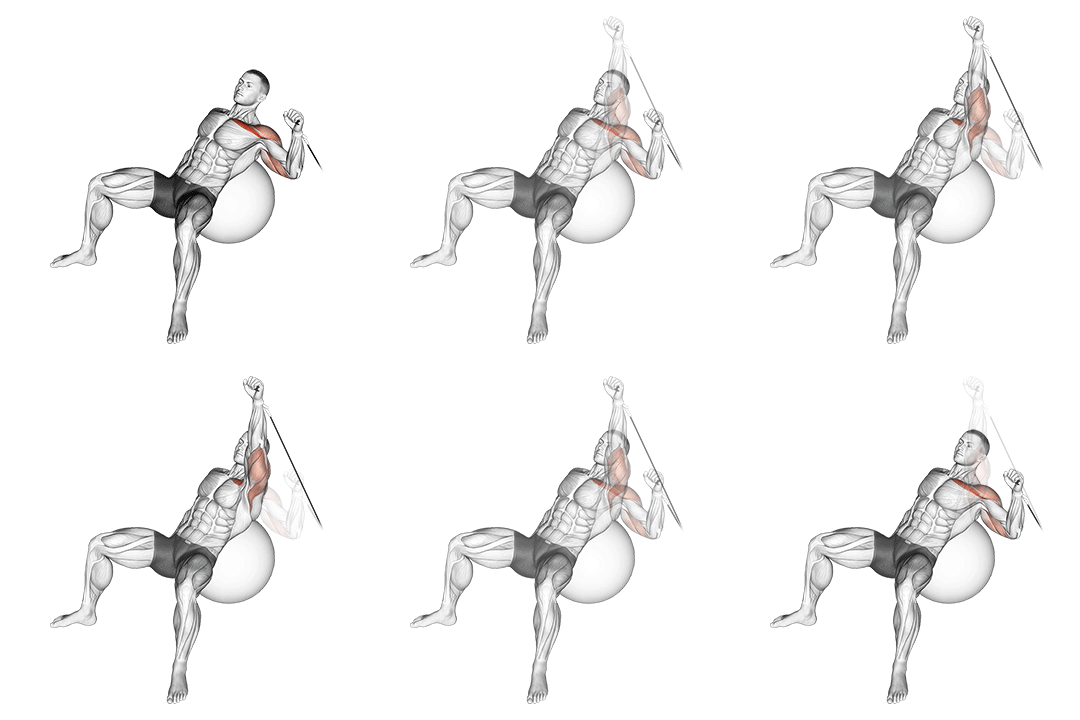
Cable One Arm Fly On Exercise Ball
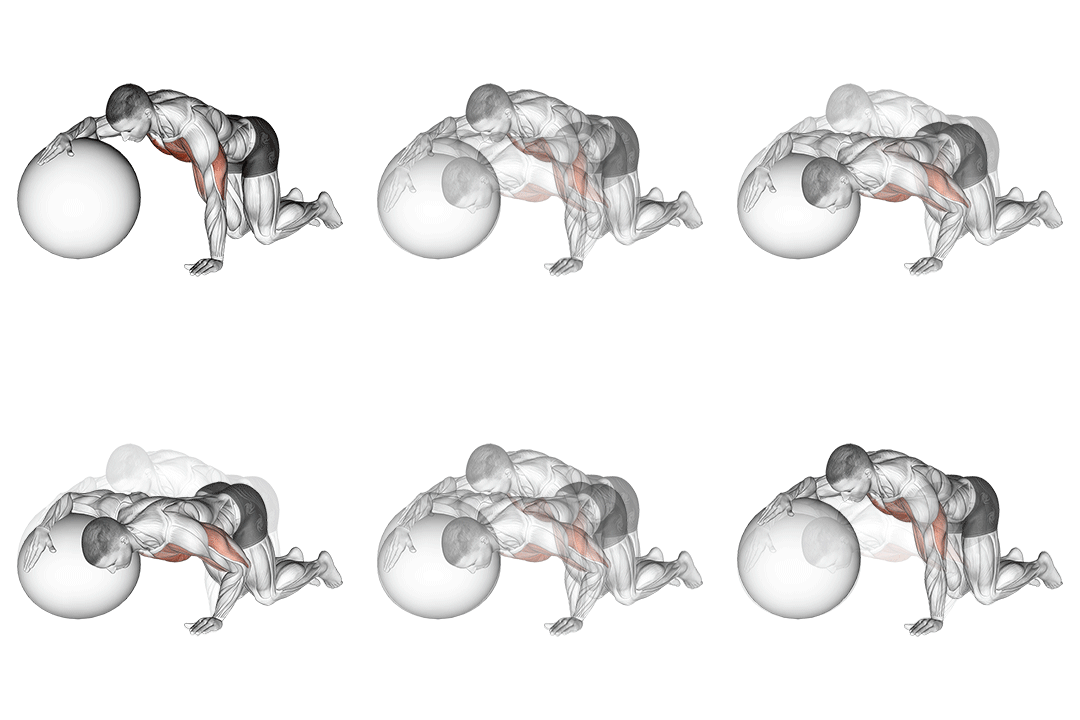
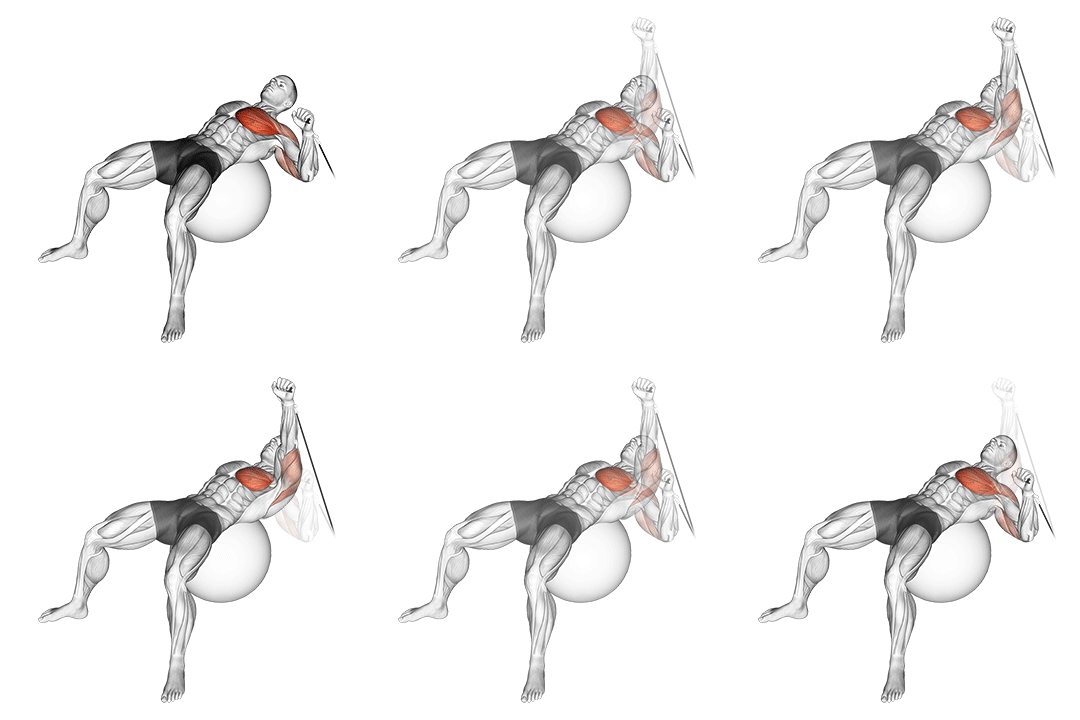
Chest Stretch With Exercise Ball
Head-to-Head Comparison
| Attribute | Cable One Arm Fly On Exercise Ball | Chest Stretch With Exercise Ball |
|---|---|---|
| Target Muscle |
Pectorals
|
Pectorals
|
| Body Part |
Chest
|
Chest
|
| Equipment |
Stability-ball
|
Stability-ball
|
| Difficulty |
Intermediate
|
Beginner
|
| Movement Type |
Isolation
|
Isolation
|
| Secondary Muscles |
2
|
2
|
Secondary Muscles Activated
Cable One Arm Fly On Exercise Ball
Chest Stretch With Exercise Ball
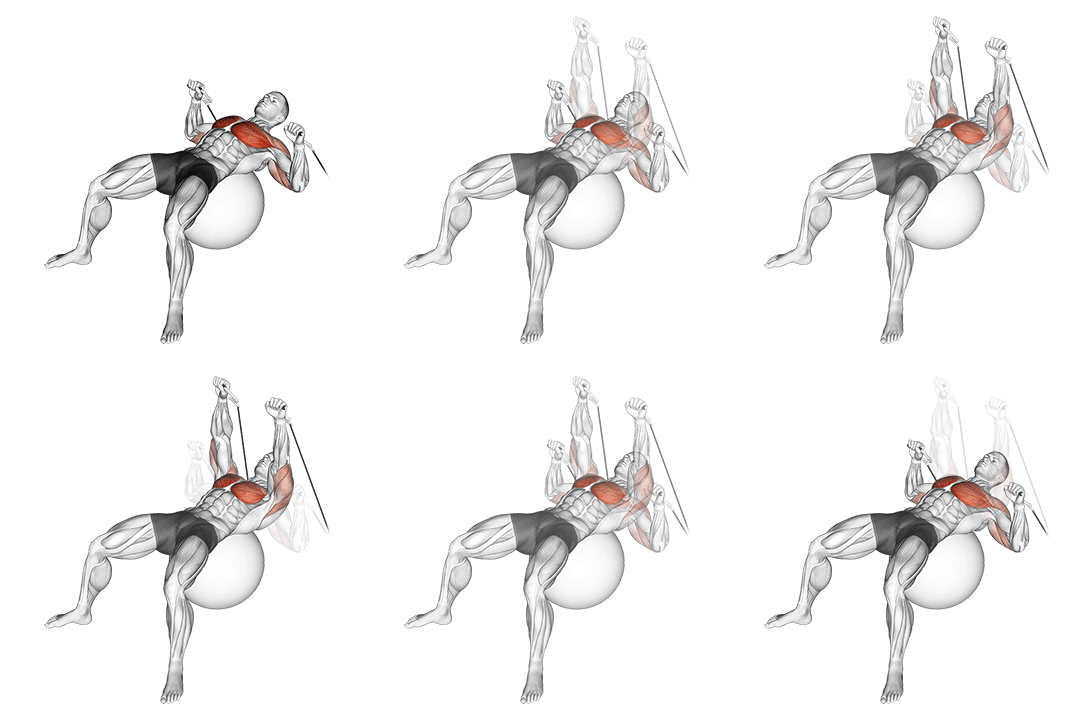
Visual Comparison
Overview
Cable One Arm Fly On Exercise Ball vs Chest Stretch With Exercise Ball — you’re comparing two stability-ball moves that both target the pectorals but serve different goals. In this guide you’ll get clear, science-backed comparisons of muscle activation, equipment needs, technique cues, and injury risk. I’ll explain how each exercise loads the chest, when to use one for muscle growth or strength, and when the stretch is the smarter choice for mobility or recovery. Read the quick wins and actionable technique tips so you can pick the right move for your program.
Key Differences
- Difficulty levels differ: Cable One Arm Fly On Exercise Ball is intermediate, while Chest Stretch With Exercise Ball is beginner.
- Both exercises target the Pectorals using Stability-ball. The main differences are in their movement patterns and muscle activation angles.
Pros & Cons
Cable One Arm Fly On Exercise Ball
+ Pros
- Direct mechanical loading of pectoralis major for hypertrophy
- Continuous tension from cable across the full ROM
- Unilateral setup corrects imbalances and improves core stability
- Multiple progression variables: load, angle, tempo, reps (8–12 recommended for hypertrophy)
− Cons
- Requires cable machine and space for setup
- Higher shoulder stress if technique breaks (overextension past ~30° behind neutral)
- Greater stabilization demand on an unstable surface can complicate form for some lifters
Chest Stretch With Exercise Ball
+ Pros
- Easy to learn and perform with minimal equipment
- Improves pectoral length-tension and thoracic extension mobility
- Low-load option for recovery, prehab, or post-workout mobility
- Safe way to increase shoulder extension and chest opening when held 30–60s
− Cons
- Minimal mechanical overload—poor choice for primary muscle growth
- Limited progression options for strength or hypertrophy
- If done improperly, can stress anterior shoulder or overcompress thoracic spine
When Each Exercise Wins
The cable fly provides sustained external resistance and clear concentric/eccentric loading, enabling progressive overload in the 8–12 rep range. Unilateral loading on the ball also forces stabilizer recruitment that supports muscle growth through increased mechanical tension.
Cable resistance lets you incrementally increase load and manipulate force vectors, so you can target stronger neural and mechanical adaptations. Use heavier loads for 4–6 reps with strict control and braced core on the stability ball.
The stretch is low-skill and low-load, teaching you thoracic extension and shoulder positioning without heavy external resistance. It builds mobility and prepares the shoulder for loaded horizontal adduction patterns.
It requires only a stability ball and no cable machine, making it easy to include in a home routine for mobility, warm-ups, or cool-downs. The cable fly typically needs gym equipment you may not have at home.
Frequently Asked Questions
Can I do both Cable One Arm Fly On Exercise Ball and Chest Stretch With Exercise Ball in the same workout?
Yes. Pair the Chest Stretch as a warm-up or cooldown and the Cable One Arm Fly as a primary chest access exercise. Do 30–60s stretches to prime tissue length, then perform 3–4 sets of 8–12 reps of the fly with controlled tempo.
Which exercise is better for beginners?
Chest Stretch With Exercise Ball is better for beginners because it teaches thoracic extension and shoulder positioning with low load. Start with mobility and stability, then progress to the Cable One Arm Fly once you can maintain spine and scapular control.
How do the muscle activation patterns differ?
The cable fly produces active concentric and eccentric pectoral contractions with peak tension near midline, while the chest stretch produces passive peak elongation at end-range with low concentric activity. The fly stresses horizontal adduction torque; the stretch emphasizes length-tension changes and scapular control.
Can Chest Stretch With Exercise Ball replace Cable One Arm Fly On Exercise Ball?
No, not for hypertrophy or strength. The chest stretch improves mobility and tissue length but offers minimal mechanical overload. If your goal is muscle growth, use the cable fly for progressive tension and add the stretch to preserve or improve range of motion.
Expert Verdict
Use Cable One Arm Fly On Exercise Ball when your goal is targeted chest loading and progressive muscle growth or unilateral strength work. Focus on a slight elbow bend (10–20°), controlled tempo (2s concentric, 2–3s eccentric), and avoid excessive shoulder extension past ~30° behind neutral. Choose Chest Stretch With Exercise Ball when your priority is mobility, thoracic extension, or recovery—hold 30–60 seconds with arms abducted ~90° to safely lengthen the pecs. For a balanced program, pair the fly for hypertrophy and the stretch to maintain range of motion and reduce injury risk.
Also Compare
More comparisons with Cable One Arm Fly On Exercise Ball
More comparisons with Chest Stretch With Exercise Ball
Compare More Exercises
Use our free comparison tool to analyze any two exercises head-to-head.
Compare Exercises