

Cable One Arm Incline Fly On Exercise Ball vs Cable One Arm Incline Press On Exercise Ball: Complete
Cable One Arm Incline Fly On Exercise Ball vs Cable One Arm Incline Press On Exercise Ball — you’re choosing between an isolation-style fly and a compound press, both performed on a stability ball. I’ll walk you through muscle activation, stability demands, equipment needs, difficulty, and when to pick each movement based on your goals. Expect clear cues for setup, recommended angles (30–45° incline), rep ranges for hypertrophy and strength, and biomechanical reasons why one emphasizes chest length-tension while the other lets you handle heavier loads and train pressing mechanics.
Exercise Comparison
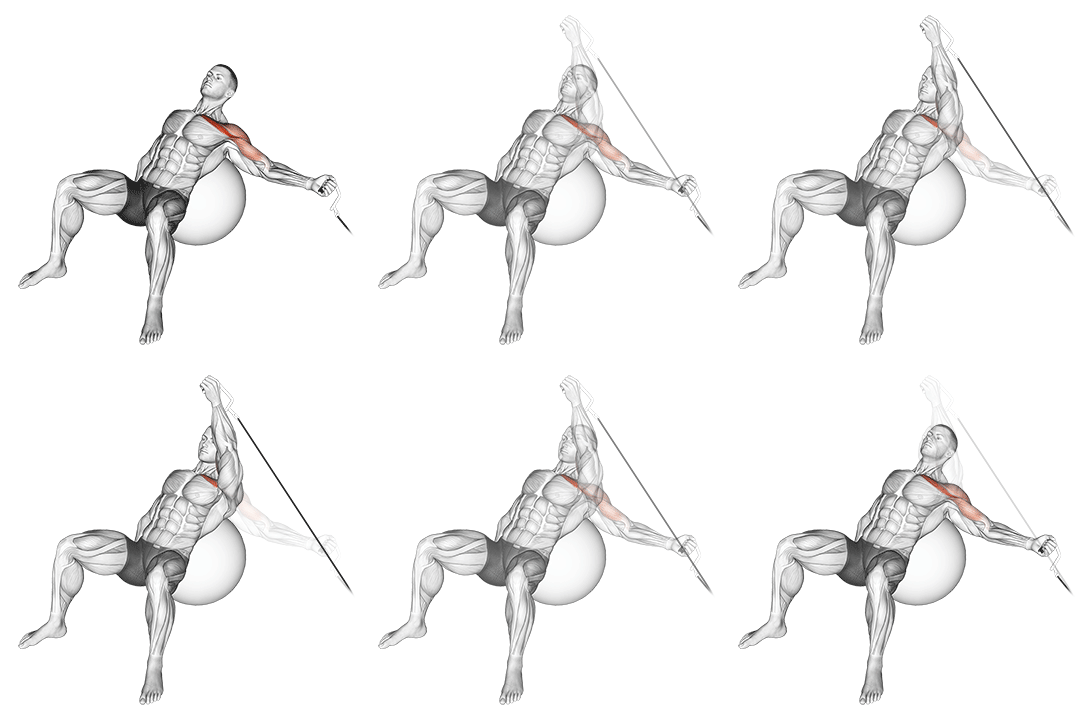
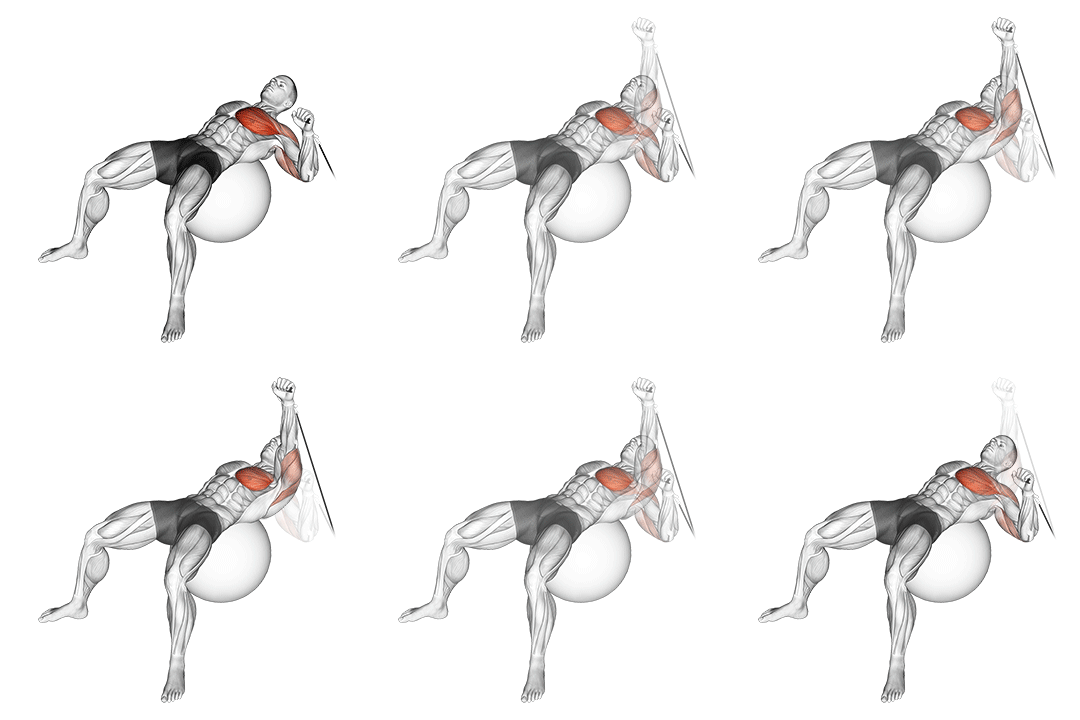
Cable One Arm Incline Fly On Exercise Ball
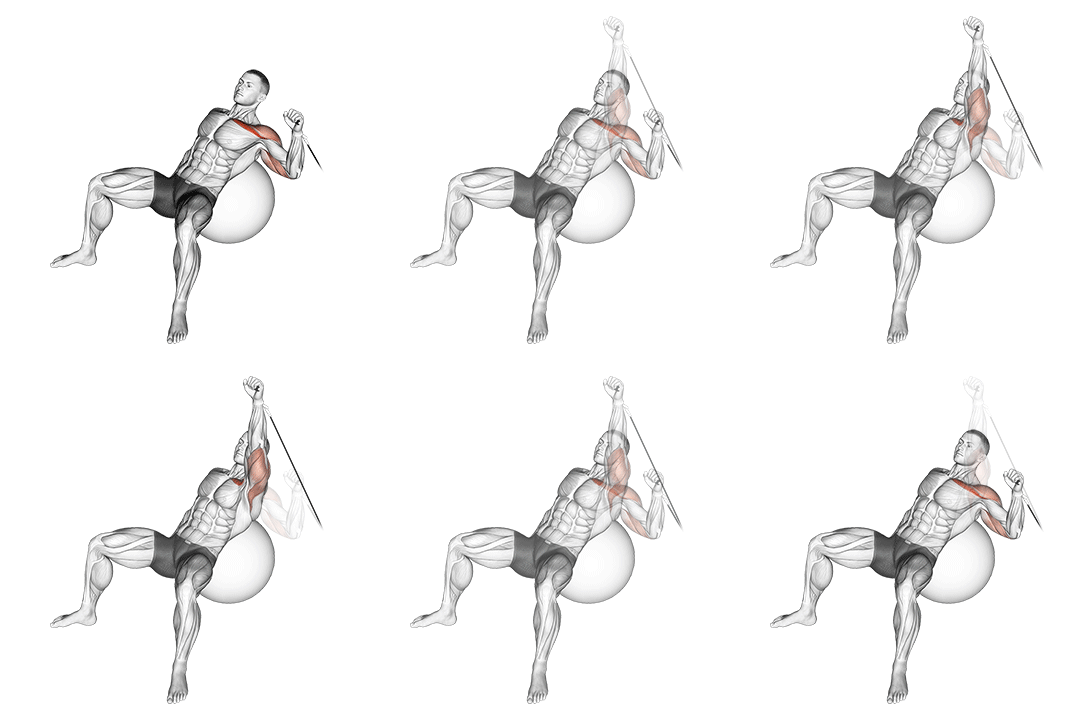
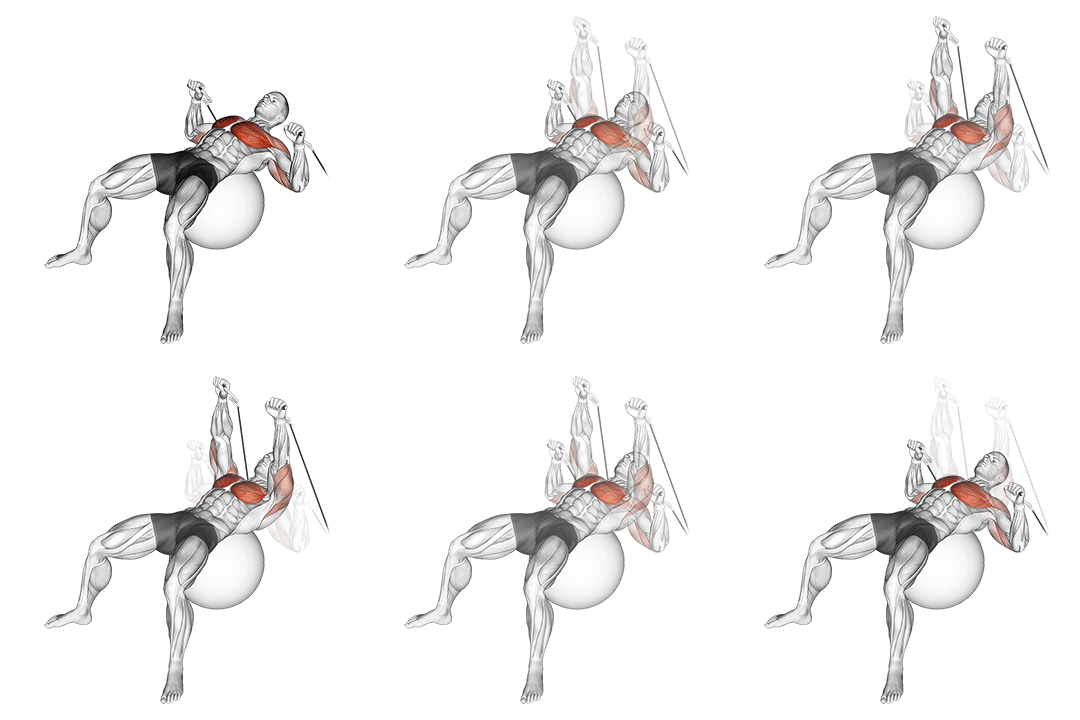
Cable One Arm Incline Press On Exercise Ball
Head-to-Head Comparison
| Attribute | Cable One Arm Incline Fly On Exercise Ball | Cable One Arm Incline Press On Exercise Ball |
|---|---|---|
| Target Muscle |
Pectorals
|
Pectorals
|
| Body Part |
Chest
|
Chest
|
| Equipment |
Stability-ball
|
Stability-ball
|
| Difficulty |
Intermediate
|
Advanced
|
| Movement Type |
Isolation
|
Compound
|
| Secondary Muscles |
2
|
2
|
Secondary Muscles Activated
Cable One Arm Incline Fly On Exercise Ball
Cable One Arm Incline Press On Exercise Ball
Visual Comparison
Overview
Cable One Arm Incline Fly On Exercise Ball vs Cable One Arm Incline Press On Exercise Ball — you’re choosing between an isolation-style fly and a compound press, both performed on a stability ball. I’ll walk you through muscle activation, stability demands, equipment needs, difficulty, and when to pick each movement based on your goals. Expect clear cues for setup, recommended angles (30–45° incline), rep ranges for hypertrophy and strength, and biomechanical reasons why one emphasizes chest length-tension while the other lets you handle heavier loads and train pressing mechanics.
Key Differences
- Cable One Arm Incline Fly On Exercise Ball is an isolation exercise, while Cable One Arm Incline Press On Exercise Ball is a compound movement.
- Difficulty levels differ: Cable One Arm Incline Fly On Exercise Ball is intermediate, while Cable One Arm Incline Press On Exercise Ball is advanced.
- Both exercises target the Pectorals using Stability-ball. The main differences are in their movement patterns and muscle activation angles.
Pros & Cons
Cable One Arm Incline Fly On Exercise Ball
+ Pros
- Stronger emphasis on pectoral isolation and stretch-mediated hypertrophy
- Lower coordination demand—easier motor learning on the ball
- Continuous cable tension gives consistent eccentric loading
- Easier to reduce load for rehabilitation or corrective work
− Cons
- Limited absolute load—harder to overload for maximal strength
- Long-lever position increases anterior shoulder stress if uncontrolled
- Less carryover to pressing strength and compound pushing patterns
Cable One Arm Incline Press On Exercise Ball
+ Pros
- Greater total-muscle recruitment—triceps and anterior deltoid add force
- Allows higher absolute loads for strength adaptations (roughly 15–30% higher than single-arm fly variants)
- Translates well to bilateral pressing and functional pushing
- Plenty of progression variables: load, tempo, pauses, unilateral vs bilateral
− Cons
- Higher technical and stability demand—advanced coordination needed
- Increased spinal and cervical stabilization requirements on the ball
- Greater injury risk if pressing heavy with poor scapular control
When Each Exercise Wins
The fly produces greater pec stretch at end-range and emphasizes horizontal adduction with minimal triceps assistance, optimizing length-tension for hypertrophy. Use 8–12 reps with 2–3 second eccentrics to exploit stretch-mediated growth.
The press lets you apply more load through combined shoulder and elbow extension, building pressing strength and triceps capacity. Train 4–6 reps with a controlled tempo and progressive overload to increase maximal force.
The fly isolates the chest movement and is easier to coach—fewer joints to control and simpler cues (soft elbow, lead with chest). Start light at 30–50% of your single-arm pressing capacity to master range and stability.
It’s simpler to scale and safer on limited equipment; you can use lighter cable resistance and focus on tempo. The fly requires less setup space and reduces the risk of overloading while on the ball.
Frequently Asked Questions
Can I do both Cable One Arm Incline Fly On Exercise Ball and Cable One Arm Incline Press On Exercise Ball in the same workout?
Yes. Sequence the fly first for pre-exhaustion (8–12 reps) to bias pec fibers, then perform the press for heavier load and compound strength (4–8 reps). Allow 60–90 seconds rest and monitor form as fatigue increases.
Which exercise is better for beginners?
The fly is generally better because it isolates horizontal adduction and has a simpler motor pattern. Start with light resistance, master the 30–45° incline and a modest ROM, then add the press as stability and strength improve.
How do the muscle activation patterns differ?
The fly emphasizes pec stretch and mid-range shortening with less elbow torque, so pecs do most of the work. The press spreads load to triceps and anterior deltoid, producing steadier activation across the concentric phase and allowing higher absolute force.
Can Cable One Arm Incline Press On Exercise Ball replace Cable One Arm Incline Fly On Exercise Ball?
Not entirely. The press can substitute when you need compound overload, but it reduces isolated pec emphasis and stretch stimulus. If hypertrophy or rehab-specific isolation is the goal, keep the fly in your plan.
Expert Verdict
Choose the Cable One Arm Incline Fly On Exercise Ball when your priority is chest isolation, hypertrophy, or teaching clean horizontal adduction with lower coordination demands. Use a 30–45° incline, keep a soft 10–20° elbow bend, and target 8–12 reps with slow eccentrics. Pick the Cable One Arm Incline Press On Exercise Ball when you want to build pressing strength, recruit triceps and anterior deltoid, and progress load—work in 4–8 rep ranges and emphasize scapular control during the press. Both deserve a spot in a balanced program: flys for focused chest work and presses for compound capacity and functional transfer.
Also Compare
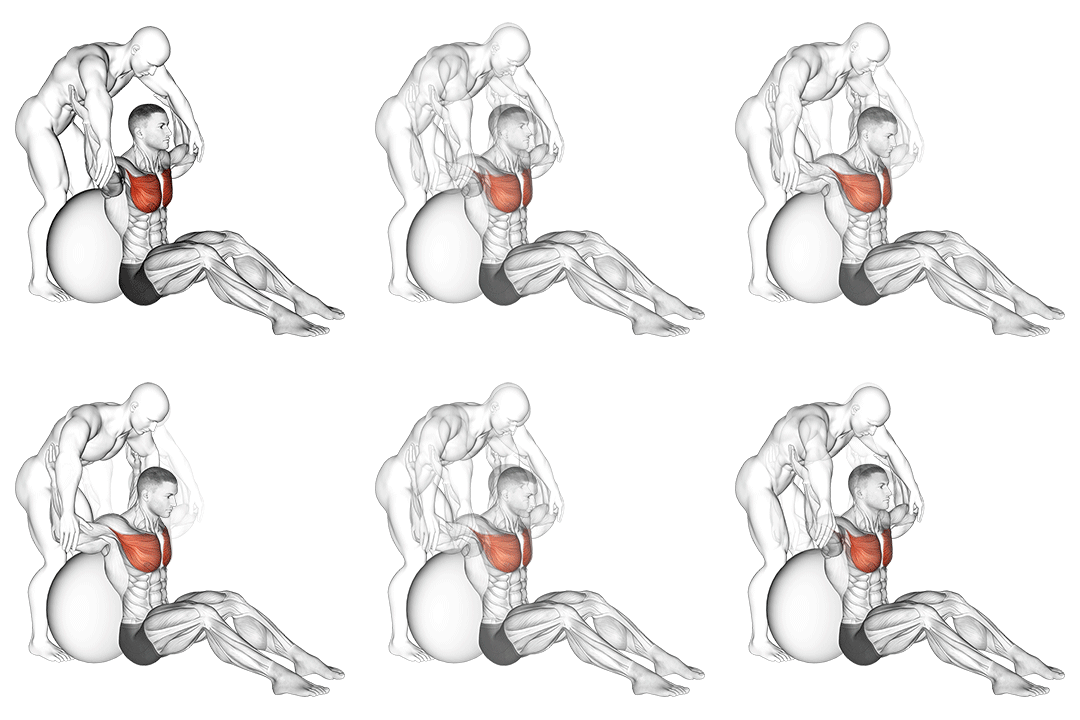
More comparisons with Cable One Arm Incline Fly On Exercise Ball
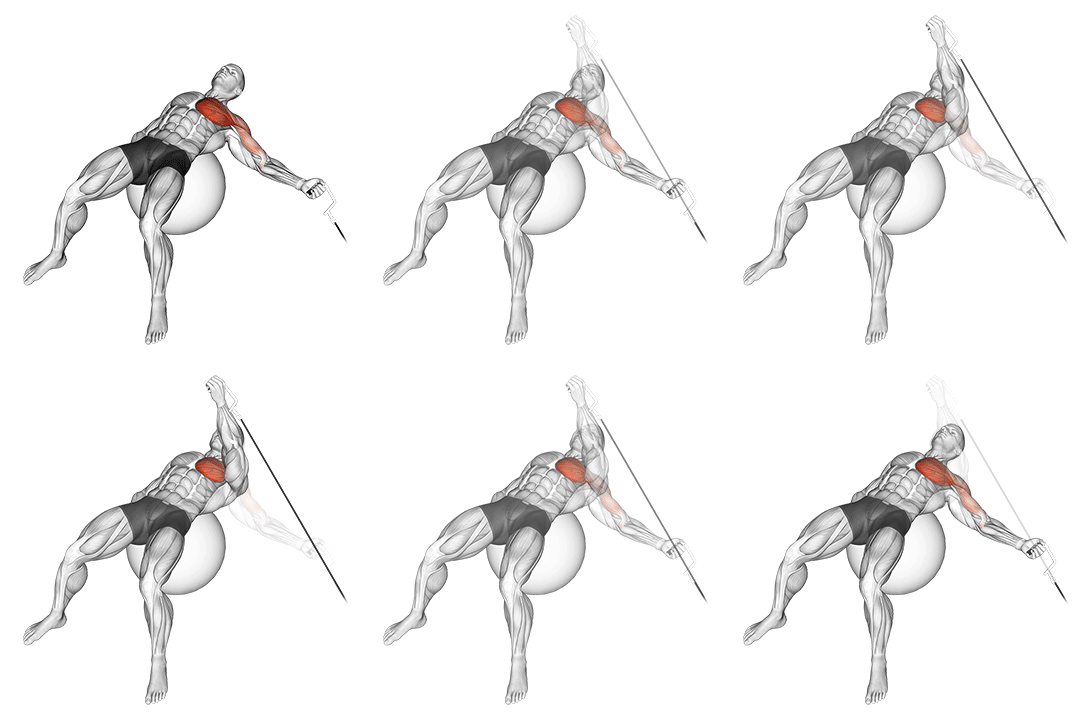
More comparisons with Cable One Arm Incline Press On Exercise Ball
Compare More Exercises
Use our free comparison tool to analyze any two exercises head-to-head.
Compare Exercises