

Cable One Arm Incline Press On Exercise Ball vs Cable Press On Exercise Ball: Complete Comparison Gu
Cable One Arm Incline Press On Exercise Ball vs Cable Press On Exercise Ball — you’re choosing between unilateral upper-chest bias and a more stable bilateral chest builder. If you want clear guidance, this comparison walks you through primary and secondary muscle activation, equipment needs, technique cues, difficulty, progression options, and when to program each movement. Read on for actionable cues (30–45° incline, elbow path, core bracing), rep-range suggestions (6–12 for hypertrophy, 3–6 for strength), and decisive recommendations so you can pick the best chest press for your goals.
Exercise Comparison
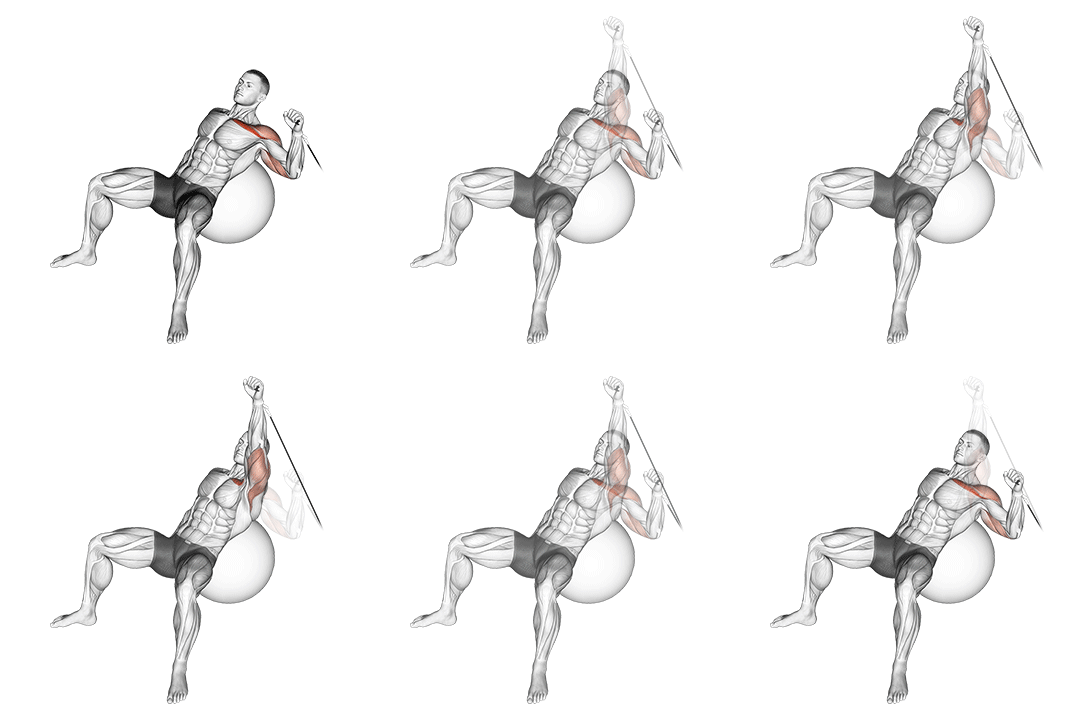
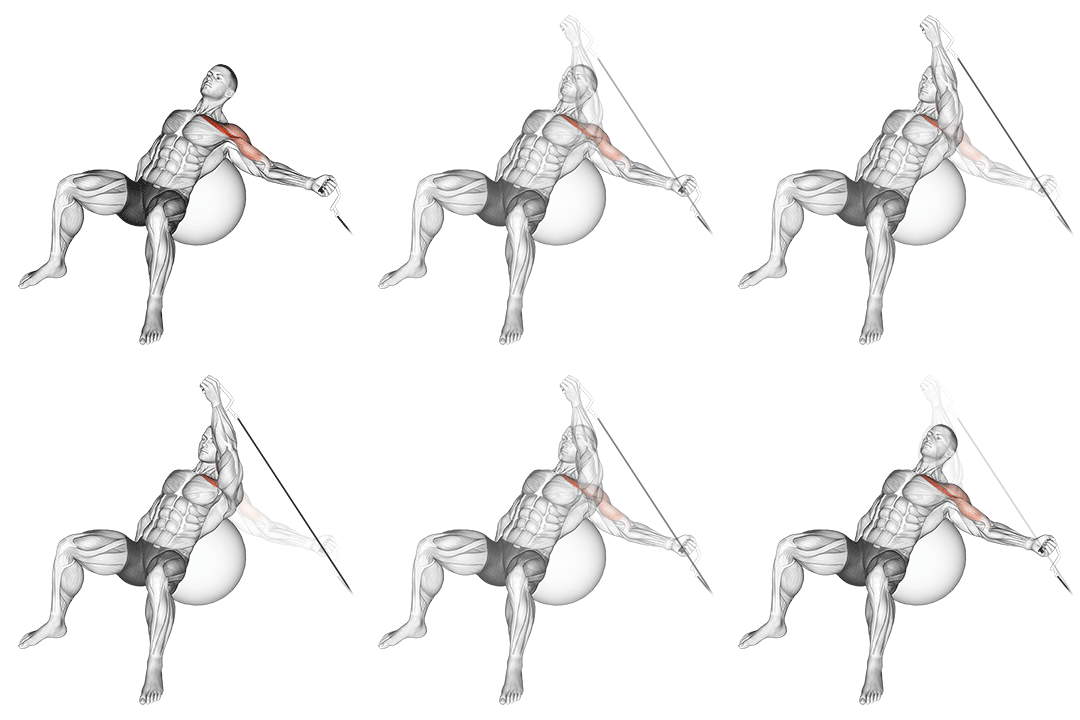
Cable One Arm Incline Press On Exercise Ball
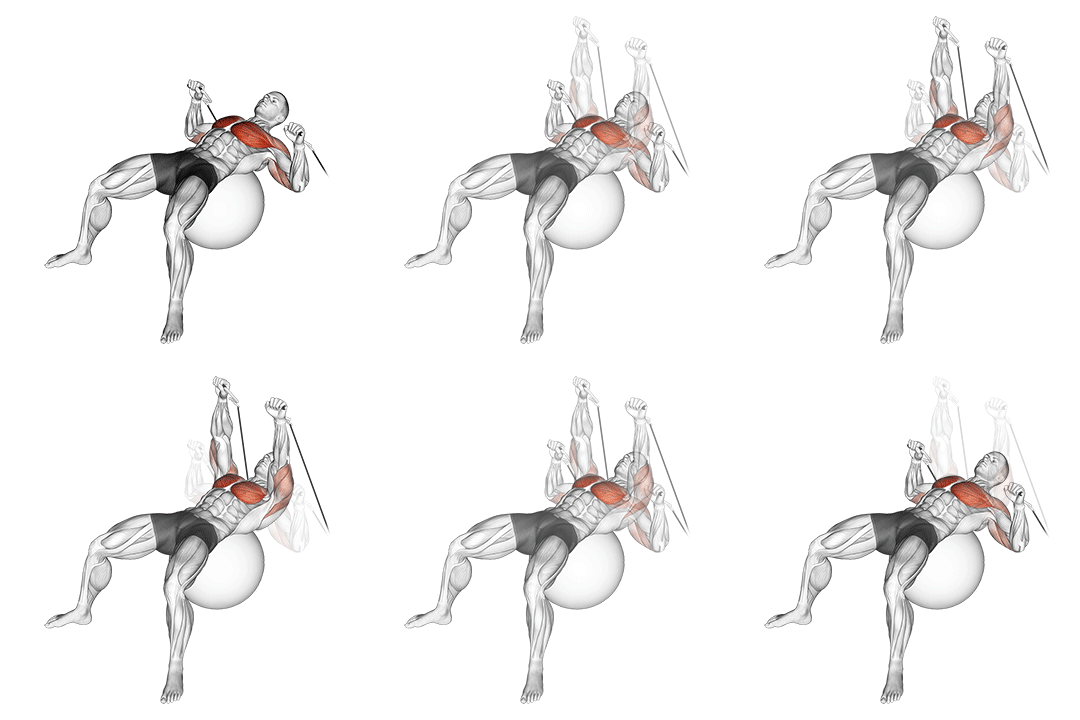
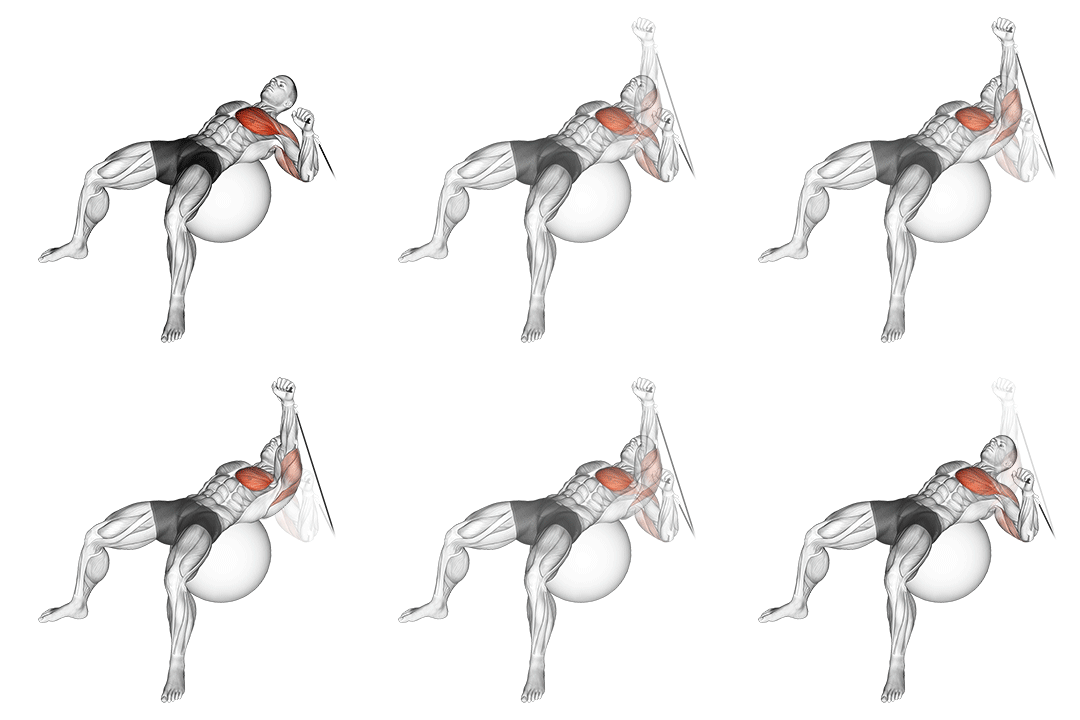
Cable Press On Exercise Ball
Head-to-Head Comparison
| Attribute | Cable One Arm Incline Press On Exercise Ball | Cable Press On Exercise Ball |
|---|---|---|
| Target Muscle |
Pectorals
|
Pectorals
|
| Body Part |
Chest
|
Chest
|
| Equipment |
Stability-ball
|
Stability-ball
|
| Difficulty |
Advanced
|
Intermediate
|
| Movement Type |
Compound
|
Compound
|
| Secondary Muscles |
2
|
2
|
Secondary Muscles Activated
Cable One Arm Incline Press On Exercise Ball
Cable Press On Exercise Ball
Visual Comparison
Overview
Cable One Arm Incline Press On Exercise Ball vs Cable Press On Exercise Ball — you’re choosing between unilateral upper-chest bias and a more stable bilateral chest builder. If you want clear guidance, this comparison walks you through primary and secondary muscle activation, equipment needs, technique cues, difficulty, progression options, and when to program each movement. Read on for actionable cues (30–45° incline, elbow path, core bracing), rep-range suggestions (6–12 for hypertrophy, 3–6 for strength), and decisive recommendations so you can pick the best chest press for your goals.
Key Differences
- Difficulty levels differ: Cable One Arm Incline Press On Exercise Ball is advanced, while Cable Press On Exercise Ball is intermediate.
- Both exercises target the Pectorals using Stability-ball. The main differences are in their movement patterns and muscle activation angles.
Pros & Cons
Cable One Arm Incline Press On Exercise Ball
+ Pros
- Strong unilateral correction — exposes left/right imbalances and builds single-arm strength
- Increased upper-pec (clavicular head) emphasis from a 30–45° incline
- High core and anti-rotation demand improves functional stability
- Constant cable tension preserves load through full ROM and eccentric control
− Cons
- Technically advanced — requires balance, shoulder stability, and coaching
- Limited absolute loading compared to bilateral presses
- Higher risk of shoulder strain or torso rotation if bracing and scapular control fail
Cable Press On Exercise Ball
+ Pros
- Easier to learn and load for heavier bilateral pressing
- Solid chest and triceps stimulus with consistent cable tension
- Better for building raw pressing strength and adding volume (6–12+ reps)
- Moderate core demand from stability ball without extreme anti-rotation stress
− Cons
- Less targeted upper-pec emphasis unless you add incline angle
- Lower unilateral carryover — can mask left/right imbalances
- Stability ball still requires balance; poor setup can reduce shoulder mechanics
When Each Exercise Wins
Bilateral pressing allows heavier total load and more volume (8–12 reps across multiple sets), producing greater mechanical tension across the chest for size. Use the cable press to accumulate volume, then add unilateral incline for targeted upper-pec work.
You can load bilaterally and apply heavier resistance or lower-rep schemes (3–6 reps) more safely, improving maximal pressing strength and triceps transfer without excessive anti-rotation demands.
It has a gentler learning curve, simpler setup, and allows progressive overload with less technical breakdown. Beginners can focus on scapular retraction, elbow path, and tempo before adding unilateral complexity.
Most home setups (band + stability ball or single-pulley machine) make bilateral pressing easier to rig and scale. The one-arm incline needs more control and ideally a cable pulley with fine weight increments.
Frequently Asked Questions
Can I do both Cable One Arm Incline Press On Exercise Ball and Cable Press On Exercise Ball in the same workout?
Yes. Start with the bilateral Cable Press On Exercise Ball for heavy compound sets (3–5 sets, 3–8 or 6–12 reps depending on goal), then finish with Cable One Arm Incline Press On Exercise Ball as an accessory (2–4 sets of 6–10) to target upper pecs and correct imbalances.
Which exercise is better for beginners?
Cable Press On Exercise Ball is better for beginners because it’s easier to load and requires less anti-rotation control. Focus on technique cues—scapular retraction, neutral wrist, and an elbow path about 30–45° from your torso—before moving to unilateral inclines.
How do the muscle activation patterns differ?
The incline one-arm press shifts the force vector upward, increasing clavicular-head recruitment and raising core/oblique activation due to anti-rotation demands. The bilateral cable press positions the vector more horizontally, producing more balanced sternal-pec and triceps loading with steadier overall force across the ROM.
Can Cable Press On Exercise Ball replace Cable One Arm Incline Press On Exercise Ball?
Not completely. Cable Press On Exercise Ball can substitute for overall chest volume and strength, but it won’t match the unilateral stability, anti-rotation challenge, and targeted upper-pec emphasis of the one-arm incline. Use both across a training cycle for best results.
Expert Verdict
Use Cable Press On Exercise Ball as your workhorse when you want volume, progressive loading, and reliable bilateral chest and triceps development. Program it for 3–5 sets of 6–12 reps, focus on a 30–45° elbow path from the torso, and maintain scapular retraction. Reserve Cable One Arm Incline Press On Exercise Ball for accessory days: it’s ideal for upper-pec shaping, correcting asymmetries, and building anti-rotation core strength. Use 2–4 sets of 6–10 reps for unilateral overload, keep the incline at 30–45°, and emphasize slow eccentrics and tight core bracing. Both movements complement each other when sequenced properly.
Also Compare
More comparisons with Cable One Arm Incline Press On Exercise Ball
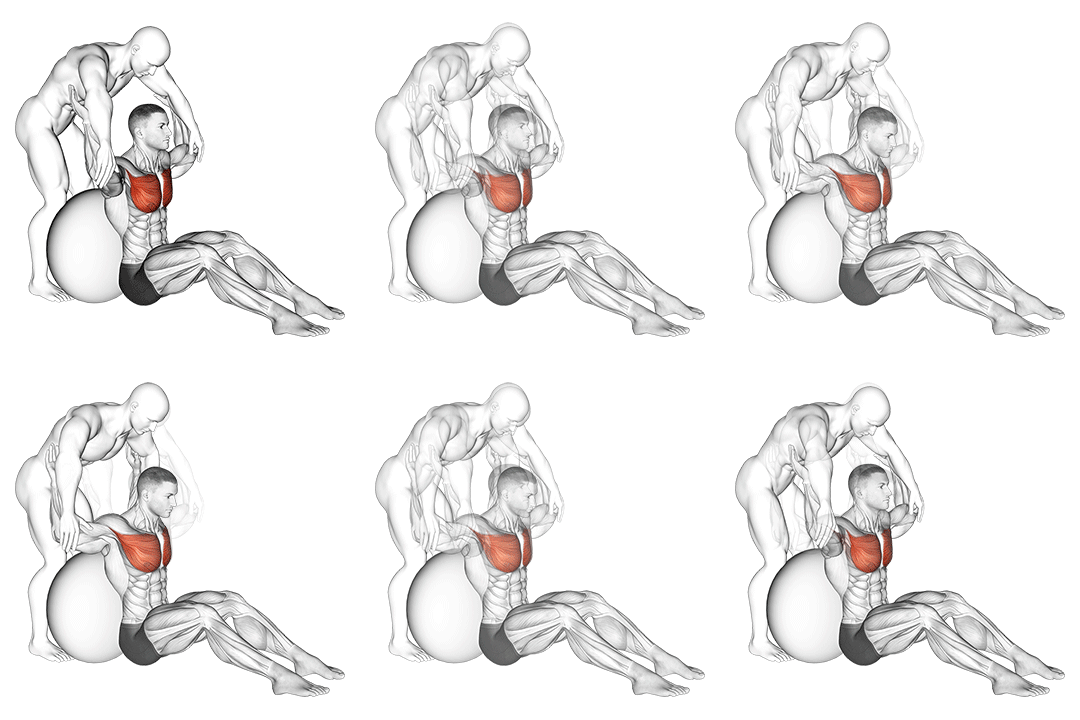
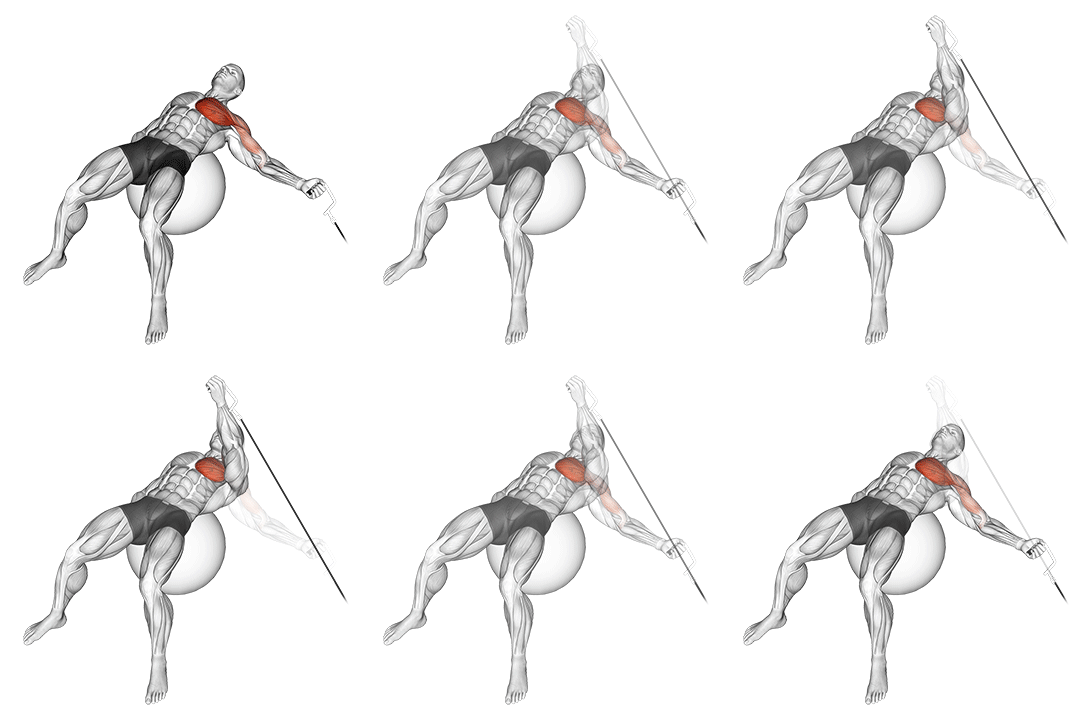
More comparisons with Cable Press On Exercise Ball
Compare More Exercises
Use our free comparison tool to analyze any two exercises head-to-head.
Compare Exercises